Cecilia Chamidah Nur
March 31st, 2026, marks a profound moment in technological history: the official decommissioning of Japan’s 3G FOMA (Freedom of Mobile Multimedia Access) antennas by NTT DoCoMo. While this date signifies the final curtain call for a specific network technology, it more significantly represents the definitive end of the i-mode service, a groundbreaking mobile internet platform that not only revolutionized Japanese daily life but also pioneered concepts that would later define the global smartphone era, particularly in mobile gaming. For millions in Japan, i-mode was more than just a service; it was the primary gateway to the digital world, a veritable "life infrastructure" that fostered an unprecedented ecosystem of connectivity and entertainment, a legacy now receding into history after a protracted decline.
A Digital Pioneer’s Farewell: The Decommissioning of Japan’s 3G FOMA Network
The shutdown of the 3G FOMA network is the culmination of a multi-year process initiated by NTT DoCoMo to transition its services entirely to newer, more efficient 4G and 5G technologies. FOMA, launched in 2001, was Japan’s first commercial 3G service and a cornerstone of i-mode’s advanced capabilities, providing the high-speed data necessary for its rich content and interactive applications. While 3G has long been supplanted by subsequent generations of mobile technology, its lingering presence supported a dwindling number of legacy devices and services, including the last functional vestiges of i-mode. The final cessation of 3G FOMA signals a complete severing of the underlying infrastructure that once powered a digital revolution, rendering any remaining i-mode-dependent services completely inoperable. This move, while necessary for technological progress and spectrum reallocation, underscores the inherent impermanence of digital infrastructure and its profound impact on access to historical digital content.
The Rise and Gradual Sunset of i-mode: A Chronology of Innovation and Obsolescence

The story of i-mode is one of explosive innovation, cultural integration, and eventual, inevitable decline in the face of globalized technological shifts. Its journey spans nearly three decades, from its audacious launch to its quiet, phased retirement.
Early Days: Laying the Foundation (1999-2004)
NTT DoCoMo launched i-mode in February 1999, an offering that fundamentally reshaped Japan’s relationship with the internet. At a time when home PC adoption was comparatively low in Japan, and internet access was often cumbersome and expensive, i-mode presented a revolutionary alternative. It provided always-on, packet-switched data connectivity through feature phones, known as "Keitai," featuring a simplified interface and a curated list of mobile-friendly websites. This was a stark contrast to the circuit-switched, per-minute billing models prevalent in other parts of the world. Crucially, i-mode offered an email service, providing millions of Japanese their first digital identity via an @docomo.ne.jp address, a service so vital that by 2002, 57.7% of mobile users were accessing their mail through i-mode.
The platform’s growth was staggering. Within just 21 months of its launch, the user base had surged past 14.5 million subscribers. By 2010, at its peak, i-mode boasted over 49 million subscribers, representing more than a third of Japan’s total population. The introduction of 3G FOMA in 2001 further amplified i-mode’s capabilities, enabling faster data speeds and more sophisticated applications, paving the way for advanced mobile content, especially in gaming.
Peak Influence and Unprecedented Innovation (2004-2008)
During its zenith, i-mode permeated every aspect of Japanese daily life, earning the descriptor "life infrastructure" from researcher Eiji Hamatani. Its comprehensive ecosystem extended far beyond basic communication, encompassing utility apps for daily tasks like trash collection schedules, banking, transportation information, and, notably, a vibrant gaming scene. The business model was highly advantageous for content providers, with NTT DoCoMo retaining a modest 9% of collection charges, leaving a substantial 91% for content creators. This incentivized a rich array of services and fostered intense innovation.
Gaming, in particular, flourished within this environment. Far from being a niche pursuit, mobile games were among the most popular uses of the service. Research from 2005-2006 indicates that over 80% of Keitai users engaged with at least one gaming feature on their phones. Manufacturers often pre-installed game demos directly onto handsets, showcasing gaming’s central role. Keitai games were not merely simplified versions of console titles; they were pioneering experiences leveraging the unique capabilities of mobile internet. Examples like Sonic Golf Cmode Cup (2002) integrated with real-world incentives, allowing players to earn discount points for Coca-Cola vending machines. Even traditional gaming devices sought integration, as seen with Sony’s Mobile Phone Connection Cable (2001), which enabled certain PlayStation and PlayStation 2 games to utilize internet features via an i-mode device, allowing virtual pets in Doko Demo Issyo to learn words from emails or read phone schedules.

The advent of 3G FOMA in 2004 truly unleashed the potential for sophisticated mobile gaming. Before Crisis: Final Fantasy VII (2004) stands as a monumental example. Released as a Keitai-exclusive prequel and the first installment in the broader Compilation of Final Fantasy VII, its very existence on mobile was a bold statement. The game pushed boundaries by completely relying on mobile internet for its core functionality, delivering its story in 26 periodically released chapters via Square Enix’s mobile storefront over three years. Players could use their phone’s camera to generate new Materia spells, which could then be shared with friends via mobile email. Side apps like the Gold Saucer offered online leaderboards for minigames, and the Weapon Dimension Mode utilized DoCoMo’s i-Area service for location tracking, mirroring in-game locations to real-world geography (e.g., fighting Jade Weapon in Icicle Inn if located in Hokkaido). This was a full-fledged Final Fantasy VII experience designed exclusively for Keitai.
Similarly, Persona Mobile Online (2009) by BBMF, an MMORPG launched alongside the Megaten Online storefront, adapted the social simulation elements of the Persona series for a mobile internet environment. Players formed parties and friendships, earning points for the storefront to purchase Megaten-themed customizations. These titles exemplify how Keitai games innovated with subscription-based models, periodic content, and microtransactions—practices that would become standard in the global mobile gaming landscape years later.
The Smartphone Era’s Onset and i-mode’s Decline (2008-2019)
The launch of the iPhone in Japan via Softbank in 2008 marked the beginning of the end for i-mode’s dominance. While i-mode had pioneered many features associated with smartphones, its proprietary nature proved to be its undoing. The platform suffered from what journalists and researchers dubbed "Galapagos Syndrome," or ‘garakei’ (Galapagos + Keitai), describing highly advanced but geographically isolated technologies. A major technical hurdle was DoJa, DoCoMo’s proprietary Java variant, which differed significantly from international standards, creating a barrier for global developers and hindering international expansion.
As smartphones gained traction, content providers began shifting their focus. G-mode, a giant in pre-smartphone mobile gaming, dramatically reduced its Keitai game releases: from 274 titles in 2008, to 161 in 2010, plummeting to just 15 by 2012. Major publishers followed suit, with Capcom shuttering its mobile store in 2017, and Square Enix shortly after. By this point, i-mode had become a "living dead" platform for gaming, its innovative edge blunted by the global smartphone revolution. NTT DoCoMo officially stopped accepting new i-mode subscribers on September 30th, 2019, signaling the definitive end of its commercial viability.
The Final Stages (2021-2026)
The i-mode website service, which hosted game storefronts, went dark on November 30th, 2021, effectively making new game purchases impossible. However, one core feature, the @docomo.ne.jp email address, remained operational until the very end, a testament to its foundational importance as a primary digital identity for millions. The final act in this long decline is the decommissioning of the 3G FOMA antennas on March 31st, 2026, which removes the last piece of infrastructure supporting any remaining i-mode functionality.
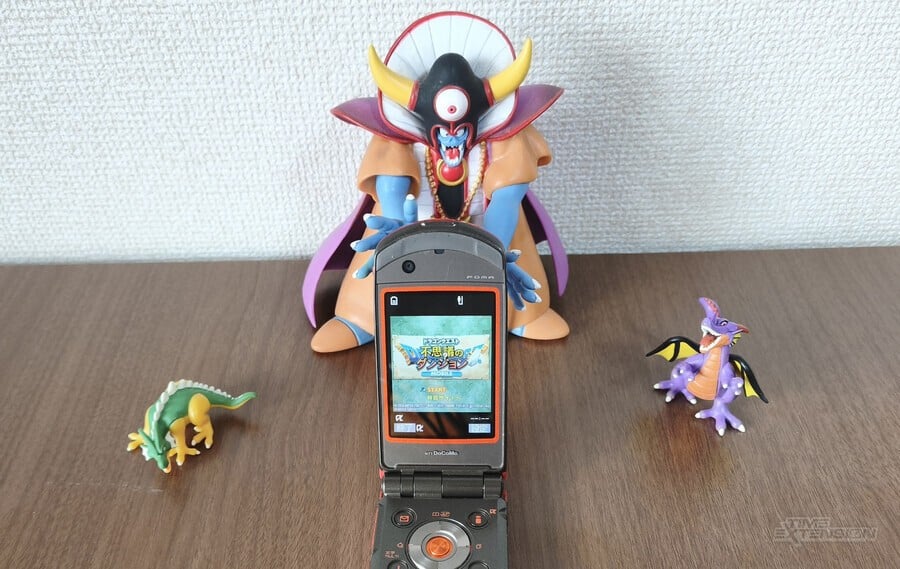
The Unprecedented Innovation of Keitai Gaming
Keitai games were far from the rudimentary "flip phone games" often envisioned in the West. They were sophisticated, integrated experiences that laid the groundwork for many aspects of modern mobile gaming and live-service models. Their extensive integrations with Japan’s advanced mobile internet platforms allowed for features that were years ahead of their time:
- Digital Distribution & Subscription Models: Games were distributed digitally through numerous online storefronts, each operated by a different publisher and accessible only through i-mode. These storefronts typically charged monthly subscription fees, a direct precursor to modern mobile game subscriptions and app store models.
- Live-Service Elements: Titles like Before Crisis: Final Fantasy VII pioneered episodic content releases, with new story chapters delivered periodically over several years, a model now commonplace in live-service games across all platforms.
- Microtransactions: Persona Mobile Online offered in-game points for phone customizations, available monthly or via microtransactions, showcasing an early implementation of in-app purchases and virtual currency.
- Online Connectivity: Games featured online leaderboards, multiplayer modes, and social interactions, leveraging the always-on internet connection provided by i-mode and 3G FOMA.
- Location-Based Gaming: Before Crisis‘s Weapon Dimension Mode used DoCoMo’s i-Area service to track players’ real-world locations, influencing in-game environments and challenges—a concept that would be popularized globally much later by games like Pokémon Go.
- Cross-Platform Integration: From earning Coca-Cola discounts to enabling PlayStation console games to utilize mobile internet features, Keitai games explored novel forms of cross-media and cross-device integration.
- Community and Events: The i-mode gaming experience extended beyond the screen. Corporate newsletters from the era highlight online competitions, real-life events, and collaborations. The 2006 Tokyo Game Show, for example, prominently featured Keitai titles, with promotional staff engaging attendees. G-mode even organized high-profile tournaments for games like Keitai Shoujo Janken, blurring the lines between digital play and physical community, demonstrating the deep cultural penetration of mobile gaming.
By Tokyo Game Show 2001, i-mode stood alongside industry titans like Sony, Nintendo, and Microsoft, cementing its status as a major player. For the Japanese public, playing on a Keitai was not merely a distraction but one of the most common ways to experience video games.
The Shadows of Progress: The Game Preservation Crisis
The groundbreaking nature of Keitai games, particularly their deep integration with mobile internet and server-reliant functionalities, has unfortunately created a dire preservation crisis. As the i-mode service and its underlying 3G network cease to exist, access to these pioneering titles becomes increasingly difficult, if not impossible.
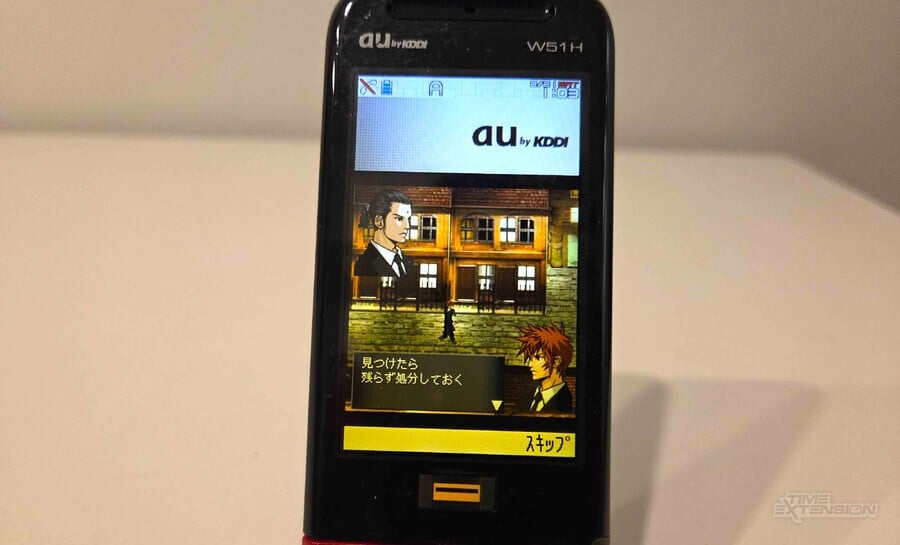
The Problem of Network Dependency: Many Keitai games, including some of the most innovative ones, were designed to store only a minimal amount of data locally on the handset. Crucial elements like game text, maps, and dynamic content were streamed from servers as needed. This architecture, while efficient for the time, means that once the servers are shut down, a significant portion of the game simply vanishes. Unlike traditional cartridge or disc-based games, where the entire experience is contained within the physical medium, network-dependent titles become largely unplayable without their server infrastructure.
Case Study: Before Crisis: Final Fantasy VII
Before Crisis serves as a stark model for these preservation challenges. Obtaining a physical Keitai handset with the game already installed is the first hurdle, but it is far from the last. As YuviApp, a leading preservationist working on Before Crisis, explains, "Even a lot of the game’s text wasn’t stored locally – it was sent dynamically from the server when needed. Because of this, a huge amount of the game’s data never made it onto the client." To even progress past the title screen, Yuvi has had to create local servers and painstakingly reverse-engineer numerous network packets. Given that the game only stored one map on a device at a time, reconstructing all 24 chapters is a monumental, ongoing task. Furthermore, periodic content updates often overwrote previous data, meaning that unless multiple versions of the game client were preserved at different times, past content may be irrevocably lost.
Broader Implications for Modern Gaming:
The preservation difficulties faced by Keitai game enthusiasts today are a chilling harbinger for the future of modern live-service games. The monetization strategies, periodic content updates, and heavy reliance on servers that characterized Keitai gaming have become standard practice across mobile, console, and PC platforms. This means that a growing number of contemporary titles are inherently ephemeral. When servers are eventually shut down – whether due to declining player bases, lack of profitability, or corporate decisions – these games become unplayable, lost to time. We have already seen this with numerous "failed" live-service games like Warhaven or Muv-Luv Dimensions.
The trend towards server-reliant gaming shows no signs of slowing. In 2023, a significant 66% of video game studios believed that live-service games were essential for long-term financial success. Despite this increasing reliance on external infrastructure, formal legal frameworks for preserving digital games remain largely absent globally. This institutional void means that the immense efforts of individuals and non-profit organizations often constitute the sole hope for safeguarding our digital cultural heritage.
Beacons of Hope:
Despite these formidable challenges, the Keitai game preservation movement offers beacons of hope. Over 2,000 Keitai games have been preserved to date, a testament to the dedication of preservationists. Online communities and individuals like Yuvi are making astounding advances, even with highly server-reliant titles. Yuvi’s work on Before Crisis, for example, has successfully preserved several Gold Saucer minigames, a training mode battle, Chapter 2’s free-roam mode, and Chapter 10’s rescue mission, all pieced together from just four copies of the game. These efforts demonstrate that even in the direst circumstances, with ingenuity and perseverance, significant portions of these lost digital worlds can be reclaimed. In light of i-mode’s complete shutdown, the tireless efforts of Keitai game preservationists serve as a powerful inspiration, underscoring the urgent need for greater awareness, resources, and formalized strategies for preserving digital video games for future generations.

Legacy and Lessons Learned
The final decommissioning of Japan’s 3G FOMA antennas marks not just the end of a network, but the final chapter for i-mode, a service that profoundly shaped an entire nation’s digital landscape. Its dual legacy is undeniable: a technological marvel that pioneered many aspects of the smartphone revolution, particularly in mobile internet and gaming, and a cautionary tale about the vulnerabilities of proprietary systems and the ephemeral nature of digital content.
i-mode’s unique trajectory, from its explosive growth to its "Galapagos" isolation, offers invaluable lessons about innovation, market dynamics, and the critical importance of interoperability. More urgently, the challenges faced by Keitai game preservationists highlight a looming crisis for the entire video game industry. As gaming increasingly embraces live-service models and server-dependent functionalities, the risk of losing vast swaths of interactive history grows exponentially. The dedication of those striving to preserve Keitai games serves as a vital call to action, urging the industry, governments, and cultural institutions to establish robust frameworks and allocate necessary resources to safeguard our increasingly digital cultural heritage. Only then can we ensure that the pioneering spirit of platforms like i-mode, and the rich experiences they offered, are not merely forgotten echoes in the digital ether.