
 Farhan hamdan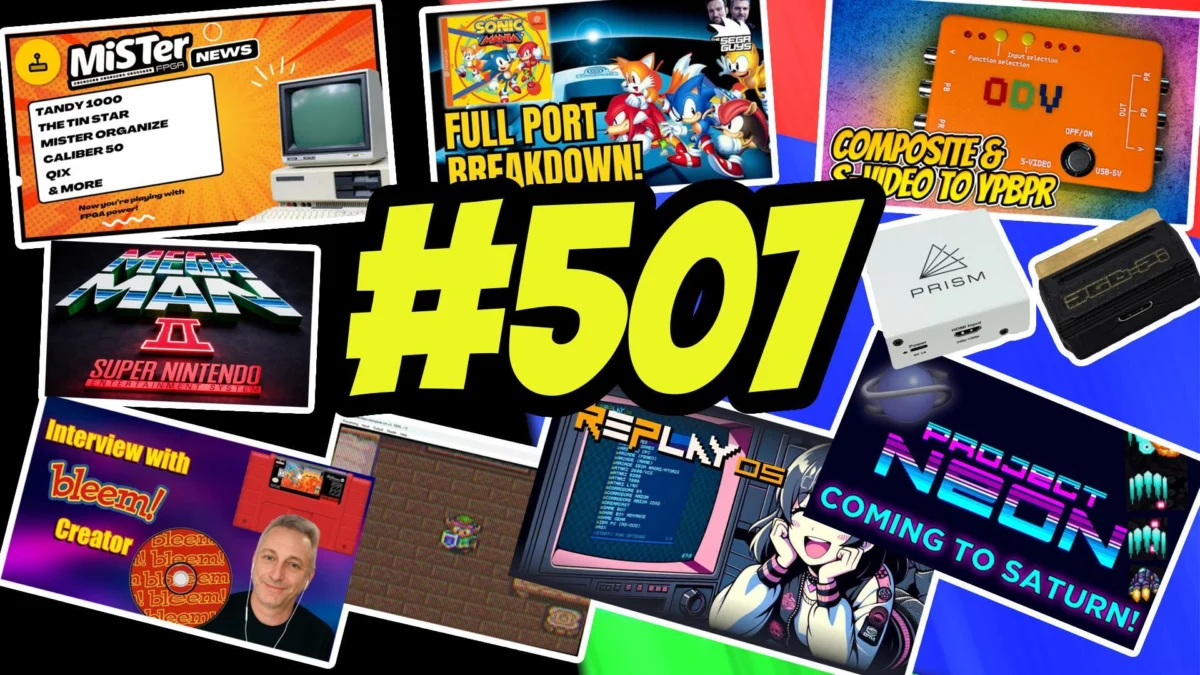
The retro gaming community and hardware enthusiasts were treated to a comprehensive overview of the latest developments in preservation, emulation, and custom hardware during the Weekly Roundup #507, broadcast on April 1st, 2026. This edition highlighted significant advancements across various platforms, from FPGA core updates and ambitious fan-made game conversions to new hardware solutions for enhanced audio-visual fidelity and critical interviews with industry pioneers. The roundup serves as a vital resource for a community deeply invested in maintaining and evolving the legacy of classic gaming, offering insights into ongoing projects and newly released tools.
FPGA Development: Expanding Horizons with MiSTer Updates
A central focus of the roundup was the continuous evolution of the MiSTer FPGA platform, with notable updates from developer Lu’s. The MiSTer FPGA, a hardware-level emulation solution, has garnered immense popularity for its ability to replicate classic console and arcade hardware with unparalleled accuracy, minimizing input lag and offering an authentic experience. Lu’s updates often encompass new core developments, performance enhancements, and user experience improvements, cementing MiSTer’s role as a cornerstone of modern retro gaming.
Among the key highlights was the ongoing refinement of the Tandy 1000 core. The Tandy 1000 series, a line of IBM PC compatibles released by Tandy Corporation in the 1980s, holds a unique place in computing history, particularly for its enhanced sound and graphics capabilities compared to standard IBM PCs of its era. Its integration into the MiSTer ecosystem means that a new generation of enthusiasts can experience classic PC titles with native accuracy, preserving a significant slice of early computer gaming. The challenges in developing such a core involve meticulously reverse-engineering complex proprietary hardware, including its unique sound chips and display modes, to ensure faithful reproduction. This ongoing development underscores the MiSTer community’s commitment to broad historical preservation, extending beyond just video game consoles to encompass seminal personal computer platforms.
Further enhancing the MiSTer ecosystem were announcements regarding the MiSTer Companion and MiSTer Organize initiatives. While specific details often vary, MiSTer Companion projects typically aim to improve the peripheral experience, offering solutions for enhanced connectivity, power management, or integration with external hardware. Such additions are crucial for making the powerful MiSTer platform more accessible and versatile for a wider range of users, from casual players to dedicated hobbyists. MiSTer Organize, on the other hand, likely refers to software or firmware updates focused on improving the user interface, file management, or system navigation within the MiSTer environment. As the number of available cores and features grows, intuitive organization becomes paramount for a seamless user experience, reducing friction and allowing users to quickly access their vast libraries of games and applications. These developments collectively signify a maturing platform that prioritizes both core accuracy and user-centric design.
Ambitious Fan Projects: Reimagining Classics and Porting Modern Hits
The roundup also showcased the vibrant and technically ambitious spirit of the retro gaming community through several fan-driven game projects. These initiatives often push the boundaries of what is thought possible on older hardware or reimagine beloved titles with modern sensibilities.
One of the most talked-about projects was the announcement of a "full SNES 16-bit conversion" of the iconic NES title, Mega Man II. Released in 1988 by Capcom, Mega Man II is widely considered one of the greatest games on the Nintendo Entertainment System, lauded for its innovative level design, memorable soundtrack, and challenging gameplay. The prospect of a full 16-bit conversion implies a significant overhaul, not merely a graphical update. Developers would likely be re-tooling graphics to take advantage of the SNES’s expanded color palette and sprite capabilities, redesigning sound effects and music to utilize the SNES’s superior SPC700 sound chip, and potentially even re-implementing gameplay mechanics to feel more aligned with SNES-era titles. This type of project is incredibly resource-intensive, requiring deep understanding of both NES and SNES hardware architectures, extensive artistic talent, and meticulous programming. Its implication is profound: it demonstrates the enduring love for classic titles and the community’s desire to explore "what if" scenarios, pushing the boundaries of retro hardware in creative ways.
Equally compelling was the demonstration of a Sonic Mania Dreamcast Port. Sonic Mania, released in 2017, was a critically acclaimed return to form for the classic 2D Sonic series, developed by Christian Whitehead, Simon Thomley, and PagodaWest Games. Porting a relatively modern 2D platformer, designed for contemporary hardware and development tools, to a console like the Sega Dreamcast (released in 1998) presents a unique set of technical hurdles. The Dreamcast, while powerful for its time, has architectural differences that require significant optimization and custom coding. The demonstration of this port indicates not only the dedication of the developers involved but also the surprising untapped potential that can still be extracted from older hardware through skilled programming. This project contributes to the Dreamcast’s robust homebrew scene, continually expanding its library with both original creations and ambitious ports, thereby extending the console’s relevance decades after its commercial discontinuation.
Adding to the list of ambitious ports was the news of an indie developer actively porting a Neo Geo SHMUP (Shoot ’em Up) to the Sega Saturn. The Neo Geo, known for its "arcade perfect" home conversions and high-quality 2D graphics, often featured highly demanding software. The Sega Saturn, while renowned for its 2D prowess, possessed a notoriously complex dual-CPU architecture that could be challenging for developers to fully exploit. A successful port of a Neo Geo SHMUP to the Saturn would be a significant technical achievement, showcasing the console’s capabilities when programmed optimally. This effort not only expands the Saturn’s already impressive library of 2D shooters but also serves as a testament to the indie development scene’s commitment to pushing boundaries and celebrating the unique strengths of various retro platforms. It further solidifies the Saturn’s reputation among collectors as a powerful 2D machine.
Software and Hardware Innovations for Enhanced Experience

The roundup also delved into critical software updates and new hardware solutions designed to refine the retro gaming experience, addressing common challenges faced by enthusiasts.
ShaderGlass v1.3 was announced, bringing further refinements to this important tool. Shaders play a crucial role in modern retro gaming, allowing users to apply visual filters that mimic the display characteristics of cathode ray tube (CRT) televisions, which were ubiquitous during the golden age of gaming. These effects, such as scanlines, phosphor glow, and subtle curvature, are essential for achieving an authentic visual presentation that modern flat-panel displays often lack. ShaderGlass, as a dedicated solution, likely offers advanced customization, performance optimizations, and a wider array of shader options. Version 1.3 would typically include bug fixes, performance improvements, and potentially new shader algorithms or integration features, making it an indispensable tool for those seeking the most faithful visual experience possible. The continuous development of such software highlights the community’s commitment to not just playing old games, but experiencing them as authentically as possible.
RePlayOS v1.6 also received attention, indicating ongoing development in custom operating systems tailored for retro gaming hardware. RePlayOS, likely a customized Linux-based distribution, aims to provide a streamlined, user-friendly interface for various retro gaming devices, often Raspberry Pi-based systems. Updates like v1.6 typically focus on improved stability, expanded hardware support (e.g., new controllers, display types), updated emulator versions, and UI enhancements. The goal is to create an all-in-one, plug-and-play solution that simplifies the complex world of emulation and retro hardware configuration, making it more accessible to a broader audience. Such operating systems are crucial for fostering community growth and reducing the barrier to entry for new enthusiasts.
On the hardware front, Mcbazel’s Koryuu transcoder was reviewed, offering a new solution for signal conversion. The Koryuu, identified as an ODV-II transcoder, addresses a persistent challenge in retro gaming: connecting older consoles with analog video outputs (like RGB, component, or composite) to modern digital displays (HDMI). High-quality transcoders are essential for converting these signals without introducing lag, artifacts, or significant signal degradation. The review indicating "Mcbazel’s Koryuu" suggests it provides a reliable and feature-rich solution, potentially supporting a wide range of input formats and offering clean, crisp output. Such devices are vital for bridging the technological gap between vintage hardware and contemporary display technology, allowing enthusiasts to enjoy their classic consoles on modern TVs without compromise.
The Reflex Prism DAC also underwent thorough testing, emerging as a "great, full-featured DAC." A Digital-to-Analog Converter (DAC) is critical for high-fidelity audio, especially when dealing with the nuanced soundscapes of retro games. While video quality often takes center stage, pristine audio is equally important for a complete immersive experience. The Reflex Prism DAC likely offers superior audio processing, a wide frequency response, and robust connectivity options, appealing to audiophiles within the retro gaming community. Its positive reception indicates a growing emphasis on high-quality audio reproduction, ensuring that the iconic soundtracks and sound effects of classic games are heard as intended, free from digital noise or distortion.
However, not all hardware news was entirely positive. The RGB-Pi 2, a project aimed at delivering high-quality RGB video output from Raspberry Pi devices, was noted for exhibiting "sync video issues" during testing. The RGB-Pi project is significant because it attempts to provide an authentic analog video signal from a modern, low-cost computer, often used in emulation setups. Sync issues, such as flickering, tearing, or instability, can severely impact the user experience. This report highlights the inherent challenges in hardware development and the rigorous testing required to ensure product reliability. While the initial findings point to areas needing improvement, such feedback is crucial for developers to iterate and refine their products, ultimately leading to more robust and reliable solutions for the community. The transparency in reporting these issues helps manage community expectations and underscores the technical complexities involved in bridging modern computing with legacy video standards.
Finally, a review of a Mini HDMI to HDMI Cable was included, emphasizing the often-overlooked importance of reliable connectivity accessories. While seemingly minor, the quality of cables can significantly impact signal integrity, especially in sensitive retro setups. A high-quality cable ensures stable connections, minimizes signal loss, and prevents potential issues that could be misdiagnosed as hardware or software faults. Highlighting a specific cable suggests it met rigorous standards, offering a reliable link in the complex chain of retro gaming setups.
Community Engagement and Historical Perspectives
Beyond hardware and software, the roundup also touched upon aspects vital to the community’s knowledge base and historical understanding. A significant segment covered Zophar’s interview with Randy Linden. Zophar, likely referring to Zophar’s Domain, has been a long-standing and respected resource in the emulation scene for decades. Randy Linden is a legendary figure in video game development, perhaps best known for his groundbreaking work on Bleem! (the PlayStation emulator for PC) and porting Doom to the original PlayStation with remarkable efficiency. An interview with Linden would offer invaluable insights into the early days of game development, the technical challenges of working with limited hardware, and the pioneering efforts in emulation. Such discussions are crucial for documenting the history of video games and the technologies that shaped them, providing context for current advancements and inspiring future generations of developers and enthusiasts.
Supporting the Ecosystem
The concluding segment of the roundup was a heartfelt appeal for community support. Independent content creators, developers, and hardware innovators in the retro gaming space often rely on community contributions to sustain their efforts. The call for support via monthly services like Patreon, direct tips, or using affiliate links for everyday purchases underscores the symbiotic relationship between creators and their audience. This model allows for the continued production of high-quality content, detailed reviews, and the development of new tools and hardware solutions that benefit the entire retro gaming ecosystem. Without this community-driven financial backing, many of the projects and analyses featured in the roundup would simply not be possible, highlighting the critical role of collective support in fostering innovation and preservation.
In summary, Weekly Roundup #507 provided a comprehensive look at the dynamic and passionate world of retro gaming in April 2026. From the continuous refinement of FPGA platforms and ambitious fan-led game conversions to essential hardware solutions and invaluable historical interviews, the segment underscored the community’s unwavering commitment to preserving, enhancing, and celebrating the rich legacy of video games. The developments showcased reflect a vibrant scene where technical prowess, historical appreciation, and collaborative spirit converge to push the boundaries of what’s possible in retro gaming.








