Cecilia Chamidah Nur
The Genesis of Lady Stalker 2D: A Tribute and a Revival
The development of Lady Stalker 2D is spearheaded by Kan Naito, a name synonymous with pivotal RPGs from the late 20th century. Naito’s decision to resurrect the Lady Stalker concept, particularly for an 8-bit platform, speaks volumes about a desire to revisit and reimagine classic gameplay mechanics while honoring a profound professional relationship. Yoshitaka Tamaki, whose artistic genius brought countless characters to life, had a long and fruitful collaboration with Naito. Their shared history dates back to their tenure at Climax Entertainment, a studio renowned for its innovative contributions to the RPG genre.
The core premise of Lady Stalker 2D leveraging Tamaki’s "left behind" character designs adds a layer of emotional resonance to the project. These designs, created by Tamaki prior to his passing, are now being given new life and purpose through Naito’s vision. This approach not only ensures that Tamaki’s distinctive art style continues to influence new works but also transforms the game into a living memorial, allowing fans to experience new facets of his creative output. It’s an unusual but deeply respectful way to celebrate a deceased artist’s unfinished work, offering a unique continuity that bridges the past and the present of game development.
A Legacy of RPG Innovation: Climax Entertainment’s Golden Era

To fully appreciate the significance of Lady Stalker 2D, one must delve into the rich history of Climax Entertainment and the collaborative efforts of its founding members. Kan Naito, Yoshitaka Tamaki, and Hiroyuki Takahashi were instrumental figures in establishing Climax Entertainment in 1990. Prior to this, all three had worked at Enix, a company celebrated for its groundbreaking Dragon Quest series. This early experience at Enix, particularly on titles like Dragon Quest IV, provided a foundational understanding of RPG design that would later define Climax’s distinct style.
Climax Entertainment quickly rose to prominence in the early 1990s, carving out a niche with its unique blend of innovative gameplay and compelling narratives. Their initial success was largely built on their alliance with Sega, for whom they developed several seminal titles. Shining in the Darkness (1991), a dungeon-crawling RPG for the Sega Mega Drive (Genesis), was a critical and commercial hit, praised for its immersive 3D dungeon exploration and strategic combat. This game marked the beginning of the highly successful Shining series, which would evolve into various sub-genres.
Following Shining in the Darkness, Climax delivered another masterpiece with Landstalker: The Treasures of King Nole (1992) for the Mega Drive. Landstalker revolutionized the action-RPG genre with its isometric perspective, challenging environmental puzzles, and engaging storyline. Its vibrant graphics and intricate level design set a new benchmark for console RPGs, showcasing the studio’s technical prowess and creative ambition. Both Shining in the Darkness and Landstalker cemented Climax Entertainment’s reputation as a developer capable of pushing the boundaries of what was possible on 16-bit hardware. These titles were not merely games; they were experiences that helped define the console generation, influencing countless developers and captivating a generation of players with their depth and innovation.
The Original Lady Stalker: A Cross-Platform Anomaly
Amidst their strong association with Sega, Climax Entertainment made a surprising move in 1995 by developing Lady Stalker: Challenge from the Past for Nintendo’s Super Famicom (the Japanese Super Nintendo Entertainment System). This decision was notable given Climax’s traditional alliance with Sega and underscored the studio’s willingness to explore new platforms and creative avenues. Lady Stalker stood out as a rare, but significant, release for the studio on a Nintendo console.

The origins of Lady Stalker are deeply intertwined with the developers’ earlier work at Enix. Naito, Tamaki, and Takahashi had initially conceived an idea for a spin-off from Dragon Quest IV that would star Princess Alena, one of the game’s beloved characters. This concept, however, was ultimately rejected by Enix. Undeterred, the creative trio revisited and refined this core idea, transforming it into what would become Lady Stalker. The game retained a spirit of adventure and a strong female protagonist, echoing the initial vision for Princess Alena’s standalone journey. Taito Corporation, a prominent Japanese publisher known for arcade classics and console titles, stepped in to handle the publishing duties for Lady Stalker, further solidifying its presence on the Super Famicom.
While Lady Stalker on the Super Famicom did not achieve the same widespread acclaim or sales figures as Landstalker, it garnered a dedicated following for its unique isometric gameplay, charming character designs, and challenging puzzles. It represented a fascinating branch in Climax’s creative tree, demonstrating their versatility and ability to adapt their distinct style to different hardware and publishing partnerships. Its cult status among retro gaming enthusiasts highlights its lasting appeal and the quality inherent in its design, making it a fitting source of inspiration for Naito’s new 8-bit endeavor.
Yoshitaka Tamaki: A Master of Character Design
Yoshitaka Tamaki’s contributions to the video game industry are immeasurable, particularly in the realm of character design. His distinctive art style, characterized by a blend of heroic fantasy and charming, expressive figures, became a signature element in many beloved RPGs. Tamaki possessed a remarkable ability to imbue characters with personality and depth through his visual storytelling, making them instantly recognizable and endearing to players.
Throughout his illustrious career, Tamaki’s artwork graced titles that spanned various platforms and genres. Beyond Shining in the Darkness, Landstalker, and Lady Stalker, he contributed to numerous other projects, leaving an indelible mark on the visual aesthetics of the games he touched. His designs were not merely static images; they were integral to the narrative and emotional core of the games, helping to define the world and its inhabitants. From valiant heroes to menacing villains and quirky companions, Tamaki’s hand brought a unique flair that resonated deeply with players.

The news of Tamaki’s passing in 2023 was met with profound sadness across the gaming community. It marked the loss of a true visionary whose artistic talents helped shape an era of RPGs. His legacy, however, continues to inspire. Kan Naito’s decision to incorporate Tamaki’s unused character designs into Lady Stalker 2D is perhaps the most fitting tribute imaginable. It ensures that Tamaki’s creative spirit lives on, offering fans a final glimpse into his boundless imagination and allowing his art to continue captivating new audiences on a new, yet retro, platform. This act of preservation and continuation speaks volumes about the deep respect and admiration Naito holds for his long-time collaborator.
Kan Naito’s Vision for the 8-bit Revival
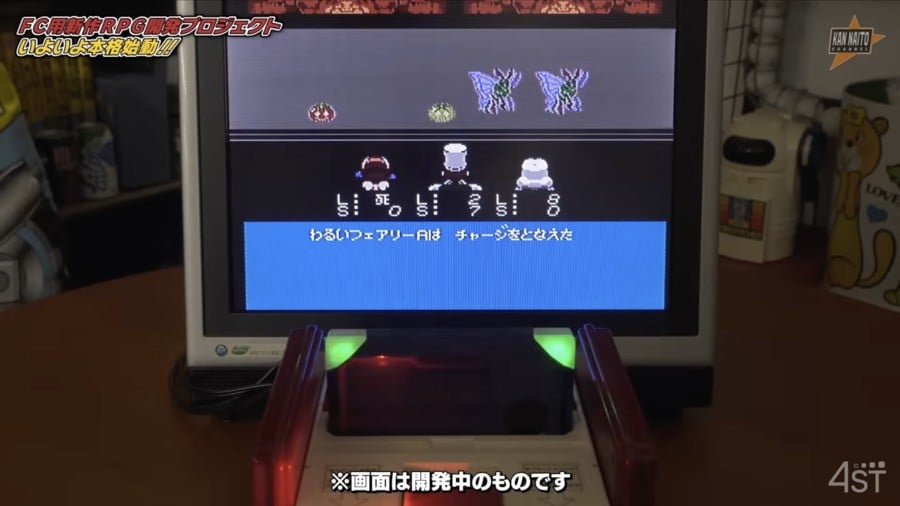
Kan Naito’s choice to develop Lady Stalker 2D for the NES/Famicom in the modern era is a bold statement, reflecting both a passion for retro gaming and a commitment to preserving the tactile and experiential aspects of classic console play. Developing for an 8-bit system in the 21st century presents unique challenges and opportunities. It necessitates a deep understanding of hardware limitations, requiring developers to be exceptionally creative within strict technical constraints. This often leads to highly optimized, ingeniously designed games that maximize every pixel and every byte of memory.
Naito’s project is not merely a nostalgic rehash; it promises innovative features that blend classic sensibilities with modern ingenuity. One of the most intriguing aspects announced is that the Lady Stalker 2D cartridge itself will feature LEDs that illuminate in time with on-screen commands. This physical interaction adds a novel dimension to the gameplay, transforming the cartridge from a passive data holder into an active participant in the gaming experience. Such a feature enhances immersion and provides a unique aesthetic that harks back to the experimental hardware designs of the 80s and 90s, while also pushing the boundaries of what a modern retro game can offer.
Furthermore, the announcement that a Famicom-compatible console is also under development suggests a broader vision for this project. This could imply a dedicated hardware solution to play Lady Stalker 2D and potentially other future 8-bit titles, ensuring optimal compatibility and an authentic experience for players who may not own original Famicom hardware. This dual approach – developing a game for an old system while also considering new hardware to play it – positions Naito’s endeavor as a significant player in the burgeoning retro gaming hardware and software scene. It caters to both purists and those looking for accessible ways to enjoy classic-style games.
The Modern Retro Gaming Landscape and Crowdfunding
The announcement of Lady Stalker 2D comes at a time when the retro gaming market is experiencing a significant resurgence. There is a growing appetite among players for new games developed for old consoles, driven by nostalgia, a desire for simpler gameplay mechanics, and an appreciation for the artistry and technical ingenuity of earlier generations of games. Developers like Naito are tapping into this market, recognizing the enduring appeal of platforms like the NES/Famicom.
To fund this ambitious project, a crowdfunding campaign is planned for later this year. Crowdfunding has become an indispensable tool for independent developers, especially those working on niche or retro-focused projects. It allows creators to bypass traditional publishers and directly engage with their audience, building a community around the game even before its release. For Lady Stalker 2D, a crowdfunding campaign will not only secure the necessary financial resources but also gauge public interest, gather feedback, and foster a sense of collective ownership among its backers. Given the legacy of the developers involved and the unique nature of the project, the campaign is likely to attract considerable attention from retro gaming enthusiasts, fans of classic RPGs, and those who appreciate the historical significance of the creators.
The success of similar crowdfunding initiatives for retro games demonstrates a robust market. Projects like Tanglewood for the Sega Genesis or Xeno Crisis for the Mega Drive/Neo Geo have proven that a dedicated audience exists, willing to support high-quality, newly developed games for vintage hardware. Lady Stalker 2D, with its unique blend of storied lineage, a heartfelt tribute, and innovative features, is well-positioned to resonate deeply within this community.
Broader Implications and Anticipation

The development of Lady Stalker 2D transcends the simple creation of a new game. It represents a multifaceted cultural and historical event within the gaming world. Firstly, it stands as a profound and tangible tribute to Yoshitaka Tamaki, ensuring that his creative legacy continues to thrive even after his passing. By giving life to his previously unused character designs, Kan Naito is offering a unique form of artistic resurrection, allowing fans to connect with Tamaki’s work in a new and meaningful way.
Secondly, the project signifies a powerful return to the roots of console RPGs. In an era dominated by hyper-realistic graphics and complex open worlds, Lady Stalker 2D‘s commitment to the 8-bit aesthetic and gameplay principles is a refreshing counter-narrative. It reminds us of the power of imagination and clever design to create compelling experiences within technological constraints. This focus on core gameplay, strategic depth, and engaging narratives, characteristic of the Famicom era, will likely appeal to both seasoned retro gamers and younger audiences curious about the foundations of modern gaming.
Finally, the innovative cartridge features and the potential development of a dedicated Famicom-compatible console highlight a forward-thinking approach to retro gaming. It’s not just about replicating the past but enriching it with new ideas and accessible hardware solutions. This project could set a new precedent for how legacy developers and artists can continue to contribute to the industry, demonstrating that creativity knows no bounds of time or technology. As the crowdfunding campaign approaches, the gaming community watches with keen anticipation for Lady Stalker 2D, a project poised to honor a legend, revive a classic, and perhaps, redefine what a "new" game truly means in the 21st century.