Cecilia Chamidah Nur
Frédérick Raynal, a luminary in the video game industry widely recognized for his pioneering work on seminal titles such as Alone in the Dark and Little Big Adventure, is poised to make a significant return to the retro gaming scene. Raynal has announced a new game for the iconic Sega Genesis/Mega Drive console, a modernized remake of his 1988 PC classic, PopCorn. This ambitious project, which includes a brand-new two-player ‘Duel’ mode and a custom-designed peripheral known as the PopCorn Spinner, is set to be funded via a Kickstarter campaign launched today, marking a unique blend of gaming history, personal tribute, and hardware innovation.
A Return to Roots: Frédérick Raynal’s Enduring Legacy
Frédérick Raynal’s career trajectory in video games spans over four decades, commencing with Laser on the Sinclair ZX81 in 1979. His early contributions laid groundwork for genres that would define subsequent generations of gaming. Alone in the Dark, released in 1992, is frequently cited as one of the progenitors of the survival horror genre, influencing titles like Resident Evil. His later work on Little Big Adventure (1994) showcased his versatility, delivering a beloved action-adventure experience. Throughout his career, Raynal has demonstrated a consistent drive for innovation, from the atmospheric dread of Alone in the Dark to the whimsical charm of Soul Bubbles (2008) and the intricate design of 2Dark (2017). His most recent venture, Skew for the PlayDate handheld, further underscored his commitment to exploring diverse platforms and creative challenges. The decision to revisit a 1988 title for a 1988 console speaks volumes about his connection to gaming’s foundational era and the enduring appeal of its technological constraints and creative freedoms.
PopCorn Reimagined: From PC Niche to Genesis Revival
The game at the heart of this new endeavor is a remake of Raynal’s 1988 PC title, PopCorn. In the late 1980s, the burgeoning PC gaming market saw a proliferation of arcade-style games, and brick-breakers like PopCorn were popular for their simple yet addictive gameplay loops. These titles often involved controlling a paddle at the bottom of the screen to deflect a ball, breaking bricks arranged above. While seemingly straightforward, the genre demanded precision, timing, and often, quick reflexes. Classic examples like Arkanoid (1986) and Breakout (1976) defined the genre, and PopCorn contributed to this legacy on early personal computers.
Raynal’s journey to adapt PopCorn for the Sega Genesis/Mega Drive began under poignant circumstances. He recounted to Time Extension how a conversation with his friend, David Mekersa from GameCodeur.fr, ignited the project. Mekersa, known for writing books on programming, sought an old game suitable for a C programming course for the Mega Drive using SGDK (Sega Genesis Development Kit). "I immediately thought of Popcorn, a brick-breaker I created in 1988, which was perfect for a console released the same year!" Raynal explained, highlighting the synchronicity. He held a special affection for that era and the collaborative spirit shared with Christophe Lacaze during the original game’s creation.
The project initially served a didactic purpose, allowing Raynal to adapt the game with progressive steps, starting with basic paddle and ball mechanics, then adding bonuses, monsters, and other elements. This methodical approach facilitated a clear learning path for aspiring programmers. Tragically, David Mekersa fell ill and passed away before the adaptation was complete. Raynal, deeply affected by the loss, made the decision to see the project through as a heartfelt tribute to his friend. This personal connection imbues the PopCorn remake with a profound emotional layer, transforming it from a mere technical exercise into a memorial. Mekersa’s work with GameCodeur.fr underscores his commitment to education in programming, a legacy that this game indirectly honors by its very genesis.
The PopCorn Spinner: A Custom Peripheral for Enhanced Gameplay
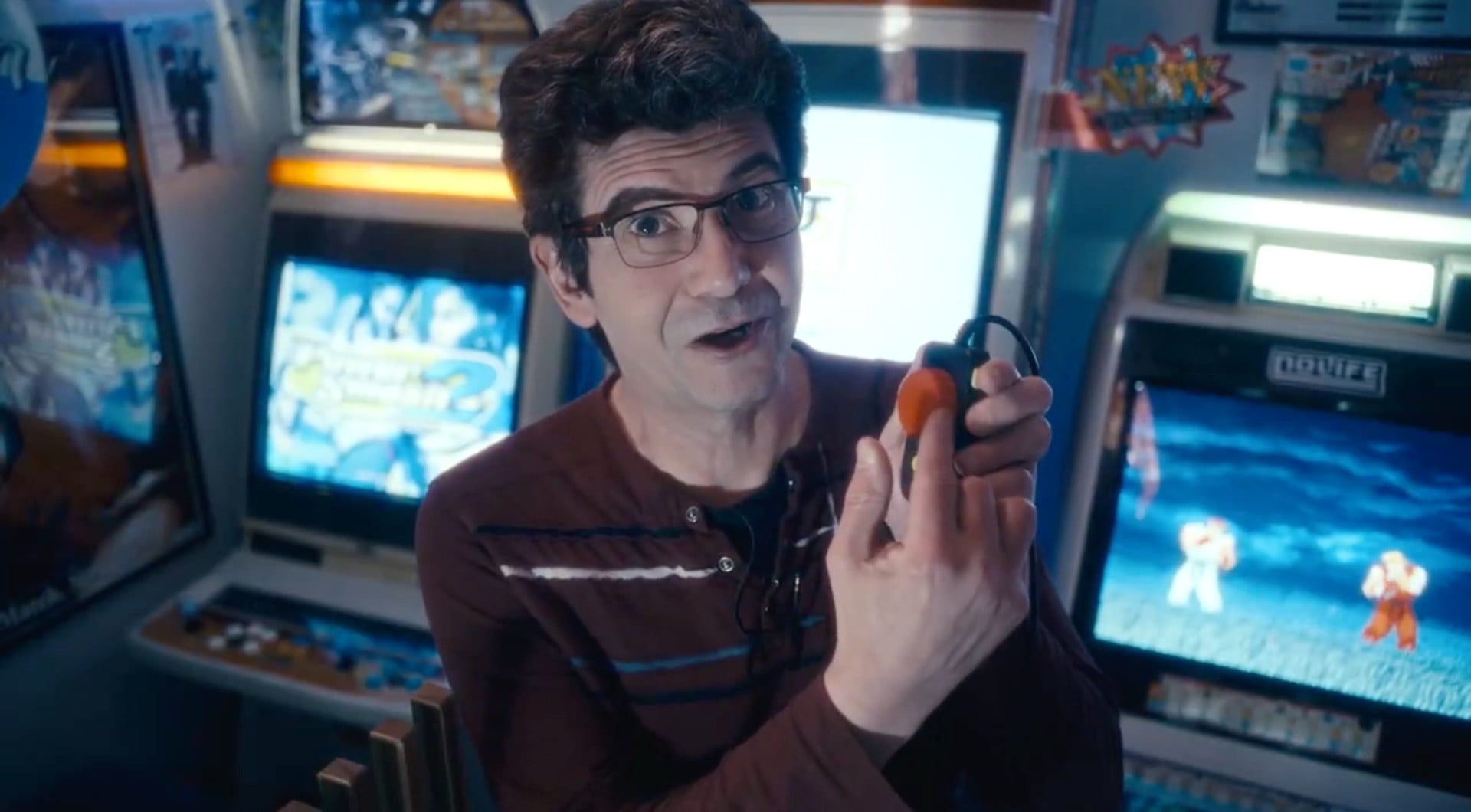
A pivotal element of this new release is the PopCorn Spinner, an innovative peripheral designed specifically for the Sega Genesis/Mega Drive. Raynal’s decision to develop a custom controller stemmed from a practical observation about the brick-breaker genre. He noted that traditional joypads are not ideal for these games, requiring precise, continuous horizontal movement that a D-pad or analog stick often struggles to provide with the same fluidity as a spinner. "Brick-breakers aren’t very fun to play with a joypad, which is why there was only ever one on the Mega Drive," he observed. Recognizing the absence of dedicated spinner controllers for the Genesis and the rarity of compatible mice, Raynal took it upon himself to engineer a solution.
His journey into hardware development involved designing the electronic circuit, a 3D-printed case, and firmware compatible with the Mega Drive’s mouse protocol. The result was transformative. "Suddenly, the gameplay became incredibly fun!" he stated, emphasizing the immediate improvement in player experience. This success, coupled with the Mega Drive’s dual controller ports, inspired a new game mode: Popcorn DUEL. Envisioned as a remake of Pong, this two-player mode leverages two spinners, creating a competitive and engaging experience. The enthusiastic response from friends who tested it and subsequently requested their own spinners solidified Raynal’s conviction that this project had broader appeal and warranted a crowdfunding campaign.
The PopCorn Spinner represents a significant technical advancement for retro gaming peripherals. Unlike older paddle controllers, such as those for the Atari 2600, which rely on potentiometers offering limited rotation (typically 270 degrees), Raynal’s design incorporates modern Hall effect sensors. These sensors, combined with a magnet, allow for "extremely precise and frictionless rotation detection, with a resolution of 4096 steps per turn." This provides "infinite rotation," a feature crucial for the authentic arcade experience that Raynal sought to replicate. He meticulously researched the Mega Drive mouse protocol and sourced an actual mouse for testing, overcoming significant technical hurdles. The compatibility with SGDK also ensures that other developers could potentially create new games that benefit from this unique controller, hinting at a potential ecosystem for the peripheral. This foresight opens the door for new interpretations of classic arcade genres like Asteroids, a possibility Raynal himself expressed eagerness to explore.
The Mechanics of the PopCorn Spinner: A Deep Dive
To understand the significance of the PopCorn Spinner, it is essential to delve into the technical specifications that distinguish it from conventional controllers. Traditional potentiometers, as found in many early paddle controllers, rely on variable resistors to detect rotational input. While effective for simple, limited-range movements, they suffer from mechanical wear, potential for ‘dead zones,’ and, crucially for arcade-style games, a finite range of motion. This limitation means a player might hit a rotational stop mid-game, disrupting immersion and control.
The PopCorn Spinner’s utilization of Hall effect sensors fundamentally bypasses these issues. A Hall effect sensor measures the magnitude and direction of a magnetic field. By integrating a magnet into the rotating mechanism, the sensor can detect changes in the magnetic field as the spinner turns. This method offers several advantages:
- Infinite Rotation: There are no mechanical stops, allowing for continuous, unhindered rotation, mirroring the experience of arcade cabinet spinners. This is vital for games like PopCorn or Arkanoid, where precise, rapid, and often continuous paddle movement is essential.
- High Precision: With a resolution of 4096 steps per turn, the spinner offers granular control far exceeding that of a typical analog stick or D-pad. This level of fidelity translates directly to more accurate gameplay, especially for tasks requiring subtle adjustments.
- Durability and Longevity: As Hall effect sensors are non-contact devices, they are not subject to the same mechanical wear as potentiometers. This contributes to a longer lifespan and consistent performance, a crucial factor for a retro peripheral that users might cherish for years.
- Frictionless Operation: The absence of physical contact for sensing ensures a smooth, low-friction rotational experience, enhancing player comfort and responsiveness.
The compatibility with the Mega Drive mouse protocol is another stroke of ingenuity. Rather than attempting to create an entirely new input standard for the console, Raynal reverse-engineered the existing mouse protocol. This clever approach ensures that the PopCorn Spinner can be recognized and utilized by the Mega Drive system with minimal overhead, while also potentially opening avenues for compatibility with existing software that might support mouse input. The integration with SGDK further cements its potential, allowing a new generation of homebrew developers to easily incorporate spinner support into their own projects for the console.
Crowdfunding and the Retro Gaming Community
The decision to launch the PopCorn Spinner and PopCorn remake via Kickstarter aligns perfectly with the nature of the project and the robust retro gaming community. Crowdfunding platforms have become vital for niche projects, allowing creators to connect directly with their audience, gauge interest, and secure funding without traditional publishing routes. For a project involving both software and custom hardware for an older console, Kickstarter offers several advantages:
- Direct Community Engagement: It enables enthusiasts to directly support a project they believe in, fostering a sense of ownership and anticipation. The retro gaming community is known for its passion and willingness to back projects that preserve or enhance classic gaming experiences.
- Funding Hardware Development: Developing a custom peripheral is a capital-intensive endeavor, requiring investment in design, prototyping, manufacturing, and quality control. Kickstarter provides the necessary capital infusion to bring such a specialized product to market.
- Market Validation: The success of the campaign itself serves as a strong indicator of market demand for such a product, justifying the investment and demonstrating the viability of creating new hardware for legacy systems. Raynal’s experience with friends eagerly requesting spinners already provided anecdotal evidence of demand, which Kickstarter aims to quantify.
The retro gaming market itself has seen a significant resurgence in recent years. Driven by nostalgia, a desire for simpler gameplay mechanics, and the collectibility of vintage hardware, this segment of the gaming industry continues to thrive. Reports indicate a growing market for retro consoles, games, and accessories, with many fans actively seeking authentic experiences or modern interpretations of beloved classics. Projects like the PopCorn Spinner tap directly into this vibrant ecosystem, offering both a new game and an innovative way to interact with an iconic console.
Broader Implications and Future Horizons
Frédérick Raynal’s latest undertaking carries implications beyond the immediate release of PopCorn and its accompanying spinner. It signifies a broader trend in the video game industry where seasoned developers are revisiting their origins or exploring new avenues within the retro gaming space. This movement contributes significantly to game preservation, ensures the continued relevance of classic platforms, and inspires innovation within a community dedicated to celebrating gaming history.
The PopCorn Spinner, in particular, has the potential to become a catalyst for future development. Raynal’s mention of an Asteroids-style game leveraging the spinner’s infinite rotation capability is not merely a passing thought but a testament to the peripheral’s versatility. Should the Kickstarter prove successful, it could pave the way for other developers, both established and homebrew, to design new titles or adapt existing ones that benefit from precise rotary input on the Mega Drive. This could effectively expand the library of games playable on the console in new and exciting ways, enriching the retro gaming experience.
Furthermore, this project underscores the enduring creative spirit of developers like Frédérick Raynal. Even after decades in an industry that constantly pushes technological boundaries, the allure of working within the constraints of older hardware, and the challenge of innovating within those limits, remains powerful. It demonstrates that creativity is not solely tied to cutting-edge graphics or processing power but thrives in the ingenious application of design principles and hardware solutions. The PopCorn remake and PopCorn Spinner are not just new products; they are a celebration of gaming’s past, a tribute to friendship, and a hopeful glimpse into the future possibilities of retro gaming innovation.