Cecilia Chamidah Nur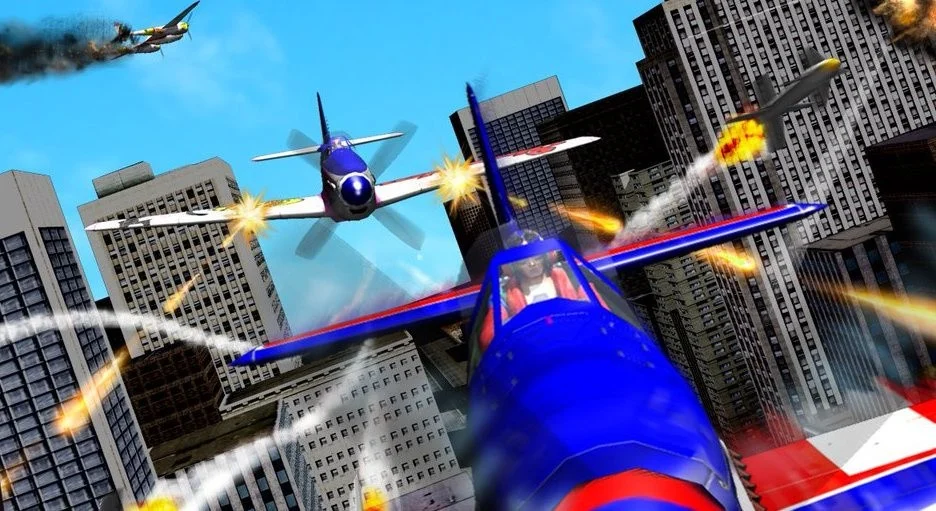
In a significant development for retro gaming enthusiasts and preservationists, Propeller Arena, an unreleased aerial combat title developed by Sega AM2 and spearheaded by legendary designer Yu Suzuki, has been brought back online for testing, nearly 25 years after its initial cancellation. This resurrection, facilitated by the dedicated efforts behind the Flycast emulator and its DCNet feature, allows players to experience the game’s long-dormant online component, a functionality that was never officially launched. The news, initially reported by Sega Online, marks a pivotal moment for a game once lost to the annals of history, now finding a new lease on life through community-driven initiatives.
A Quarter-Century in Limbo: Propeller Arena’s Online Revival
The core of this exciting news revolves around the restoration of Propeller Arena‘s online multiplayer capabilities. For decades, the game existed solely as an offline experience for those fortunate enough to acquire a leaked development build. The online servers, which were never officially activated, have now been emulated and made accessible through the Flycast emulator, specifically leveraging its DCNet functionality. This breakthrough enables modern players to engage in the competitive dogfights that Yu Suzuki and Sega AM2 originally envisioned.
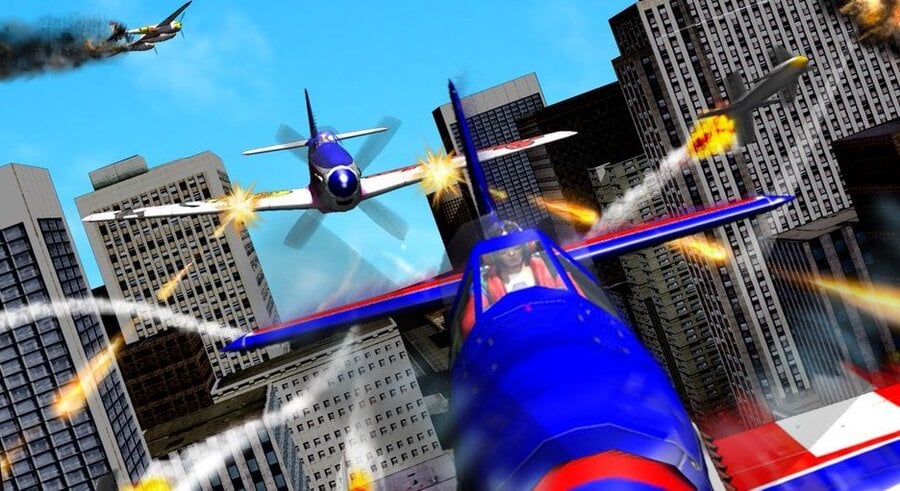
Propeller Arena is an aerial combat game designed for the Sega Dreamcast, placing players in fast-paced, deathmatch-style tournaments above diverse environments, ranging from sprawling urban centers to picturesque natural landscapes. Its design emphasized quick reflexes and strategic maneuvering, a hallmark of Sega AM2’s arcade heritage. The game was poised for a 2001 release, a critical period for the Dreamcast, which was struggling in the console market against newer competitors. However, despite its development being largely complete, the title faced an indefinite postponement and eventual cancellation following the tragic events of September 11, 2001.
The Genesis of an Unreleased Gem: Yu Suzuki’s Vision and Sega AM2’s Craftsmanship
Propeller Arena carries the distinguished pedigree of Sega AM2, one of Sega’s most renowned internal development studios, and the creative oversight of Yu Suzuki. Suzuki, a luminary in the video game industry, is celebrated for pioneering 3D graphics and arcade gaming with seminal titles such as Virtua Fighter, Daytona USA, Out Run, and the groundbreaking Shenmue series. His involvement typically signaled a commitment to innovative gameplay, cutting-edge graphics, and a polished user experience.
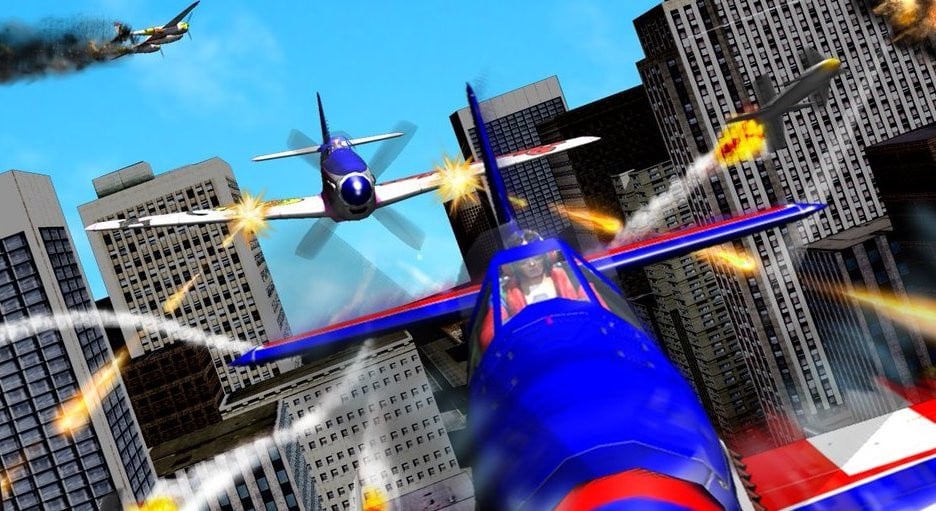
Sega AM2, under Suzuki’s guidance, had a reputation for pushing technological boundaries, particularly in the arcade space before transitioning to console development. Their games were often characterized by their smooth performance, engaging mechanics, and competitive depth. Propeller Arena, while never officially released, was intended to embody these qualities, offering an accessible yet deep aerial combat experience that leveraged the Dreamcast’s powerful hardware. The game’s focus on fast-paced, quick-match combat was a deliberate design choice, aiming to capture the essence of arcade excitement within a home console environment. The diverse environments, ranging from coastal cities to arid canyons, were designed not merely as backdrops but as interactive arenas that influenced gameplay strategies, offering cover, tactical positions, and varied flight paths. The unreleased status of the game has long fueled speculation among fans about its potential impact, had it seen the light of day, especially given the Dreamcast’s strong legacy in online multiplayer.
The Shadow of 9/11: Why Propeller Arena Was Grounded
The cancellation of Propeller Arena is a poignant example of how real-world events can profoundly impact the entertainment industry. Following the devastating terrorist attacks on September 11, 2001, in the United States, a pervasive sense of national trauma and sensitivity swept across the globe. Media outlets, entertainment companies, and the public became acutely aware of imagery that could be perceived as insensitive or exploitative in the wake of such a tragedy.
Sega of America, the primary decision-maker for the Western release, issued a statement at the time explaining the indefinite postponement: "Though the game content does not deal with terrorism in any way, it is possible for a determined individual to deliberately play the game in a manner that generates images similar to those we have seen on the news." This cautious stance reflected a broader industry trend where various forms of media, including films, television shows, and other video games, were delayed, edited, or re-evaluated to avoid any potential association with the attacks. For instance, several movies with scenes depicting prominent skylines or explosions were either postponed or had specific sequences altered. The release of Grand Theft Auto III, which launched shortly after 9/11, also underwent minor content adjustments.
While Propeller Arena was an arcade-style dogfighting game, featuring fictional planes and futuristic settings, the concern was that players could, intentionally or unintentionally, create scenarios involving aircraft flying into or around cityscapes that might evoke the horrific imagery of the 9/11 attacks. Given the Dreamcast’s already precarious market position in 2001—Sega had announced its withdrawal from the console hardware business earlier that year, transitioning to a third-party software developer—the company was highly sensitive to public perception. A controversial release, regardless of its artistic intent, could have been disastrous for their reputation during this crucial transition period. Industry analysts at the time largely understood Sega’s decision as a pragmatic one, prioritizing corporate responsibility and public image over the release of a single title, even one with a notable pedigree. The financial implications of a potential backlash were deemed too high, particularly for a company striving to redefine its identity in the gaming landscape.
From Digital Dust to Playable Build: The 2013 Leak
Despite its official cancellation, Propeller Arena did not entirely vanish. In 2013, a development build of the game eventually found its way onto the internet, leaked by unknown sources. This leak was a significant event for Dreamcast collectors and preservationists, as it provided the first widespread opportunity for players to experience the game’s offline features. The leaked build allowed enthusiasts to explore the single-player campaigns, practice modes, and local multiplayer options that Sega AM2 had completed.

The phenomenon of leaked development builds is a double-edged sword in the gaming world. On one hand, it raises concerns about intellectual property and the security of game development. On the other, it serves as an invaluable resource for game preservation, offering a glimpse into titles that were never officially released, or into early versions of games that underwent significant changes. For Propeller Arena, the leak was the primary means by which the game’s existence and a portion of its gameplay could be documented and experienced by the public. It allowed fans to assess the quality of the game, understand its mechanics, and appreciate the work that had gone into it, even in its incomplete state. However, the online components of the game, designed to connect players over Sega’s now-defunct Dreamarena network, remained inaccessible, leaving a significant part of the game’s intended experience unrealized.
Resurrecting Online Dreams: The Role of Flycast and DCNet
The recent breakthrough in bringing Propeller Arena‘s online mode back to life is largely attributable to the advancements in Dreamcast emulation, specifically through the Flycast emulator and its integrated DCNet feature. Flycast is a highly regarded, open-source Dreamcast emulator known for its accuracy and compatibility across various platforms. Its continuous development by dedicated programmers has enabled increasingly faithful reproductions of Dreamcast titles.
DCNet, a feature within Flycast, represents a sophisticated effort to re-implement the Dreamcast’s online capabilities. The original Dreamcast online infrastructure, which relied on dial-up modems and Sega’s proprietary Dreamarena or SegaNet services, was officially shut down years ago. Recreating this complex network environment requires reverse-engineering protocols, simulating server functions, and patching game code to redirect network traffic to fan-run servers. The lead developer behind this particular effort, known as "FlyingHead," has been instrumental in this undertaking. As FlyingHead notes, the online component for Propeller Arena is currently in a testing phase. While it is "somewhat playable," there are acknowledged "issues to fix," most notably a "network error" that players currently encounter on the results screen after a match. These minor glitches are common in the early stages of such complex emulation projects and are indicative of the ongoing development and refinement process. The ability to even connect and play, despite these issues, is a testament to the dedication and technical prowess of the emulation community.
Community Mobilization: Dogfights in the Digital Ether
The revival of Propeller Arena‘s online mode has galvanized the Dreamcast emulation community. Enthusiasts are actively gathering on platforms like the Sega Online Discord server to coordinate matches, troubleshoot issues, and share their experiences. This communal effort is crucial for testing the stability of the online emulation, identifying bugs, and providing feedback to the developers. The Discord server has become a central hub for organizing six-player deathmatches, allowing players to fully experience the competitive intensity the game was designed for.
Footage of these newly possible online matches is now making its way onto video-sharing platforms. Notably, YouTuber "Elpannta satanito" has uploaded several videos showcasing full six-player rooms in action. These videos provide tangible evidence of the successful online revival, allowing a wider audience to witness Propeller Arena being played in its intended multiplayer format for the first time in nearly a quarter-century. The footage reveals fast-paced aerial combat, a variety of aircraft, and the diverse environments that characterize the game. Beyond the technical achievement, these videos highlight the passion and persistence of a fan base committed to preserving and experiencing gaming history. The active participation of the community in testing and documenting these efforts underscores the collaborative nature of modern game preservation and retro gaming.
Broader Implications: Preservation, Legacy, and the Enduring Spirit of the Dreamcast
The successful online revival of Propeller Arena carries significant implications for game preservation, the legacy of the Dreamcast, and the broader retro gaming movement.
Firstly, it underscores the critical role of community-driven preservation efforts in safeguarding video game history. As commercial entities often lack the incentive or resources to maintain defunct online services for older titles, the onus falls on dedicated fans and independent developers. Projects like Flycast and DCNet demonstrate that even highly complex online functionalities, once thought lost forever, can be meticulously recreated and brought back to life. This effort ensures that future generations can experience games as they were originally intended, offering a more complete historical context.
Secondly, this event further solidifies the enduring appeal and cult status of the Sega Dreamcast. Despite its commercial struggles and relatively short lifespan (1998-2001 globally), the Dreamcast remains beloved for its innovative hardware, its pioneering role in console online gaming, and its unique library of titles. The resurrection of Propeller Arena‘s online mode adds another layer to the console’s historical significance, demonstrating its potential for robust multiplayer experiences that were ahead of their time. It also highlights the sheer volume of quality content that Sega AM2 produced, even for games that never saw official release.
Thirdly, the success with Propeller Arena opens the door for similar efforts with other unreleased or online-defunct Dreamcast titles. There are numerous games from that era whose online components have been lost, and this achievement provides a blueprint and renewed hope for their potential restoration. It exemplifies how modern emulation technology, combined with dedicated community efforts, can transcend the limitations of original hardware and network infrastructure, creating virtual archives that are not just playable but fully functional. This ongoing work is vital as digital game preservation continues to be a challenge, particularly for games with online components that rely on proprietary servers.
The ability for players to now engage in six-player deathmatches within Propeller Arena is not merely a nostalgic indulgence; it represents a triumph of digital archaeology and collaborative passion. It breathes new life into a game that was tragically grounded, allowing it to finally soar in the digital skies it was always meant to inhabit.
A Timeline of Propeller Arena’s Journey
- Circa 1999-2000: Development of Propeller Arena by Sega AM2 begins under Yu Suzuki for the Sega Dreamcast.
- Early 2001: Development is completed, and the game is eyed for a release later in the year.
- September 11, 2001: Terrorist attacks in the United States occur, leading to heightened sensitivities regarding media content.
- September 2001 (Post-9/11): Sega of America indefinitely postpones Propeller Arena‘s release, citing concerns about potential imagery resemblance to the real-world tragedy. The game is effectively canceled.
- 2013: A development build of Propeller Arena is leaked online, allowing enthusiasts to play the game’s offline modes for the first time.
- Present Day (Reported by Sega Online): Thanks to the efforts of the Flycast emulator and its DCNet feature, Propeller Arena‘s online multiplayer component is resurrected and made available for public testing, nearly 25 years after its cancellation. Players begin coordinating online matches and sharing footage.