Farhan hamdan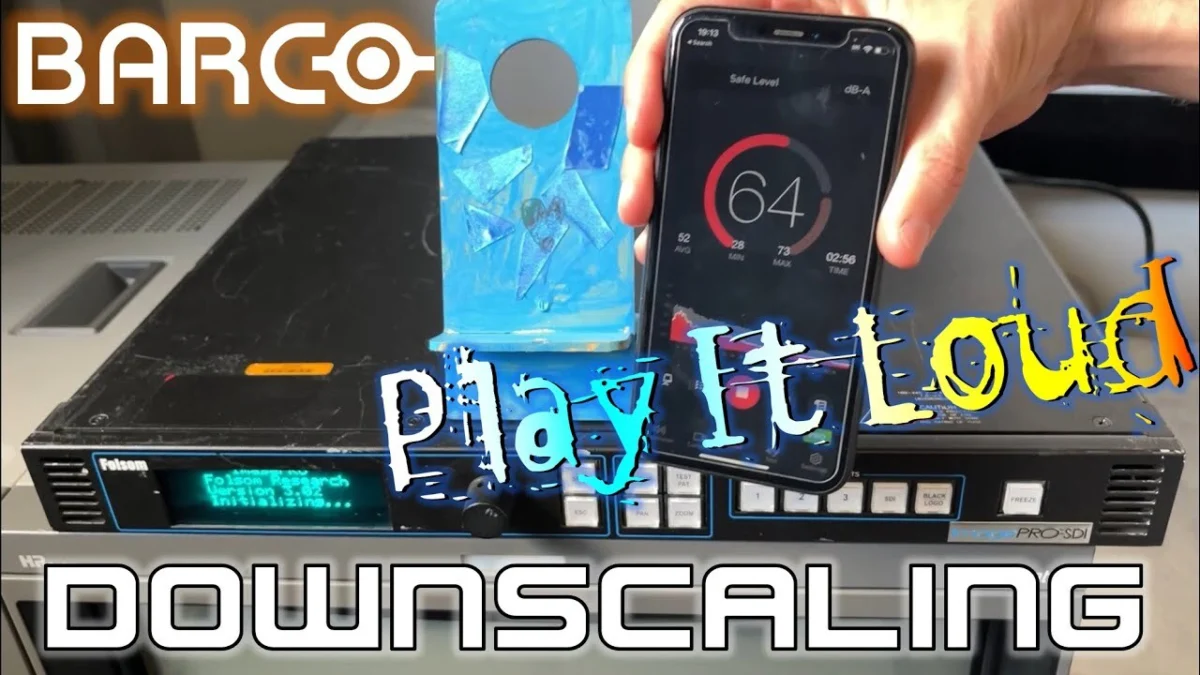
The Barco Folsom Research ImagePRO, a robust presentation scaler originally designed for high-end professional audiovisual environments, has recently garnered significant attention within the retro gaming community for its unexpected capability to output a native 240p signal. This discovery, championed by a dedicated downscaling enthusiast known as KTown on the prominent retro gaming forum shmups.system11.org, unlocks a new avenue for vintage console users seeking optimal display fidelity on classic Cathode Ray Tube (CRT) televisions. The ImagePRO, characterized by its formidable full-rack length metal enclosure, represents a compelling, albeit quirky, solution in the ongoing quest to perfectly render retro game aesthetics.
The Quest for 240p: A Core Challenge in Retro Gaming
For decades, video game consoles from the 8-bit, 16-bit, and even some 32-bit eras predominantly outputted a 240p signal, a progressive scan resolution that provided sharp, artifact-free images on contemporary CRT televisions. Unlike the 480i interlaced signal, which became standard for later consoles and broadcast television, 240p draws all lines of an image sequentially in a single pass, eliminating the flickering and combing artifacts often associated with interlaced signals. Modern displays, almost exclusively progressive scan and high-definition, struggle to correctly interpret and display 240p, often treating it as 480i, leading to visual degradation. This fundamental incompatibility has driven a fervent community effort to find devices capable of converting modern or even 480i/480p signals back into a native 240p format, particularly for enthusiasts dedicated to preserving the authentic visual experience on CRTs.
The discovery of the Barco Folsom Research ImagePRO’s 240p output capability is therefore a significant development. While numerous professional video scalers exist, few are known to reliably generate a true 240p progressive output, especially from a wide range of input signals. The ImagePRO’s entry into this niche market provides another powerful tool for those committed to achieving pixel-perfect retro visuals.
Technical Overview of the Barco Folsom Research ImagePRO
Manufactured by Barco, a global leader in professional visualization technologies, the ImagePRO series was designed as a versatile presentation switcher and scaler for demanding live event, corporate, and broadcast applications. Its primary function was to seamlessly integrate and scale various video sources to a desired output resolution, ensuring compatibility across diverse display technologies. The device boasts an extensive array of analog video input/output (I/O) options, reflecting its professional heritage and the video standards prevalent during its original market tenure. These include support for composite video, S-Video, component video, and RGB signals, accessible via both BNC and HD15 (VGA-style) connectors. High-definition models further include a DVI input, which can be adapted for HDMI sources using a passthrough adapter, thereby extending its utility to more modern digital signals.

However, a key characteristic of the ImagePRO, pertinent to its repurposing, is its complete lack of integrated audio handling. This necessitates external solutions for audio extraction, such as an HDMI to VGA Digital-to-Analog Converter (DAC) for digital sources, adding an extra layer of complexity to setup for comprehensive retro gaming rigs. The robust metal enclosure, designed for rack-mounting in controlled server or equipment rooms, hints at its industrial-grade build quality and intended environment.
The KTown Discovery and Community Validation
The pivotal finding of the ImagePRO’s 240p capability was initially shared by KTown on the shmups.system11.org forum, a hub for discussions on arcade and console shoot ’em ups and related technical aspects. This community is well-known for its deep dives into video hardware, signal processing, and display technology, often unearthing hidden functionalities in professional equipment. KTown’s detailed investigation and subsequent documentation, including a linked YouTube video and forum thread, provided the necessary groundwork for other enthusiasts to replicate and validate the discovery.
The process of enabling 240p output is not entirely straightforward, requiring the ImagePRO to run the latest firmware version. Firmware upgrades on these older professional units typically involve an RS232 serial connection, a common interface for system management and updates in enterprise hardware. This necessity underscores the specialized nature of utilizing such devices, often requiring familiarity with legacy IT and AV protocols. Once the firmware is updated, specific adjustments to the vertical timing parameters are crucial. The vertical position must first be lowered before the scaler permits the ‘V Active’ setting to be reduced to 240 lines. An example configuration, generating a 16.02kHz, 59.99Hz output, involves a precise sequence of adjustments to these vertical timings. This meticulous process highlights the technical acumen required by the retro gaming community to harness the full potential of such devices.
Addressing Operational Quirks: Noise and Cooling
One of the most immediate challenges identified by users repurposing the ImagePRO for home use is its significant fan noise. Designed for server racks where ambient noise levels are rarely a concern, the unit employs three internal 12V 0.5W fans. These fans, while effective at cooling in an enclosed professional environment, produce an "excessive" amount of noise in a typical living room setting, making them impractical for many enthusiasts.
Fortunately, the community has already devised an effective solution: a fan modification. The stock fans can be replaced with quieter alternatives, such as Noctua NF-A4x10 FLX fans. This modification typically only requires basic power and ground connections, making it accessible to individuals with fundamental electronics knowledge. It is noted that 40x10mm replacement fans may be slightly taller than the original units, potentially requiring a single screw for fixation instead of two. However, this minor fitment alteration does not appear to compromise stability or thermal performance for typical home use. This fan mod is a classic example of the retro gaming community adapting professional gear to suit their specific domestic needs, prioritizing user experience alongside technical performance.

Connectivity, Signal Handling, and Configuration Annoyances
The ImagePRO offers versatile output options for its custom timings, supporting RGB (with HV/C-Sync/SoG) or YPbPr via HD15 or BNC connectors. This broad compatibility ensures it can interface with a wide range of professional and consumer CRTs. However, a limitation arises with its composite and S-Video outputs, which are "locked" to a 480i output only, preventing them from utilizing the custom 240p progressive resolutions. This constraint means that the highest quality RGB or component inputs are necessary to leverage the device’s unique downscaling capabilities.
A notable operational quirk that impacts user convenience is the ImagePRO’s tendency to clear any previously configured custom resolution when switching to another output resolution (e.g., the built-in 480i NTSC output). This necessitates re-entering the custom timing parameters and re-adjusting the output size every time a user wishes to return to 240p. While the process is relatively quick, taking approximately one minute, it represents a significant annoyance for frequent resolution switchers and underscores the device’s design philosophy, which likely prioritized fixed, pre-configured settings for specific professional presentations rather than dynamic, on-the-fly adjustments for diverse content.
Latency Considerations: "A New Lord of the Lag?"
Input latency is a critical factor for competitive retro gaming, where even a few milliseconds can impact gameplay. The ImagePRO’s latency performance is influenced by its Genlock settings, which manage the synchronization between input and output signals. When Genlock is set to "Input Video," the latency remains close to a single frame. However, this mode fixes the output refresh rate at 59.94Hz. If the input signal’s refresh rate deviates, visible screen tearing, similar to issues observed with other scalers like the Extron VSC 500/700/900 series, can occur.
To eliminate tearing and allow the output refresh rate to dynamically follow the input signal, the "Freerun" Genlock setting is recommended. In this configuration, latency measurements conducted with tools like the Time Sleuth indicate a range of 20ms to 37ms. This latency range applies universally, regardless of whether the output is 240p or 480i, or if the input resolution is up to 1080p. While not ideal for the most latency-sensitive applications, this performance places the ImagePRO in a similar category to other professional scalers, such as the Analog Way Tetra VIO, which are generally considered acceptable for many retro gaming scenarios. The trade-off between tear-free visuals and slightly increased latency is a decision point for individual users based on their priorities.
Advanced Image Control Features for Precise Calibration

Beyond its core scaling capabilities, the ImagePRO offers a robust suite of image positioning and scaling controls, demonstrating its professional-grade design. A particularly useful feature for downscaling content, especially integer-upscaled sources, is the ability to apply vertical adjustments both before and after the scaling process. The ‘Input Menu’ allows for adjustments to vertical field alignment before scaling, crucial for correctly aligning fields and ensuring proper blending when downscaling. Subsequently, the ‘Output Menu’ can be used to reposition the final processed image on the screen without affecting the underlying vertical field order. This dual-stage adjustment capability provides granular control, allowing enthusiasts to achieve perfectly aligned and centered images on their target displays.
Furthermore, the scaler includes multiple aspect ratio modes, zoom functionalities, and underscan options, offering comprehensive control over how the image is presented. These features empower users to fine-tune the display to compensate for various source resolutions, aspect ratios, and individual display characteristics, ensuring a tailored viewing experience.
Implications and Broader Impact on the Retro Gaming Community
The discovery of the Barco Folsom Research ImagePRO’s 240p capability is another testament to the ingenuity and persistence of the retro gaming community. It highlights a recurring theme: the repurposing of high-quality, often overlooked, professional AV equipment to solve niche problems in vintage media playback. These devices, once commanding significant prices in their original market, can often be acquired for a fraction of their cost on the secondary market, making sophisticated video processing accessible to a wider audience.
The introduction of the ImagePRO to the roster of viable downscaling solutions enriches the options available to enthusiasts. While devices like the Extron VSC series have long been popular, each scaler brings its own set of advantages and disadvantages. The ImagePRO’s strong I/O support, ability to downscale from high resolutions (up to 1080p) to native 240p/480i, smoothly blended output, and advanced dual-stage image controls are significant redeeming features. Its quirks, such as the loud fans (mitigated by mods), lack of audio handling, configuration resets, and moderate latency in tear-free modes, must be weighed against these benefits.
The ongoing documentation and sharing of these findings on platforms like shmups.system11.org contribute significantly to the collective knowledge base of the retro gaming world. Such community-driven research not only unearths new hardware solutions but also fosters a deeper understanding of video signal processing, empowering enthusiasts to build increasingly sophisticated and authentic retro gaming setups. The Barco Folsom Research ImagePRO, thanks to KTown’s diligent discovery, now firmly holds its place as another valuable, albeit specialized, tool in the arsenal of the modern retro gamer.