Ganda Hendra Perkasa
The murky world of intellectual property rights and digital preservation has been thrown into the spotlight by a protracted legal battle over Cookie’s Bustle, a peculiar and genre-defying computer game released by Japanese developer Rodik in 1999. For years, this cult favorite has languished in obscurity, not only due to its unique and complex nature but also due to aggressive and, as it has now been revealed, largely unsubstantiated copyright claims that have stifled its documentation and accessibility. The Video Game History Foundation (VGHF), a non-profit dedicated to preserving the legacy of video games, has emerged as a key player in challenging these claims, ultimately leading to a significant victory for creators and archival efforts.
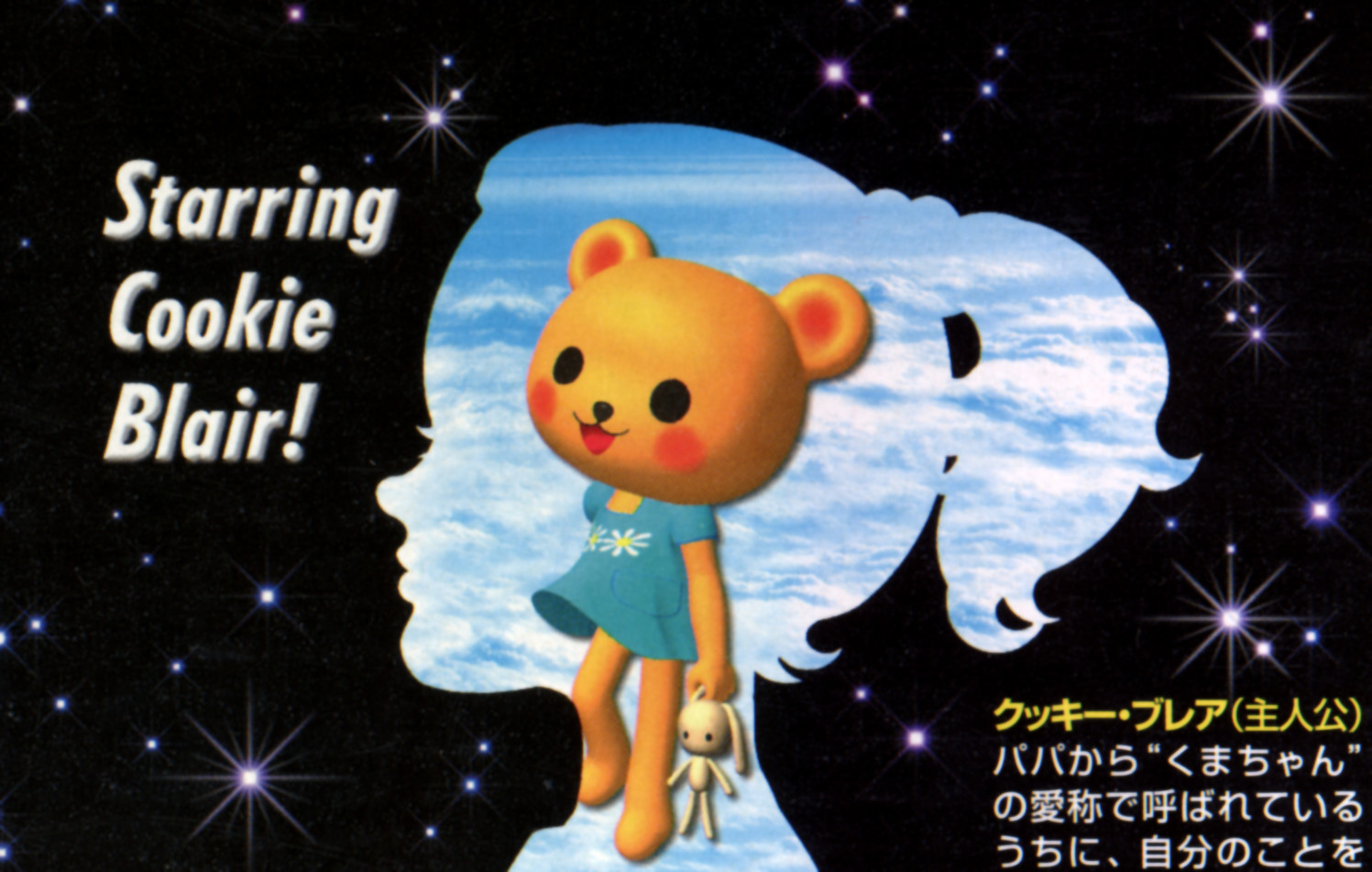
The game itself, Cookie’s Bustle, is described as an experience that defies easy categorization. Players assume the role of a five-year-old girl from New Jersey who embarks on an international sports competition that rapidly escalates into a complex web of civil war and intergalactic intrigue. This unusual narrative, coupled with its 1999 release date and subsequent disappearance from commercial availability, cemented its status as a rare and artistically unique title.
A Rare Find and a Digital Preservation Effort
The VGHF acquired a physical copy of Cookie’s Bustle through a donation from multimedia researcher Misty De Méo. Recognizing its historical and artistic significance, the foundation sought to preserve it within its collection. However, with the game being out of print for nearly three decades, direct access to the game itself for research purposes is restricted due to copyright considerations. To facilitate scholarly examination, the VGHF meticulously documented the game’s packaging and physical materials, making them available in their digital archive. Furthermore, a video demonstrating the gameplay, recorded by community member sebmal, has also been provided, offering valuable insights for researchers keen to understand this remarkable title.
The Emergence of a Copyright Troll
The VGHF’s efforts to document and preserve Cookie’s Bustle were met with a barrage of Digital Millennium Copyright Act (DMCA) takedown notices. These notices, originating from an individual identified as Brandon White, often operating under the corporate name Graceware, SL, and channeled through the trade association Ukie (the Association for UK Interactive Entertainment), targeted the VGHF’s legally sound use of materials related to the game. This was not an isolated incident; since 2022, numerous websites and content creators had been subjected to what the VGHF describes as "frivolous takedown requests" from Graceware. These requests encompassed a wide range of content, from "Let’s Play" videos and fan art to mere mentions of the game’s title.
Investigating the Claims: A Lack of Evidence
Undeterred by the disruptive nature of these takedowns, the VGHF, in conjunction with their legal counsel, Albert Sellars LLP, launched an investigation into the validity of Brandon White’s claims of ownership over Cookie’s Bustle. Their findings, as detailed in their report, indicate a profound lack of verifiable evidence. Brandon White, or the entity Graceware, SL, has consistently failed to produce legally meaningful proof of ownership for any enforceable rights to Cookie’s Bustle. This critical absence of evidence forms the crux of the VGHF’s challenge.
The Game’s Origins and "Orphan Work" Status
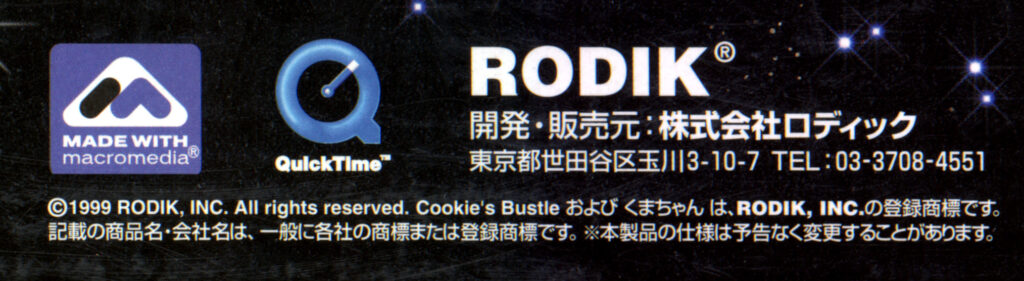
Cookie’s Bustle was officially published in 1999 by RODIK, Inc. The copyright attribution on the game’s packaging clearly states "©1999 RODIK, INC. All rights reserved." Crucially, the game was only published and copyrighted within Japan. To the best of the VGHF’s knowledge, the game has remained out of print since its initial release. The current status of RODIK, Inc. and the ownership of its intellectual property rights are unclear, leading to the classification of Cookie’s Bustle as an "orphan work." An orphan work is a copyrighted work where the copyright holder is either unknown or cannot be located. While this status often makes preservation and research challenging, it does not place the work in the public domain.
Brandon White and Graceware, SL: A Shadowy Claim
The claims of ownership over Cookie’s Bustle began to surface in 2021, with an individual operating as Brandon White initiating actions concerning the game’s intellectual property. These actions included asserting copyright ownership and filing trademark registrations, sometimes using his personal name and at other times through the corporate entity Graceware, SL. While no explicit connection between Brandon White and Graceware, SL is publicly stated, DMCA takedowns issued on behalf of Graceware have identified Brandon White as the copyright owner.
The identity and whereabouts of Brandon White remain largely unknown. Documentation cited by Graceware has placed him in Japan, while business information for Graceware, SL points to a purported address in Andorra. Investigations by the VGHF revealed that Graceware has virtually no discernible online or offline presence and has, to their knowledge, never produced or marketed any products or services. This suggests that Graceware, SL likely functions as a shell company for Brandon White. The VGHF expresses skepticism that RODIK, Inc., a studio known primarily for fortune-telling software based on traditional Japanese divination techniques, would have sold its intellectual property library to an obscure holding company with a nebulous operational base. However, they note that if such an acquisition did occur, proof of ownership should be readily available.
A Pattern of Spurious Takedown Notices
The primary output of Graceware, SL has been an overwhelming volume of DMCA takedown notices concerning Cookie’s Bustle. These notices have been characterized by their sheer number and indiscriminate nature. The VGHF has documented instances where Graceware has issued takedowns for:
- "Let’s Play" videos and gameplay streams: Content creators documenting their experience with the game.
- Fan art and derivative works: Creative expressions inspired by the game’s characters or themes.
- Fan translations and ROM hacks: Efforts by the community to make the game more accessible or playable.
- Archival descriptions and metadata: Even pages that merely describe the existence of the game and its ownership of a copy have been targeted.
- Discussions and news articles: Content that discusses or reports on the game, its history, or its accessibility.
The VGHF asserts that the majority of these takedown requests targeted content that would likely fall under fair use provisions, intended for commentary, criticism, or educational purposes. The speed and aggression of these takedowns were noted as unusual, even within the often-contentious video game community. Several YouTube channels have documented this behavior, with some videos featuring Cookie’s Bustle footage remaining accessible due to being the only available visual record of the game.
The INTEROCO "Registrations" and Trademark Applications: Legally Meaningless
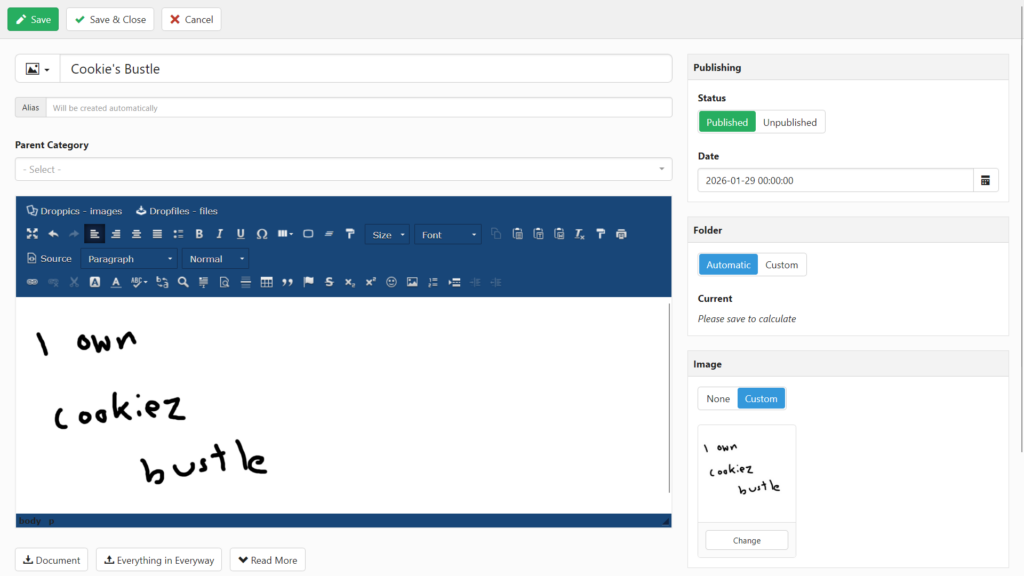
A cornerstone of Graceware’s takedown strategy has been a series of "registrations" filed by Brandon White through a German company called INTEROCO – "Copyright Office" in 2021. These filings claim ownership of various aspects of Cookie’s Bustle, including its source code, game concept, and character designs. However, the VGHF, in consultation with legal experts, clarifies that these are not legitimate copyright registrations and INTEROCO is not a governmental agency.
Copyright protection, under international treaties like the Berne Convention, is automatically granted upon creation of a work in signatory countries, including Japan, the United States, and the United Kingdom. While copyright registration can provide additional legal benefits, such as the ability to file an infringement lawsuit in the U.S., the INTEROCO filings do not confer any actual rights. INTEROCO is described as a private company offering a "full-automated electronic depository," essentially a digital equivalent of mailing oneself a letter for proof of mailing. The VGHF attempted to replicate the process, discovering that the system lacked oversight and that a third party attempted to charge a significant fee for registration, raising further questions about its legitimacy. The VGHF’s analysis concludes that these INTEROCO deposits are effectively meaningless as proof of ownership for a work that was already published and copyrighted.
Similarly, Graceware, SL has filed trademark applications in the United States for the name "Cookie’s Bustle" across various product categories, including computer games, apparel, and merchandise. These applications were filed under an "intent to use" basis, meaning the mark is not yet actively in commerce. As such, they are considered "pending" and do not grant Graceware any enforceable rights until actual use in trade is demonstrated. Furthermore, trademark rights are distinct from copyright. The original trademark for "Cookie’s Bustle" by RODIK, Inc. expired in 2001, and Graceware’s subsequent application does not grant them ownership of the game’s copyright.
Exploiting the DMCA Process Through Ukie and Web Capio
Graceware’s DMCA takedown notices have been facilitated by Ukie, the UK’s largest video game trade organization. Ukie offers its member companies, including Graceware, free takedown request services. This service is managed by Mumith (Mo) Ali, Ukie’s IP coordinator, and his company Web Capio (now operating as Obviously). The VGHF notes that membership in Ukie is relatively inexpensive, potentially allowing entities with minimal investment to leverage its legal services for broad takedown campaigns.
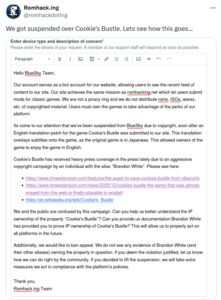
A critical aspect of this operation, as highlighted by the VGHF, is Web Capio’s advertised use of "automated takedown notices." Their marketing materials indicate that a significant portion of these notices do not require manual verification by a human. This automation, combined with the low barrier to entry for Ukie membership, appears to have enabled Graceware to issue a high volume of takedown requests with minimal scrutiny. The VGHF points out that this automated approach, particularly when devoid of legal review, could expose Web Capio and its clients to liability under U.S. copyright law, specifically 17 U.S.C. § 512(f), which addresses misrepresentations in takedown notices. Importantly, neither Brandon White nor Graceware has initiated any legal action beyond these takedown notices.
Targeting Web Hosts and a Lack of Response
The VGHF’s own experience with Graceware’s takedown notices reveals a strategic targeting of platforms and service providers rather than directly engaging with the content creators or archives themselves. In one instance, a DMCA notice was not sent to the VGHF or its archive host, Preservica, but rather to Vercel, the web host for the VGHF’s archive portal. This approach, the VGHF suggests, exploits the DMCA’s provision that platforms must remove content upon receiving a takedown notice to avoid potential liability. This tactic allows for the quick and quiet removal of material with less likelihood of immediate challenge.
However, this strategy proved less effective in the case of the VGHF. Vercel reportedly took the VGHF’s concerns seriously and did not comply with the takedown request. Subsequently, the VGHF was contacted directly by Web Capio, providing an opportunity to address Graceware’s claims directly. When asked by the VGHF’s counsel to provide proof of ownership linking Brandon White’s INTEROCO "registrations" to the original 1999 publication of Cookie’s Bustle, Graceware failed to respond. This lack of a substantive response, particularly when faced with direct inquiry regarding legal claims, is seen by the VGHF as indicative of bad faith.
Ukie’s Intervention and the Suspension of Services
Following the VGHF’s detailed presentation of their findings and concerns to Ukie CEO Nick Poole, the matter was escalated to Mumith Ali. Initially, Ali indicated that the takedowns were issued in good faith based on information provided by Graceware, asserting that Graceware had "verified ownership." However, after reviewing the VGHF’s evidence, Ali acknowledged the need for further clarification from Graceware.
The VGHF reports that after a month of no resolution, Ukie ultimately suspended DMCA takedown services for Graceware, SL. This action effectively halts Graceware’s ability to issue widespread, automated takedowns through Ukie’s platform, a significant blow to their campaign of disruption.

Implications: A Victory for Fair Use and Archival Efforts
The suspension of Ukie’s services for Graceware represents a major victory for the gaming community and the VGHF’s mission. It signals a potential end to what is described as a "rights-squatting campaign." For users and researchers, this means that fair uses of Cookie’s Bustle, such as gameplay clips, streams, commentary, documentation, and fan works, should now be able to exist online without the immediate threat of automated takedowns. While existing takedown notices will not be automatically restored, future content and re-uploads should be largely unaffected.
The VGHF acknowledges that the underlying issues, such as the misleading nature of INTEROCO’s services and the potential for abuse by automated takedown systems, remain unaddressed. However, they note that Web Capio has reportedly implemented additional measures to escalate counterclaims, which may offer some recourse for those facing similar situations in the future.
The Road Ahead: Vigilance and Awareness
While Graceware can no longer leverage Ukie’s services, the VGHF cautions that this may not entirely end their disruptive actions. Graceware could potentially seek alternative representatives for takedown notices or attempt to issue them independently, citing their unverified INTEROCO claims. The VGHF has stated that they have not ruled out legal action should they be harmed by future spurious takedown requests.
Furthermore, Graceware’s three outstanding trademark applications for "Cookie’s Bustle" remain pending. These applications, which have not yet been approved by the USPTO and are set to expire in April 2027, represent the only remotely plausible legal claim Graceware has to any rights associated with the game.

The VGHF emphasizes the importance of creators and users understanding their rights. They encourage individuals facing similar takedown notices to push back, reference their detailed report to debunk Graceware’s claims, and to be aware of the practical weaknesses within the DMCA process.
A Broader Fight for Video Game History
The VGHF views the struggle over Cookie’s Bustle as emblematic of a larger challenge facing the preservation of video game history. Their 2023 survey on the video game reissue market revealed that an estimated half of game and software titles released before 1995 have become orphan works due to inadequate documentation of ownership. Video games, often treated as ephemeral entertainment, are particularly vulnerable to this issue, more so than other cultural mediums. This vulnerability creates fertile ground for bad actors to distort historical records, spread misinformation about ownership, and impede the efforts of historians, documentarians, archivists, and individual researchers seeking to understand and celebrate the medium’s rich past. The VGHF’s stand against Graceware is thus a principled defense of the legal right to document out-of-print orphan games and to confront those who seek to exploit copyright law for nefarious purposes. The organization has affirmed that it has not complied with any of Graceware’s DMCA takedown notices and has not removed any material related to Cookie’s Bustle from its digital archive, a testament to their commitment to historical preservation.