Chalid Lutfie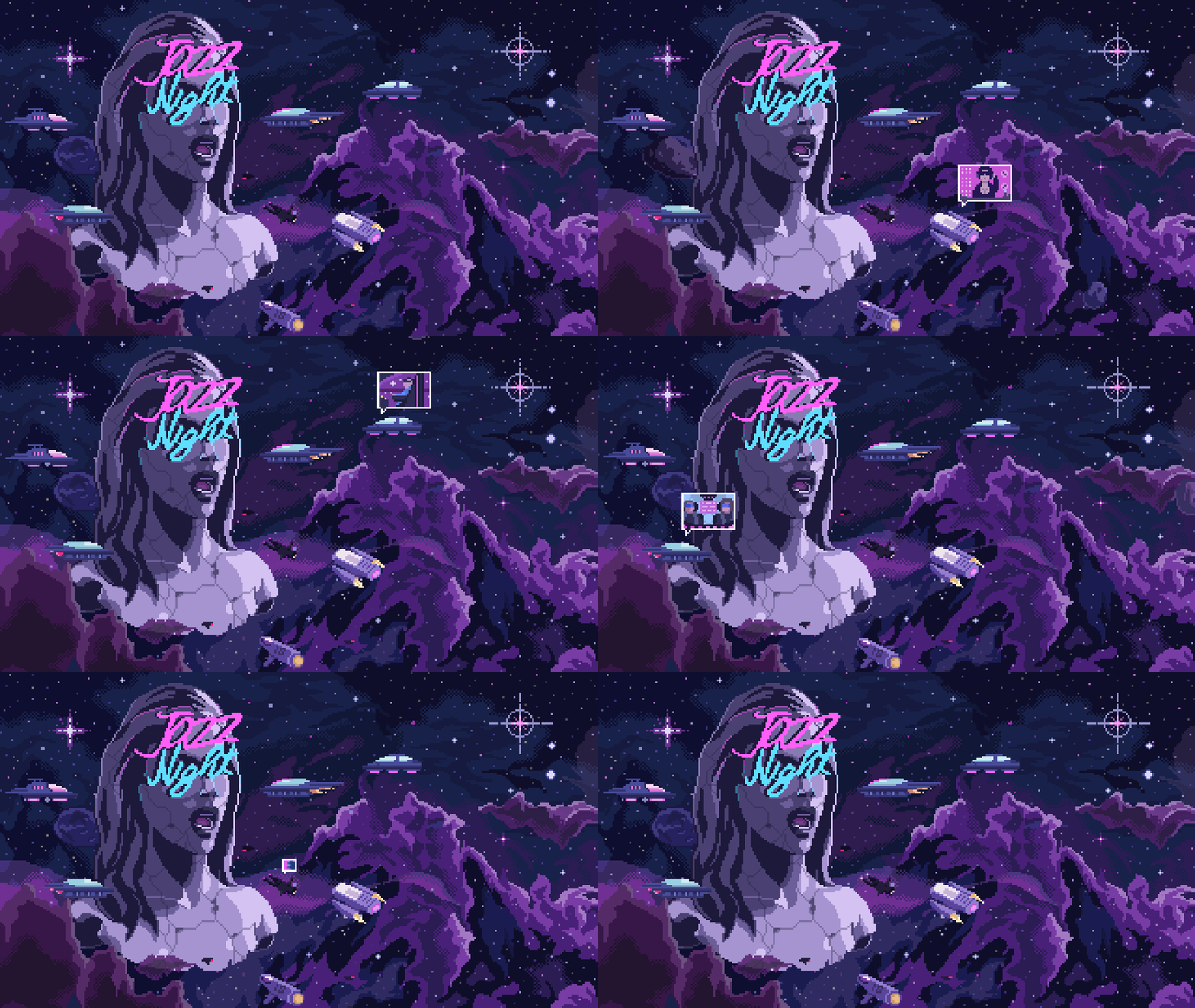
The independent record label Ubiktune has officially announced the release of The Frequency Modulators Orchestra, Vol. 1, marking the debut of Los Angeles-based producer and composer Juan Irming, better known by the moniker Amplitude Problem. Released on April 25, 2017, the album represents a conceptual departure from traditional electronic music, focusing exclusively on the use of Frequency Modulation (FM) synthesis and low-fidelity drum samples to recreate the improvisational spirit of jazz-funk. The project is positioned as a technical and artistic exploration of whether digital synthesis, historically characterized as cold or rigid, can be manipulated to convey the warmth and nuanced timing associated with human-led jazz ensembles.
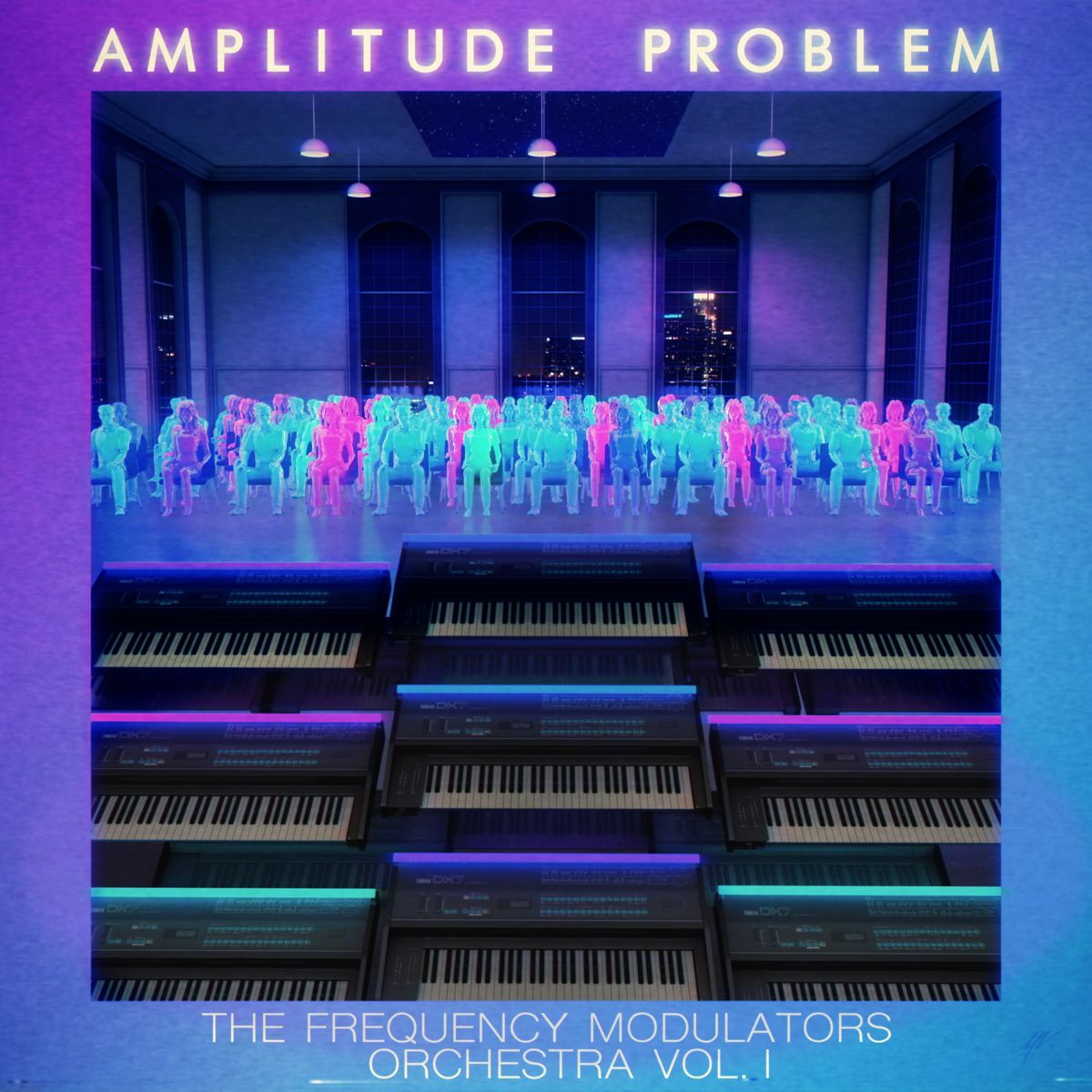
The album arrives at a time when the "synthwave" and "chiptune" genres are increasingly intersecting with more complex musical traditions. Amplitude Problem’s latest work is not merely a collection of tracks but a narrative-driven experience that blends the precision of computer-generated sound with the spontaneity of live performance. To ensure the highest fidelity for this digital-analog hybrid, the project was mastered by Don Grossinger, a Grammy Award-winning engineer whose portfolio includes work with jazz icons such as Miles Davis. The visual presentation of the album is equally curated, featuring cover art by Mythical Vigilante and animated pixel-art contributions from the renowned artist Valenberg.
The Evolution of Amplitude Problem: From Demoscene to Contemporary Composition
Juan Irming’s trajectory in the electronic music world spans several decades, beginning in the late 1980s within the European demoscene. The demoscene, a subculture dedicated to pushing the technical limits of computer hardware through art and music, served as the primary training ground for many of today’s leading electronic composers. Irming gained early recognition as a composer for SYNC, a highly regarded Atari ST demo crew. During this period, he secured multiple victories in demo music competitions, establishing a foundation in the constrained, hardware-specific composition that would later define the Amplitude Problem sound.

In the early 1990s, Irming moved to Los Angeles to attend the Musicians Institute, a transition that allowed him to bridge the gap between European computer music and American jazz and session performance styles. This formal education is evident in the harmonic complexity of his work. Over the subsequent years, Irming diversified his output, contributing to soundtracks for video games such as Power Drive 2000 and VirtuaVerse. He also became a frequent collaborator within the "geek rap" and cyberpunk scenes, most notably producing the instrumental tracks for YTCracker’s 2014 album, Introducing Neals. His credits extend across ten LPs, and he has shared billing with prominent figures in the retrowave scene, including Mitch Murder, Lazerhawk, and GUNSHIP.
Technical Foundations: The Role of FM Synthesis in Modern Jazz
The central conceit of The Frequency Modulators Orchestra, Vol. 1 lies in its strict adherence to FM synthesis. Developed in the 1960s and 1970s and popularized by the Yamaha DX7 synthesizer in the 1980s, FM synthesis is known for producing "metallic," "glassy," and "sharp" textures. Unlike subtractive synthesis, which filters down rich waveforms, FM synthesis builds complex sounds by modulating the frequency of one operator with another. This method was the backbone of 1980s pop music and early video game audio (specifically the Yamaha YM2612 chip found in the Sega Genesis).
Irming’s decision to use this specific technology for a jazz-funk album was a deliberate attempt to subvert the medium’s reputation. While FM synthesis is often criticized for being "cold" or "soulless" compared to the voltage-controlled warmth of analog synthesizers, Irming argues that the percussive nature of FM sound is uniquely suited for the rhythmic demands of funk. The project seeks to prove that with enough technical mastery, these digital operators can replicate the expressive "groove" of a human rhythm section.
A Ten-Month Creative Chronology
The genesis of this project can be traced back to 2014 during the production of the track "Feel Like Leisure Suit Larry" for YTCracker. Irming noted that the "chip-like" FM sounds used in that production lent themselves naturally to zany, syncopated rhythms. This experimentation continued with the 2015 track "Funky Mustache" from the album Blue Bots Dots. By late 2015, the concept for a full-length, all-FM jazz-funk album had solidified.
Irming describes a ten-month production cycle characterized by intensive studio sessions and a focus on live improvisation. Unlike many electronic albums that rely heavily on grid-based sequencing—where every note is perfectly aligned to a mathematical beat—The Frequency Modulators Orchestra utilizes "off-the-grid" performance. Irming recorded himself jamming on keyboards to ensure the tracks maintained the "spontaneous and in-the-moment" feel required for the jazz genre. This approach was vital because, as an instrumental album, the music had to sustain listener interest without the narrative aid of vocals.
Artistic Collaboration and Visual Synergy
The presentation of the album reflects a multidisciplinary effort to capture a specific "retro-future" aesthetic. The primary cover art, provided by Mythical Vigilante, sets the tone for the release, while the additional work by Valenberg brings a cinematic quality to the project. Valenberg, who also collaborated with Irming on previous releases, created a "Jazz Night" pixel-art animation that serves as a visual counterpart to the album’s soundscapes. This synergy between 16-bit visual aesthetics and sophisticated musical arrangements has become a hallmark of the Ubiktune label.
The involvement of Don Grossinger in the mastering phase provided a bridge between the niche world of chiptune and the broader recording industry. Grossinger’s expertise in balancing high-end digital frequencies was essential for an album composed entirely of FM synthesis, which can often produce harsh "aliasing" or unpleasant high-frequency artifacts if not handled correctly. By applying the same mastering techniques used for legendary jazz records, the production team successfully imbued the digital tracks with a professional, "radio-ready" sheen.
Official Commentary: The Philosophy of the "Frequency Modulators"
In statements regarding the release, Irming emphasized that the album is a deeply personal work. He noted that the first four tracks serve as an introspective journey, while the final three tracks offer a commentary on broader existential themes. "I made music I wanted to hear," Irming stated, explaining that the track "Ghosts in My Medicine Cabinet" was an example of going "all in" on a creative vision without concern for commercial constraints.

On the naming of the fictional "orchestra," Irming explained that the stylistic requirements of the music necessitated the persona of a full band. "A band was needed, and so the idea of The Frequency Modulators was born," he said. "Each FM instrument would be a full band member, granted the privilege to improvise, have fun, and spread good vibes." This personification of the synthesizers allows the listener to approach the electronic sounds as if they were listening to a traditional jazz ensemble, where each "player" has a distinct voice and role.
Broader Impact and Industry Implications
The release of The Frequency Modulators Orchestra, Vol. 1 arrives at a pivotal moment for the electronic music industry. As digital audio workstations (DAWs) become increasingly capable of perfect emulation, there is a growing movement among composers to return to the limitations of specific hardware or synthesis methods to find a unique "voice." Irming’s work contributes to the academic and artistic discourse regarding the "humanization" of digital tools.
Furthermore, the album highlights the continued relevance of the demoscene ethos in contemporary music. By applying the "hacker" mindset—extracting maximum emotional and sonic value from restricted technology—Amplitude Problem has created a bridge between the subcultures of the 1980s and the sophisticated production standards of 2017. The album is now available across all major digital distribution platforms and streaming services, offering a case study in how retro technology can be repurposed for modern, high-concept art.
As the first volume in a projected series, this release establishes a high benchmark for future "orchestra" installments. It serves as both a technical showcase for FM synthesis and a compelling argument for the enduring versatility of the jazz-funk genre. For listeners, it offers a "pixelated rabbit hole" into a soundscape that is simultaneously nostalgic for the 16-bit era and forward-looking in its compositional ambition.