Farhan hamdan
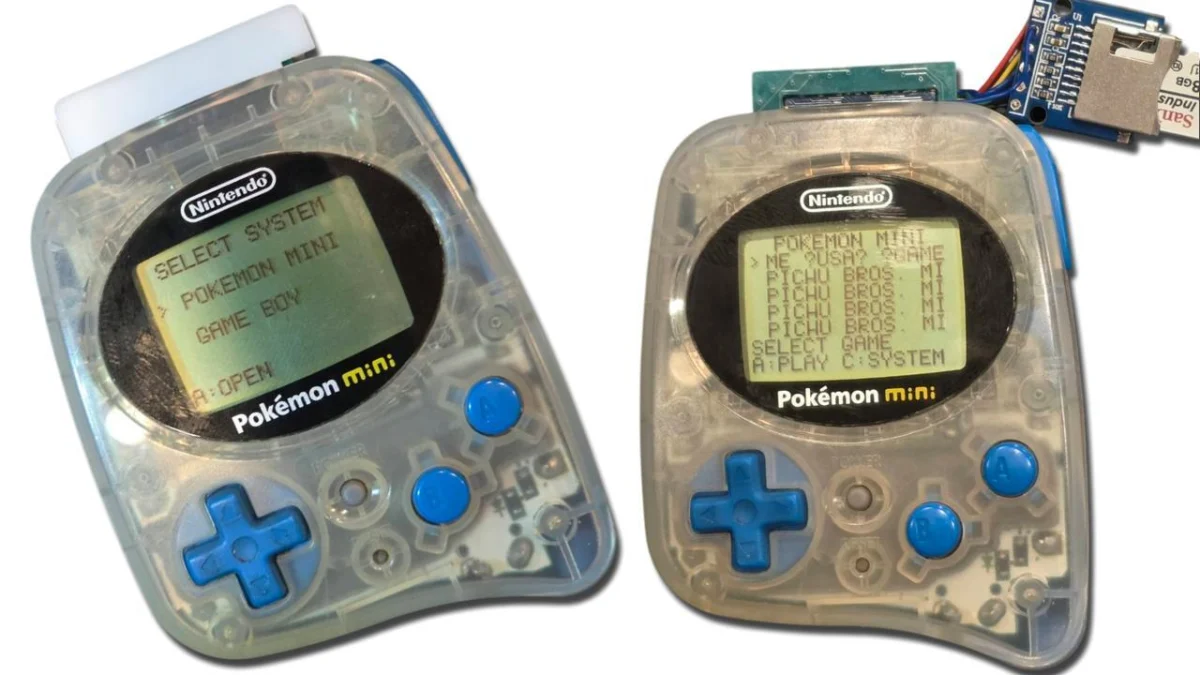
The landscape of retro video game hardware modification has expanded once again with the official launch of a crowdfunding campaign for the PM2354 SD, a modern MicroSD-compatible flash cartridge designed specifically for Nintendo’s historic Pokémon Mini handheld system. While retro gaming enthusiasts have previously relied on single-flash cartridges that require dedicated external hardware programmers to change games, this new device aims to streamline the user experience by allowing players to load entire libraries of titles, homebrew applications, and fan translations directly from a standard MicroSD card. Priced at approximately $60 excluding shipping, the project has already progressed past the conceptual phase, featuring a fully functional hardware and software prototype capable of running both native Pokémon Mini ROMs and original Game Boy software adaptations. The development team has set an ambitious delivery timeline, aiming to fulfill orders and ship units to backers by the close of the calendar year.
Main Facts of the PM2354 SD Project
The core innovation of the PM2354 SD lies in its internal architecture, which utilizes a widely available Waveshare RP2040-Zero microcontroller board to handle file management and data transfer to the host system. This design choice helps mitigate potential manufacturing bottlenecks caused by global semiconductor shortages, ensuring a more reliable path toward mass production. The physical cartridge shell houses the custom PCB and a MicroSD card slot, fitting flush into the cartridge slot of an unmodified Pokémon Mini console.
Unlike previous hardware iterations that forced users to rewrite a single game onto a flash memory chip every time they wanted a change of scenery, the PM2354 SD introduces a menu-driven interface accessible directly on the handheld’s monochrome LCD screen. Users can navigate their stored ROM collections, select titles instantly, and launch them without external tools. The hardware prototype has demonstrated stable compatibility with standard game files, opening up the platform for broader experimentation and accessibility.
Background Context and Evolution of Pokémon Mini Homebrew
Released by Nintendo in late 2001, the Pokémon Mini holds the Guinness World Record for being the smallest interchangeable-cartridge game system ever officially produced. Measuring slightly larger than a standard car key fob and featuring a built-in real-time clock, infrared multiplayer capabilities, and a directional pad, the console was a niche novelty that received a limited library of official titles. Despite its obscurity, the system developed a dedicated cult following among collectors and hardware modders who appreciated its quirky engineering.
In the decades following its commercial discontinuation, the platform’s homebrew and preservation community has worked tirelessly to reverse-engineer its hardware and software protocols. Milestones in this journey have included the complete translation of the console’s entire official software library into English and other languages, allowing international fans to experience games that previously remained exclusive to Japan. However, interacting with these translated ROMs has historically been cumbersome, restricted by the limitations of single-flash cartridges that required technical proficiency and dedicated programming hardware to update. The introduction of mass-produced, multi-game storage solutions represents a significant maturation point for the Pokémon Mini preservation ecosystem.
Chronology of Development and Community Origins
The genesis of the PM2354 SD can be traced back to open-source hardware projects within the retro gaming community, most notably the PM2040 design pioneered by developer zwenergy. For years, zwenergy and other community engineers have pushed the boundaries of what is possible on the Pokémon Mini architecture, releasing schematics, code, and custom hardware modifications online.
However, a persistent challenge in the retro enthusiast space has been the transition from open-source hobbyist designs—which often require advanced soldering skills, hand-assembly, and sourcing specialized components—to professionally manufactured consumer products. While the creator of the PM2354 SD drew direct inspiration from zwenergy’s foundational PM2040 work, the project operates as an independent commercial initiative with no direct corporate or developmental affiliation with zwenergy. This distinction highlights a common collaborative cycle in retro computing, where open-source blueprints serve as stepping stones for manufacturers willing to scale production and make specialized technology accessible to a wider audience.

Technical Analysis and Component Availability
The hardware specifications of the PM2354 SD reflect modern cost-effective engineering practices. By centering the cartridge around the Waveshare RP2040-Zero—a compact development board powered by the dual-arm Cortex-M0+ processor—the creators have leveraged a robust, inexpensive, and readily available computing module. This microcontroller provides sufficient processing speed and memory management capabilities to emulate cartridge behavior, manage file allocation tables on MicroSD cards, and communicate directly with the Pokémon Mini’s bus interface.
From a supply chain perspective, utilizing off-the-shelf microcontrollers rather than custom application-specific integrated circuits (ASICs) drastically reduces financial risk and development time. This choice is particularly vital in the current electronics landscape, where traditional silicon fabrication can suffer from extended lead times. Nevertheless, manufacturing physical plastic cartridge shells that fit the proprietary dimensions of the Pokémon Mini slot requires precision injection molding or high-quality 3D printing, variables that often introduce unforeseen delays in hardware crowdfunding campaigns.
Crowdfunding Realities and Delivery Expectations
As with any hardware project hosted on platforms like Kickstarter, potential backers must weigh the innovative features against inherent risks. The development team’s target of fulfilling orders by the end of the year is optimistic, particularly when factoring in the complexities of global logistics, component quality control, and final assembly scaling. While the software and hardware prototypes are functional, unforeseen manufacturing defects or regulatory shipping hurdles can impact timelines.
Industry observers note that crowdfunding campaigns within the retro gaming niche have experienced a mixed track record over the past decade. While many projects successfully deliver polished products to their backers, others encounter severe delays or logistical failures. Fortunately, because the PM2354 SD relies on accessible components like the RP2040-Zero and standard MicroSD interfaces, it avoids some of the custom silicon dependencies that have derailed more ambitious retro console hardware ventures in the past.
Broader Impact and Implications for Retro Preservation
The commercial availability of a multi-game MicroSD cartridge for the Pokémon Mini carries significant implications for digital preservation, software accessibility, and the collector market. By lowering the technical barriers required to play modified and translated software on original hardware, devices like the PM2354 SD encourage more developers and enthusiasts to engage with the platform.
Furthermore, flash cartridges play a vital role in preserving physical hardware. Constantly swapping physical cartridges subjects the fragile internal contact pins of vintage consoles to mechanical wear and tear. Consolidating an entire game library onto a single flash medium minimizes physical manipulation of original cartridges, many of which are becoming increasingly rare and expensive on the secondary market.
As the crowdfunding campaign progresses toward its funding goals, the retro gaming community will be watching closely to see if the final product meets expectations. If successful, the PM2354 SD will not only provide a long-awaited convenience for current system owners but also cement another milestone in the ongoing effort to keep early 2000s portable gaming hardware viable for future generations of players and historians.