Vera Clarissa
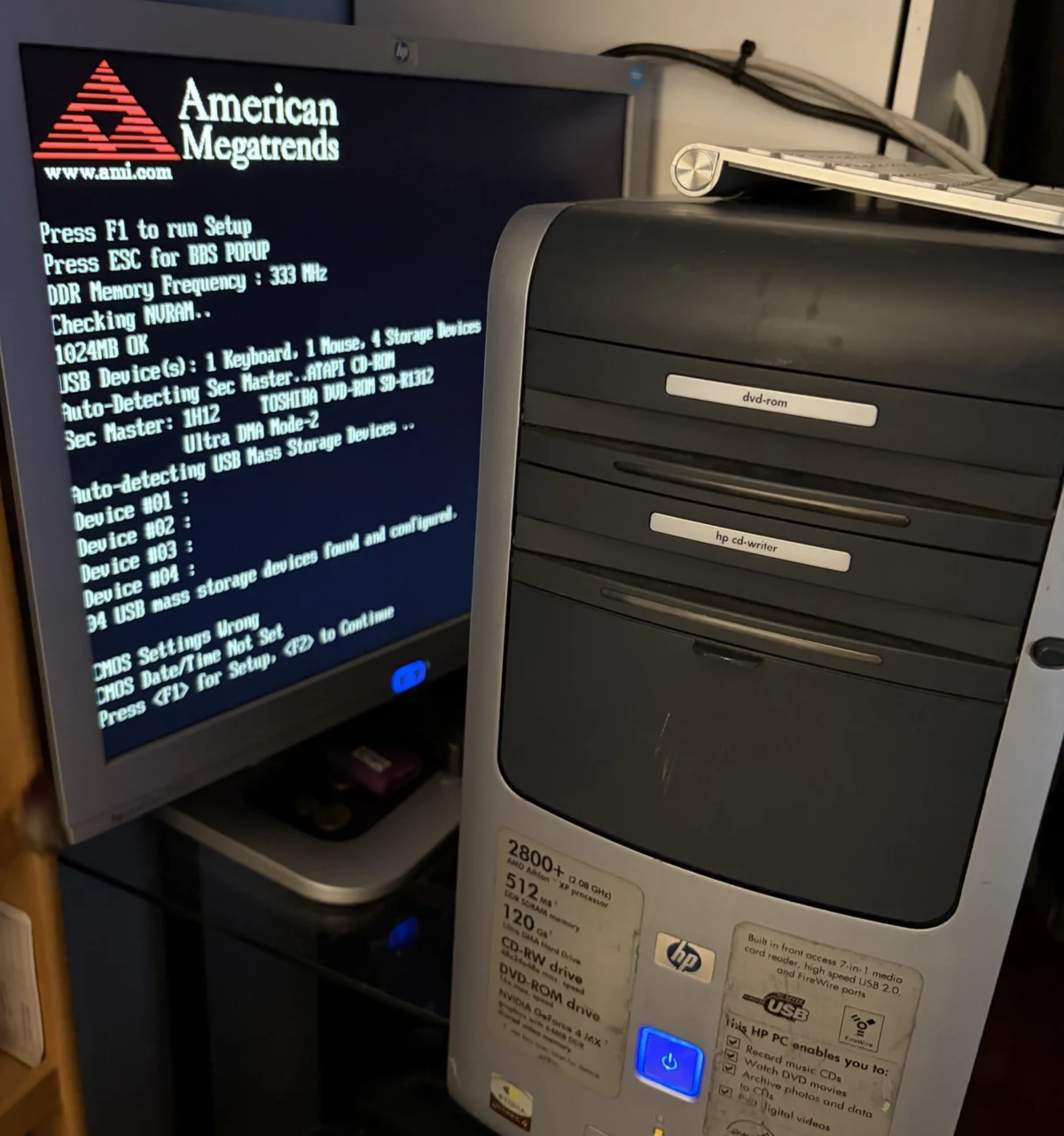
The Vintage Computer Festival (VCF) Midwest 2026, held this past October, served as more than just a gathering for historical computing enthusiasts; it functioned as a conduit for the physical reclamation of personal technological history. Among the thousands of vintage systems on display at the Schaumburg, Illinois event, a specific acquisition by a long-time enthusiast highlighted the enduring cultural and technical significance of the mid-2000s home computing era. The recovery and subsequent restoration of an HP Pavilion a320n desktop computer—a machine that defined the domestic digital experience for millions in 2003—offers a lens through which to analyze the rapid evolution of consumer hardware and the subsequent rise of the retro-computing preservation movement.

The Context of VCF Midwest 2026
VCF Midwest is one of the largest annual gatherings dedicated to the history of computing, drawing engineers, collectors, and hobbyists from across the globe. The 2026 iteration, held in a sprawling exhibition space, featured an expansive floor plan designed to showcase everything from 1970s mainframes to early 21st-century x86 architecture. The event provides a structured environment for the trade, repair, and exhibition of hardware that, in many cases, has been relegated to recycling centers or landfills.

The acquisition of the HP Pavilion a320n from the EcoTech vendor tables (A108–A106) reflects a growing trend in the community: the transition from collecting "foundational" systems (like the Apple II or Altair 8800) to preserving the "mass-market" machines that served as the primary entry point for the internet generation. By 2026, these machines are considered "modern-vintage," occupying a space between obsolete e-waste and historical artifacts.

A Chronology of the HP Pavilion Series
The HP Pavilion line, particularly the a420n and a320n models, occupies a distinct place in the chronology of consumer electronics. Launched in the early 2000s, these systems represented the "beige-to-silver" transition period in industrial design.

- 2001–2002: The industry began shifting away from the standard off-white/beige tower aesthetic toward metallic, matte-gray finishes, often accompanied by "futuristic" lighting elements like glowing blue power buttons.
- 2003: The peak of the "Living Room PC" movement. Manufacturers like Hewlett-Packard successfully marketed computers not just as office tools, but as central components of the home, often displaying them in showroom environments like IKEA to emphasize their lifestyle integration.
- 2007–2008: The end-of-life cycle for the Pentium 4 and early Athlon XP era. As operating systems like Windows Vista were released, the hardware limitations of the 2003-era Pavilion series led to mass disposal.
- 2026: The current state of preservation. Collectors are actively sourcing these machines to reconstruct the specific software environments—including Adobe Flash-based internet experiences and early social networking interfaces—that characterized the 2003–2005 web.
Technical Specifications and Restoration Challenges
The HP Pavilion a320n, acquired at the event, is a quintessential example of mid-range consumer hardware from the era. Its configuration was designed to balance performance for gaming, office productivity, and early digital media consumption.

Technical Comparison: 2003 Original vs. 2026 Restoration

| Feature | 2003 Original (a420n) | 2026 Restoration (a320n) |
|---|---|---|
| Logic Board | ASUS A7V8X-LA | ASUS A7N8X-LA |
| Processor | AMD Athlon XP 3000+ | AMD Athlon XP 2800+ |
| Memory | 512 MB PC-2700 DDR | 2 GB PC-2700 DDR |
| Storage | 160 GB IDE HDD | 80 GB IDE HDD (Temp) |
| Graphics | Integrated UniChrome | NVIDIA GeForce 4 MX |
| Operating System | Windows XP Home | Windows POSReady 2009 |
The restoration process highlights the technical hurdles inherent in maintaining 23-year-old hardware. The primary challenge identified during the post-event setup was the degradation of mechanical storage media. The original 250 GB hard drive failed immediately following the acquisition, a common occurrence for IDE drives that have remained unpowered for over a decade. The transition to a modern IDE-to-SATA adapter, while theoretically viable, revealed the persistent compatibility issues between legacy motherboard chipsets and modern solid-state controllers.

The decision to utilize Windows POSReady 2009—a version of Windows XP optimized for point-of-sale systems—provides an interesting case study in software preservation. Because POSReady 2009 received security updates significantly longer than standard Windows XP Home, it offers a more stable environment for those looking to connect these legacy machines to local networks for file transfer or testing purposes without immediate vulnerability.

Industry Implications and Market Impact
The resurgence of interest in mid-2000s hardware is not merely a nostalgic exercise; it has real-world implications for digital archaeology. As major tech companies continue to sunset support for legacy software and cloud services, hardware like the HP Pavilion a320n remains the only way to experience the original digital ecosystem.

Engineers and researchers are currently utilizing these systems for practical applications, such as flashing legacy ROMs onto AGP-based graphics cards. This is vital for the continued operation of even older vintage hardware, such as PowerPC-based Macintosh systems, which often require specific, period-correct GPU support to function with modern monitors or high-resolution displays. By maintaining the HP Pavilion as a "workhorse" for these tasks, enthusiasts are building a bridge between different silos of computing history.

The Broader Cultural Shift
The professional reaction from the retro-computing community suggests that the focus is shifting toward "experience-based" preservation. Collectors are no longer satisfied with simply owning a piece of hardware; there is an increasing demand for "environmental reconstruction"—the effort to recreate the exact mouse, keyboard, monitor, and printer that accompanied the machine at the time of purchase.

This movement is supported by the availability of online databases and forums where original system drivers, manuals, and software recovery discs are being archived. The "minimalist-maximalist" approach—upgrading the machine with non-invasive components like SATA PCI cards or SSDs while preserving the original aesthetic and case—is emerging as the industry standard for responsible vintage restoration.

Conclusion: The Legacy of the Pavilion
The HP Pavilion a320n serves as a significant marker in the history of domestic technology. It represents the moment when the computer ceased to be a "forbidden" or strictly professional tool and became a standard household appliance. The effort to restore such a machine in 2026 demonstrates that these systems have survived the initial "trash-or-treasure" cycle and have now earned their place in the pantheon of computing history.

As technology continues to advance at an exponential rate, the preservation of the 2003-era computing environment remains a critical task. These machines are the last vestiges of an era where hardware was tangible, user-serviceable, and designed with a distinct aesthetic intent. Through the dedicated efforts of events like VCF Midwest and the individual work of collectors, these pieces of digital heritage will continue to function, providing future generations with a tangible link to the dawn of the interconnected home. The successful integration of the a320n alongside systems like the Power Mac G4 underscores a unified history of computing, where the distinctions between "Mac" and "PC" become less relevant than the shared goal of preserving the ingenuity and design ethos of the early 21st century.