Farhan hamdan
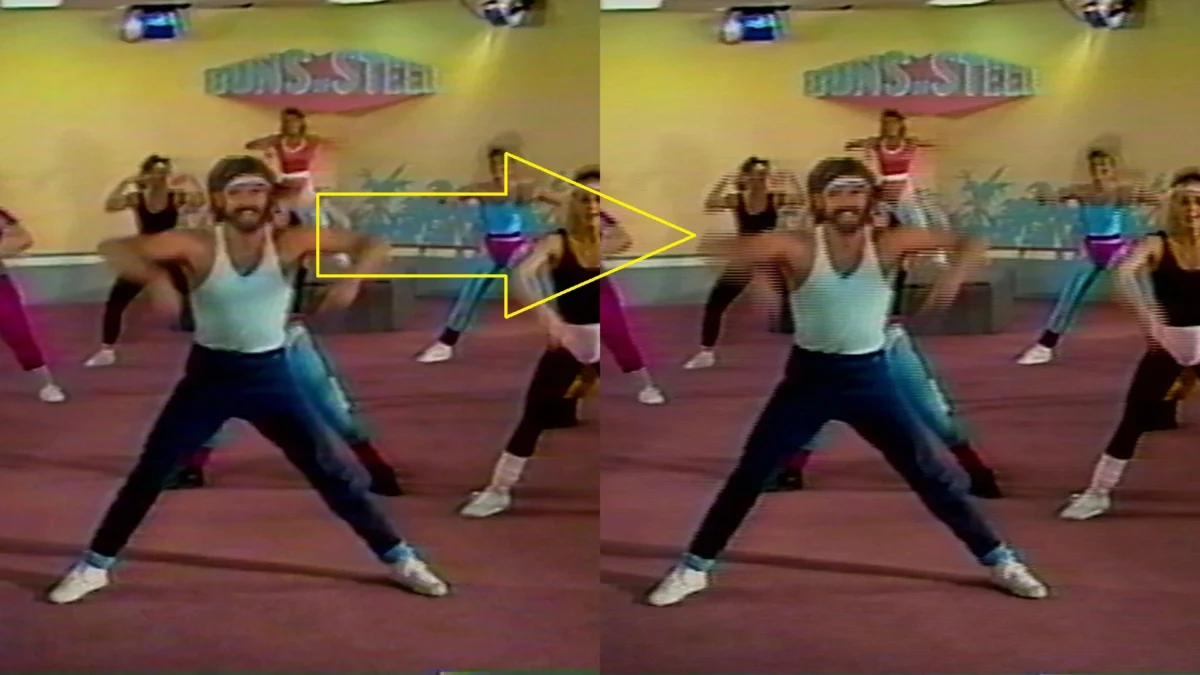
Digitizing analog video formats such as VHS home movies has long presented a technical paradox for archival enthusiasts and preservationists. While modern hardware scalers like the RetroTINK-5X, RetroTINK-6X, and RetroTINK-4K offer state-of-the-art processing capabilities for high-definition tape transfers, the downstream capture hardware often presents a restrictive bottleneck. Many modern capture cards lack native support for interlaced video formats, automatically forcing a conversion of standard-definition 480i content into a progressive 480p signal. For archivists determined to retain the original interlaced format for future software-based scaling and advanced filtering, this hardware limitation has traditionally necessitated costly equipment investments, specialized USB cards, or complex RF decoding setups.
A newly documented, cost-free method developed within the retro-technology community offers an alternative. By leveraging existing hardware alongside the open-source multimedia framework FFmpeg, users can capture a "bob-deinterlaced" 480p signal and subsequently re-interlace it back into a lossless 480i file. This technique provides a viable pathway for individuals equipped with a RetroTINK device and a standard progressive capture card to archive critical analog media in its native structure without incurring additional hardware expenses.
The Technical Dilemma of Analog Archival
The challenge stems from the fundamental differences between analog television display standards and modern digital capture technology. Analog formats like NTSC and PAL rely on interlaced video, where each frame is split into two sequential fields transmitted at 60 fields per second for NTSC. Capturing this natively requires hardware capable of ingesting interlaced streams without altering the temporal or spatial structure of the video fields.

When a standard capture card automatically deinterlaces an incoming 480i signal into a progressive 480p stream upon ingestion, the original field structure is fundamentally altered. Preservationists working with historically or sentimentally significant family footage often find this unacceptable, preferring to capture the raw interlaced data to apply superior, future-proof software deinterlacers such as QTGMC at a later stage.
Historically, overcoming this limitation required purchasing specialized legacy hardware, tracking down functional Time Base Correctors (TBCs) on the secondhand market, or investing in rare capture cards with robust 480i support. Such solutions can be prohibitively expensive and logistically frustrating for casual hobbyists and independent preservationists.
Step-by-Step Methodology for Free Re-Interlacing
The newly popularized workaround utilizes a multi-step process combining a RetroTINK processor, VirtualDub for lossless cutting, and FFmpeg for command-line re-interlacing.
The process begins on the RetroTINK device by loading an appropriate profile, setting the video output to 480p, and configuring the deinterlacer to "bob" mode. This setting maps each individual field to its own distinct frame, outputting a 60-fields-per-second stream as a 480p60 lossless signal. Because the capture card can accept standard progressive 480p video, the transfer completes successfully without requiring native interlaced ingestion.

To test the viability of the capture before committing to full-length tape transfers, operators use VirtualDub to isolate a short test clip, ensuring the file remains unmodified through Direct Stream Capture.
The core of the workaround relies on FFmpeg, a command-line tool standard in video engineering. By navigating to the directory containing the trimmed file, users execute a specific command to re-establish the interlaced structure based on the proper field order—either Top Field First (TFF) or Bottom Field First (BFF). For RetroTINK hardware outputs, the field order is almost universally Top Field First.
The command structures utilized for this process are:
- Top Field First:
ffmpeg -i INPUTFILE.AVI -vf “tinterlace=mode=interleave_top” -c:v ffv1 -level 3 TFFOUTPUT.mov - Bottom Field First:
ffmpeg -i INPUTFILE.AVI -vf “tinterlace=mode=interleave_bottom” -c:v ffv1 -level 3 BFFOUTPUT.mov
Once processed, the output file can be verified in VirtualDub using the Yadif filter to ensure that the fields re-align correctly into the original interlaced cadence.

Evaluation and Implications for Media Preservation
Initial comparative testing involving the RetroTINK-4K indicates that video files processed through this bob-capture and re-interlacing method closely resemble raw 480i captures when subjected to identical scaling pipelines. However, technical analysis reveals certain caveats; utilizing motion-adaptive deinterlacing during the initial hardware phase can introduce noticeable artifacts or softness compared to pure native captures.
Industry experts emphasize that while this method provides a functional bridge for users lacking dedicated interlaced capture hardware, it should be approached with realistic expectations. Archivists processing irreplaceable home movies are advised to run comparative tests—such as scaling a source file to 4K directly versus applying the re-interlacing method followed by advanced software deinterlacing—to determine the optimal visual outcome for their specific source material.
Broader Impact on the Retro Tech Community
The introduction of this free software-based workaround democratizes high-fidelity analog archiving. By lowering the financial barrier to entry, hobbyists who already own high-end video scalers can achieve professional-grade archival results without purchasing specialized capture cards or obsolete broadcast equipment.
As digital preservation methods continue to evolve, community-driven solutions like the FFmpeg re-interlacing technique underscore the adaptability of open-source software in solving persistent hardware incompatibilities. While physical preservation of aging magnetic tape remains a race against time, innovative workflows ensure that family histories and cultural artifacts can be secured with increasing precision and accessibility.