Farhan hamdan
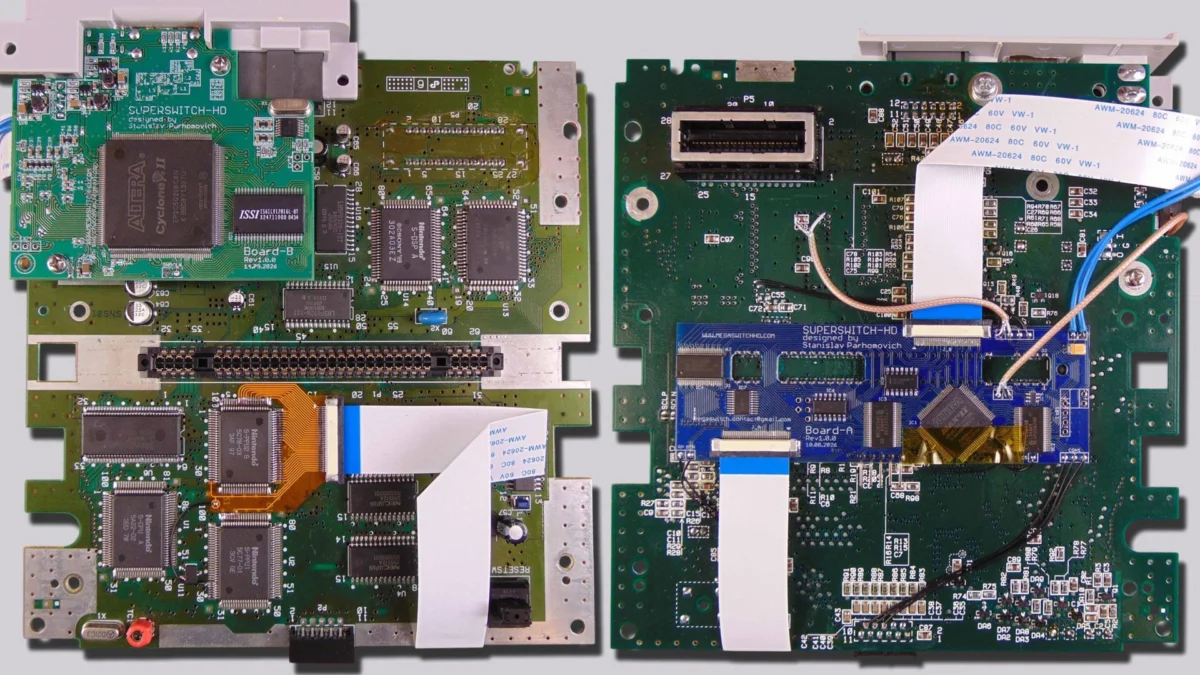
The landscape of retro video game hardware modification has reached another significant milestone with the official release of the SuperSwitch HD. Developed by hardware engineer Stanislav Parhomovich, this new internal modification kit brings native 1080p digital video and integrated digital audio output to original Super Nintendo and Super Famicom hardware. Following closely on the heels of the creator’s previous Sega Genesis/Mega Drive HDMI solution—the MegaSwitch HD—this latest release addresses a growing demand among enthusiasts who wish to play classic cartridge-based software on modern high-definition displays without sacrificing the authenticity of original console architecture.
The SuperSwitch HD is currently tailored for non-1CHIP motherboard revisions of the Super Nintendo, a configuration prized by many collectors for specific hardware compatibility profiles. Priced at $150 for the core hardware board, the modification natively integrates the console’s internal digital audio stream directly into the HDMI output. For users seeking specialized audio capabilities, such as processing cartridge-specific audio sources from peripherals like the Super Game Boy or custom MSU-1 flash cartridge soundtracks, an optional Audio ADC add-on is available for an additional $20. International shipping rates, including delivery to the United States, are estimated around $16, subject to regional postal fluctuations. Procuring the hardware mirrors the purchasing process established for the MegaSwitch HD, requiring buyers to directly contact the developer via electronic mail for order placement and fulfillment details.
Technical Architecture and Hybrid Emulation Mechanics
At its core, the SuperSwitch HD operates on a hybrid emulation principle, a methodology shared by other advanced hardware modifications like the well-known NESRGB board. Rather than emulating the entire console through software or substituting the core processing units with a system-on-a-chip, the modification leverages a Field Programmable Gate Array (FPGA). This FPGA is programmed to interface directly with the original custom chips housed on the Super Nintendo motherboard.
By capturing the raw video data signals directly from the PPU (Picture Processing Unit) before they are converted into analog signals like Composite, S-Video, or RGB, the modification eliminates analog signal degradation, interference, and visual noise entirely. The FPGA then scales and formats this pristine digital data into a crisp 1080p HDMI signal. This approach preserves the exact timing, game logic, and compatibility of original hardware while adapting the output for modern digital flat-panel displays, which often struggle to properly process legacy analog resolutions without external hardware scalers.
Chronology and Development Milestones
The arrival of the SuperSwitch HD is the culmination of extensive hardware prototyping and community testing conducted by Stanislav Parhomovich. Over the preceding months, the developer shared numerous technical demonstrations and proof-of-concept videos documenting the evolution of the project. Early development footage highlighted the successful integration of digital audio outputs, followed by milestone demonstrations verifying proper handling of the Super Nintendo’s demanding 512-pixel high-resolution graphic modes.
Subsequent developmental updates showcased advanced user-facing features integrated into the firmware, including adjustable scanline overlays, scaling options such as Scale3x, and granular brightness controls. This transparent development cycle allowed hardware enthusiasts and prospective buyers to evaluate the fidelity and feature set of the modification well in advance of the commercial release. The sequential rollout—moving from the Sega Genesis MegaSwitch HD to the Super Nintendo counterpart—demonstrates a consistent engineering roadmap aimed at providing definitive modern display solutions for fourth-generation home video game consoles.
Installation Requirements and Physical Modifications

While the visual and acoustic benefits of the SuperSwitch HD are substantial, prospective buyers must consider the physical installation requirements. Retro console modifications of this caliber demand advanced soldering skills, precise wiring, and careful handling of delicate printed circuit boards. Furthermore, integrating the digital output hardware and associated ports necessitates physical alterations to the Super Nintendo console shell. Installers must carefully cut portions of the plastic housing to accommodate the new HDMI connectivity port.
For collectors hesitant to permanently alter original, pristine hardware shells, the release coincides with a readily available market of replacement and aftermarket plastic shells. This practical consideration allows users to preserve their original, unmodified OEM shells in storage while outfitting a secondary or replacement shell to house the modern digital hardware modifications.
Comparative Market Analysis and Alternative Options
The retro gaming marketplace features a variety of methods for connecting vintage consoles to modern displays, generally divided between external video scalers and internal digital modifications. External solutions—such as line doublers and high-end video processors paired with custom RGB cables—remain a versatile and cost-effective strategy for users who maintain a diverse collection of multiple analog consoles. Investing in a single external scaler permits the routing of numerous systems through one display device without requiring invasive internal modifications to individual consoles.
Conversely, internal HDMI modifications like the SuperSwitch HD target dedicated enthusiasts for whom a specific platform—in this case, the Super Nintendo—is the primary focus of their retro gaming hobby. By eliminating external conversion boxes and cables, internal mods provide a streamlined, clutter-free setup alongside absolute noise-free signal transmission.
Consumers must also weigh the SuperSwitch HD against competing internal projects. Alternative Super Nintendo HDMI modifications slated for release feature lower price points and simpler installation procedures, but their capabilities are capped at lower maximum resolutions such as 240p, 480p, and 720p, omitting native 1080p output. Consequently, the choice between these competing options hinges on a user’s display hardware, technical proficiency, budgetary constraints, and specific visual preferences regarding scaling and resolution output.
Broader Industry Impact and Preservation Implications
The commercial availability of advanced hardware modifications like the SuperSwitch HD underscores the enduring vitality of the retro gaming hardware community. As original cathode-ray tube (CRT) televisions become increasingly scarce, expensive to maintain, and impractical for modern living spaces, hardware modifications play a vital role in ensuring that original physical software media remains playable on contemporary display technology.
By bridging the technological divide between 16-bit console architecture and modern high-definition digital interfaces, projects like the SuperSwitch HD offer a viable path for long-term hardware preservation and utilization. While such modifications require specialized technical labor and financial investment, they represent a meticulous effort to maintain the authentic experience of classic video games while adapting them to the realities of modern home entertainment standards.