Farhan hamdan
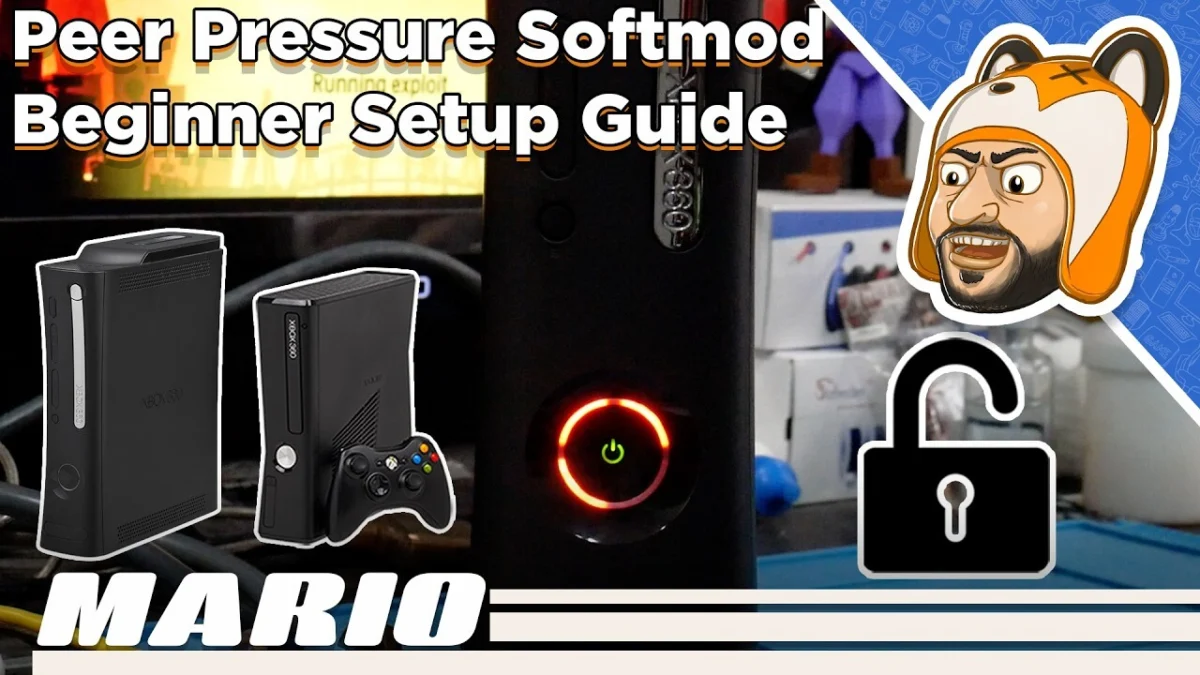
The landscape of seventh-generation console modification has experienced a seismic shift with the release of a genuine, software-based exploit for Microsoft’s Xbox 360. For nearly two decades, modifying an Xbox 360 to execute custom code, homebrew applications, and backup software required invasive hardware modifications. These procedures typically involved soldering complex microchips, installing bypass wires, or executing precision circuit traces. However, the introduction of a new exploit dubbed "Peer Pressure"—developed by prominent security researcher and homebrew developer Grimdoomer—has fundamentally altered the ecosystem. By leveraging a previously discovered hypervisor vulnerability known as BadUpdate, Peer Pressure achieves a true softmod, enabling users to boot the console into an unlocked state using little more than a standard USB flash drive.
This breakthrough represents a watershed moment for retro gaming preservationists, hardware enthusiasts, and the broader Xbox 360 modding community. While previous exploits democratized homebrew execution to a degree, they routinely gatekept the hobby behind technical soldering skills and the risk of permanent console damage. Peer Pressure removes these barriers for a vast majority of existing Xbox 360 hardware revisions, breathing new life into aging systems while preserving the physical integrity of the consoles themselves.
Background Context and Evolution of Xbox 360 Exploitation
To fully appreciate the significance of Peer Pressure, it is necessary to examine the long and arduous history of Xbox 360 security research. Released in November 2005, Microsoft’s seventh-generation flagship was designed with a heavily fortified security architecture. Inspired by the relative ease with which the original Xbox was compromised via software exploits and modchips, Microsoft implemented a multi-layered defense system for the Xbox 360. This architecture relied on a secure boot chain, starting with a read-only bootloader fused directly into the CPU, followed by encrypted system software and a strict hypervisor layer designed to isolate processes and prevent unauthorized code execution.
For years, security researchers chipped away at these defenses. Early methods focused on optical drive firmware flashing, allowing users to play backup discs, but leaving the underlying system software locked. Later, hardware-based glitches emerged, most notably the "Reset Glitch Hack" (RGH) and its various iterations (RGH2, RGH3). These methods worked by sending a precise electrical pulse to the processor, momentarily halting the CPU to bypass the secure bootloader and boot custom NAND images. While highly effective, RGH required advanced soldering capabilities, delicate wire placement on microscopic motherboard points, and specialized hardware programmers like the NAND-X or PicoFlasher. Consequently, casual enthusiasts and collectors who lacked soldering equipment were largely excluded from the homebrew scene.
The paradigm began to shift when developer Grimdoomer introduced the BadUpdate exploit, a hypervisor-level vulnerability that laid the groundwork for software-only execution vectors. Building upon BadUpdate, Peer Pressure successfully bridges the gap between complex hardware modifications and accessible software loading. By packaging the exploit so that it can be initialized via standard storage media, the development team has effectively eliminated the hardware hurdle for millions of legacy consoles.
Technical Mechanics and Scope of the Peer Pressure Exploit
Peer Pressure operates by utilizing a vulnerability in how the Xbox 360 handles system updates and hypervisor privileges. When executed via a USB storage device, the exploit bypasses standard security checks, allowing the console to initialize an unlocked firmware state. Once active, the system grants functionality functionally identical to traditional hardmodded consoles running custom dashboards like Freestyle Dash or Aurora. Users can run unsigned homebrew applications, manage files, execute game backups, and customize the system interface without altering the physical motherboard.
Crucially, the exploit has been engineered to be entirely reversible. Because Peer Pressure does not permanently flash modified NAND images onto the core motherboard components in the destructive manner of early hardware glitches, users can theoretically return their consoles to a pristine, stock retail state by removing the modified storage media and clearing system caches.
However, hardware limitations inherent to the manufacturing lifecycle of the Xbox 360 dictate the boundaries of the exploit’s compatibility. Peer Pressure is fully compatible with all legacy Xbox 360 revisions—including the original "Phat" models and the later "Slim" models—with two notable exceptions: the Corona and Winchester motherboard revisions.
Technical analysis confirms that Microsoft patched the underlying vulnerability at the silicon level during the production runs of the Corona and Winchester boards. As a result, systems utilizing these specific hardware revisions lack the necessary security flaws to run the exploit. Industry analysts and community developers suggest that due to these hardware-level patches, Corona and Winchester consoles will likely never be compatible with a true softmod of this nature, leaving hardware-based glitching as the sole avenue for those specific models.
Chronology of the Release and Community Adoption

The deployment of Peer Pressure followed a methodical timeline characteristic of responsible security research and open-source homebrew development.
Months prior to the release of Peer Pressure, Grimdoomer publicly detailed the mechanics of the BadUpdate hypervisor exploit. This foundational research established that hypervisor privileges could theoretically be coerced through carefully constructed update files.
Following internal testing and refinement, Grimdoomer published the complete source code and user documentation for Peer Pressure via GitHub under the repository name Xbox360PeerPressure.
Recognizing the monumental nature of the release, prominent figures within the retro gaming and console modification community rapidly published comprehensive walkthroughs. Content creators such as Modern Vintage Gamer released architectural overviews analyzing the technical impact of the exploit, while tutorial specialists like Mr Mario 2011 published step-by-step installation guides to assist users in preparing their USB drives, configuring directory structures, and managing required system files.
Community adoption has been swift and widespread. Forums dedicated to console preservation and homebrew development have seen an unprecedented surge in traffic, with users reporting successful softmod implementations across various Phat and early Slim hardware configurations.
Implementation Requirements and Caveats
While Peer Pressure vastly simplifies the modification process, successful execution still demands careful attention to specific system prerequisites. Foremost among these requirements is the presence of a compatible internal or properly formatted external storage drive.
While the exploit itself is launched from a USB flash drive, the Xbox 360 operating system relies heavily on functional storage partitions to cache data, manage user profiles, and execute unpacked homebrew payloads. Users must pay close attention to partition formatting, file allocation tables, and directory placement during the setup phase. Incorrectly configured storage devices are cited as the primary point of failure for users attempting the installation for the first time.
Furthermore, community documentation explicitly emphasizes the importance of verifying console model revisions prior to attempting the procedure. Users attempting to run the exploit on patched Corona or Winchester motherboards will encounter execution failures, underscoring the necessity of identifying internal hardware configurations via exterior manufacturing dates, power supply ratings, and lot numbers.
Broader Impact, Implications, and Future Outlook
The arrival of Peer Pressure carries profound implications for the preservation of seventh-generation video game history. As digital storefronts close, online servers shut down, and optical drives degrade with age, the long-term viability of console hardware depends increasingly on homebrew solutions. Software-based exploits lower the barrier to entry, empowering a broader demographic of enthusiasts, archivists, and casual hobbyists to maintain, repair, and study aging hardware.
From an industry and security perspective, the exploit highlights the enduring vulnerability of legacy systems whose manufacturers have long since ceased active software support. With no official patches forthcoming from Microsoft, legacy security paradigms are left exposed to modern cryptographic and reverse-engineering techniques pioneered by dedicated community researchers.
As the Peer Pressure repository continues to mature on GitHub, developers anticipate further refinements to stability, user interfaces, and compatibility layers. While the hardware limitations of Corona and Winchester motherboards remain an insurmountable barrier for this specific method, the democratization of softmodding for millions of legacy Xbox 360 consoles ensures that the platform will remain a vibrant subject of study, preservation, and homebrew innovation for years to come.