Farhan hamdan
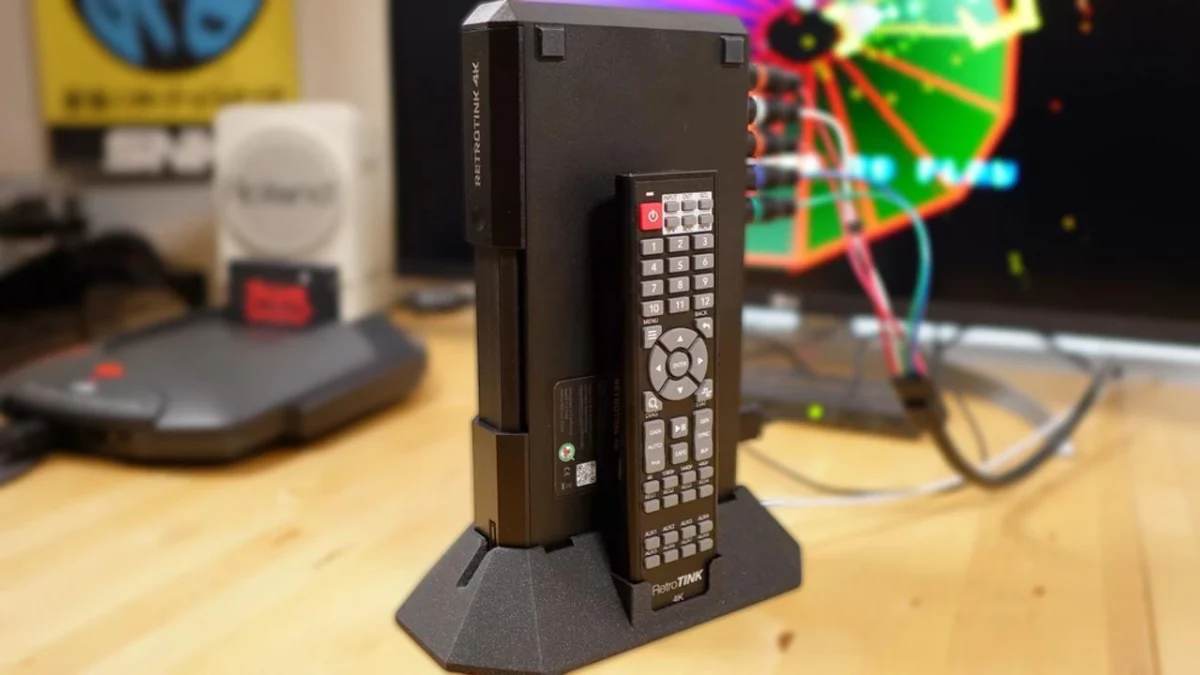
The accessory ecosystem surrounding high-end video processors for retro gaming continues to evolve as manufacturers adapt to community needs and hardware revisions. RetroFrog, a prominent name in custom-designed mounting solutions and accessories for classic gaming hardware, has officially released an updated version of its vertical stand tailored specifically for the flagship RetroTINK 4K video processor lineup. Spearheaded by Todd Gill, the newly redesigned accessory addresses a specific logistical challenge introduced by subsequent hardware iterations: accommodating the larger remote controls bundled with the RetroTINK 4K, the 6x “CE” editions, and the RetroTINK 4K Pro variants.
Available immediately through the official RetroFrog webstore, the updated stand is priced at $18 plus applicable shipping costs. This latest revision represents a direct response to consumer feedback that accumulated following the release of newer hardware iterations, ensuring that enthusiasts who prefer a vertical desk or entertainment center footprint are not forced to compromise on accessory storage and aesthetic cohesion.
Background Context of the Event
The RetroTINK 4K has established itself as a pinnacle device in the retro gaming and video processing community. Designed to upscale standard-definition and high-definition analog and digital signals to modern ultra-high-definition displays with minimal latency and maximum fidelity, the hardware quickly became an essential tool for preservationists, content creators, and dedicated enthusiasts. However, high-performance hardware often comes with a physical footprint that requires careful management in home theater setups and gaming stations.
To help users optimize their physical space, RetroFrog previously developed a vertical stand tailored for the original RetroTINK 4K architecture. Vertical orientation allows users to significantly reduce the desk or shelf space occupied by the processor. Yet, the introduction of newer models—such as the 6x “CE” editions and the RetroTINK 4K Pro—brought physical updates to the accompanying remote controls. These newer remotes feature extended dimensions that rendered previous docking and storage solutions incompatible, prompting requests from the community for a redesign.
Responding to these user demands, Todd Gill acquired a 6x unit to meticulously measure the dimensions of the updated hardware and remote controls. The resulting engineering adjustments ensure that the new vertical stand seamlessly integrates the larger remote control into its unified footprint, maintaining the clean, organized presentation that RetroFrog customers expect.
Chronology of Development and Release
The evolution of the RetroTINK 4K vertical stand reflects a standard trajectory in the niche hardware modification and accessory market, where products iterate rapidly based on direct consumer engagement.
Phase One: Initial Launch. Following the market debut of the RetroTINK 4K, RetroFrog released the first-generation vertical stand. This initial model was engineered strictly around the physical dimensions of the base unit and the original remote control supplied at launch.
Phase Two: Hardware Diversification. As derivative models such as the 6x “CE” and the RetroTINK 4K Pro entered the market, manufacturers introduced revised accessories, most notably larger remote controls designed to offer enhanced ergonomics and expanded functionality.
Phase Three: Community Feedback and Prototyping. Users quickly noted that the original RetroFrog vertical stand could not accommodate the storage or placement requirements of the new, larger remotes. Community forums and social media channels filled with requests for an updated design. In response, RetroFrog procured the necessary hardware variants to study the dimensional shifts firsthand.

Phase Four: Commercial Rollout. Finalizing the computer-aided design (CAD) adjustments, RetroFrog commenced production on the revised vertical stand. The product launched publicly in October 2026, accompanied by a public demonstration video showcasing the dual-remote compatibility feature.
Thermal Management and Operational Realities
A common concern among consumers transitioning horizontal electronics into a vertical orientation is the potential impact on thermal dissipation. Video processors like the RetroTINK 4K handle intensive computational workloads, deinterlacing, scaling, and processing complex video signals in real time, which naturally generates internal heat.
Industry analysts and hardware experts have evaluated the thermal dynamics of vertically mounting the RetroTINK 4K and conclude that the orientation change does not negatively impact operational temperatures in a meaningful way. Under normal operating conditions, passive airflow around the chassis remains sufficient to dissipate heat effectively. Unless the device is installed within an exceptionally enclosed environment—such as a densely packed AV rack without active ventilation—thermal thresholds are rarely approached.
For users operating in specialized high-density setups or pushing their hardware to absolute operational limits, supplementary mitigation strategies remain available. The ecosystem supports modular additions, such as dedicated wall-mount fan kits designed to force active airflow across the chassis. However, extensive field testing by power users running the RetroTINK 4K Pro under heavy workloads indicates that standard ambient room conditions, combined with either horizontal or properly spaced vertical stands, maintain stable operating temperatures without the necessity of forced cooling.
Broader Impact and Implications for the Retro Gaming Ecosystem
The release of the updated RetroFrog stand highlights the vibrancy and responsiveness of the third-party accessory market that surrounds high-end retro gaming hardware. As devices like the RetroTINK 4K continue to anchor high-end enthusiast setups, the demand for polished, purpose-built organizational tools grows proportionally.
In the broader context of consumer electronics accessories, small-batch manufacturing and 3D-printed or injection-molded modular solutions play a critical role in user satisfaction. Major consumer electronics manufacturers rarely produce niche organization accessories for specialized prosumer video equipment. Consequently, independent creators bridge the gap, transforming hardware utilization from a functional necessity into an optimized, streamlined experience.
Furthermore, the iterative refinement of products like the RetroTINK 4K vertical stand demonstrates the value of agile manufacturing pipelines. By listening closely to consumer feedback across platforms like Bluesky and dedicated enthusiast forums, independent designers can pivot quickly—often within weeks of a hardware revision—to deliver compatible solutions that protect investments and enhance daily usability.
Conclusion and Availability
The updated RetroFrog vertical stand for the RetroTINK 4K, CE, and 6x series is available for purchase directly through the official RetroFrog online storefront at a retail price of $18, exclusive of shipping. While promotional imagery may occasionally feature the first-generation design for illustrative purposes, all current orders fulfill the newly engineered revision equipped to handle both legacy and current-generation remote control formats. As the retro gaming hardware landscape continues to advance, such dedicated peripheral support ensures that enthusiasts can maintain clean, efficient, and professional-grade setups for years to come.