Farhan hamdan
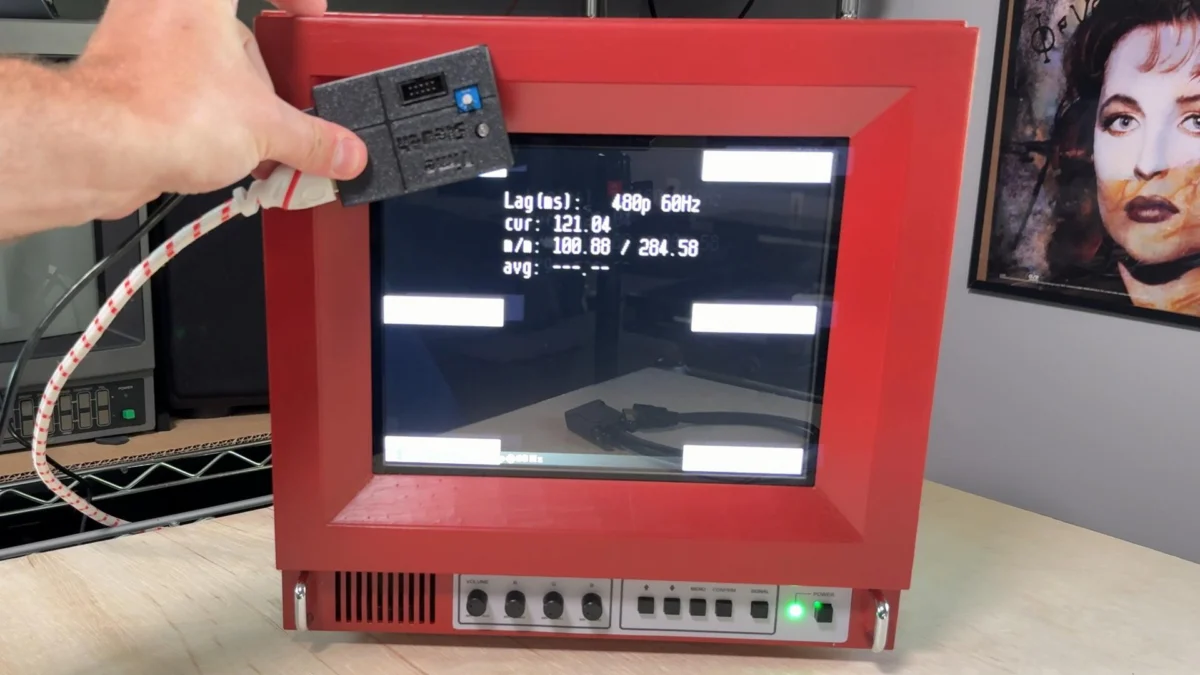
The crowdfunding campaign for Unico’s Traveller ULW10—a modern, LCD-based display designed to emulate the classic aesthetics and utility of vintage 4:3 Professional Video Monitors (PVMs)—has officially met its funding goals and transitioned into the development phase. While the successful funding ensures that the project will continue, the journey from its initial pitch to its current production milestones has been marked by significant scrutiny from the retro gaming community, early prototype controversies, and shifting hardware timelines.
As backers await the realization of a device promised to bridge the gap between legacy analog hardware and modern flat-panel displays, questions regarding manufacturing realities, engineering revisions, and delivery schedules remain at the forefront of industry discussions.
Background and Concept of the Traveller ULW10
For decades, enthusiasts of retro video games have relied on vintage cathode-ray tube (CRT) monitors and professional-grade video displays, such as Sony PVMs, to achieve the authentic visual fidelity intended by original developers. Because classic video games were designed around the physical characteristics of CRT technology—including scanlines, phosphor persistence, and native 4:3 aspect ratios—playing them on modern flat-screen LCD or OLED monitors often results in an overly sharp, blocky, or distorted image without external scalers and filters.
The Unico Traveller ULW10 was pitched to the retro gaming community as an all-in-one hardware solution designed to solve these issues. Promoted as a portable, modern take on the traditional 4:3 PVM, the display aimed to provide retro gamers, content creators, and developers with a dedicated desktop monitor capable of natively handling older video signals while offering the convenience and longevity of contemporary LCD panels. The pitch resonated strongly with the enthusiast community, quickly securing approximately a quarter of a million dollars in backing from consumers eager for a dedicated hardware alternative to aging, increasingly scarce vintage CRTs.
Chronology of the Controversy
The path to funding, however, was far from straightforward. The project encountered immediate turbulence following the distribution of early review units to prominent members of the retro gaming press and hardware analysis community. Reviewers examining the initial prototype units reported an experience that fell drastically short of the specifications and performance capabilities advertised in the Kickstarter marketing materials.
Rather than a specialized display engineered specifically for retro gaming requirements, early evaluations suggested that the prototype utilized a generic, off-the-shelf LCD driver board entirely unsuited for advanced video processing, low-latency gaming, or authentic CRT simulation. When these early shortcomings were publicly highlighted by reviewers and community advocates, the response from the project organizers drew additional criticism. Representatives reportedly defended the state of the hardware by emphasizing that the fundamental spirit of crowdfunding involves backing projects based on preliminary concepts and evolving prototypes.
This defense did little to quell skepticism, particularly given the ambitious delivery timelines promised in the initial campaign. However, mounting public pressure and direct community feedback appear to have prompted a significant shift in Unico’s development strategy. Rather than proceeding with the inadequate hardware initially distributed to reviewers, the project leadership initiated a complete engineering overhaul of the display’s internal architecture prior to finalizing mass production.
Hardware Revisions: FPGA Integration and Video Input Testing
Recent developer updates published through the official Kickstarter campaign page indicate that Unico has abandoned the generic driver boards featured in the initial review units, replacing them with a custom-designed circuit board centered around a Field Programmable Gate Array (FPGA).

The inclusion of an FPGA represents a critical technical pivot for the Traveller ULW10. Unlike standard, fixed-function integrated circuits found in generic display controllers, an FPGA can be programmed and reconfigured at the hardware level to handle complex video signal processing tasks with minimal latency. During the initial Kickstarter campaign, developers explicitly claimed that the monitor would feature capabilities capable of simulating the visual characteristics of original CRT displays and classic pixel art formations. While the presence of an FPGA does not automatically guarantee optimal performance, industry experts note that it serves as an indispensable prerequisite for implementing authentic scanline generation, custom scaling algorithms, and advanced visual filters without introducing prohibitive input lag.
In addition to the FPGA-based driver board, subsequent project updates have demonstrated progress regarding legacy video input compatibility. Recent technical disclosures showcased the updated board accepting composite video signals. Handling standard-definition interlaced signals (480i) over composite connections remains notoriously difficult for modern display controllers due to the complex nature of separating luma and chroma data cleanly without introducing artifacts or motion judder.
Despite these hardware improvements, technical analysts and hardware reviewers emphasize the necessity of maintaining realistic expectations. While composite video support aligns more closely with original campaign promises, vintage video standards present inherent engineering challenges on modern flat-panel technology. Furthermore, despite the release of these hardware update logs, critical metrics—such as comprehensive input lag testing data—have yet to be formally demonstrated or independently verified through the campaign’s official update channels.
Delivery Timelines and Production Realities
A persistent point of contention surrounding the Traveller ULW10 campaign involves the projected fulfillment schedule. The official Kickstarter page continues to list an estimated delivery window targeting the end of the current calendar year.
However, industry observers and hardware developers have expressed widespread skepticism regarding the feasibility of this timeline. The recent completion and public demonstration of a completely redesigned FPGA-based driver board imply that the project is still in a relatively late engineering validation phase rather than ready for mass manufacturing. Transitioning from a newly revised prototype board to mass production, component sourcing, regulatory compliance testing, assembly, and international shipping typically requires a sustained period of rigorous quality assurance—a process that rarely aligns with accelerated end-of-year fulfillment estimates.
Critics have questioned why original delivery projections remain unadjusted despite major hardware redesigns occurring midway through the campaign lifecycle. In manufacturing circles, substantial architectural changes routinely introduce unforeseen delays, supply chain bottlenecks, and necessary firmware refinements.
Broader Implications and Industry Impact
The trajectory of the Unico Traveller ULW10 highlights a recurring tension within the modern crowdfunding ecosystem between rapid marketing pitches and the realities of hardware engineering. Crowdfunding platforms have increasingly served as incubators for niche retro gaming hardware, allowing enthusiast-driven concepts to bypass traditional venture capital hurdles. However, projects targeting specialized technical markets face intense scrutiny from a knowledgeable consumer base that evaluates product claims against rigorous empirical standards.
The initial misstep of shipping undercooked prototypes to reviewers—and the subsequent public friction—serves as a cautionary case study in project transparency and consumer relations. While the decision by Unico to redesign the internal driver board and incorporate an FPGA indicates a willingness to respond constructively to technical feedback, the long-term reputation of the product will ultimately depend on final production units reaching backers’ hands.
As development continues, the retro gaming community remains cautiously observant. If the final hardware successfully delivers low-latency performance, reliable legacy video compatibility, and authentic visual emulation, the Traveller ULW10 could establish a viable commercial template for bridging the gap between vintage displays and modern flat-panel technology. Conversely, failure to meet performance expectations or persistent fulfillment delays risk cementing the campaign as a cautionary tale of overpromised hardware specifications. For now, backers and industry watchers alike maintain a watchful stance, awaiting independent verification of the final production hardware’s capabilities.