Chalid Lutfie
The Technical Genesis of Still Flying
The creation of Still Flying was constrained by the hardware architecture of the Sinclair ZX Spectrum, specifically the General Instrument AY-3-8910 sound chip. This chip, which features three square-wave channels and a single noise channel, required composers to operate within extremely narrow parameters. C-Jeff’s choice of Pro Tracker 3—a popular tracker software of the era—meant that every note, volume envelope, and sound effect had to be programmed manually, often through complex hexadecimal inputs.
This era of music production was defined by the "demoparty" circuit. These gatherings were not merely social events but intense technical competitions where programmers, graphic artists, and musicians pushed aging hardware beyond its original design specifications. The composition process for the album was deeply integrated into these events, with several tracks serving as competitive entries before being curated into the final album structure. By utilizing real hardware, C-Jeff ensured that the album maintained the authentic "grit" and frequency response that distinguishes 8-bit audio from modern digital emulations.
A Chronology of Competition and Release
The development of the album spans the calendar year of 2002, a period marked by high activity in the Eastern European demoscene. The timeline of the project’s evolution is as follows:
- Early 2002: C-Jeff begins the composition of tracks intended for the Still Flying project, focusing on a narrative-driven approach to melody.
- May 2002: The track "My Mind is Free" is submitted to the CAFe 2002 demoparty. Due to a self-described lack of language proficiency at the time, the track was released under the truncated title "My mind free." It placed 13th in the highly competitive ZX Spectrum AY Music category.
- Late 2002: The track "Lonely Soul" is composed. Although it was initially excluded from the core album concept, its stylistic alignment with the other tracks led to its eventual inclusion. It achieved a 2nd place finish at the Paradox 2002 demoparty.
- Late 2003/Early 2004: Approximately 18 months after the initial compositions, the album was ported into an executable musicdisk format. This technical feat was made possible through a collaboration with developer Vortex, artist Schafft, and packer Poisoned CyberJack, demonstrating the collaborative nature of the demoscene.
The Demoscene Context and Collaborative Efforts
The release of Still Flying as an executable file is a significant historical detail. In the early 2000s, simply releasing an audio file was insufficient for the demoscene community. A "musicdisk" was a standalone program that would run on a ZX Spectrum emulator or original hardware, often featuring custom graphics and code-driven visualizers. By involving Schafft for artwork and Poisoned CyberJack for compression algorithms, C-Jeff transformed the album from a collection of songs into a piece of functional software.
This collaborative model remains a cornerstone of the demoscene. The contribution of MmcM in the mastering process further highlights the professionalization of these hobbyist projects. Mastering 8-bit audio is a distinct discipline; it requires balancing the harsh, unfiltered output of the AY chip to make it palatable for modern playback devices without stripping away the character of the square-wave synthesis.
Analysis of the 2002 ZX Spectrum AY Music Compo
To understand the environment in which Still Flying was born, one must look at the data surrounding the 2002 demoparty circuit. The ZX Spectrum AY Music competitions were characterized by an emphasis on "trick" programming—finding ways to make the limited hardware produce sounds that seemingly exceeded its three-channel limit.
"My Mind is Free," despite its 13th-place finish at CAFe 2002, is retrospectively cited by fans for its melodic complexity, which stood in contrast to the more rhythm-heavy, percussive tracks often favored by judges at the time. "Lonely Soul," by securing 2nd place at Paradox 2002, demonstrated that C-Jeff’s shift toward more melancholic, "lyric" compositions was finding traction among critics who valued emotional resonance over purely technical sound manipulation. These placements established a blueprint for the artist’s future career, proving that a balance between technical proficiency and narrative composition was a viable path in the chiptune genre.
Broader Impact and Historical Significance
The long-term impact of Still Flying lies in its preservation of the "tracker" workflow. As software production tools became more automated and user-friendly, the raw, manual nature of Pro Tracker 3 became a niche interest. By documenting this process and later making the album available on platforms like Bandcamp, C-Jeff helped transition these ephemeral demoscene tracks into a more permanent, accessible format.
The album serves as a case study for the "lo-fi" aesthetic that would later dominate the independent game music scene. The constraints faced by C-Jeff in 2002—limited memory, restricted voice count, and monochromatic visual displays—are now mirrored in the minimalist design philosophies of many modern indie developers. Consequently, the album is frequently referenced in discussions regarding the transition of 8-bit music from a competitive "sport" to an established musical genre.
Official Credits and Technical Specifications
The production of Still Flying was a multidisciplinary effort. The following credits have been formally recognized:
- Composition and Production: C-Jeff, whose role encompassed both the creative writing of the melodies and the technical management of the project.
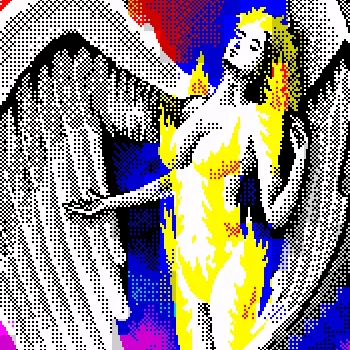
- Visual Art: Schafft, who provided the graphical assets for the musicdisk interface.
- Mastering: MmcM, responsible for the sonic balance of the tracks to ensure consistency across different playback environments.
The rights to the work remain under the stewardship of the composer, with the copyright and licensing established at the time of the initial release in 2002. The album’s enduring availability on modern digital storefronts ensures that the 2002 recordings remain accessible to a new generation of listeners and researchers of retro-computing history.
Conclusion: The Legacy of a Real-Hardware Production
The importance of Still Flying cannot be understated for those tracking the evolution of digital music. It is a snapshot of a specific moment in technological history where the limitations of the Sinclair ZX Spectrum were not viewed as barriers, but as the medium itself. By refusing to use external emulators or modern synthesizers, the project maintained an integrity that defines its place in the canon of chiptune music.
The journey of the album—from a competition entry at the CAFe 2002 party to a polished, mastered, and distributed collection—mirrors the broader transition of the demoscene from a clandestine network of hobbyists to a respected subculture of digital artists. Whether viewed as an artifact of 2002 software engineering or as a collection of evocative electronic melodies, Still Flying remains a foundational text in the history of computer-based music composition. As the demoscene continues to influence contemporary music and game design, the technical and creative choices made by C-Jeff in 2002 continue to provide valuable insights into the potential for artistic expression within strictly defined technical constraints.