Jia Lissa

The era of the early 1990s represented a period of unprecedented expansion for the video game industry, a time when the rivalry between Sega of America and Nintendo of America defined the living rooms of a generation. Central to this period of innovation was the Sega Channel, a groundbreaking service that delivered games directly to the Sega Genesis console via cable television infrastructure. One of the primary architects of this service was Doug Glen, a veteran executive whose tenure at Sega of America helped pivot the company from a hardware manufacturer into a multifaceted entertainment powerhouse. By examining the development of the Sega Channel and the strategic shifts during Glen’s tenure, we gain insight into a crucial evolutionary step in the transition from physical media to digital distribution.
The Genesis of a Digital Vision
Doug Glen’s entry into the gaming industry predated his time at Sega, beginning with his work at Lucasfilm Games in 1986. With an academic background as an MIT engineer and a career foundation in advertising and consumer research for companies like Atari and Intellivision, Glen brought a unique synthesis of technical literacy and marketing acumen to the table. His time at Lucasfilm Games—which later became LucasArts—provided him with a front-row seat to the industry’s resurgence following the crash of 1983.
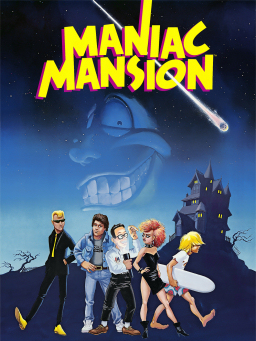
The success of titles like Maniac Mansion served as a professional touchstone for Glen, reinforcing his philosophy that success in a crowded market requires products that are both "remarkable and delightful." When Glen moved to Sega of America, he joined an organization on the cusp of cultural dominance. Under the leadership of Tom Kalinske, the company aggressively sought to dismantle Nintendo’s grip on the North American market. Glen’s role, defined as Group VP and unofficial chief strategy officer, placed him at the center of the company’s most ambitious initiatives, including the development of the Sega Channel.

The Sega Channel: A Technological Milestone
Launched commercially in 1994, the Sega Channel was years ahead of its time. It functioned as a bridge between the analog cable television infrastructure and the nascent world of online gaming. The system required a specific hardware adapter that connected to the Sega Genesis console, allowing users to access a rotating library of approximately 50 games.
From an engineering perspective, the service was an exercise in extreme efficiency. It utilized a narrow 3MHz bandwidth between standard VHF channels to broadcast a continuous loop of data. When a user selected a game, the adapter would "pluck" the necessary data from this "wheel" of information, loading the game into the console’s memory. While today’s high-speed internet makes such a process seem archaic, in 1994, it was a technical marvel that provided consumers with a "games-on-demand" experience that would not see a mainstream equivalent for another decade.
Despite its innovation, the project faced significant hurdles. Technical issues plagued the early iterations of the hardware, caused in part by a reluctance from Sega’s Japanese engineering management to disclose specific glitches in the Genesis hardware architecture. These communication gaps between the U.S. and Japanese divisions created friction, but the persistence of the American team—comprised of talent from Sega and partners like Time Warner and TCI—ensured the service’s viability for a period of time.
Marketing Warfare: The Goodby-Silverstein Era
Glen’s influence at Sega extended far beyond technical infrastructure; he was instrumental in shaping the company’s aggressive, combative marketing strategy. Upon his arrival, Glen prioritized the search for a new advertising agency, eventually selecting Goodby-Silverstein & Partners. This partnership resulted in the iconic "SEGA!" branding and a series of commercials that were intentionally provocative.
By challenging Nintendo directly through advertisements such as "Punk Zoom," "Tom’s Dog," and the "Bug Zapper," Sega fundamentally changed the market dynamics of the 1990s. The efficacy of this strategy was confirmed by the reactions of their competitors. Howard Lincoln, then the head of Nintendo of America, famously contacted Sega to demand the removal of these advertisements, citing their disparaging nature. For Glen and his team, this was the ultimate validation of their impact; they had moved the goalposts of the industry, forcing Nintendo to play on their terms.
Strategic Realignment and the Barbie Phenomenon
Glen’s departure from Sega in the mid-1990s marked another strategic shift in his career. Recruited by Mattel to serve as Chief Strategy Officer and President of Mattel Media, Glen turned his attention toward an underserved demographic: girl gamers. At the time, the industry was heavily skewed toward male consumers, with over 2,000 titles marketed to boys compared to a negligible number for girls.
Glen’s conviction that girls represented a viable mass market for gaming was met with skepticism by many in the industry. However, the release of Barbie Fashion Designer in 1996 proved his thesis correct. The title became a million-unit success, outselling many of the top-tier video game releases of that year. This achievement mirrored his earlier work on the Sega Channel—the ability to identify an untapped market or technological capability and execute a strategy that competitors had ignored.
Legacy and Industry Implications
The Sega Channel was eventually shuttered as the industry transitioned toward the Saturn and subsequent consoles, and as internet connectivity evolved beyond cable television signals. However, its historical significance cannot be overstated. It was the first complex, robust online service in gaming, paving the way for platforms like Xbox Live and the PlayStation Network. It demonstrated that consumers were willing to pay for digital access to libraries of content, an idea that is now the backbone of modern gaming services like Xbox Game Pass.

Furthermore, the tension between Sega of America and Sega of Japan regarding the channel highlights the complexities of international corporate management during the 1990s. While Sega of Japan remained hesitant—partially due to the low penetration of cable boxes in Japanese households, which hovered under 5%—Sega of America saw the channel as a vehicle for brand prestige and market expansion. This divergence in vision would characterize much of the company’s internal discourse throughout the decade.
Conclusion: A Blueprint for the Future
The career of Doug Glen serves as a lens through which we can view the evolution of interactive entertainment. From his early days at Lucasfilm to his innovative leadership at Sega and his market-defining success at Mattel, Glen’s trajectory reflects a consistent theme: the pursuit of the "remarkable."
The Sega Channel remains a testament to the risks taken by early industry pioneers. It was a project that navigated the limitations of 1990s hardware and infrastructure to offer a glimpse of the future. While the industry has since moved toward high-definition streaming and global cloud gaming, the fundamental logic established by the Sega Channel—the seamless delivery of entertainment to the home—continues to underpin the digital landscape of the 21st century. Through his strategic management and willingness to challenge the status quo, Doug Glen helped ensure that the video game industry evolved from a niche hobby into a dominant force in global popular culture. The lessons learned during that era of rapid iteration and bold marketing continue to influence how companies approach, monetize, and distribute digital entertainment today.