Jia Lissa
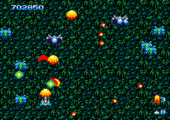
The Sega Master System, released globally between 1985 and 1987, occupies a unique position in the history of home video game consoles. While it was arguably overshadowed by the Nintendo Entertainment System (NES) in North America and Japan, it maintained a dominant market share in Europe and Brazil for nearly a decade. Despite this longevity, the console’s library has traditionally been categorized by its foundational platformers and adventure games, such as Alex Kidd in Miracle World and Phantasy Star. The vertical-scrolling shooter—or "shmup"—genre, while represented by high-quality ports like Power Strike and R-Type, has historically remained a niche sub-segment of the platform’s catalog. This narrative is currently being challenged by the independent developer known as badcomputer, whose 2026 release, Razing Core, serves as a technical benchmark for the 8-bit architecture.
Chronology of Development and Release
The arrival of Razing Core follows a multi-year trajectory of development aimed at maximizing the Master System’s Zilog Z80 processor and its custom Video Display Processor (VDP). The developer, badcomputer, first signaled a commitment to the platform with the 2025 releases of Frontier Force and Astro Climber. These titles served as the foundational R&D for Razing Core, allowing the developer to refine sprite handling and color palette optimization.
Prior to these releases, the developer’s earlier work, such as the single-screen shooter Blast Arena, provided the proof-of-concept for the scrolling mechanics seen in the current title. Razing Core represents an evolution of this framework, moving from static environments to multi-stage, side-scrolling, and vertically-scrolling levels. The game was optimized for the original Master System and Mark III hardware, maintaining a target refresh rate of 60Hz. Following its digital debut on the itch.io platform, industry observers have noted a roadmap for a physical release scheduled for 2027, continuing a trend of "homebrew" physical media preservation that has become common among dedicated retro-gaming communities.
Technical Specifications and Gameplay Mechanics
Razing Core operates within the constraints of 8-bit hardware while employing sophisticated software optimization to minimize common graphical artifacts such as flicker and frame-rate drops. The game is designed to support both standard Master System controllers and the three-button Sega Genesis controller, offering remapped inputs for a more ergonomic experience.
The core gameplay loop centers on the "Horizon" spacecraft, which utilizes three primary combat systems:
- Standard Rapid Fire: A base weapon system capable of five-tier upgrades via item collection.
- Core-Rotation: A tactical defensive maneuver that shields the player from incoming projectiles, governed by a cool-down timer.
- Burst Charge: An invincibility-state weapon activated by holding dual-button inputs, intended for high-intensity encounters.
The game utilizes a persistent point-tracking system, a staple of arcade-style titles from the late 1980s. Strategic depth is added through a risk-reward item system; while "S" icons grant weapon upgrades, "X" icons act as penalties, stripping the player of secondary armaments. This mechanic encourages precise movement and target prioritization, differentiating the title from simpler "bullet hell" games where evasion is the sole requirement.
Performance Analysis on Modern and Legacy Hardware
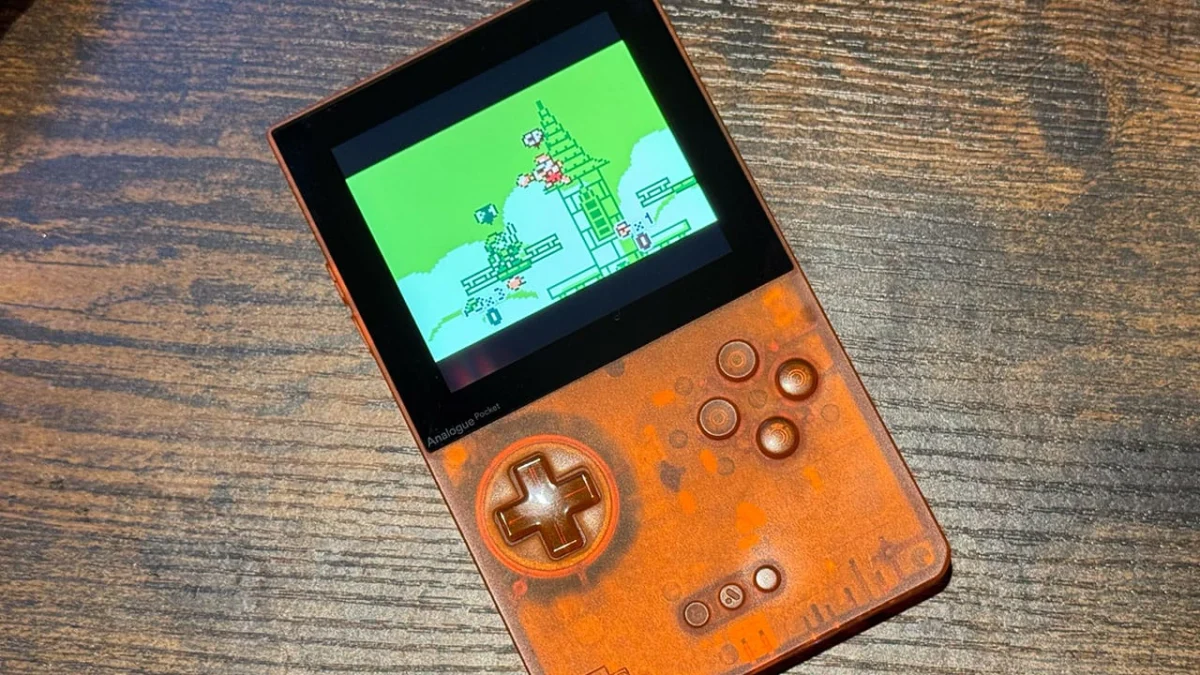
To assess the game’s performance, technical evaluations were conducted using a variety of hardware configurations, including original Master System consoles, FPGA (Field-Programmable Gate Array) devices like the Analogue Mega SG, and various emulation suites.
The game’s optimization ensures that despite high sprite density—often exceeding the standard count expected on 8-bit machines—the performance remains stable. This is a critical observation for the retro-gaming market, where "slowdown" was historically accepted as a limitation of the hardware. The absence of such issues in Razing Core suggests a high level of proficiency in Z80 assembly optimization. Furthermore, the audio presentation, composed by Lovepenguin, leverages the Master System’s Texas Instruments SN76489 sound chip to produce multi-minute, non-looping compositions that avoid the high-frequency distortion and percussive "scratching" often found in western-developed 8-bit titles.
Broader Implications for the Retro-Development Industry
The release of Razing Core highlights a shifting trend in the independent gaming sector: the "homebrew" market is no longer limited to passion projects but is increasingly producing software that rivals official retail releases from the late 1980s. By leveraging modern digital distribution platforms like itch.io, developers can bypass the physical manufacturing barriers that previously limited the reach of such niche software.
The impact of this development is twofold. First, it extends the lifecycle of legacy hardware, providing value to owners of original consoles who are often restricted by the availability of vintage software. Second, it creates a pipeline for modern artistic talent—such as digital artist danmakuman and musician Lovepenguin—to contribute to the preservation of retro aesthetics.
Industry analysts have noted that the accessibility of these titles, priced at an entry point of $7.99, encourages a wider demographic of players to engage with 8-bit hardware. This economic model sustains a niche ecosystem that keeps the Sega Master System and similar consoles relevant in the era of high-definition gaming.
Conclusion and Future Outlook
As of mid-2026, Razing Core stands as a definitive example of what can be achieved through rigorous optimization of 8-bit architecture. While minor criticisms regarding the pacing of the "Burst Charge" ability and the high durability of certain mid-tier enemies persist among early players, the overall reception emphasizes the game’s success as a technical achievement.
The planned physical release for 2027 is expected to be a significant event for collectors, further cementing the status of badcomputer within the community. As the developer continues to refine their approach, the implications for the future of the Master System remain positive. By demonstrating that the hardware is capable of supporting complex, multi-stage shmups with high-fidelity audio and minimal technical degradation, Razing Core has successfully redefined the ceiling for 8-bit software development. For collectors, researchers, and enthusiasts alike, the game serves as a compelling case study in the intersection of historical hardware limitations and modern software engineering ingenuity.