Jia Lissa
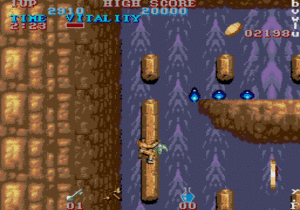
For over thirty-five years, Capcom’s 1987 arcade powerhouse Black Tiger remained an elusive title for console gamers. While the game achieved significant popularity in the late 1980s as a staple of the coin-op scene, it was never officially ported to major home consoles like the Nintendo Entertainment System or the Sega Master System. While various home computer conversions surfaced during that era, they often failed to capture the fluid mechanics and intricate level design of the original hardware. Today, the landscape of retro gaming has shifted as developer rester159 has unveiled a ground-up recreation of the title specifically engineered for the Sega Genesis, utilizing the modern Sega Genesis Development Kit (SGDK).
A Historical Absence in Console Gaming
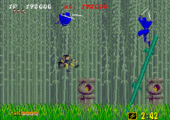
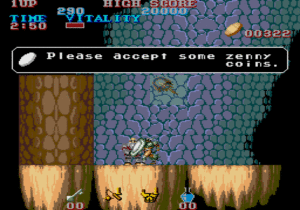
When Capcom released Black Tiger in 1987, it was defined by its blend of action, platforming, and exploration. Players navigated a treacherous fantasy landscape as a barbarian fighter, managing resources, liberating sages, and battling a variety of mythological adversaries. Throughout the late 1980s and early 1990s, Sega of America and Capcom collaborated on several high-profile conversions for the Sega Genesis, including critically acclaimed titles like Ghouls ‘N Ghosts and Forgotten Worlds. Despite the success of these titles, Black Tiger was notably absent from the Genesis library, leaving a void for fans who desired a high-fidelity home experience that matched the arcade’s performance.
The lack of a console port was historically attributed to the limitations of 8-bit architecture and the rapid shifts in development priorities as the industry moved toward 16-bit hardware. By the time the Sega Genesis gained market dominance, the window for a direct commercial port had largely closed, leaving Black Tiger as a title primarily preserved through arcade emulation and legacy home computer versions.
Technical Architecture and Re-engineering
The current project by rester159 is not a simple software emulation but a native build designed to interface directly with the Motorola 68000 processor architecture of the Sega Genesis. By utilizing the SGDK—a C-based development environment that has become the industry standard for modern Sega homebrew projects—the developer has rewritten the game’s logic to function within the constraints of the Genesis’s 256×224 display resolution.
Translating the arcade’s visual assets to the Genesis required a significant technical overhaul. The original arcade hardware featured a more expansive color palette than the Genesis, which typically supports 64 colors simultaneously from a 512-color master palette. To maintain visual fidelity, the development team performed a manual conversion of all tile patterns and sprites, optimizing them for the Genesis’s specific color registers. While this resulted in minor variations in the color depth of background elements, the project maintains the overall aesthetic integrity of the original 1987 release.
Further technical adjustments were necessitated by the hardware’s audio capabilities. The original arcade version relied on custom sound hardware, whereas the Genesis utilizes Yamaha YM2612 FM synthesis and the Texas Instruments SN76489 programmable sound generator. The developer has painstakingly mapped the original score and sound effects to these chips. Although some differences in noise channel scaling and volume balance are present, the recreation effectively mirrors the auditory experience of the arcade original.
Gameplay Modes and Modern Enhancements
A defining characteristic of this project is the bifurcation of the user experience into two distinct modes: Arcade and Home. The Arcade mode is designed for purists, featuring the inclusion of virtual coin credits, original attract mode sequences, and simulated DIP switch settings that allow players to adjust game difficulty, starting lives, and bonus life thresholds exactly as they appeared on the original arcade cabinets.
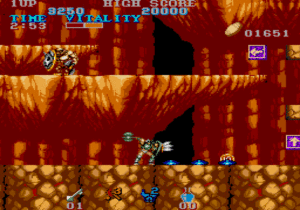
Conversely, the Home mode introduces features designed to modernize the gameplay loop for the living room environment. These include the removal of coin-operated mechanics, the inclusion of a comprehensive boss rush mode, and a persistent SRAM feature that allows players to record and save their high scores directly to the cartridge memory. Furthermore, the developer has implemented an optional "jump assist" mechanic to facilitate navigation through the game’s seventh stage, which is widely considered one of the most difficult platforming sequences in the original game.
Perhaps the most significant addition is the implementation of visual parallax scrolling. This technique, which creates a sense of depth by moving background layers at different speeds, was absent in the original coin-op but is a hallmark of high-quality 16-bit titles. Its inclusion in this build offers a modernized visual presentation that aligns with the expectations of the 16-bit era.
Broader Implications for the Homebrew Community
The release of a playable public beta signifies a growing trend in the software development community: the preservation of legacy titles through native porting rather than emulation. By leveraging modern development tools like the SGDK, developers are capable of producing software that runs with the same efficiency as commercial games from the 1990s.
This project also highlights the longevity of the Sega Genesis hardware, which continues to see active development nearly three decades after its discontinuation. The ability for users to test this beta via modern hardware—such as flash cartridges or MISTer FPGA systems—demonstrates how the bridge between historical hardware and modern accessibility is narrowing.
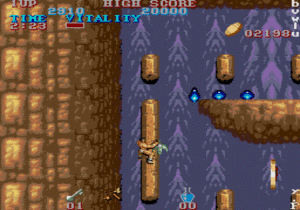
While the developer acknowledges that the project currently experiences minor frame rate fluctuations during high-intensity scenes, the overall stability of the build indicates a high level of technical proficiency. The decision to open the beta to public feedback on platforms such as itch.io allows for iterative refinement, ensuring that the final release will be as polished as possible.
Outlook and Future Development
At present, there is no finalized timeline for a formal release of the completed version. However, the current build is considered "fully playable," encompassing all stages and core mechanics from the original 1987 release. The developer remains engaged with the user community, soliciting bug reports and feature suggestions to improve the experience.
For the retro gaming industry, this project serves as a case study in how dedicated enthusiasts can successfully bridge the gap where official commercial entities could not. By choosing to build from the ground up rather than relying on emulation, the project provides a tangible look at what a "lost" 1980s port might have looked like had it been produced during the peak of the Sega Genesis’s lifespan. As development continues, it remains one of the most anticipated homebrew titles in the modern retro-gaming scene, promising to finally bring a long-requested classic to the console that arguably would have been its best home environment.