Farhan hamdan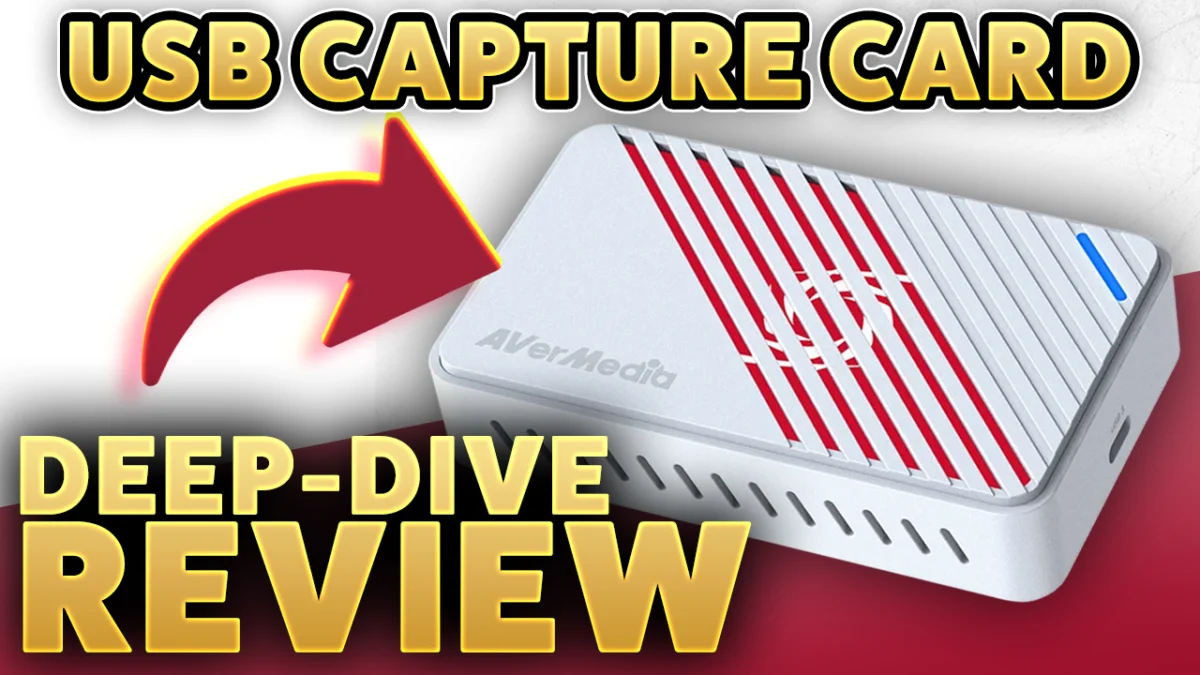
The landscape of content creation and video capture technology has evolved at a rapid pace over the past decade, driven largely by the exponential growth of live streaming, competitive esports, and the burgeoning retro gaming preservation community. As resolutions have climbed from standard definition to high definition, and subsequently to 4K ultra-high definition, hardware manufacturers have continually sought to balance high-fidelity video throughput with low latency and broad platform compatibility. Within this competitive market, AverMedia has established itself as a prominent industry fixture, regularly releasing hardware iterations tailored to both mainstream content creators and niche technical enthusiasts. The latest entry in this hardware lineage is the AverMedia Live Gamer Ultra S, designated by the model number GC553Pro. This external USB 3.0 capture card has recently undergone rigorous testing by industry analysts to determine its efficacy not only with contemporary high-resolution gaming rigs and current-generation consoles, but also within the demanding parameters of vintage and retro hardware signal chains.
Technical Specifications and Core Architecture
The AverMedia Live Gamer Ultra S (GC553Pro) is built around a high-bandwidth USB 3.0 interface operating at a theoretical maximum speed of 5Gbps. This connection speed is critical for handling the immense data throughput required by modern video capture standards. According to the manufacturer’s specifications, the capture card is capable of handling up to 1080p resolution at a smooth 60 frames per second in an uncompressed, lossless format. Alternatively, for users working with ultra-high-definition content, the hardware supports 4K capture at 60 frames per second, albeit utilizing compression algorithms to fit within the constraints of the 5Gbps USB 3.0 bandwidth pipeline.
One of the most notable design choices implemented by AverMedia for the GC553Pro is its plug-and-play architecture. Unlike many legacy capture solutions that require proprietary drivers, dedicated control software, and complex configuration routines to interface with host operating systems, the Live Gamer Ultra S is designed to be UVC (USB Video Class) compliant. This compliance ensures that the hardware functions natively across a wide spectrum of operating systems without necessitating specialized installation packages. Formal compatibility testing confirms that the capture card operates seamlessly on Microsoft Windows, Apple macOS, and various distributions of Linux. This cross-platform versatility addresses a long-standing pain point for content creators and technical hobbyists who operate outside the dominant Windows ecosystem, particularly Linux users who have historically faced driver availability hurdles with specialized video capture hardware.
Compatibility Testing with Retro Gaming Signal Chains
While modern consoles and PC setups present straightforward HDMI output signals that contemporary capture cards handle with ease, the retro gaming community relies on complex signal processing chains to bridge the gap between vintage hardware and modern digital displays. Enthusiasts frequently employ scanconverters, line doublers, and FPGA-based hardware emulation systems to achieve pristine image quality on flat-screen monitors. To evaluate the true capability of the AverMedia Live Gamer Ultra S, the hardware was subjected to extensive testing involving specialized retro gaming signal chains.
The Open Source Scan Converter (OSSC), widely regarded as one of the premier hardware line multipliers for retro consoles, served as a primary testing benchmark. Results from these evaluations revealed specific behavioral nuances when pairing the GC553Pro with legacy video signals. Testing indicated that the capture card is not compatible with the OSSC SNES 5x mode, a specific output profile known to push unconventional timing structures that many capture devices reject. However, the Live Gamer Ultra S performed exceptionally well with all other standard and scaled OSSC output modes, accepting them without signal drops, stutter, or synchronization failures.
Furthermore, the hardware was tested in conjunction with the MiSTer FPGA project, a popular open-source platform that replicates vintage computer and console hardware at the hardware level. The GC553Pro successfully processed the MiSTer’s low-latency "vsync_adjust=2" HDMI mode. This specific mode alters the vertical synchronization timing to eliminate stutter and achieve frame-locked motion, a feature highly coveted by speedrunners and preservationists. Additionally, the capture card demonstrated complete operational compatibility with Direct Video implementations when configured with specific parameters, specifically when RGB and Composite Sync were set to zero. These findings indicate that while certain extreme scaling modes like the OSSC SNES 5x profile remain unsupported, the vast majority of retro gaming configurations will interface with the Live Gamer Ultra S reliably.
Chronology of AverMedia Hardware Development

The release of the Live Gamer Ultra S (GC553Pro) is the latest chapter in a multi-year chronological evolution of capture technology produced by AverMedia. Over the past several years, the company has methodically expanded its product portfolio to address shifting consumer demands for higher frame rates, color depth precision, and reduced input latency.
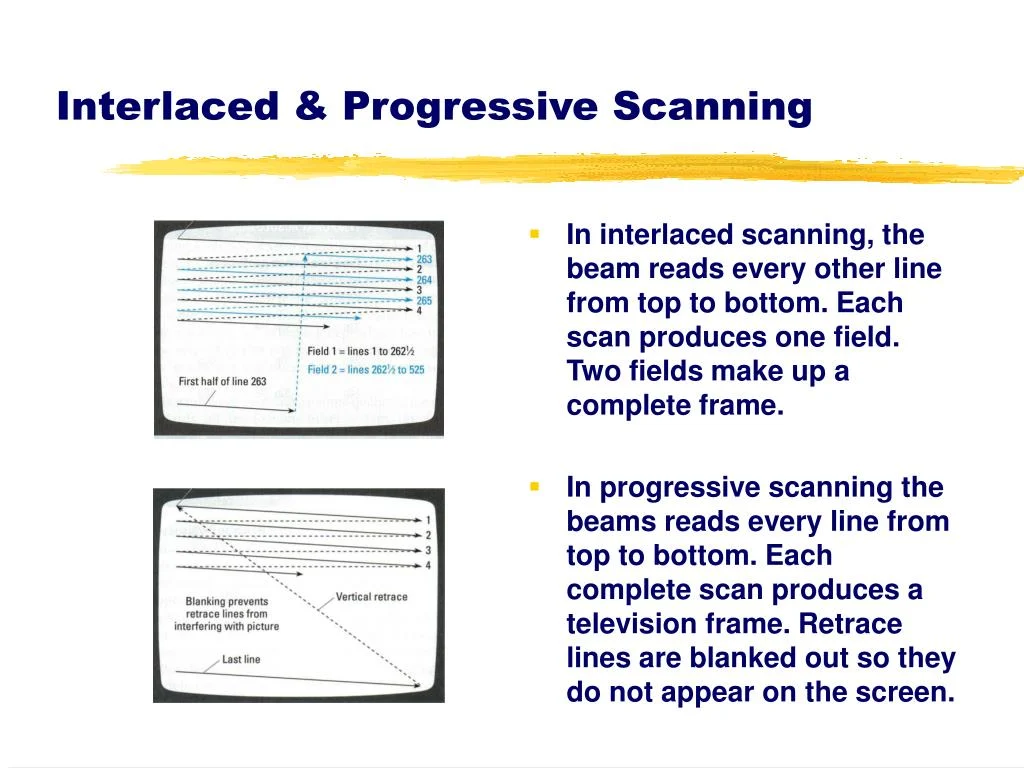
In the early stages of the 4K transition, capture solutions were largely confined to internal PCI-Express cards due to the immense bandwidth demands of uncompressed 4K video streams. Devices such as the original AverMedia Live Gamer 4K established benchmarks for internal capture, though they occasionally encountered firmware hurdles regarding legacy signal support, such as historical limitations with 480i interlaced video streams that required subsequent firmware updates to rectify. As external USB-C and USB 3.0 interfaces matured, manufacturers shifted engineering focus toward external form factors that offered comparable performance without requiring users to open their PC towers.
Concurrently, the emergence of dual-system streaming setups, mobile content creation, and multi-camera broadcasts prompted the development of versatile peripherals, including hybrid capture cards and capture-switching hardware like the AverMedia DualCam. The introduction of the GC553Pro represents a convergence of these historical trajectories, merging the high-speed data handling of internal PCIe cards into a portable, driverless external USB 3.0 form factor capable of managing both compressed 4K workflows and pristine 1080p lossless streams.
Ecosystem Integration and Supporting Software
Effective utilization of modern capture hardware extends beyond the physical device itself, heavily depending on the software ecosystem employed by the creator. High-bandwidth capture cards like the Live Gamer Ultra S often require optimized software configurations to realize their full potential, particularly when operating at high resolutions or uncompressed bitrates.
Industry discussions surrounding the GC553Pro frequently intersect with advancements in open-source broadcasting tools, such as OBS Studio. Specialized workflows, including OBS Lossless Capture methodologies, allow advanced users to capture uncompressed or mathematically lossless video data streams for archival, editing, and analytical purposes. Achieving stable 4K60 lossless captures requires careful balancing of CPU encoding overhead, solid-state drive write speeds, and USB controller bandwidth allocation. The plug-and-play nature of the GC553Pro simplifies this integration by removing driver-level variables from the equation, allowing broadcasting software to communicate directly with the UVC video stream.
Market Implications and Industry Impact
The introduction and technical validation of the AverMedia Live Gamer Ultra S carry several noteworthy implications for the broader video capture and content creation market. From an engineering perspective, the trend toward driverless UVC compliance lowers the technical barrier to entry for users migrating between different operating systems. The expansion of robust Linux compatibility is particularly significant, as the open-source gaming and streaming community has historically experienced hardware fragmentation due to a lack of manufacturer-provided drivers.
For the retro gaming and emulation communities, hardware that accommodates non-standard video timings—such as the MiSTer FPGA low-latency modes—provides critical infrastructure for preservation and content creation. While compatibility gaps like the OSSC SNES 5x mode highlight the ongoing challenges of bridging analog-era signal timings with modern digital video standards, the overall high rate of compatibility positions the GC553Pro as a viable tool for vintage gaming channels.
As consumer expectations shift toward higher fidelity, lower latency, and greater hardware flexibility, capture card manufacturers face continuous pressure to innovate within static interface standards like USB 3.0. By optimizing compression algorithms for 4K60 streams while offering uncompressed 1080p60 capture and broad cross-platform support, devices like the AverMedia Live Gamer Ultra S illustrate the current engineering equilibrium between data bandwidth limits and professional-grade video fidelity.