Farhan hamdan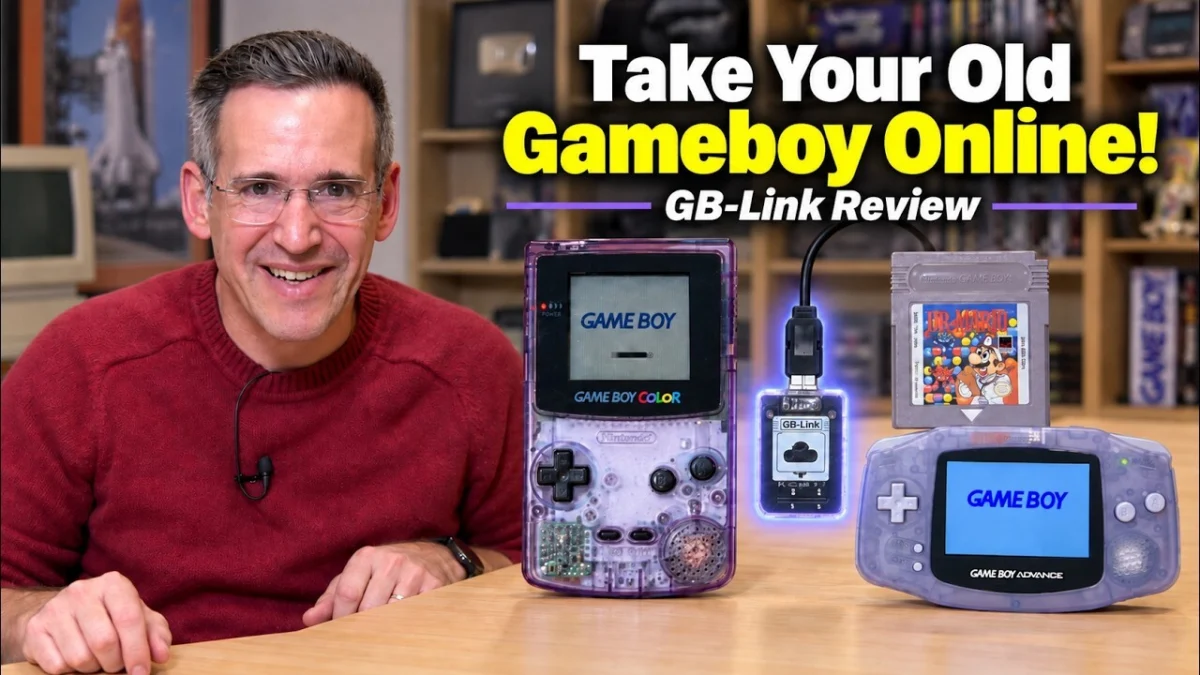
The landscape of retro video game preservation and hardware modification continues to evolve, bridging the gap between decades-old nostalgia and contemporary internet infrastructure. Tech reviewer and hardware enthusiast Lon Seidman recently showcased the second iteration of the GB-Link, a specialized homebrew peripheral designed to interface directly with the legendary Game Boy, Game Boy Color, and Game Boy Advance link ports. This innovative hardware accessory allows original, unmodified handheld consoles to communicate over the internet using standard peer-to-peer netplay architecture, effectively eliminating physical distance as a barrier for classic multiplayer experiences like Tetris, Pokémon, and Dr. Mario. Priced at approximately $50 and slated for an official commercial rollout in early 2027, the device is rapidly garnering attention across the retro gaming community as a transformative tool for both casual players and hardware archivists.
The Technical Evolution of the GB-Link V2
The concept of connecting legacy hardware to modern networks is not entirely new, but previous solutions often required complex custom software, expensive capture setups, or heavily modified console internals. The GB-Link V2 approaches this challenge from a hardware-centric perspective, acting as an intelligent bridge between the handheld’s serial communication port and a standard internet connection. By intercepting and translating the data packets transmitted through the link cable port, the device synchronizes gameplay timing between two distant consoles.
According to product specifications and demonstrations, the hardware mimics a traditional local link cable session over a wide-area network (WAN). This means that players can insert an authentic game cartridge into their original Game Boy hardware, plug in the GB-Link V2, and play head-to-head with a friend across the globe without experiencing the desynchronization issues common in crude software emulators. The low-latency data routing preserves the authentic feel and tactile responsiveness of genuine hardware, ensuring that timing-sensitive competitive titles remain playable.
Beyond Netplay: Comprehensive Cartridge Management and Emulation
While the internet-enabled multiplayer capability serves as the primary marketing focal point, the GB-Link V2 functions as a robust Swiss Army knife for retro handheld enthusiasts. Official documentation and developer overviews on Crowd Supply and the main project portal outline a diverse suite of auxiliary features that extend far beyond simple netplay functionality.
For collectors and digital archivists, the device offers full cartridge dumping capabilities. Users can back up their physical game ROMs and save files directly to modern storage media, safeguarding aging flash memory against inevitable battery degradation and hardware failure. Furthermore, the hardware includes functionality to load ROM files directly without requiring a dedicated flash cartridge, lowering the barrier of entry for homebrew developers and players testing custom software.
Photography enthusiasts and niche hardware collectors will find particular utility in the device’s interaction with the classic Game Boy Camera. The peripheral allows users to extract captured bitmap images directly from the camera cartridge to a modern file format, preserving grainy, low-resolution photographs from the late 1990s onto contemporary computers and smartphones. Additionally, the GB-Link V2 can emulate the Game Boy Advance e-Reader peripheral, unlocking rare promotional content, classic minigames, and dot-code data scans that were previously locked behind expensive, increasingly scarce physical card accessories.

Chronology and Development Timeline
The path to the GB-Link V2 reflects the broader trajectory of the open-source hardware and homebrew communities. The initial concept originated as a niche proof-of-concept project aimed at solving localized communication hurdles for classic handhelds. As interest grew within online retro gaming forums and community hubs such as RetroRGB, the developer collective recognized the commercial and archival potential of refining the hardware for a wider audience.
- Phase One (Concept and Prototyping): Early iterations focused strictly on establishing stable serial communication over TCP/IP protocols, testing basic netplay stability with high-traffic multiplayer titles like Tetris DX.
- Phase Two (Feature Expansion): Recognizing the demand for comprehensive hardware utilities, engineers integrated ROM dumping, save backup, and Game Boy Camera data extraction tools into the firmware.
- Phase Three (Crowdfunding and Manufacturing Partnerships): The project transitioned to professional crowdfunding platforms, securing manufacturing pipelines to ensure component availability amid global semiconductor fluctuations.
- Phase Four (Current Status and Anticipated Delivery): With public demonstrations by prominent tech reviewers like Lon Seidman generating significant traction, pre-orders are currently active via Crowd Supply, leading toward an anticipated global fulfillment window in early 2027.
Market Implications for Retro Preservation and Community Play
The introduction of accessible netplay hardware for seventh- and eighth-generation handhelds arrives at a critical juncture for video game preservation. As physical cartridges age, the community faces mounting challenges regarding hardware degradation, battery life depletion, and the physical isolation of regional player bases. Solutions like the GB-Link V2 address these concerns by breathing new life into physical hardware that might otherwise sit dormant on collector shelves.
From an economic perspective, a $50 price point positions the peripheral competitively within the modern retro accessories market. While high-end FPGA consoles and specialized flash carts often command hundreds of dollars, an affordable adapter that leverages existing, widely owned original hardware offers a cost-effective alternative for enthusiasts seeking authentic experiences.
Moreover, the ability to dump saves and back up cartridges directly supports ongoing institutional and community-led preservation efforts. Libraries, museums, and digital preservationists continually seek reliable methods to migrate proprietary data from aging physical formats to secure digital repositories. By incorporating these features into a consumer-grade device, developers are inadvertently contributing to the broader archival framework that safeguards interactive entertainment history.
Industry Reception and Future Outlook
Early critical reception from prominent community figures and hardware reviewers has been overwhelmingly positive. Demonstrations highlighting seamless netplay matches and functional e-Reader emulation have validated the technical competence of the underlying architecture. As production scales toward the early 2027 delivery target, attention will likely shift toward firmware stability, community software support, and the potential for third-party developers to write custom applications utilizing the device’s open API.
For the millions of consumers worldwide who still own functional Game Boy systems, the GB-Link V2 represents a compelling intersection of past and present technology. By transforming isolated legacy devices into connected nodes on a modern network, the project redefines what is possible with hardware that celebrated its 35th anniversary. As the release window approaches, anticipation continues to build across digital forums, signaling a vibrant, enduring future for classic handheld gaming.