Ganda Hendra Perkasa
Phil Salvador hosts a special episode of the Video Game History Hour featuring Carolyn Rauch and Doug Lowenstein to discuss the origins and evolution of the Electronic Entertainment Expo (E3).
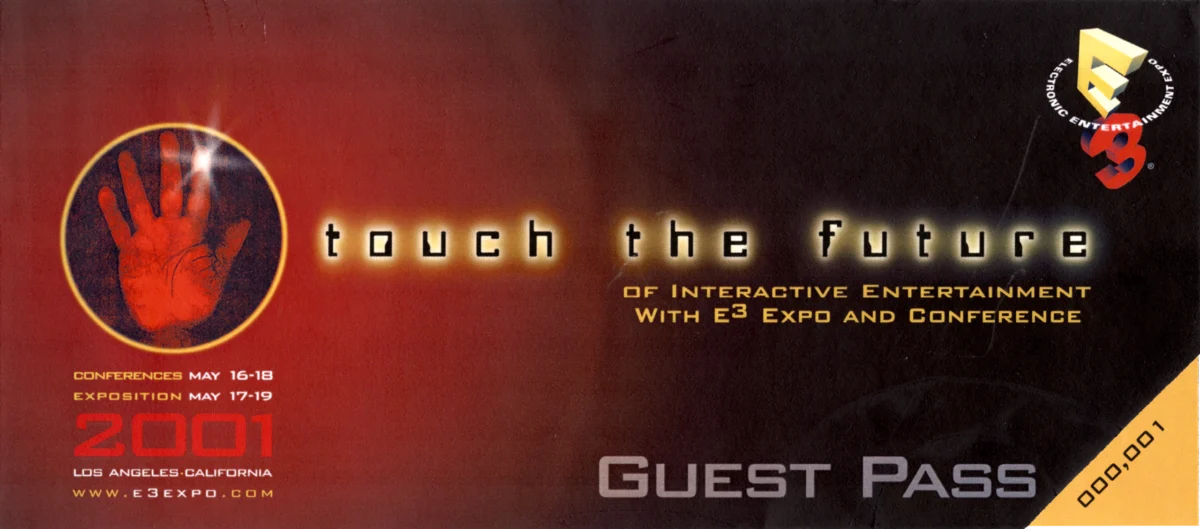
For nearly three decades, the Electronic Entertainment Expo, universally known as E3, served as the absolute epicenter of the global video game industry. Every summer, journalists, developers, executives, and eventually fans from around the world converged on Los Angeles to witness the future of interactive entertainment. However, the creation of this legendary multi-billion-dollar trade show was not an inevitable triumph; rather, it was born out of regulatory crisis, industry infighting, and logistical desperation. A recent retrospective episode of the Video Game History Hour, hosted by Phil Salvador and featuring foundational industry architects Carolyn Rauch and Doug Lowenstein, sheds new light on the tumultuous birth, golden era, and ultimate transformation of E3.
The Genesis of an Industry: The 1994 Founding of the Interactive Digital Software Association
To understand why E3 was necessary, one must examine the geopolitical and cultural landscape of the video game industry in the early 1990s. Prior to the mid-1990s, video games lacked a unified trade organization to represent their political, legal, and economic interests. This vacuum changed dramatically in 1993 and 1994, largely driven by intense political scrutiny. Following notorious U.S. Senate hearings concerning graphic violence in titles such as Mortal Kombat and Night Trap, lawmakers threatened federal censorship and severe regulatory oversight unless the industry self-regulated.
In response to this legislative threat, industry visionaries banded together to establish the Interactive Digital Software Association (IDSA)—which later became the Entertainment Software Association (ESA). Doug Lowenstein, the founder and first president of the organization, spearheaded this monumental effort. During his appearance on the Video Game History Hour, Lowenstein detailed how the newly formed IDSA had to simultaneously fight off political panic on Capitol Hill, establish the Entertainment Software Rating Board (ESRB) to placate concerned parents and legislators, and figure out how to represent a rapidly maturing entertainment medium.
Simultaneously, the industry faced a major domestic exhibition crisis. Historically, video game publishers showcased their upcoming hardware and software at the Consumer Electronics Show (CES), held annually in Las Vegas and Chicago. However, by the mid-1990s, CES organizers relegated video game companies to obscure, poorly lit backrooms, tents, and peripheral halls. Consumer electronics heavyweights viewed video games as mere toys rather than sophisticated cultural products. This systematic marginalization served as the final catalyst for change. Realizing that the interactive entertainment sector had outgrown CES, Lowenstein and other industry leaders decided the sector needed an exclusive, dedicated venue of its own. Thus, the concept of the Electronic Entertainment Expo was born.
The High-Stakes Logistics of E3 1995
Organizing the inaugural E3 convention for May 1995 was an unprecedented gamble. Carolyn Rauch, who would go on to manage E3 for approximately two decades as the former senior vice president of the ESA, joined Lowenstein on the podcast to recount the monumental hurdles of putting the first show together. Securing a convention space was only the first step; the organizers had to convince skeptical corporate boardrooms that an unproven, standalone trade show was worth millions of dollars in marketing investments.
The greatest hurdle for the fledgling event was securing commitments from the undisputed heavyweights of the era: Nintendo and Sega. In 1995, the console wars between the 16-bit Sega Genesis and the Super Nintendo Entertainment System (SNES)—soon to be followed by the launch of the Sony PlayStation and the Sega Saturn—were fiercely competitive. Neither company wanted to participate in an untested venture if their chief rivals pulled out. Through careful diplomacy and a shared recognition that the industry needed a unified megaphone, Rauch and Lowenstein successfully corralled the major hardware manufacturers and software publishers to the Los Angeles Convention Center.
The gamble paid off spectacularly. E3 1995 opened to overwhelming industry attendance, instantly establishing itself as the premier stage for product reveals. Attendees witnessed historic moments, including the surprise announcement of the Sega Saturn’s U.S. launch price by then-CEO Tom Kalinske, and Sony’s infamous counter-announcement regarding the original PlayStation. The event proved that the video game industry was no longer a subculture, but a dominant force in global entertainment economics.
Chronology of an Era: From Trade-Only Sanctuary to Consumer Spectacle
Over its nearly thirty-year lifespan, E3 underwent continuous metamorphosis, reflecting the rapid evolution of the medium it represented.
- 1995: The inaugural E3 is held in Los Angeles, drawing tens of thousands of industry professionals, retailers, and journalists, instantly superseding CES as the industry’s primary showcase.
- 1997–1998: Facing logistical challenges and complaints from exhibitors about the high cost of the Los Angeles venue, the ESA briefly relocates E3 to Atlanta, Georgia. However, the southern experiment proves unpopular with the predominantly West Coast-based tech and media contingent.
- 1999: E3 permanently returns to the Los Angeles Convention Center, beginning a long-term residency that would anchor the city’s summer tourism and hospitality economy for over a decade.
- 2007: Responding to complaints from exhibitors that the massive trade show had become too chaotic, expensive, and overrun with booth babes and non-industry personnel, the ESA dramatically scales down the event into an invitation-only, low-key summit called "E3 Media and Business Summit" in Santa Monica.
- 2009: Recognizing that the stripped-down summit format lacked the cultural impact and marketing power of the original convention, the ESA restores E3 to its traditional massive trade show format at the L.A. Convention Center.
- 2017: Driven by the rise of direct-to-consumer digital broadcasts (such as Nintendo Direct and digital press conferences), the ESA opens E3 doors to the general public for the first time, selling thousands of tickets to everyday gamers.
- 2020–2023: The COVID-19 pandemic forces the cancellation of the physical 2020 event. Subsequent attempts to revive the show in digital and hybrid formats fail as major publishers—including Nintendo, Sony, and Microsoft—realize they can successfully reach audiences directly via their own proprietary streams. In 2023, the ESA officially announces the permanent retirement of E3.
Economic Impact and Unforeseen Legal Battles
Beyond its cultural significance, E3 served as a massive economic engine for the city of Los Angeles. During its peak years, the convention brought hundreds of thousands of visitors to downtown L.A., generating tens of millions of dollars annually for local hotels, restaurants, transportation networks, and service industries. City officials regularly courted the ESA to ensure the convention remained anchored in Southern California, recognizing its value as one of the city’s premier annual conventions alongside auto shows and medical summits.
However, running an institution of E3’s magnitude brought complex administrative and legal hurdles. As Rauch and Lowenstein discussed on the podcast, managing the expo involved navigating unexpected corporate and legal disputes, including high-stakes trademark and copyright challenges surrounding the iconic E3 logo and brand identity. Protecting the intellectual property of the convention required constant vigilance as the event grew into a globally recognized trademark.
Fact-Based Analysis: The Legacy and Afterlife of E3
The permanent cancellation of E3 marks the end of an era, but its structural DNA lives on throughout the modern gaming landscape. The challenges that led to the creation of E3 in 1994—namely, the need for concentrated media attention and unified industry representation—have evolved rather than disappeared.
While physical trade shows have yielded to digital showcases, the blueprint established by Rauch, Lowenstein, and their contemporaries demonstrated that video games command the same cultural and commercial gravity as Hollywood cinema or mainstream music. Today, digital alternatives like Summer Game Fest and publisher-led livestreams continue to fill the calendar space once occupied by E3, proving that while the convention hall may be gone, the global appetite for major summer gaming announcements remains stronger than ever.
Listeners interested in a deeper dive into these foundational years can access the complete conversation on the Video Game History Hour, available through Patreon, Spotify, and the official Video Game History Foundation website.