Edi Durjana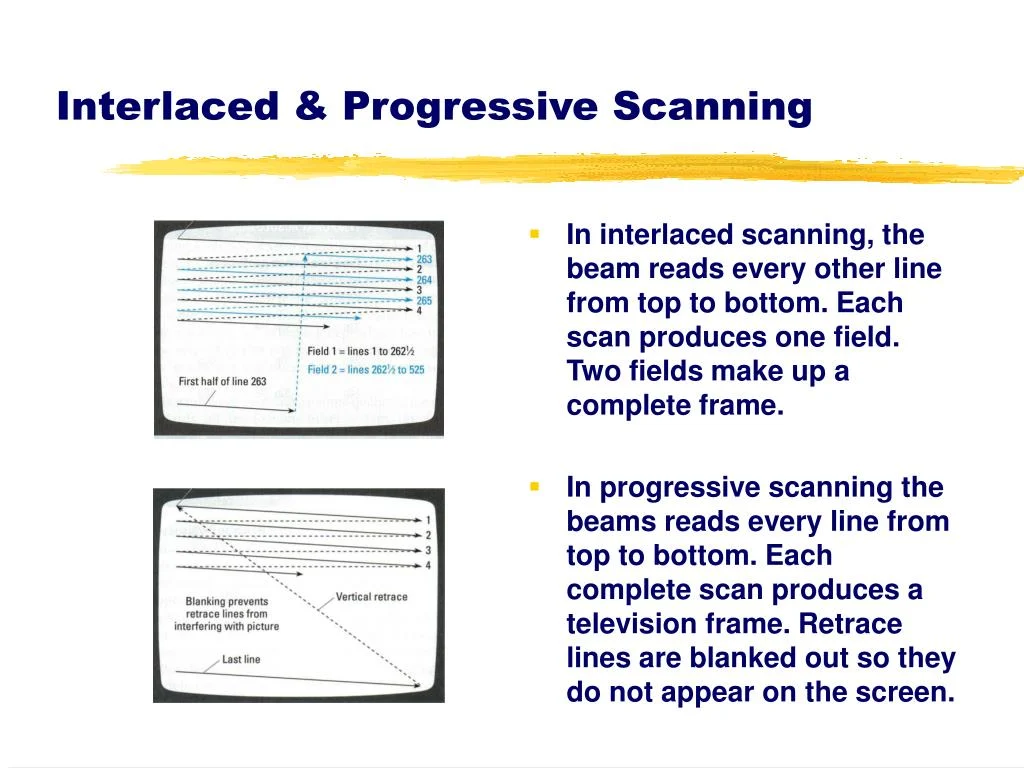
The engineering legacy of Sony’s PlayStation 2 remains a fascinating study in hardware constraints, creative developer workarounds, and complete reliance on analog display technology. Released at the turn of the millennium, the PlayStation 2 was designed almost entirely from the ground up for use with Cathode-Ray Tube (CRT) televisions. Unlike modern digital displays that process fixed pixels and native resolutions, analog video output systems rely on precise scanlines and electronic timing. While the platform did feature limited VESA display modes via the official PS2 Linux toolkit—allowing connection to VGA monitors—this functionality was an afterthought that virtually no commercial video games utilized. To fully understand why the PS2 behaves the way it does, one must examine the specific acronyms that governed its architecture, including the Graphics Synthesizer (GS, the system’s GPU), PAL and NTSC television signals, the Cathode-Ray Tube Controller (CRTC), Enhanced Definition TVs (EDTV), and the Vector Units (VU0 and VU1) serving as the system’s dual SIMD coprocessors.
The Architectural Limits of the Graphics Synthesizer and the Imperative for 60 Frames Per Second
At the heart of the PlayStation 2’s graphical pipeline was the Graphics Synthesizer, equipped with a mere 4 megabytes of embedded video RAM. Sony frequently advised developers to view this minuscule memory pool not as traditional VRAM, but rather as a high-speed scratchpad. Nevertheless, developers had to carefully manage render targets within this strict 4MB limit.
Despite the capacity constraints, the bandwidth of the Graphics Synthesizer was astonishingly advanced for its time. Operations like alpha blending, multi-pass rendering, and framebuffer copies—which routinely bogged down competing hardware architectures—were executed with almost negligible performance costs. Titles such as Driv3r abused these hardware strengths in ways that would have brought contemporary GPUs to a standstill. Furthermore, thanks to a fully programmable geometry pipeline driven by the dual vector units VU0 and VU1, the PS2 possessed primitive hardware features akin to modern mesh shaders, concepts that would not officially re-emerge in commercial PC hardware until the release of Nvidia’s GeForce RTX 20-series nearly two decades later.
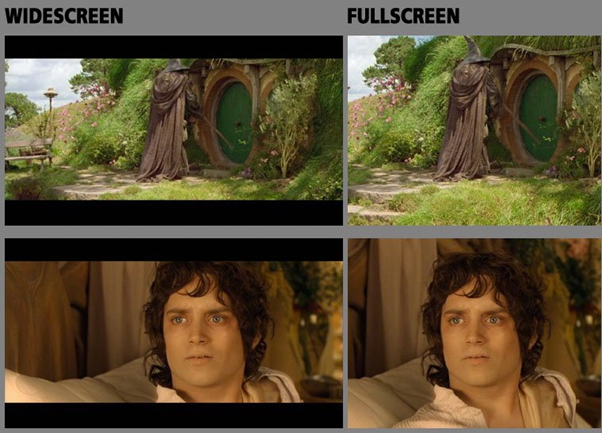
Hardware architecture practically forced developers to maintain a solid, locked 60 frames per second on NTSC systems, or 50 frames per second on PAL systems. This performance standard was partially driven by early Software Development Kits (SDKs), which initially supported only interlaced scanline modes requiring 60Hz to achieve a 640-by-448 resolution. Later updates granted developers the choice between full-frame mode and field-rendered mode.
Field rendering operated via interlaced signals, halving memory requirements per frame by outputting images at resolutions of 640-by-240 or 512-by-224. This reduction was vital given the 4MB limitation of the GS eDRAM, while also drastically shortening render times. However, this optimization introduced a severe catch: if a game missed its frame deadline and the previous frame had to be displayed twice, the entire image would noticeably shift vertically by a single scanline. Consequently, developers went to extreme lengths to prevent frame drops. Many titles, such as SSX 3, chose to internally slow down game logic by actively dropping frames when performance faltered, thereby preserving a rock-solid 60Hz target. Conversely, frame mode rendered full, uncompromised frames (640-by-448 or 512-by-448). While render times increased and consistent 60fps pacing became harder to maintain, the system was more forgiving during performance dips, simply displaying the second field of the previous frame without vertical jitter.
The Cultural Impact of Jaggies and Early Print Media Misconceptions
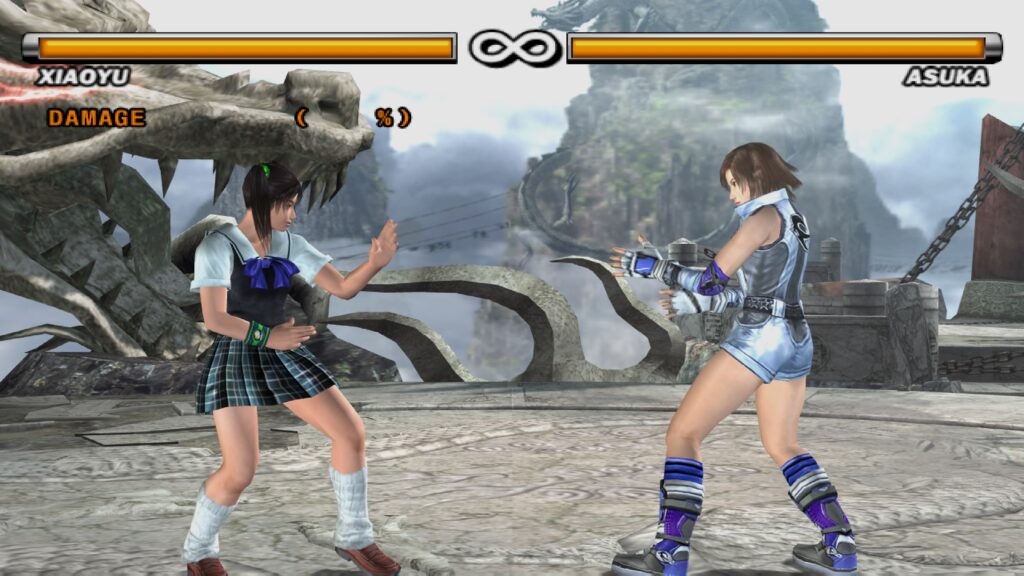
During the launch window of the PlayStation 2, industry critics frequently lambasted the console for noticeable geometric aliasing, colloquially known as "jaggies," and a general lack of anti-aliasing compared to Sega’s Dreamcast. This visual critique was heavily compounded by the limitations of contemporary print media. Gaming magazines and journalists relied heavily on single-frame capture technology for their screenshots. When capturing an interlaced video feed, these capture devices recorded only a single field—either the odd or even scanlines—rather than the complete, interleaved frame. As a result, print publications featured screenshots displaying half-resolution artifacts, making PS2 games appear significantly more pixelated and jagged on paper than they actually appeared on a functioning CRT television. While the low output resolutions necessitated by the GS eDRAM certainly played a role, print media drastically exaggerated the console’s visual deficiencies.
Widescreen Implementations and Aspect Ratio Challenges
The mainstream commercial landscape shifted significantly during the lifespan of the PlayStation 2. As the console doubled as an affordable DVD player, the home entertainment industry embraced anamorphic widescreen formats. By the early-to-mid 2000s, 16:9 widescreen CRT televisions began entering the consumer mainstream. Although the vast majority of PS2 software was natively developed for traditional 4:3 aspect ratios, developers increasingly incorporated widescreen options to meet evolving consumer demands.
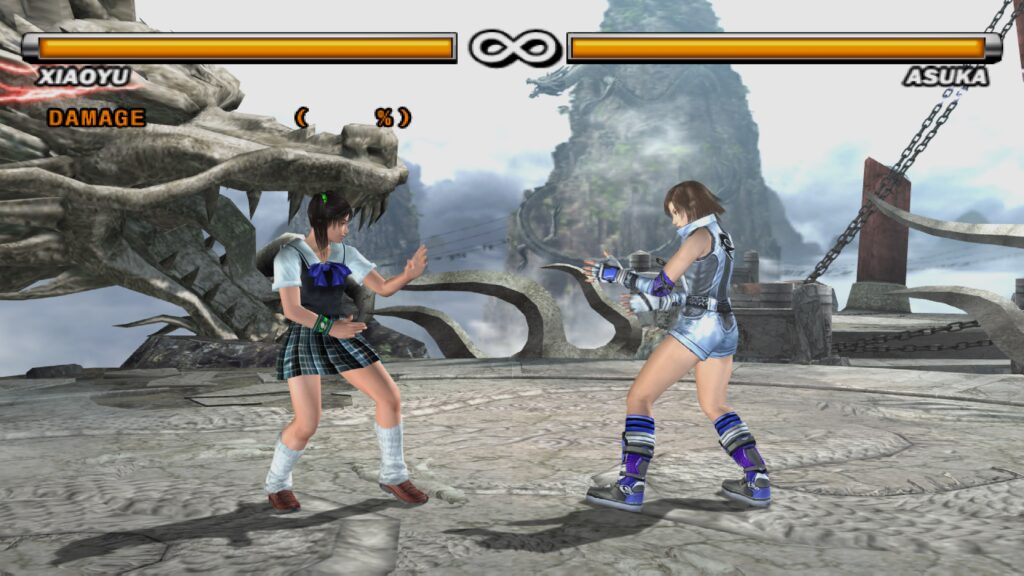
Historically, hardware platforms handled widescreen through three primary rendering methodologies:
- Vert- (Vertical Minus): The engine crops the top and bottom of the standard 4:3 image, zooming into the center to fill a 16:9 frame.
- Hor+ (Horizontal Plus): The engine expands the horizontal field of view, rendering more of the virtual world on the sides without cropping.
- Hybrid configurations combining elements of both.
Unsurprisingly, the vast majority of PlayStation 2 games utilized the Vert- approach. Implementing Hor+ widescreen required substantial increases in system resources and horizontal resolution—luxuries that developers working within the 4MB GS eDRAM limit rarely possessed. Furthermore, horizontal expansion required higher resolutions to maintain visual fidelity, whereas the PS2 heavily relied on CRT scanline blending to mask lower rendering resolutions.
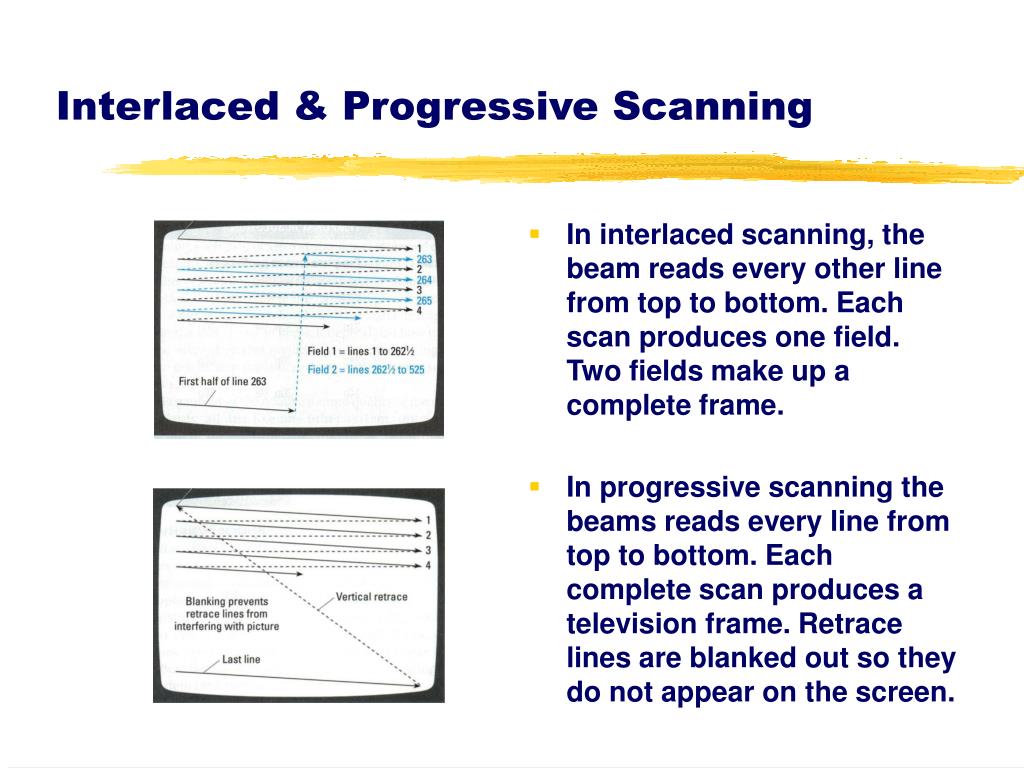
Prominent titles such as Tekken 5, along with the Ratchet & Clank and Jak and Daxter franchises, relied on Vert- implementations, resulting in "quasi-widescreen" modes where gameplay area was sacrificed at the top and bottom to fit 16:9 displays. For home theater enthusiasts, sixth-generation widescreen support frequently proved frustrating, as many studios failed to utilize extended screen real estate effectively. Emulation developments and modern internal software patches, such as those implemented within the LRPS2 core, have since demonstrated that true Hor+ rendering was mathematically feasible, restoring missing peripheral environments without vertical cropping.
Progressive Scan Transitions and Deceptive Resolutions
As the sixth generation matured toward its twilight years, consumer display technology began its slow pivot away from standard-definition analog units. Enhanced-Definition Television (EDTV) standards emerged around 2001, allowing standard-definition displays to accept 480p and 576p progressive scan signals. Utilizing component cables on NTSC hardware or RGB SCART cables in European and Japanese markets, players could press a specific button combination at boot to bypass interlaced artifacting entirely, unlocking full-height backbuffers.
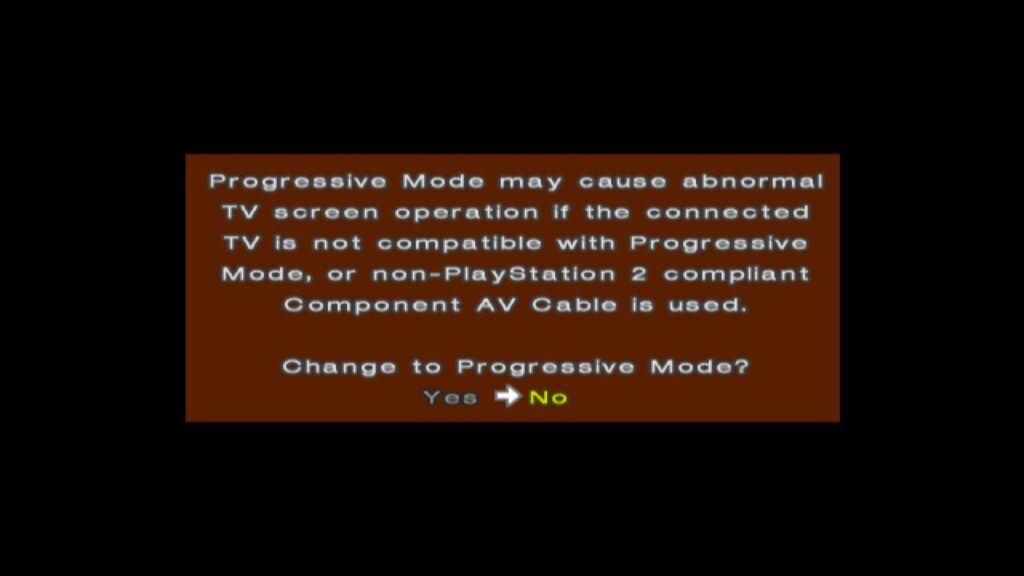
While progressive scan substantially improved visual clarity, it forced developers to make difficult resource compromises. To fit progressive frames into the GS eDRAM, some studios reduced framebuffer depth to 16 bits per pixel or lower, inadvertently introducing noticeable color banding. Nevertheless, progressive scan output generally offered superior image fidelity on compatible hardware.
Certain ambitious titles, such as Gran Turismo 4 and Valkyrie Profile 2, pushed technical boundaries by offering designated 1080i display modes. However, this feature relied on clever frame-buffer manipulation rather than native high-definition rendering. Gran Turismo 4, for instance, internally rendered at a resolution of 640-by-540. The Graphics Synthesizer’s CRTC then magnified this image using an integer horizontal magnification factor of 3 (640 × 3 = 1920) and a vertical scaling factor or interlaced switch to stretch the vertical axis to 1080 lines. On contemporary CRT monitors, this optical illusion appeared remarkably convincing, though modern digital panels often render native 480p modes with cleaner visual results.
The European Market, PAL Timings, and Regional Disparities
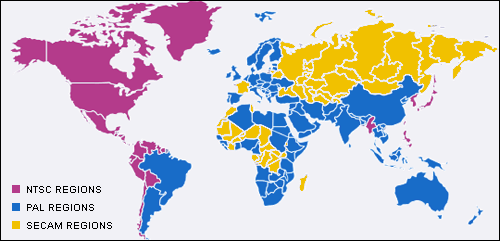
Regional disparities plagued European consumers throughout the sixth generation. While American and Japanese markets utilized NTSC signals running at 60Hz, European territories relied on PAL standard CRTs operating at 50Hz. Although Sega’s Dreamcast widely adopted PAL60 modes to mitigate the 16.9% frame-rate reduction inherent in PAL conversions, Sony declined to establish PAL60 as a mandatory platform standard. Consequently, early European PS2 software launched exclusively in 50Hz.
While UK-based studios like Psygnosis, Core Design, and DMA Design optimized their software to render additional scanlines for PAL displays—resulting in higher vertical resolution than NTSC counterparts—the underlying frame rates remained locked at 50Hz, causing slower game speeds. By 2002, publishers increasingly introduced 50Hz/60Hz selection screens at startup. Rather than implementing native PAL60, the console often initiated an NTSC 480i mode, relying on the widespread compatibility of late-90s European televisions.
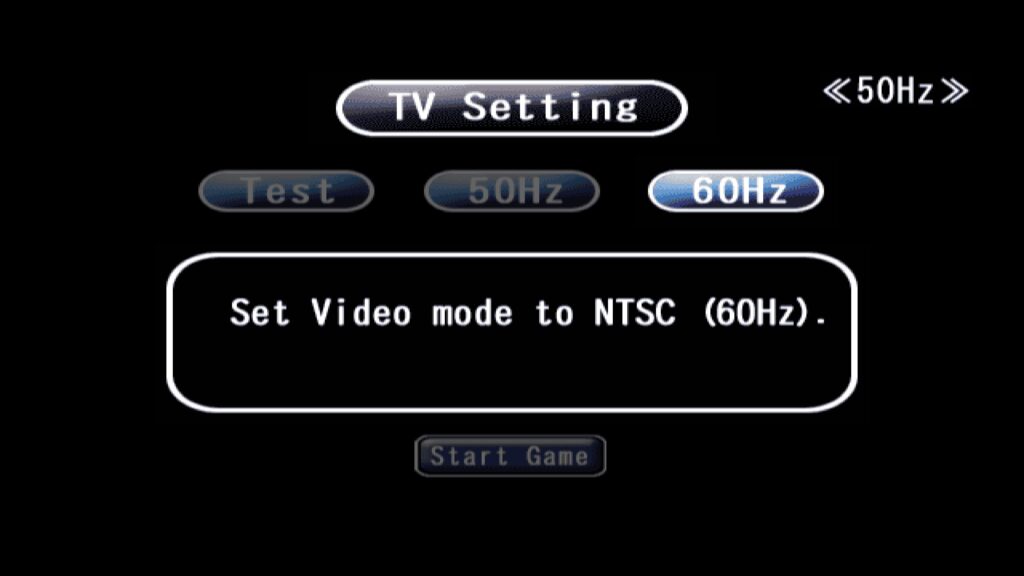
Titles that omitted these toggles—such as Metal Gear Solid 2 and Silent Hill 2—required extensive manual PAL conversion work to eliminate letterboxing. Square Enix famously cited data storage limitations for Final Fantasy X, noting that duplicating massive, high-quality Full Motion Video sequences to accommodate both 50Hz and 60Hz variants exceeded the capacity of standard DVD media, forcing those releases to remain locked at 50Hz. Over time, however, single-standard releases became outliers as consumer demand forced industry-wide standardization.
The Seventh-Generation Transition to LCD Displays and Modern Implications
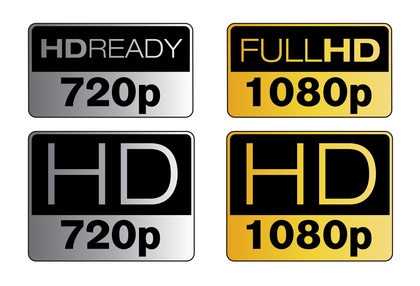
The industry-wide transition from analog CRTs to digital LCD flat-panel displays in the mid-2005 era proved exceptionally harsh for legacy hardware. As seventh-generation consoles like the Xbox 360 and PlayStation 3 ushered in native high-definition, HDMI-connected, progressive-scan standards, older analog hardware was left behind. Europeans finally escaped the fractured PAL versus NTSC dichotomy, but sixth-generation consoles suffered immensely on early LCD panels.
Early liquid-crystal displays introduced severe input latency, poor motion clarity, and aggressive ghosting artifacts. Because PlayStation 2 software frequently utilized framebuffer blur techniques to simulate motion blur on CRTs, these visual effects smeared across early LCD screens, compounding visual degradation. Software solutions, such as the "Software Overdrive" setting in Soulcalibur III, attempted to mitigate afterimage persistence, but hardware latency remained an unresolvable bottleneck for decades.
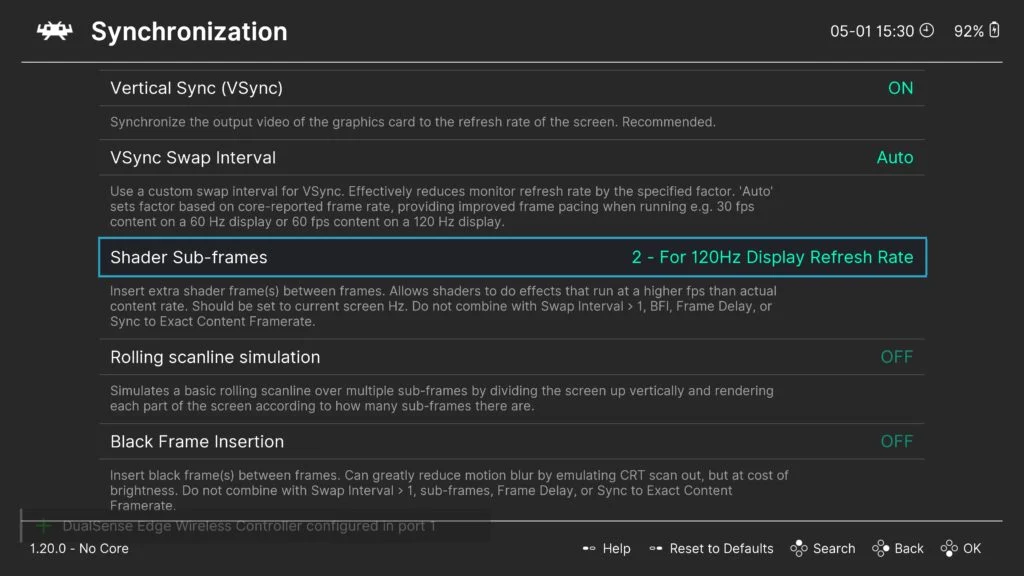
Only recently have modern software advancements begun addressing the unique rendering characteristics of analog-era hardware on digital panels. Innovations like BlurBusters’ CRT beam-racing simulator shaders, integrated into platforms such as RetroArch, allow modern OLED displays to replicate the low-latency response times, motion clarity, and aesthetic warmth of classic cathode-ray tube technology. Through these modern emulation tools, contemporary preservationists can finally experience the PlayStation 2 precisely as its engineers originally intended—without the hardware compromises of early flat-panel displays.