 Cecilia Chamidah Nur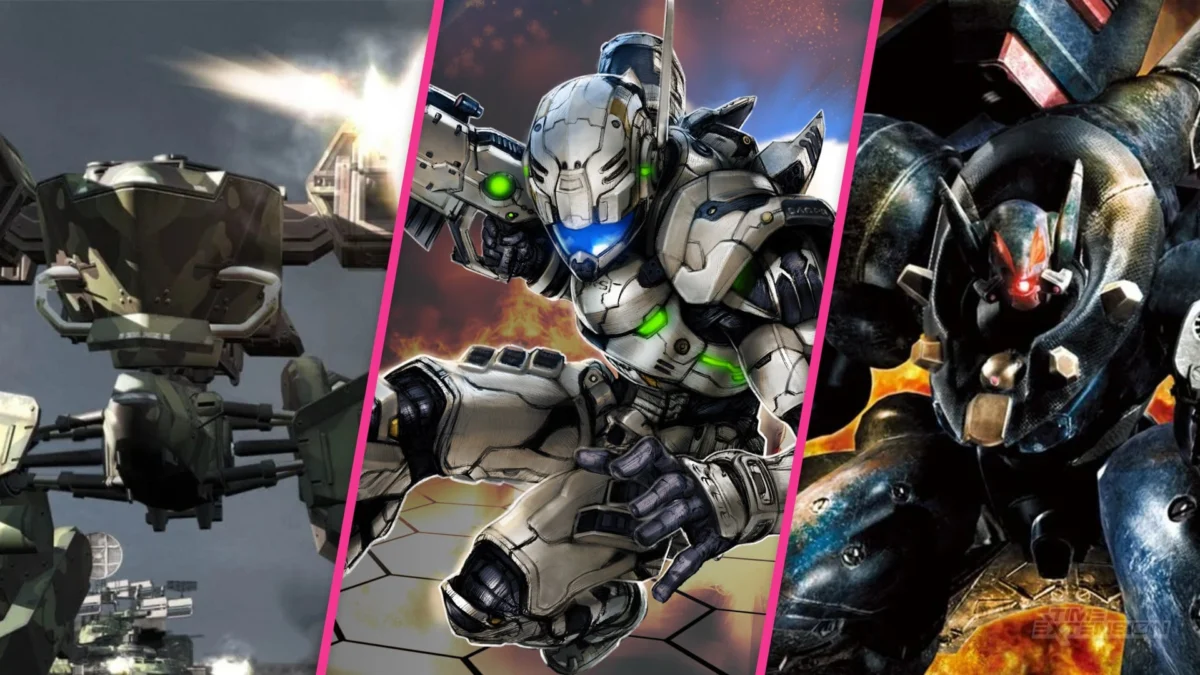
The misconception that the Japanese entertainment sector operates in silos—separating the domains of video games, anime, and industrial toy manufacturing—fails to account for the fluid movement of creative talent between these industries. Central to this intersection is Shinji Usui, a designer whose career serves as a blueprint for modern cross-media development. Usui’s professional trajectory highlights a critical trend in Japanese creative circles: the application of rigorous industrial design principles to the fantastical requirements of interactive media and animation. His portfolio, which spans iconic titles such as FromSoftware’s Metal Wolf Chaos, PlatinumGames’ Vanquish, and the reimagined Ghost in the Shell: SAC_2045, provides a window into the evolution of mechanical design in the digital age.
A Foundational Evolution: From Engineering to Virtual Worlds
Usui’s path into the entertainment industry was not a direct progression from art school to studio, but rather a transition from applied industrial design. His early career was defined by work in toy development and industrial engineering, where he was tasked with designing everyday consumer goods, medical equipment, and automotive components. This background proved vital when he entered the game industry during the mid-1990s, a period marked by the meteoric rise of the Sony PlayStation and the maturation of 3D computer graphics (CG).
The transition from physical product design to 3D CG provided Usui with a unique mechanical sensibility. Unlike designers who approached mecha purely from an aesthetic standpoint, Usui brought an understanding of spatial constraints, structural integrity, and manufacturing logic. This approach became a hallmark of his work, as he sought to ground high-concept machinery in a logic that felt tangible to the player or viewer.
The FromSoftware Years: Defining a Genre
Usui’s tenure at FromSoftware represents a formative chapter in his career, occurring during a period of rapid industry expansion. Between the late 1990s and the mid-2000s, FromSoftware was cementing its reputation as a powerhouse of mecha-action titles. Usui’s contributions to Metal Wolf Chaos and Chromehounds were instrumental in establishing the studio’s design language.
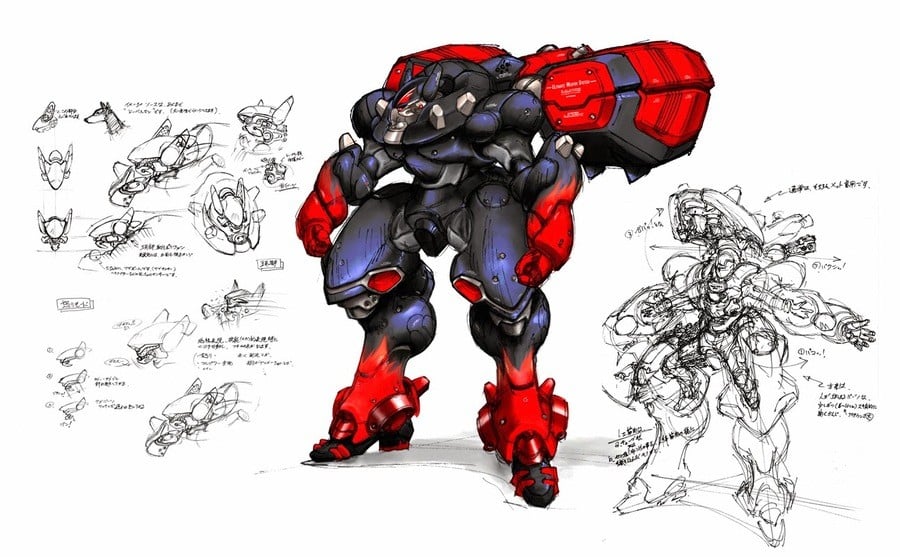
In the development of Metal Wolf Chaos, Usui was tasked with visualizing a "high-octane" aesthetic that defied traditional military simulation tropes. The project, which placed the President of the United States in a heavily armed powered suit, required a design that was both absurdly powerful and functionally grounded. Usui recalls that the design process was iterative, evolving alongside the project’s internal code name, "Dogs." He conceptualized the protagonist’s suit to evoke the aggressive silhouette of a Doberman, a choice that underscored the game’s satirical and kinetic energy.
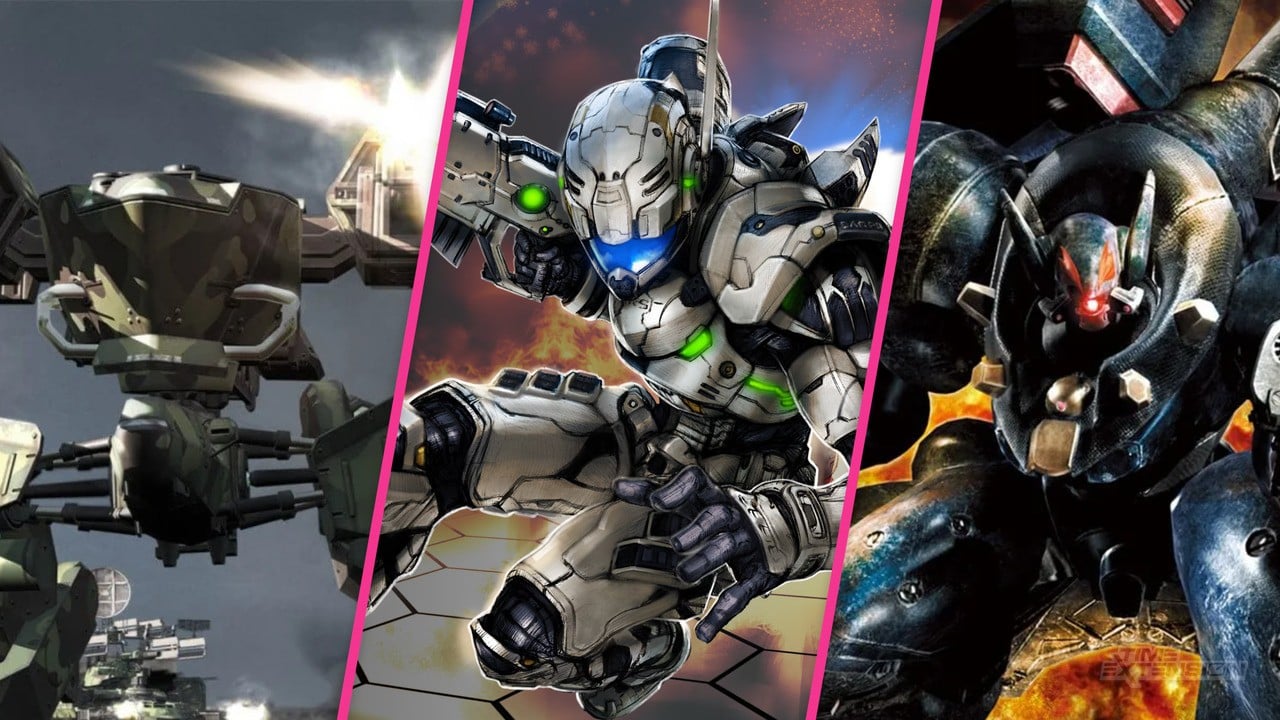
By the time Chromehounds entered development for the Xbox 360, Usui’s focus had shifted toward modularity and realism. In an era when online multiplayer was becoming a cornerstone of console gaming, the challenge was to create a battlefield that felt "gritty and down-to-earth." Usui utilized geometric motifs—circles, squares, and triangles—as the foundation for his mechanical designs, allowing players to visualize how different components, from avionics to power systems, integrated into a functional whole. This modularity was not merely a visual choice; it was a core gameplay mechanic that allowed for the deep customization that remains a hallmark of the genre.
The Kansai Influence: PlatinumGames and Vanquish
In the late 2000s, Usui moved to the Kansai region to collaborate with PlatinumGames, an experience he describes as a departure from his previous work environments in the Kanto region. Joining the team for the development of Vanquish, Usui worked under the direction of Shinji Mikami, whose design philosophy prioritized high-speed action and fluid, responsive gameplay.
At this stage, the project was already well underway, presenting a new set of challenges for a mechanical designer. Usui was brought in to fill a critical gap: the design of the supporting cast, enemies, and environmental elements. The experience forced him to adapt to a high-pressure development environment characterized by a relentless drive to iterate. The focus at PlatinumGames was strictly on the player experience; if a design did not contribute to the game’s sense of "exhilaration," it was subject to rapid revision. This period of his career underscored the importance of designing for the player’s agency, a philosophy that distinguishes game development from static media production.
Expanding into Anime: Ghost in the Shell and Legend of the Galactic Heroes
Usui’s transition into anime was a natural extension of his CG expertise. His collaboration with director Kenji Kamiyama on Ghost in the Shell: SAC_2045 marked a significant achievement in modernizing a classic franchise. Tasked with redesigning the Tachikoma—the iconic spider-tanks of the series—Usui had to navigate the expectations of a legacy fanbase while meeting the functional requirements of the narrative.
The redesign focused on downsizing the units to increase their utility in cramped urban environments, such as elevators and civilian vehicles. By synthesizing elements from the original manga’s Fuchikoma with the anime’s established Tachikoma, Usui created a design that felt both nostalgic and innovative.
Simultaneously, his work on The Legend of the Galactic Heroes: Die Neue These showcased his ability to handle large-scale world-building. Working alongside mechanical designer Atsushi Takeuchi, Usui helped establish a visual language that differentiated the series’ opposing factions through ship architecture. By grounding the designs in technical premises—such as long-distance warp technology versus conventional propulsion—he provided a narrative weight that enhanced the audience’s suspension of disbelief.
Bridging the Gap: The Philosophy of Design
Usui identifies a clear distinction between designing for interactive media and designing for passive viewing. In game development, he argues, the design must never obstruct the player’s interaction. The "kerenmi"—a term denoting a degree of bold, theatrical flair—must be balanced with the functional requirements of the game engine and user experience.
In contrast, animation allows for a greater emphasis on visual impact and narrative symbolism. When a character or machine does not need to be "operated" by the audience, the designer has more freedom to prioritize iconic silhouettes and thematic resonance. Despite these differences, Usui maintains that the core of his process remains the same: establishing a believable, logical foundation for the design before applying the theatrical flourishes that define his signature style.
Broader Implications and Future Trajectories
The career of Shinji Usui illustrates the increasing professionalization and convergence of Japanese creative industries. As technologies like real-time rendering and procedural generation continue to blur the lines between game engines and animation tools, the demand for designers who understand both hardware constraints and narrative aesthetics is rising.
Looking forward, Usui remains focused on the potential of open-world development. His ambition to create a fully immersive, expansive world reflects the current industry trend toward high-fidelity, interconnected digital environments. By continuing to apply the rigorous lessons learned from industrial design, FromSoftware’s technical challenges, and the high-speed iteration of PlatinumGames, Usui represents a generation of creators who are not just building models, but are crafting the foundational architecture of modern digital entertainment. His journey suggests that the future of mecha design—and, by extension, the design of virtual spaces—will continue to rely on the synthesis of mechanical logic and artistic intuition.