 Retno Hari Mulyono
The pursuit of absolute reliability on the racetrack often forces automotive enthusiasts to abandon traditional aftermarket components in favor of advanced, factory-grade engineering. For owners of the ubiquitous NA and NB generations of the Mazda Miata—produced from 1989 through 2005—the mechanical cable-driven throttle body has long been a staple of engine management. However, chronic reliability issues with prominent aftermarket offerings, such as the widely criticized Skunk2 units, have pushed high-performance builders to reevaluate the limits of legacy throttle actuation. This technical case study examines one builder’s comprehensive engineering pivot toward a fully integrated drive-by-wire (DBW) system utilizing a Megasquirt MS3Pro Evo standalone engine control unit (ECU) communicating via Controller Area Network (CAN) bus protocols.
Background Context and Mechanical Failures
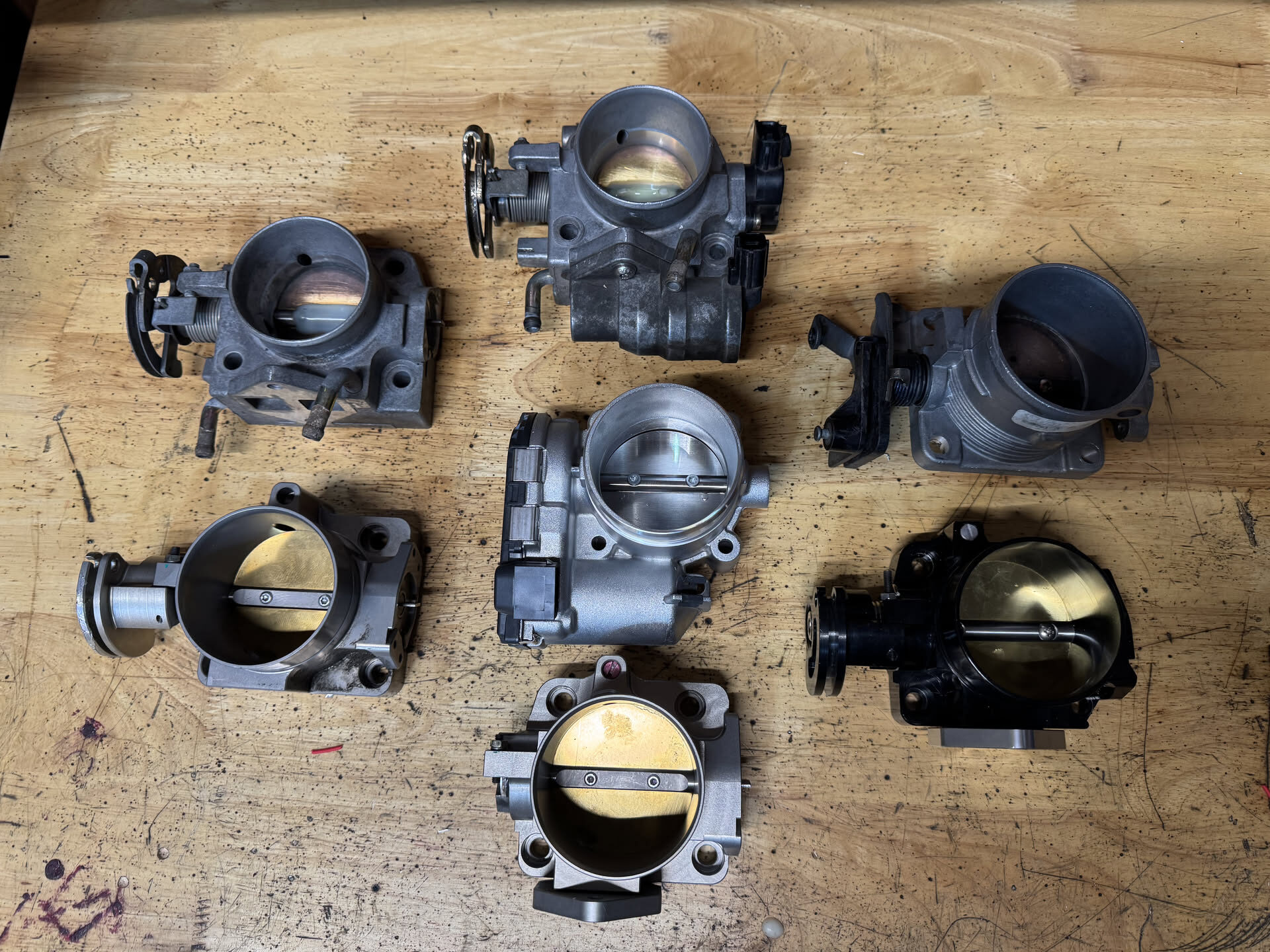
The Mazda MX-5 Miata remains one of the most heavily modified platforms in amateur and professional motorsports. With hundreds of thousands of units on global roadways, the aftermarket ecosystem has traditionally catered to mechanical throttle setups. For years, performance builders seeking marginal gains in airflow turned to aftermarket options like the Skunk2 throttle body. Unfortunately, real-world track testing across multiple competitive seasons exposed severe structural vulnerabilities in these aftermarket components.
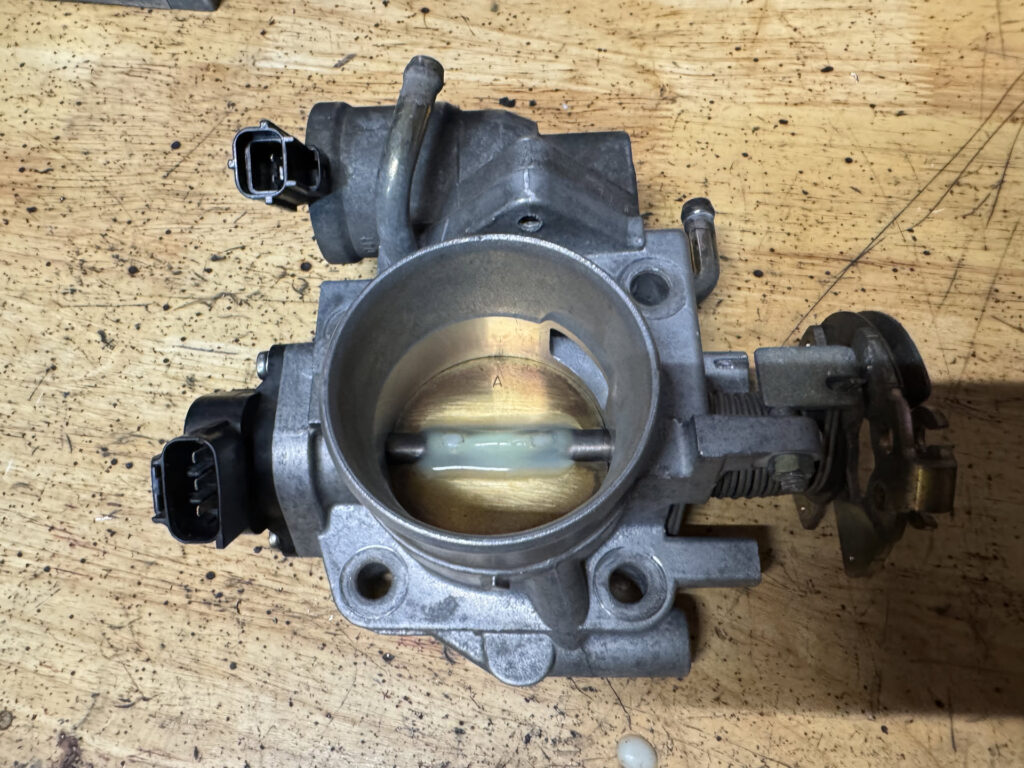
Cataloged failures on track included severe mechanical binding that resulted in intermittent high-idle conditions, as well as catastrophic structural failure of the throttle shaft itself. In high-stress racing environments, a throttle shaft fracture poses an immediate safety hazard and risks catastrophic engine failure if debris enters the combustion chamber. While factory original equipment manufacturer (OEM) throttle bodies are generally robust when operating at modest power outputs—such as the builder’s 140-wheel-horsepower naturally aspirated configuration—documented instances of throttle blade retaining screws backing out or shafts snapping have forced cautious engine builders to seek safer alternatives.
Emergency mitigation strategies during the 2005 racing season required reverting to stock throttle hardware fortified with industrial-grade 3M DP420 epoxy applied to the throttle shaft and retaining screws. While this temporary fix held up under competitive conditions, it highlighted a glaring void in the Miata aftermarket: a lack of robust, high-quality, off-the-shelf cable-driven alternatives. Exploration into cross-platform OEM adaptations, such as utilizing a 4.6-liter Ford V8 throttle body, proved technically cumbersome. Although adaptable via mounting-hole modification, such a transition necessitates the integration of an external idle air control (IAC) valve and custom throttle cable fabrication, multiplying potential failure points.

The Evolution of Drive-By-Wire Integration in Standalone ECUs
Drive-by-wire technology, standard in virtually all modern passenger vehicles, replaces the physical steel cable connecting the accelerator pedal to the throttle valve with electronic sensors, actuators, and dedicated control algorithms. Implementing DBW yields several distinct operational advantages: precise idle speed regulation, elimination of physical cable stretch and friction, enhanced safety fail-safes, and the foundational infrastructure required for advanced motorsport features such as programmable throttle mapping, cruise control, and automated downshift rev-matching (auto-blip).
Historically, integrating DBW into a custom or vintage chassis required migrating to high-end standalone ECUs with native electronic throttle control (ETC) hardware channels, such as systems produced by Haltech or MaxxECU. For builders already invested in mid-tier ecosystems like the Megasquirt MS3Pro Evo—which lacks native onboard H-bridge driver channels for electronic throttle actuators—switching entire ECU platforms represented a cost-prohibitive hurdle.
The technical landscape shifted significantly with recent firmware advancements in the Megasquirt MS3 architecture. Modern Megasquirt firmware now supports external drive-by-wire controllers communicating bidirectionally via CAN bus messaging. This capability allows the primary ECU to manage fuel and ignition timing while offloading the high-speed closed-loop control of the electronic throttle actuator to an intelligent secondary module. Consequently, builders can achieve modern OEM-level throttle integration without discarding their existing core engine management investment.
Market Analysis of Megasquirt-Compatible DBW Controllers
As of late 2025, the aftermarket offers a specialized selection of CAN-bus-compatible drive-by-wire controllers engineered to bridge the gap between legacy ECUs and modern electronic throttle bodies. An evaluation of the available hardware reveals distinct engineering philosophies across price points, form factors, and feature integration.

The DBWX2, entering the market in 2019, represents the veteran option in the segment, commanding a premium price point of approximately $500. Its defining characteristic is dual-channel architecture capable of independently controlling two separate electronic throttle bodies. This capability serves specialized forced-induction configurations, such as compound boost control actuators or hot-side supercharger setups requiring dual throttle valves.
Positioned in the mid-tier segment at roughly $200, the LD Performance DBW controller provides basic CAN integration but exhibits notable limitations. Most critically, the unit lacks configuration support through TunerStudio—the industry-standard tuning suite for Megasquirt systems—thereby complicating calibration. Furthermore, its enclosure and connector design lack marine-grade waterproofing, restricting installation to the interior cabin of the vehicle.
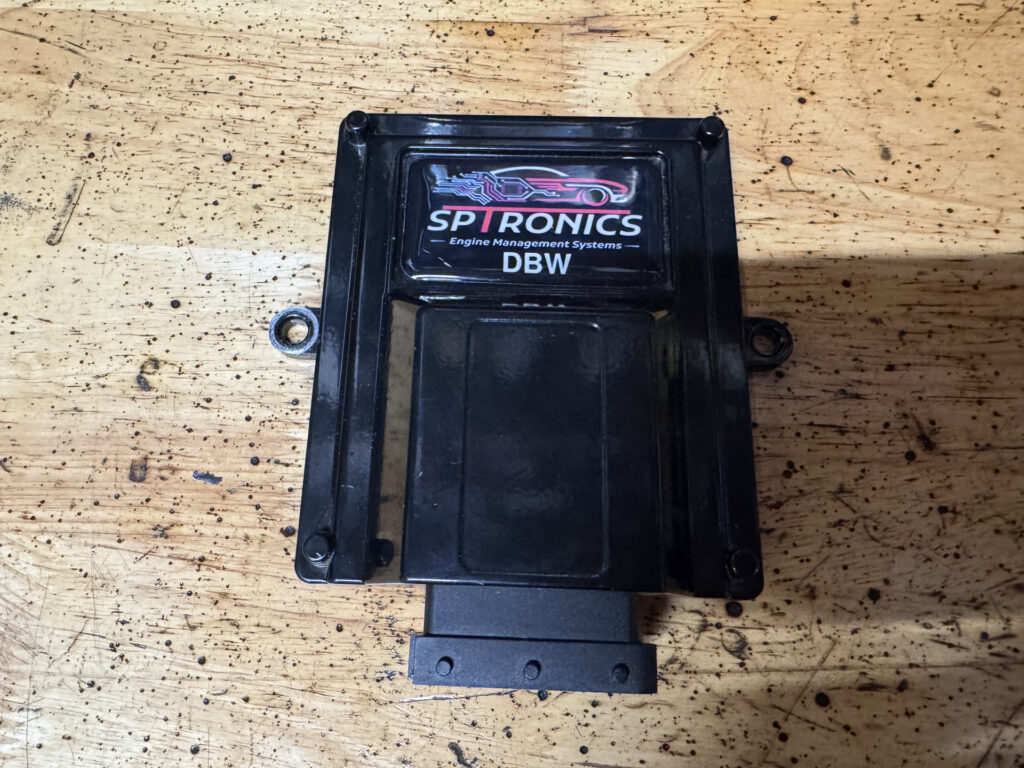
The SPTronics controller targets budget-conscious builders with a highly competitive price of approximately $150. Available in single- and dual-channel variants, it offers broad functionality for its cost. However, compromises include fixed firmware update paths, a non-configurable internal CAN bus termination resistor, and restricted proportional-integral-derivative (PID) tuning parameters, which may limit precision under aggressive racing conditions.

On the higher end, the MS Labs controller delivers advanced motorsport features, including comprehensive multi-map support, sophisticated idle control algorithms, and native integration for auto-blip downshift logic via brake and clutch pedal inputs. While pricing sits at the upper tier and regional distribution restrictions currently limit availability within the United States, its feature set closely mirrors factory motorsport electronics.
The AMP EFI controller represents the newest market entrant, introduced in October 2025 at an accessible price point near $300. Designed for versatility, it functions either as an integrated CAN-bus slave to a primary ECU or as a fully standalone DBW controller utilizing analog throttle position sensor (TPS) outputs and idle input pins. Configurable auto-blip downshifts via external brake and clutch inputs cement its position as a highly capable, cost-effective solution.
Hardware Selection and Implementation Strategy

To execute the conversion on a 2000 Mazda Miata equipped with an MS3Pro Evo ECU, the project requires three primary hardware assemblies: an electronic throttle body, an intake manifold adapter, an independent DBW controller, and an accelerator pedal position sensor.
For the throttle interface, the project utilizes a Bosch Motorsports 60mm electronic throttle body. Sourced readily at approximately $150, these OEM-grade components boast exceptional reliability and are manufactured across a wide range of diameters. Because the Bosch mounting flange differs from the stock Mazda manifold geometry, an adapter is required. While custom fabrication was considered, commercially available options from specialty manufacturers—such as Outsider Garage ($150) and ChathamCNC ($95)—provide precise engineering solutions that streamline installation.
To determine optimal long-term reliability, the builder procured three distinct CAN-compatible controllers for comparative empirical testing: the SPTronics unit, the DBWX2, and the AMP EFI controller. Each module will undergo rigorous on-vehicle evaluation to assess signal latency, tuning granularity, thermal stability, and seamless integration with the MS3Pro Evo CAN broadcast network.

For driver input, the system incorporates an accelerator pedal position sensor harvested from late-model Honda platforms (specifically 2003–2007 V6 Honda Accords and associated Acura models). Unlike firewall-mounted electronic pedal assemblies that require extensive interior fabrication, the Honda unit utilizes a cable-driven remote sensor architecture. A mechanical cable connects the factory accelerator pedal to a spring-loaded housing containing dual integrated position sensors. This design preserves the familiar mechanical tactile feedback of a traditional cable throttle, minimizes under-dash labor, and maintains compatibility with factory cruise control systems.
Broader Industry Implications and Future Outlook
The transition of legacy sports cars to drive-by-wire architectures via open-source and modular CAN-bus controllers marks a maturing trend in aftermarket automotive engineering. As OEM parts become increasingly standardized across diverse manufacturing platforms, builders are no longer constrained by the physical limitations of mechanical linkages.
By decoupling driver input from throttle valve actuation through intelligent micro-controllers, enthusiasts can achieve levels of safety, engine protection, and driveability previously reserved for factory-engineered modern performance vehicles. The forthcoming empirical evaluation of the SPTronics, DBWX2, and AMP EFI controllers will provide valuable performance data for the grassroots motorsport community, establishing a repeatable roadmap for retrofitting electronic throttle control into legacy platforms safely and efficiently.