 Hartono Sudibyo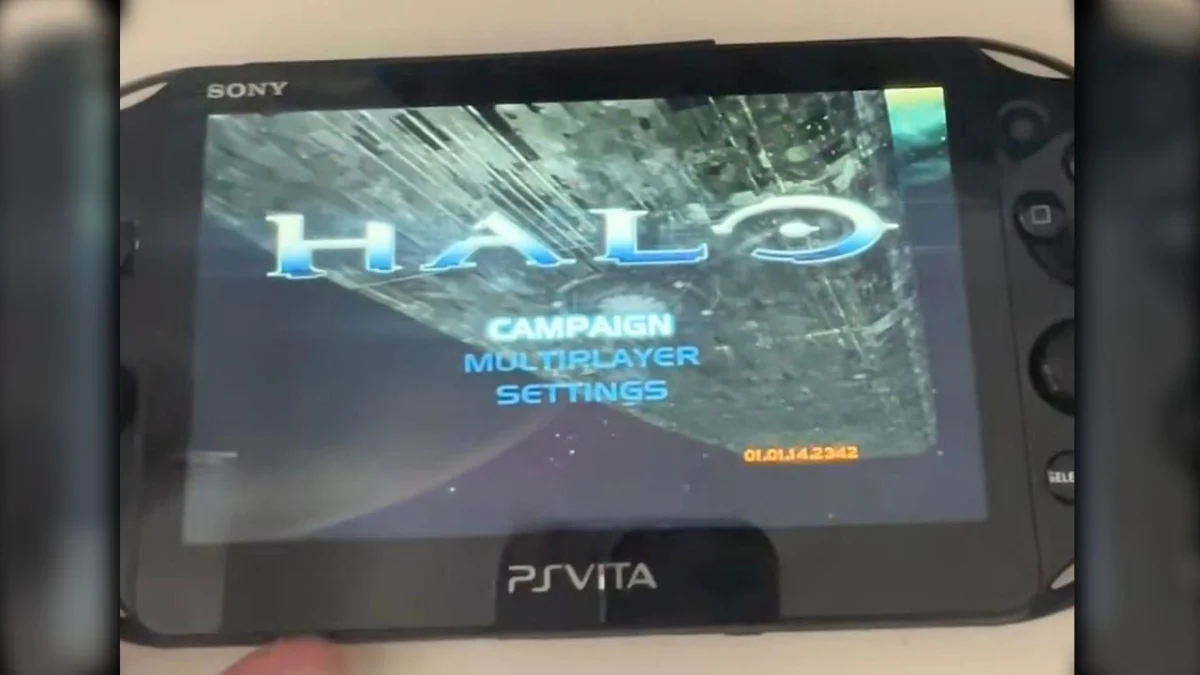
The landscape of retro game preservation and unofficial porting has reached a new milestone as developer Isidro demonstrates an early work-in-progress port of Halo: Combat Evolved running on the PlayStation Vita. Initially released by Bungie in November 2001 as a launch title for Microsoft’s original Xbox, the seminal first-person shooter has steadily transcended its original hardware boundaries through decades of community-driven engineering. This latest endeavor highlights the enduring viability of Sony’s discontinued eighth-generation handheld console, which has experienced a significant renaissance within the homebrew and hardware modification communities.
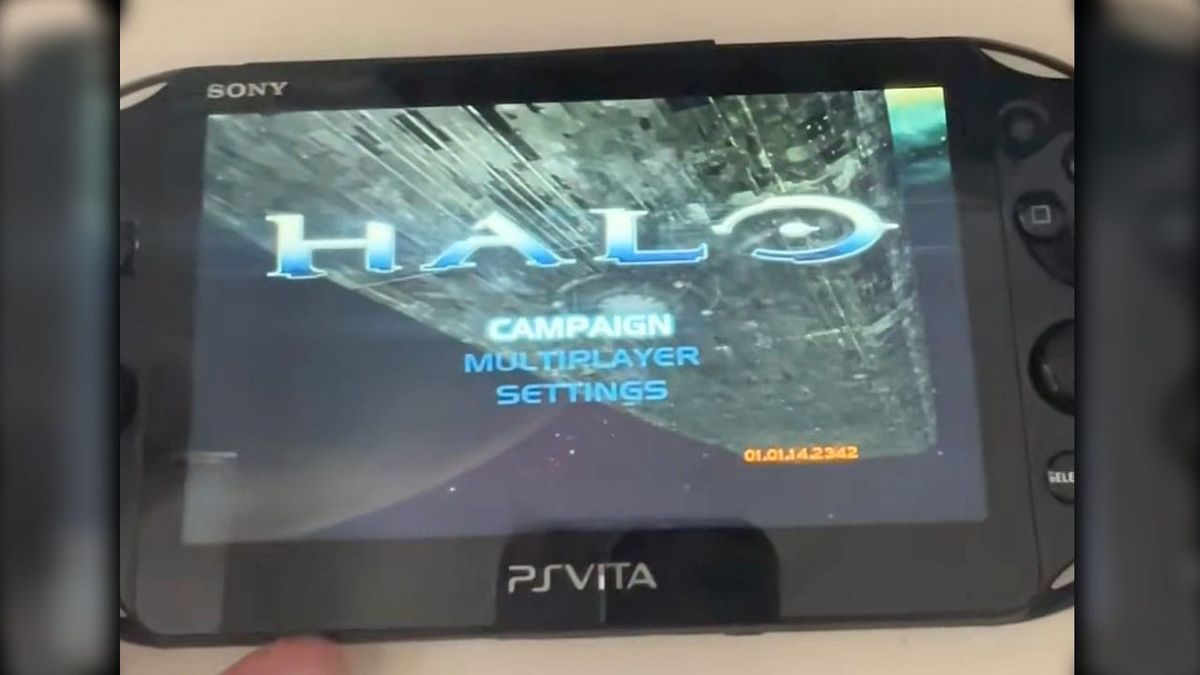
The demonstration, shared via social media by developer Isidro, displays the initial boot sequence, main title interface, and primary menu navigation of Halo: Combat Evolved functioning natively on PlayStation Vita hardware. Although actual gameplay footage has not yet been released, the preliminary build confirms that the game’s engine architecture is capable of executing basic routines within the Vita’s hardware ecosystem. This technical achievement arrives amid a broader surge in source-code recompilation projects, which are increasingly revolutionizing how legacy titles are adapted to non-standard platforms.
Technical Context and the Rise of Game Recompilation
The feasibility of bringing a demanding, seventh-generation-adjacent title like Halo: Combat Evolved to a portable device from 2011 lies heavily in contemporary advancements in reverse engineering and recompilation methodologies. Over the past several years, the retro gaming and homebrew community has shifted away from traditional emulation—which demands immense processing overhead to simulate foreign hardware architectures—toward native static recompilation and source porting.
Static recompilation involves translating compiled machine code from one architecture (such as the x86 architecture of the original Xbox or PC) into the native instruction set of the target device, such as the ARM Cortex-A9 processor housed within the PlayStation Vita. This approach eliminates the performance bottlenecks typically associated with software-based emulation. Consequently, developers can achieve framerates and stability levels that would otherwise be impossible on aging mobile hardware.
The PlayStation Vita features a quad-core ARM Cortex-A9 MPCore CPU and a PowerVR SGX543MP4+ graphics processing unit. While formidable for its release window in late 2011, the hardware struggles natively with complex shaders and geometry loads designed for desktop or console environments. However, dedicated homebrew developers have continuously pushed the boundaries of the system through optimized graphics drivers, memory management patches, and targeted source ports, turning the handheld into a primary focal point for advanced portable retro gaming.
Chronology of Halo’s Porting Renaissance
The unauthorized adaptation of Halo: Combat Evolved to the PlayStation Vita does not occur in a vacuum; it is part of a wider timeline of recent community-led porting milestones affecting the franchise:
- November 2001: Bungie releases Halo: Combat Evolved alongside the Microsoft Xbox, establishing a benchmark for console first-person shooters.
- December 2024 to Mid-2025: Community interest spikes around advanced source code recompilations, allowing classic titles to run natively on unexpected hardware variants, including various handheld PCs and mobile devices.
- Early 2026: Developers successfully port Halo: Combat Evolved to alternative low-spec systems, most notably bringing functional builds to the Nintendo 3DS family of handhelds and standard web browsers via modern JavaScript and WebAssembly runtimes.
- October 2, 2026: Developer Isidro publishes initial video evidence of Halo: Combat Evolved booting up on the PlayStation Vita, confirming that the title’s menu systems and interface frameworks are operational within a work-in-progress build.
This accelerated timeline reflects a general acceleration in community-driven software development, heavily augmented by modern coding assistants and automated translation tools that streamline the arduous task of mapping legacy APIs to foreign operating systems like the Vita’s proprietary Sony SDK and Henkaku-based homebrew environments.
Developer Transparency and Future Documentation
As of the initial announcement, comprehensive technical documentation regarding the underlying codebase, optimization methods, and exact compilation toolchains remains sparse. Community observers and fellow homebrew developers are awaiting the publication of a dedicated GitHub repository to analyze the project’s dependency tree and contribution history.
In projects of this magnitude, understanding whether artificial intelligence assistance played a structural role in translating legacy C++ functions or optimizing graphic pipelines is of considerable interest to software historians. While AI-assisted coding has lowered the barrier to entry for complex reverse-engineering tasks, achieving stable execution on constrained hardware like the PlayStation Vita invariably demands meticulous human oversight, memory profiling, and custom assembly tweaks.
Once the project reaches a more mature state, public testing builds are expected to be distributed through established community channels. These releases typically undergo rigorous peer review by other homebrew developers specializing in ARM architecture optimizations.
Broader Impact on Handheld Preservation and Industry Implications
The emergence of a PlayStation Vita port for Halo: Combat Evolved carries notable implications for the broader ecosystem of video game preservation, intellectual property management, and community-driven hardware longevity.

From a preservation standpoint, community ports often outlive official digital storefronts. With Microsoft and Sony frequently sunsetting legacy online services and closing digital marketplaces for older hardware generations, homebrew initiatives ensure that software remains accessible and functional on physical hardware long after official manufacturer support has ceased. The PlayStation Vita PlayStation Store closure debates of recent years galvanized an already passionate user base, cementing the device’s status as a premier platform for hardware preservation.
Conversely, these projects occupy a complex legal gray area. While educational and non-commercial reverse-engineering projects rarely receive aggressive legal pushback unless they distribute copyrighted assets directly, they consistently highlight the tension between corporate intellectual property control and consumer-led hardware longevity. Major publishers hold exclusive rights to distribute their software portfolios, meaning unofficial ports typically require end-users to supply their own legally acquired asset files (such as textures, maps, and audio data) extracted from legitimate copies of the game.
Market Dynamics and the Handheld Hardware Landscape
The continued fascination with porting classic Microsoft franchises to Sony hardware also underscores a shift in how gamers view platform exclusivity. Historically, Halo served as the foundational pillar of the Xbox brand, driving console adoption throughout the sixth generation. Today, the diminishing value of strict hardware exclusivity—exemplified by Microsoft’s own multiplatform publishing strategy—has indirectly fostered an environment where cross-ecosystem experimentation is celebrated by enthusiasts.
Furthermore, the longevity of the PlayStation Vita stands in stark contrast to the planned obsolescence typical of modern consumer electronics. Released fifteen years ago, the handheld commands a thriving secondary market and an active development community that continually defies the device’s official commercial lifecycle. Projects like Isidro’s Halo port demonstrate that community passion can extend the utility of legacy hardware far beyond original manufacturing expectations.
As development continues over the coming weeks, further technical disclosures are anticipated. Observers within the retro gaming community will monitor the GitHub repository for updates regarding framerate stability, control mapping accommodations for the Vita’s singular analog stick configuration, and potential multiplayer networking capabilities. For now, the successful boot sequence serves as a testament to both the enduring engineering legacy of Bungie’s original design and the unrelenting ingenuity of the homebrew development scene.