 Farhan hamdan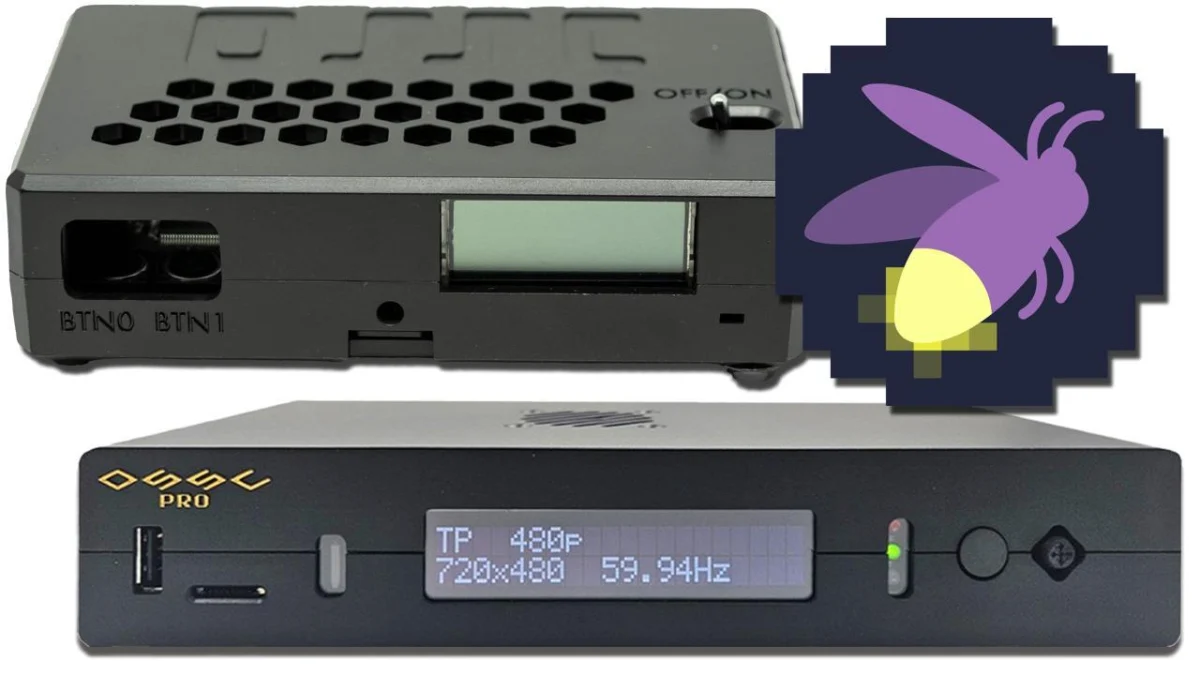
The retro gaming community has received a significant technical update regarding high-definition display hardware for legacy consoles. RetroRGB has officially introduced a dedicated section on its platform providing comprehensive instructions for loading and configuring profiles specifically tailored for Lumacode-modified consoles on the OSSC Pro (Open Source Scan Converter Pro). Alongside this documentation, the platform released an initial suite of pre-configured profiles designed for classic hardware platforms, including the Nintendo Entertainment System (NES), Sega Master System (SMS), and Atari 2600.
This expansion builds upon existing resources for the original OSSC hardware, aiming to streamline the upscale configuration process for enthusiasts utilizing modern digital display outputs for vintage analog systems. Furthermore, the update introduces refreshed documentation for the legacy OSSC Lumacode setup, consolidates existing profile packages, and shares a practical workflow shortcut for custom profile nomenclature.
Background Context of the Open Source Scan Converter Ecosystem
The Open Source Scan Converter series, pioneered by developer Markus Hiironen (commonly known in the community as marqs), represents a monumental shift in how retro video game hardware interfaces with modern high-definition televisions and computer monitors. Traditional flat-panel displays struggle significantly when attempting to process the native 240p and 480i analog signals produced by consoles manufactured in the 1970s, 1980s, and 1990s. These modern displays often introduce severe input lag, incorrect aspect ratios, or fail to recognize the non-standard video timings altogether.
The original OSSC revolutionized the retro gaming landscape by line-multiplying analog RGB, Component, and SCART signals with ultra-low latency, converting them into HDMI-compatible digital video without buffering frames. However, as display resolutions shifted further toward 4K and complex video routing requirements evolved, the community demanded more advanced processing capabilities. This led to the development of the OSSC Pro, a more powerful successor equipped with a larger FPGA (Field-Programmable Gate Array), advanced deinterlacing engines, flexible video scaling algorithms, and support for high-bandwidth digital video inputs and outputs.
Concurrently, internal hardware modifications have evolved to bypass the limitations of legacy analog video encoders. Lumacode, a specialized digital video modification standard, extracts pure digital video data directly from the picture processing units of classic consoles. By routing this pristine digital signal directly into compatible upscalers, players can circumvent analog-to-digital conversion loss, interference, and color bleed, achieving the sharpest possible image representation on modern pixel-grid displays.
Chronology of the Lumacode and OSSC Pro Integration
The integration of Lumacode technology within the OSSC ecosystem has advanced incrementally through collaborative efforts among hardware modders, firmware developers, and content creators.
Phase One: Introduction of Lumacode for Legacy OSSC
Initially, Lumacode solutions were engineered primarily to interface with the original OSSC hardware architecture. This required specific firmware adaptations and manual profile generation to ensure the line-doubling and scaling engines correctly interpreted the incoming digital data streams. Documentation was established to guide users through the complex timing adjustments necessary to achieve stable image output.
Phase Two: Evolution of the OSSC Pro Architecture
As the OSSC Pro moved from conceptual development to commercial release, its expanded feature set necessitated a complete reimagining of profile management. The hardware’s ability to handle complex scaling matrices, custom sampling phases, and advanced color space transformations meant that legacy profiles could not simply be ported over without adjustment.
Phase Three: Standardization and Profile Consolidation (Current Phase)
The recent deployment by RetroRGB marks a transition toward standardization for Lumacode users. By establishing centralized, pre-tested profiles for foundational systems like the NES, SMS, and Atari 2600, the barrier to entry for configuring complex hardware chains has been substantially lowered. The platform has committed to expanding this repository incrementally as additional Lumacode-compatible console modifications undergo rigorous testing phases.
Technical Breakdown of Profile Management and Configuration

Configuring an advanced scan converter like the OSSC Pro involves managing numerous variables, including horizontal and vertical sampling rates, phase adjustments, active video regions, and synchronization timings. For users deploying internal digital mods like Lumacode, these parameters must be precisely tuned to match the pixel clock of the modified console.
The newly published OSSC Pro resources provide exact numerical parameters and profile configurations designed to eliminate visual artifacts, shimmering, and off-center framing. Users can transfer these profiles via SD card storage directly into the OSSC Pro environment.
In addition to publishing the core configuration files, the update addresses a persistent user interface limitation within the OSSC firmware architecture. Historically, saved user profiles on both the standard OSSC and the OSSC Pro were identified primarily by numerical index (e.g., Profile 01, Profile 02), requiring users to maintain external reference sheets to recall which configuration corresponded to a specific console.
While the official documentation outlines robust text-editing workflows—particularly beneficial for large, community-curated collections such as those assembled by Wobbling Pixels—an alternative, streamlined naming methodology has been validated. This simplified file-tagging trick allows the hardware menu system to render human-readable identifiers natively upon profile selection, significantly improving user experience during multi-console gaming sessions.
Ecosystem Implications and Community Impact
The expansion of dedicated support infrastructure for Lumacode and OSSC Pro configurations carries notable implications for the broader retro gaming preservation and enthusiast community.
First, the standardization of profiles reduces the technical friction associated with high-end video hardware. Historically, achieving optimal picture quality on high-resolution displays required deep technical literacy regarding video timings, phase synchronization, and analog-to-digital signal theory. By supplying verified, plug-and-play profiles for major platforms, content creators and hardware developers are democratizing access to professional-grade display fidelity.
Second, the maturation of internal digital modifications like Lumacode points toward a broader industry trend within the hobbyist space. While external cables (such as high-quality SCART or Component leads paired with traditional transcoders) remain popular, internal digital taps represent the upper ceiling of video purity for retro hardware. As more consoles receive Lumacode support, the demand for centralized configuration repositories—such as those hosted on RetroRGB—will continue to scale proportionally.
Finally, the ongoing refinement of open-source hardware projects demonstrates the viability of community-driven engineering. Unlike proprietary consumer electronics, platforms like the OSSC Pro thrive on collaborative firmware updates, user-generated documentation, and transparent hardware modifications. The integration of Lumacode profiles exemplifies how disparate hardware standards coalesce into unified, user-friendly ecosystems through the diligence of community documentation.
Future Outlook for Open Source Video Processing
As manufacturers and developers look toward future iterations of video processing hardware, compatibility between internal digital mods and external scalers will remain a critical focus area. The methodologies established in configuring the NES, Sega Master System, and Atari 2600 for Lumacode-equipped OSSC Pro units provide a foundational blueprint for forthcoming profiles targeting more complex 16-bit and 32-bit architectures.
Users currently operating previous-generation OSSC Lumacode setups are advised that existing configurations remain fully functional, meaning immediate migration is unnecessary. However, those transitioning to the OSSC Pro hardware architecture now have access to a streamlined, continuously updated resource library designed to maximize the visual potential of classic video game hardware on contemporary display technology.