 Chalid Lutfie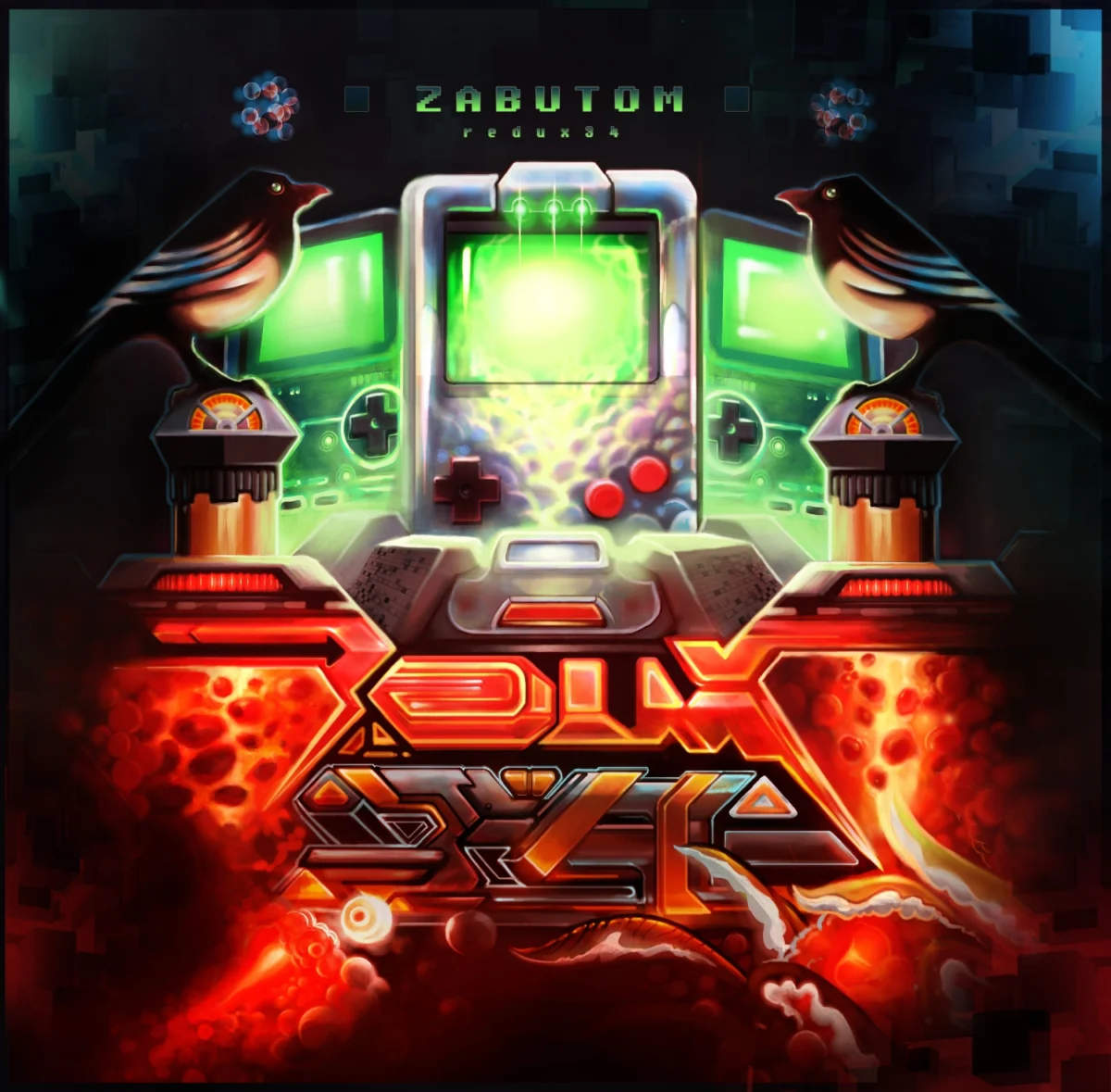
On September 18th, 2015, the chiptune community witnessed a significant evolution in the genre with the release of Redux34, the latest full-length effort from Swedish composer and producer Niklas Sjösärd, known professionally as Zabutom. The album represents a departure from the traditional, purist approach to 8-bit composition, instead opting for a sophisticated hybrid sound that marries the nostalgic aesthetic of Nintendo-era hardware with the structural complexities of progressive rock, IDM, and folk-inspired instrumentation. This release marks a pivotal moment in the artist’s career, occurring shortly after his completion of formal studies in composition and electronic music at the Academy of Music and Drama in Gothenburg, Sweden.
The Evolution of the Chiptune Genre
To understand the significance of Redux34, one must look at the trajectory of the chiptune movement over the last two decades. Emerging from the "demoscene" of the early 2000s—a subculture focused on creating technical and artistic displays of code and sound on limited hardware—chiptune has transitioned from a niche hobbyist pursuit into a recognized musical genre.
In the early 2000s, producers were largely restricted by the limitations of sound chips found in systems like the Game Boy or the Nintendo Entertainment System (NES). As technology advanced, the barrier to entry lowered, leading to a saturation of lo-fi digital music. Zabutom’s emergence in this era was notable; his 2011 debut, Zeta Force, provided a seminal collection of "shmup" (shoot-em-up) inspired tracks that defined a generation of sound design. However, as the industry matured, artists began seeking ways to integrate these "bleeps and bloops" into broader musical frameworks. Redux34 serves as a case study for this maturation, demonstrating that retro hardware can function as a foundational element rather than a restrictive ceiling.
Chronology of a Sonic Journey
The genesis of Redux34 dates back to 2008, a period during which Sjösärd began performing regularly on the international chip music festival circuit. The album’s development was characterized by a protracted, multi-year gestation period. According to the artist, the project began as a series of plain LSDJ (Little Sound DJ) compositions.
The title track, "Redux34," serves as a testament to the technical volatility inherent in the medium. During its initial production in 2008, a hardware failure in the artist’s Game Boy cartridge resulted in the total loss of the project’s data. Sjösärd was forced to reconstruct the track from memory, a process that underscored the fragility of working with legacy hardware. The numerical suffix "34" refers to the specific time signature of the track, which became a defining characteristic of the album’s challenging rhythmic structures.

Between 2011 and 2014, Sjösärd pursued formal academic training at the Academy of Music and Drama. During this interval, his musical output diversified significantly. He participated in experimental electronic projects such as "Friktion" and "Scratches and Petals," explored modular synthesis via the "Buchla Boys" collective, and contributed as a multi-instrumentalist to folk-inspired acts. These diverse influences—ranging from acoustic folk arrangements to high-concept experimental synthesis—eventually converged into the production aesthetic of Redux34.
Production Analysis and Technical Craft
The soundscapes present in Redux34 are defined by their "retro-futuristic" ambition. While the core of the album remains rooted in 8-bit sound generation, the production environment is decidedly contemporary. Sjösärd utilizes a layering technique that blends analog synthesizers and electric guitars with digital waveforms. The use of "spaced out" delay textures and complex, non-standard rhythmic patterns moves the material away from the repetitive loops often associated with early electronic music and toward the structured development of progressive rock.
From a production standpoint, the album reflects an attempt to solve the "chiptune dilemma": the difficulty of maintaining the charm of low-bit audio while achieving the high-fidelity clarity expected of modern studio albums. By incorporating professional-grade mixing and mastering techniques, Sjösärd has created an auditory experience that feels both nostalgic and forward-looking. This integration of disparate genres—IDM’s glitchy percussion, the acoustic sensibilities of folk, and the melodic tropes of video game soundtracks—positions the album as a hybrid work, appealing to both traditional electronic listeners and the broader alternative music audience.

The Role of Visual Collaboration
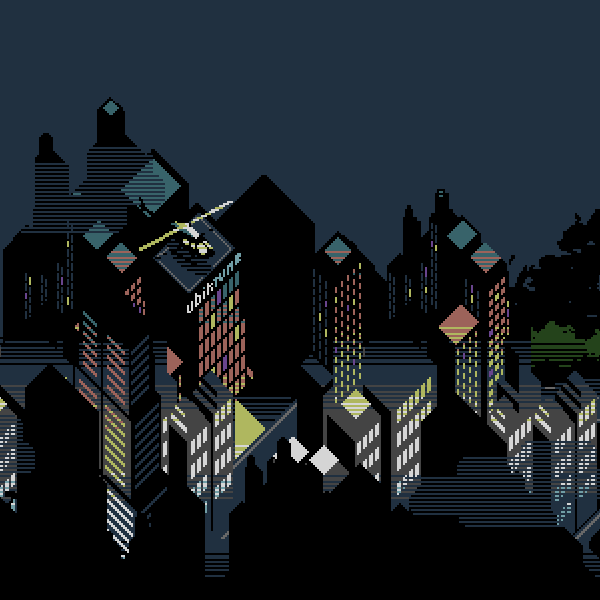
Redux34 also distinguishes itself through its cohesive visual identity. Collaborating with Norrköping-based concept artist and painter Anders Karlsson, the release incorporates artwork that mirrors the melancholic yet hopeful narrative arc of the music. In the modern music industry, where digital distribution often lacks the tactile connection of physical media, the intentional pairing of specific visual motifs with the album’s conceptual themes suggests a return to the "album-as-art" philosophy. Karlsson’s contributions serve to ground the abstract electronic compositions, providing a visual shorthand for the "strange new worlds" the music purports to explore.
Industry Implications and Legacy
The release of Redux34 highlights a broader trend within the electronic music sector: the "professionalization" of sub-genres that were once considered underground. By bridging the gap between hobbyist chip music and conservatory-trained composition, Sjösärd has created a blueprint for future electronic musicians.
The implications for the chiptune scene are twofold. First, it validates the legitimacy of the genre within academic and professional circles. By successfully integrating chiptune with complex music theory and advanced electronic production, artists like Zabutom challenge the perception that the genre is merely a novelty. Second, the album underscores the value of the "slow-production" model. In an era of streaming where artists are pressured to release frequent, short-form content, the long, deliberate gestation of Redux34—spanning seven years—offers a counter-narrative, emphasizing craftsmanship and artistic intent over rapid output.

Conclusion and Market Availability
Redux34 stands as a significant milestone in the career of Niklas Sjösärd and a notable entry in the catalog of Ubiktune, the label responsible for the release. Available across all major streaming platforms and as a physical compact disc, the album invites listeners to engage with a work that is as intellectually rigorous as it is emotionally resonant.
The success of this project confirms that the legacy of 8-bit hardware is not merely a nostalgic curiosity, but a viable, evolving medium for contemporary composition. As the boundaries between electronic, acoustic, and digital music continue to blur, works like Redux34 provide a vital link, demonstrating how the sounds of the past can be effectively repurposed to define the auditory landscape of the future. Through a combination of technical persistence, formal education, and cross-genre exploration, Zabutom has solidified his position as a prominent figure in the evolving narrative of modern electronic music.