Cecilia Chamidah Nur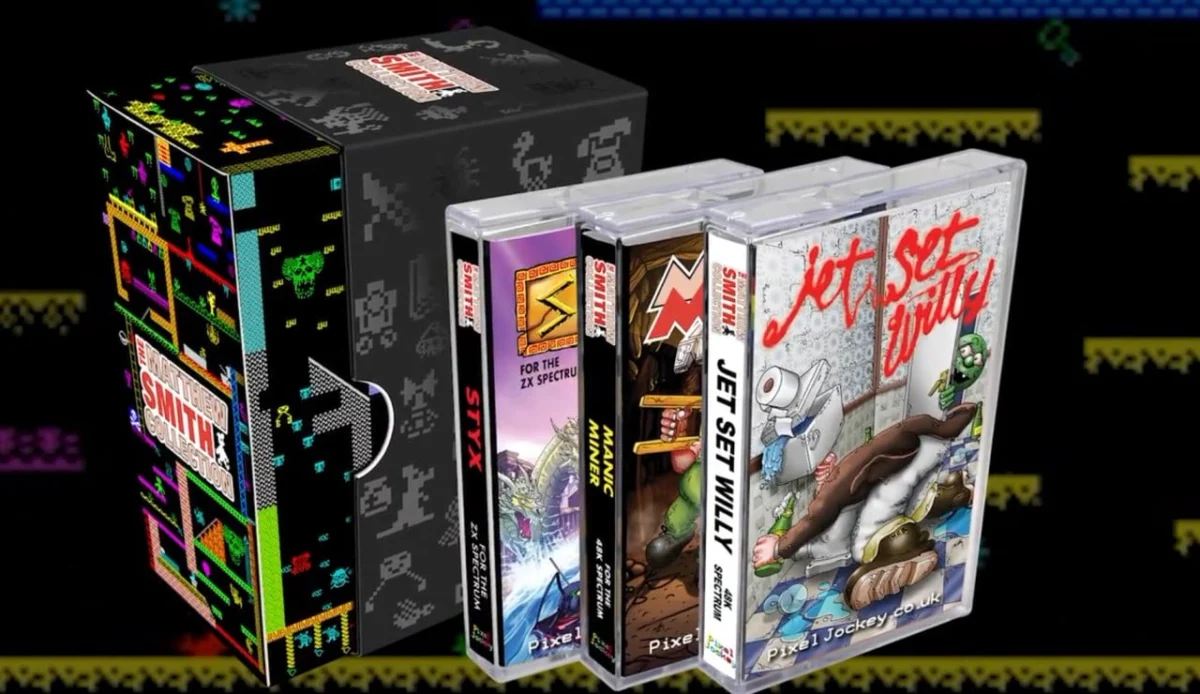
The landscape of early 1980s British computing was defined by a unique confluence of accessibility, ingenuity, and a distinct, almost anarchic, DIY spirit. At the epicenter of this movement stood Matthew Smith, a prodigy whose contributions to the ZX Spectrum platform transcended mere software development, effectively helping to establish the conventions of the platforming genre. Publisher Pixel Jockey has now launched a Kickstarter campaign for The Matthew Smith Collection, a curated, physical compendium that seeks to immortalize Smith’s most influential works. This initiative serves as both a preservation effort and a tribute to a developer whose rapid rise to prominence remains a cornerstone of video game history.
The Genesis of a Bedroom Coder
Matthew Smith’s entry into the burgeoning home computing market began in 1979, when he received a TRS-80 computer. During an era when formal computer science education was in its infancy and professional development kits were expensive, Smith demonstrated an intuitive grasp of assembly language and machine code. By the time he was 17, his proficiency had reached a level of commercial viability that caught the attention of Bug-Byte Software.
The collaboration with Bug-Byte proved to be the catalyst for a meteoric career. The publisher provided Smith with a ZX Spectrum, a machine that would become his primary canvas. His first major project, Styx (1983), was a maze-runner that demonstrated his ability to manipulate the hardware’s color limitations and sprite movement. However, it was his subsequent titles that would fundamentally alter the trajectory of the medium.
Defining the Platformer: Manic Miner and Jet Set Willy
Manic Miner, released in 1983, is frequently cited by industry historians as a foundational text for platform gaming. It introduced the concept of single-screen, multi-level platforming that required precise timing and navigation, often accompanied by synthesized classical music—specifically, renditions of Edvard Grieg’s "In the Hall of the Mountain King."
The success of Manic Miner was swiftly followed by its 1984 sequel, Jet Set Willy. If Manic Miner was a technical achievement, Jet Set Willy was a cultural phenomenon. It expanded the scope of the platformer into a non-linear, exploration-based experience. The game’s surreal aesthetic, coupled with its challenging gameplay, resonated with a generation of British youth. Commercially, the impact was profound; Jet Set Willy would eventually reach lifetime sales exceeding one million units, an extraordinary figure for the independent software market of the mid-1980s. These titles not only cemented Smith’s reputation but also validated the "bedroom programmer" model—a business strategy where individual coders could compete with, and often outperform, established software houses.
The Matthew Smith Collection: A Curated Retrospective
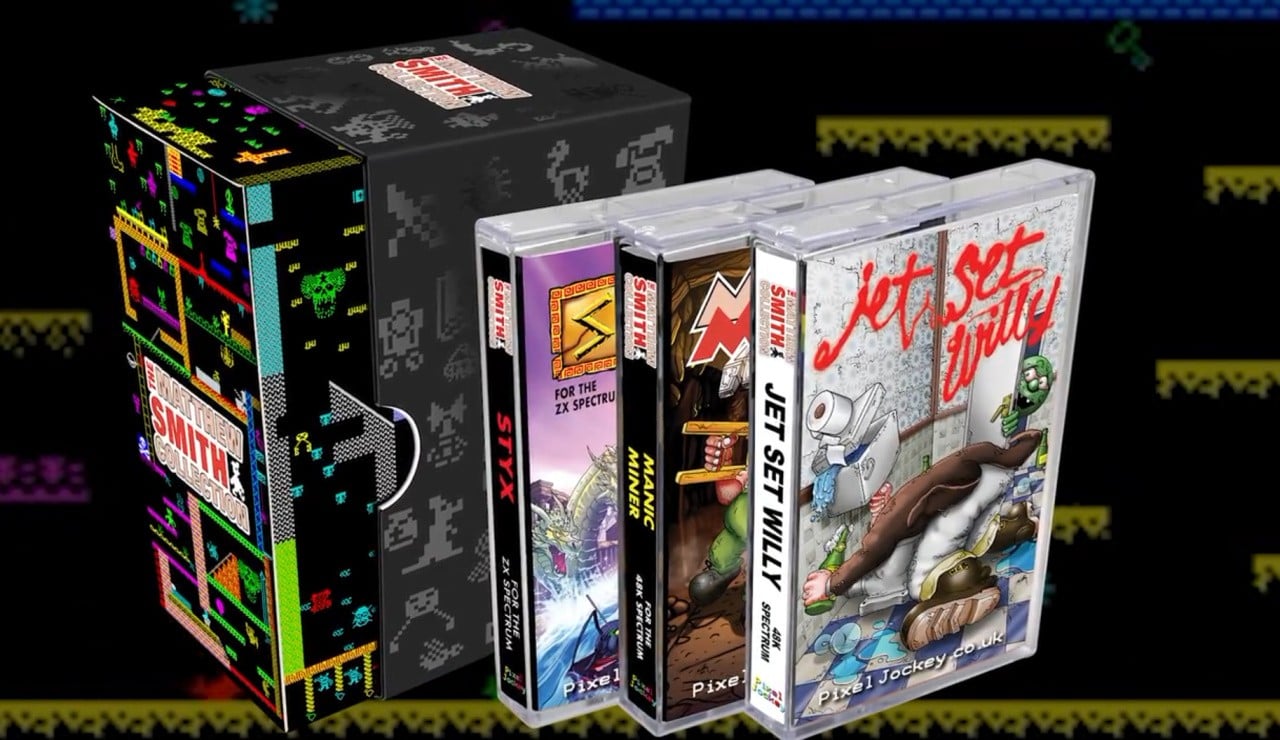
Pixel Jockey’s new collection is designed to provide a premium, archival experience for collectors. The project features newly produced physical copies of Styx, Manic Miner, and Jet Set Willy for the ZX Spectrum, each housed in updated packaging. A critical component of this release is the contribution of artist Trevor Storey, formerly of Crash! and Zzap! magazines. Storey has recreated the cover art, ensuring that the visual identity of these games remains faithful to the aesthetic of the era while benefiting from modern production techniques.
The collection is divided into tiers to accommodate different levels of collector engagement:
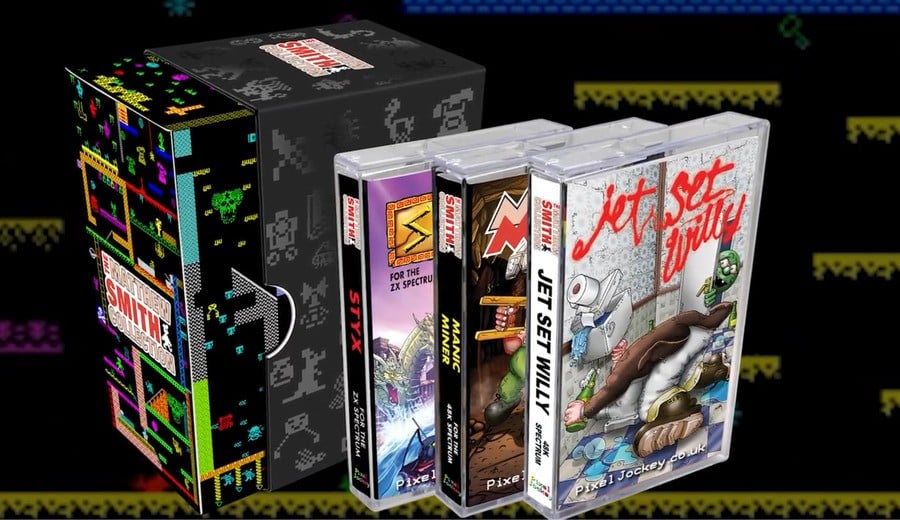
- Standard Edition: Priced at £39, this set includes the three core titles in a specialized slipcase.
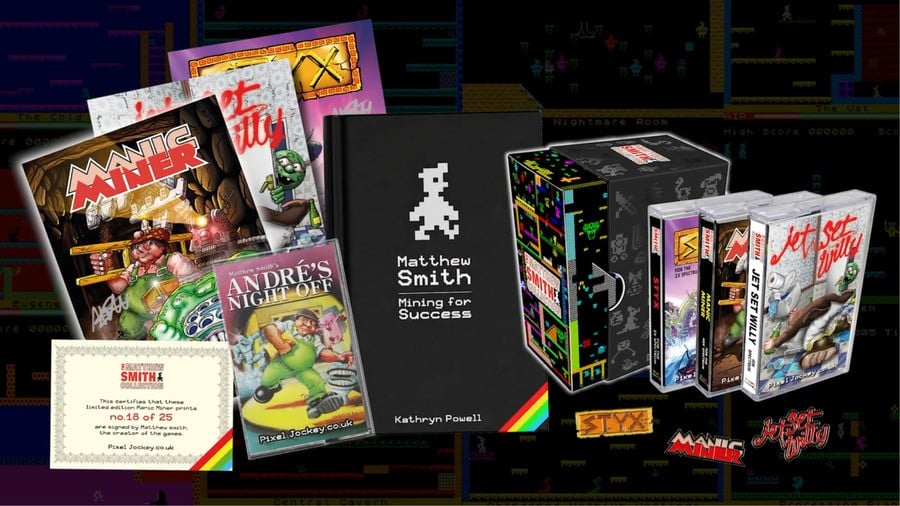
- The Full Set: Starting at £74, this premium tier incorporates the game boxset alongside "Mining for Success," a 200-page, hardback A5 biography of Matthew Smith. This volume documents his early years, the technical challenges he faced during the development of his most famous titles, and his influence on the industry.
- Specialized Additions: The Full Set also includes a collection of enamel pins featuring the logos of the three primary games and, significantly, the first-ever standalone cassette release of Andre’s Night Off. Originally coded by Smith for C&VG magazine, Andre’s Night Off had never previously seen a retail release, making this inclusion a primary draw for completionists.
- Signed Prints: A £99 tier offers an expanded package that includes a set of A5 prints featuring the collection’s new artwork, individually signed by Matthew Smith.
Contextualizing the Preservation Effort
The decision to release these titles on original media—cassettes—is a deliberate choice aimed at the retro-computing community, which places a high value on the physical tactile experience of 8-bit software. While emulators have made these games widely available for decades, the physical collection seeks to bridge the gap between historical software and the tangible artifacts that accompanied its release.
The historical significance of this release extends beyond the games themselves. In the early 1980s, the "bedroom coder" phenomenon was an economic anomaly. Smith was part of a cohort of young developers who, operating out of residential homes, created software that defined the British computer industry. This era is often contrasted with the current landscape of the multi-billion-dollar game development industry, which is characterized by massive development teams and long production cycles. By archiving the works of this period, collections such as this provide a necessary point of reference for understanding how the modern gaming landscape evolved from individual experimentation.
Implications for the Retro Market
The crowdfunding approach via Kickstarter serves as a litmus test for the continued interest in the ZX Spectrum ecosystem. Historically, the Spectrum has maintained a robust fan base, particularly in the United Kingdom, Spain, and Russia. This community has remained active through homebrew development, hardware modifications, and annual events that celebrate the machine’s legacy.
Industry analysts observe that such collections serve a dual purpose: they provide an entry point for newer enthusiasts interested in the roots of the platformer genre, and they satisfy the demand for high-quality, preservation-focused merchandise among long-term collectors. The inclusion of Andre’s Night Off is particularly notable, as it represents a commitment to archival accuracy—rescuing "lost" or marginalized software from obscurity.
Looking Forward: Production and Legacy
The project has established a delivery timeline that extends into February 2027. This long lead time reflects the complexities involved in sourcing and manufacturing hardware-compatible physical media, as well as the editorial work required for the accompanying 200-page biography.
The lasting impact of Matthew Smith’s work is evident in the way developers continue to reference the structural tropes he established. His influence is felt in the "Metroidvania" genre and the modern independent gaming scene, which continues to prioritize artistic vision over sheer graphical fidelity. By packaging these titles in a way that respects their historical context, Pixel Jockey is ensuring that the legacy of one of gaming’s most enigmatic pioneers remains accessible for future research and enjoyment.
As the industry moves toward increasingly digital-only distribution models, the physical preservation of software from the 8-bit era becomes increasingly critical. The Matthew Smith Collection acts as a repository of a foundational moment in computing, documenting the transition from hobbyist experimentation to a professionalized industry. Through this collection, the "wild, compelling, and somewhat anarchic" spirit of the early 1980s is successfully preserved, ensuring that the history of the ZX Spectrum is not merely remembered, but experienced as it was intended.