Indra Gunadi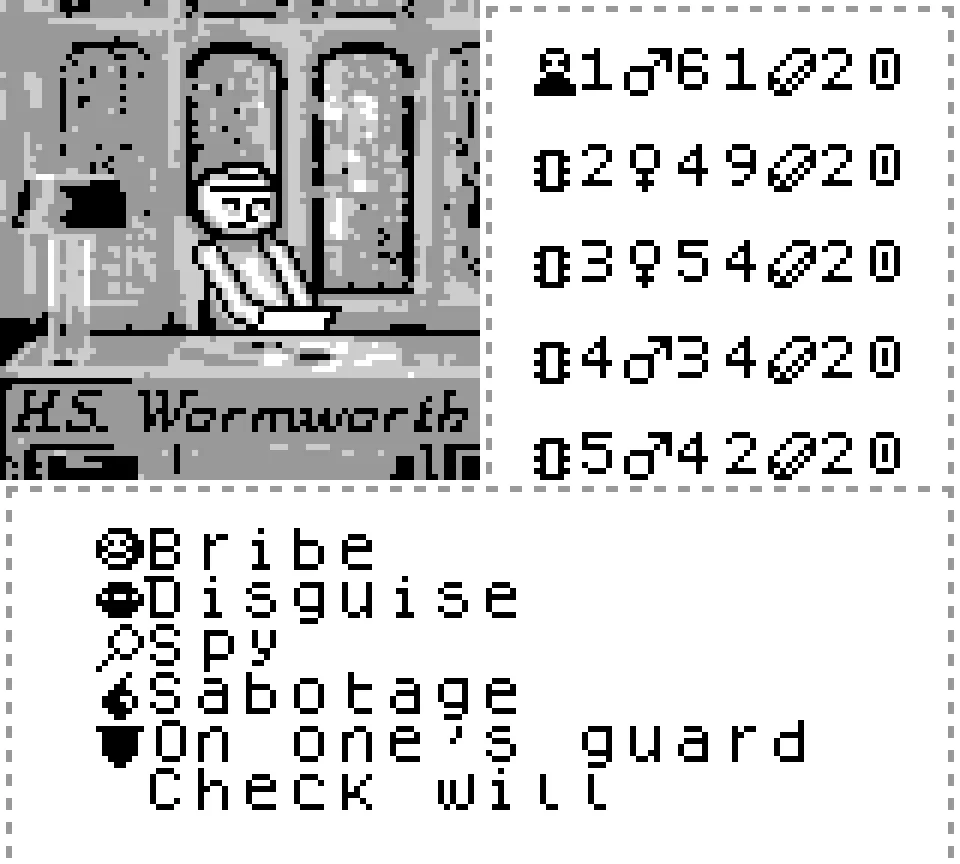
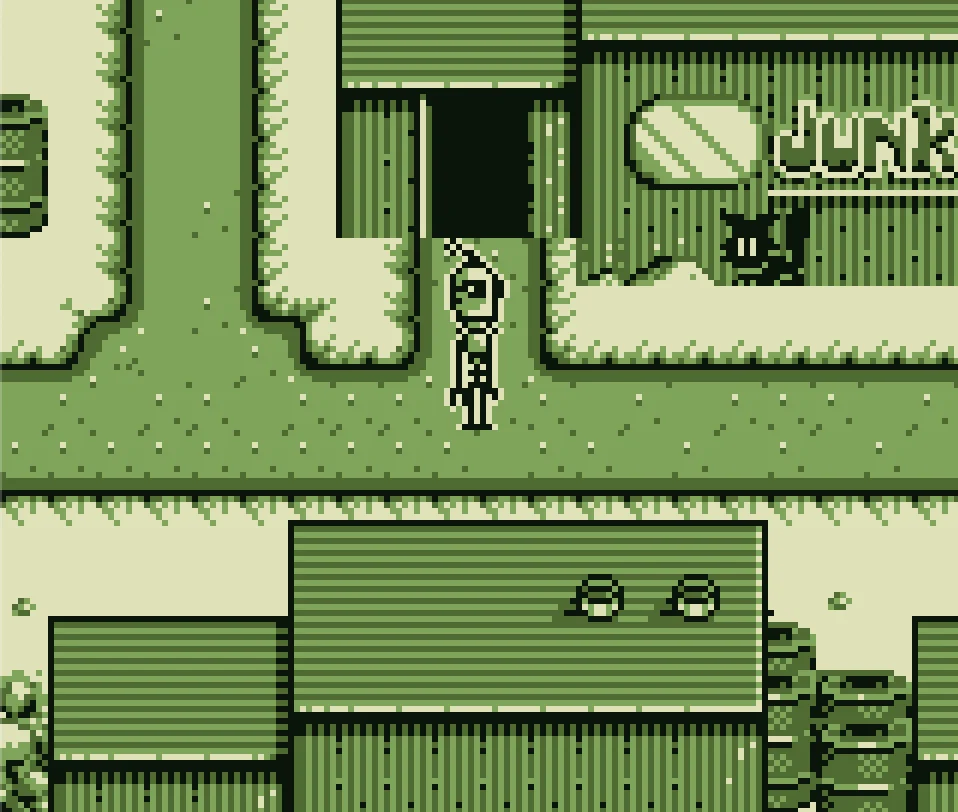
The landscape of homebrew software development for legacy hardware continues to evolve with the release of The Final Will, a narrative-driven strategic title developed by Vertmo for the Nintendo Game Boy and Game Boy Color. Released on September 21, 2026, the game represents a sophisticated departure from the arcade-style titles that historically dominated the platform’s library, focusing instead on social deduction, resource management, and branching narrative paths. The project arrives during a period of sustained interest in 8-bit architecture, driven by a global community of developers who leverage modern assembly language optimization techniques to push the technical boundaries of handheld consoles that were originally released in 1989.
Narrative Mechanics and Gameplay Structure
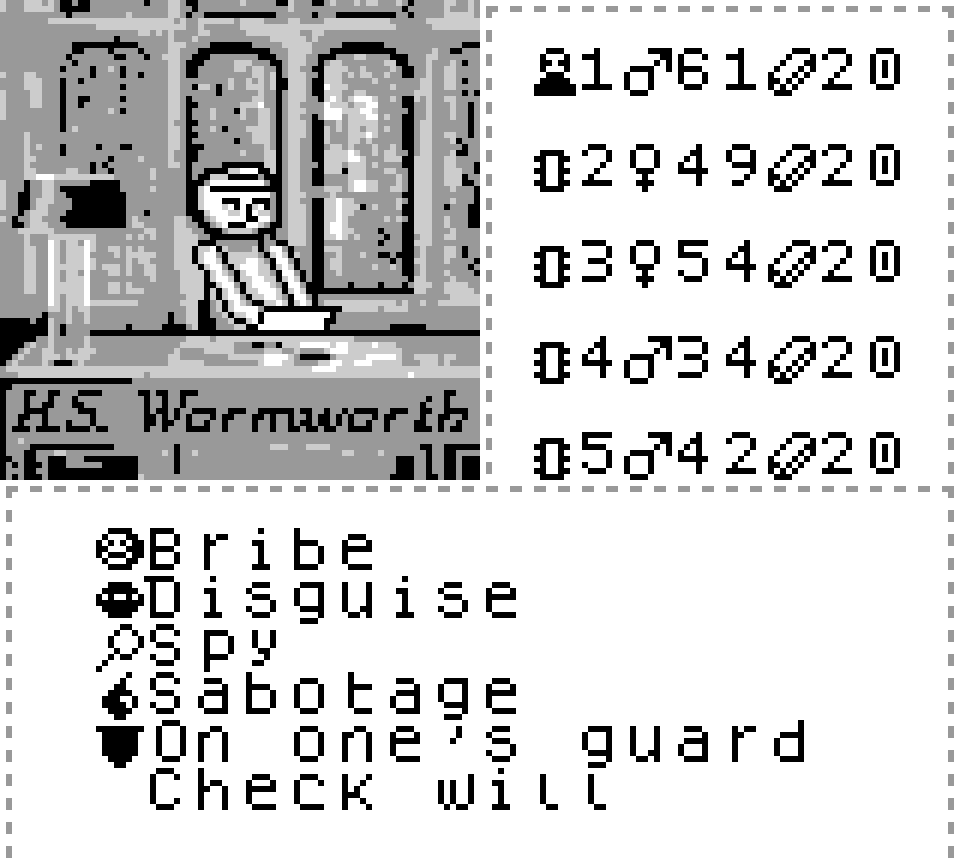
The Final Will centers on a high-stakes inheritance scenario: the passing of a matriarch and the subsequent struggle between five potential heirs vying for a fortune consisting of 100 gold bars. The core gameplay loop is constrained by an eleven-day time limit, during which the player must navigate the complexities of estate law and familial treachery. Each day introduces a new legal clause or familial intervention that threatens to disqualify the player from the inheritance.
The title employs a multifaceted strategic approach. Players must actively manage their limited resources to bribe the estate executor, gather intelligence on rival heirs, or employ disguises to avoid detection while sabotaging the positions of others. This structural design mimics the "hidden traitor" or "social deduction" genre popular in modern tabletop gaming, effectively porting these mechanics to the restricted memory and input constraints of the Nintendo Game Boy. By utilizing the Game Boy’s limited screen real estate, Vertmo has implemented an interface that emphasizes information gathering—a departure from the reflex-heavy action titles that typically defined the console’s commercial era.
Historical Context and the Homebrew Renaissance
The release of The Final Will is part of a broader, decade-long trend of "homebrew" development. The homebrew community, consisting of hobbyists, software engineers, and digital preservationists, has increasingly focused on creating original content for legacy hardware rather than mere emulation or ports. According to industry tracking data from independent software archives, the number of new titles released for the original Nintendo Game Boy has increased by approximately 15% annually since 2022.
This resurgence is supported by the availability of modern development tools, such as the GBDK (Game Boy Development Kit) and specialized assembly compilers that allow developers to write code on modern operating systems and compile it into ROM files compatible with original hardware. The technical requirements for these projects remain stringent; developers must optimize for a Zilog Z80-derivative processor (the Sharp LR35902) running at 4.19 MHz, with only 8KB of internal Work RAM and a restricted color palette. The Final Will succeeds in navigating these limitations, showcasing an aesthetic that adheres to the technical capabilities of the hardware while offering gameplay depth that exceeds the scope of many 1990s-era titles.
The Evolution of Narrative in 8-Bit Media
Historically, Game Boy titles were limited by storage capacity—specifically the size of the ROM cartridges, which generally ranged from 32KB to 1MB. Early developers relied on repetitive gameplay loops to provide longevity, as extensive text-based storytelling consumed valuable memory space. Vertmo’s approach with The Final Will suggests a shift in developer priorities. By prioritizing narrative complexity over graphical fidelity, the game demonstrates how modern coding efficiency can allow for larger script files and more complex state machines within the same 8-bit architecture.
In the context of the current homebrew scene, narrative-heavy games are becoming a sub-genre of their own. Analysts observing the retro-development scene note that these games provide a "nostalgia-plus" experience, where the aesthetic of the 1990s is paired with the game design philosophies of the 2020s. This hybrid approach has allowed titles to find a stable market among collectors who utilize flash-memory cartridges—hardware that allows users to play homebrew ROMs on original, authentic Game Boy consoles.
Economic and Technical Implications
The development of The Final Will highlights the democratization of game design. With zero reliance on official Nintendo licensing or publishing infrastructure, the developer has successfully brought a project to completion using community-supported frameworks. The economic implications for this niche are significant; by operating outside the traditional retail model, creators like Vertmo can focus on niche, high-concept experiences that would be deemed non-viable by traditional publishers.
From a technical standpoint, the game’s reliance on daily "clauses" and AI-driven rivalry suggests a robust internal logic system. The challenge for developers on the Game Boy is managing the "game state"—the set of variables that track the player’s relationship with the four other heirs and their current standing with the executor. Managing these variables without exceeding the console’s memory limit requires rigorous programming discipline. The Final Will serves as a case study for how modern developers use modular code to squeeze complex state-driven gameplay into the limited addressable memory of the 8-bit era.
Industry Perspectives on Legacy Development
While Nintendo has not officially commented on the recent surge of unauthorized homebrew software, the company’s silence is generally interpreted as tacit acceptance, provided the software does not infringe on existing intellectual property. The homebrew community maintains a strict code of ethics regarding copyright, focusing on original assets and code.
"The development of titles like The Final Will is not merely about preserving the past; it is about extending the lifecycle of technology that remains physically functional," says Dr. Elena Vance, a historian specializing in early digital media. "We are seeing a unique phenomenon where the shelf life of a piece of hardware is being extended by several decades, not by the manufacturer, but by the users themselves. When you see a game released in 2026 that functions on a 1989 device, you are witnessing the pinnacle of digital sustainability."
Broader Impact and Future Outlook
The release of The Final Will serves as an indicator of the maturity of the retro-development scene. As the tools used to create these games become more accessible, the barrier to entry continues to lower, leading to an increase in the quality and variety of titles. This development cycle encourages a cross-generational exchange of skills, where younger developers learn the constraints of assembly language, and veteran programmers share the tricks of the trade regarding memory management and hardware registers.
Furthermore, the existence of such titles fosters an ecosystem of secondary hardware production. The demand for "flash carts," backlit screen modifications for original Game Boys, and high-quality printed manuals for homebrew games has created a sustainable micro-economy. As a result, the "Game Boy" as a platform is no longer a static piece of history but a dynamic, ongoing project.
Conclusion
The Final Will by Vertmo is a testament to the enduring appeal of the Game Boy platform. By successfully integrating complex, narrative-driven gameplay into a classic 8-bit environment, the developer has contributed to the growing body of work that defines the current era of homebrew software. As the community moves toward 2027 and beyond, the expectation is that such projects will continue to blend the constraints of the past with the design ingenuity of the present. The game serves as both an entertainment product and a technical achievement, ensuring that the legacy of the original Game Boy remains relevant in the modern digital age. Whether played on original hardware or through contemporary emulation software, The Final Will stands as a rigorous example of what is possible when modern creative ambition is applied to the foundational limitations of early console architecture.