Vera Clarissa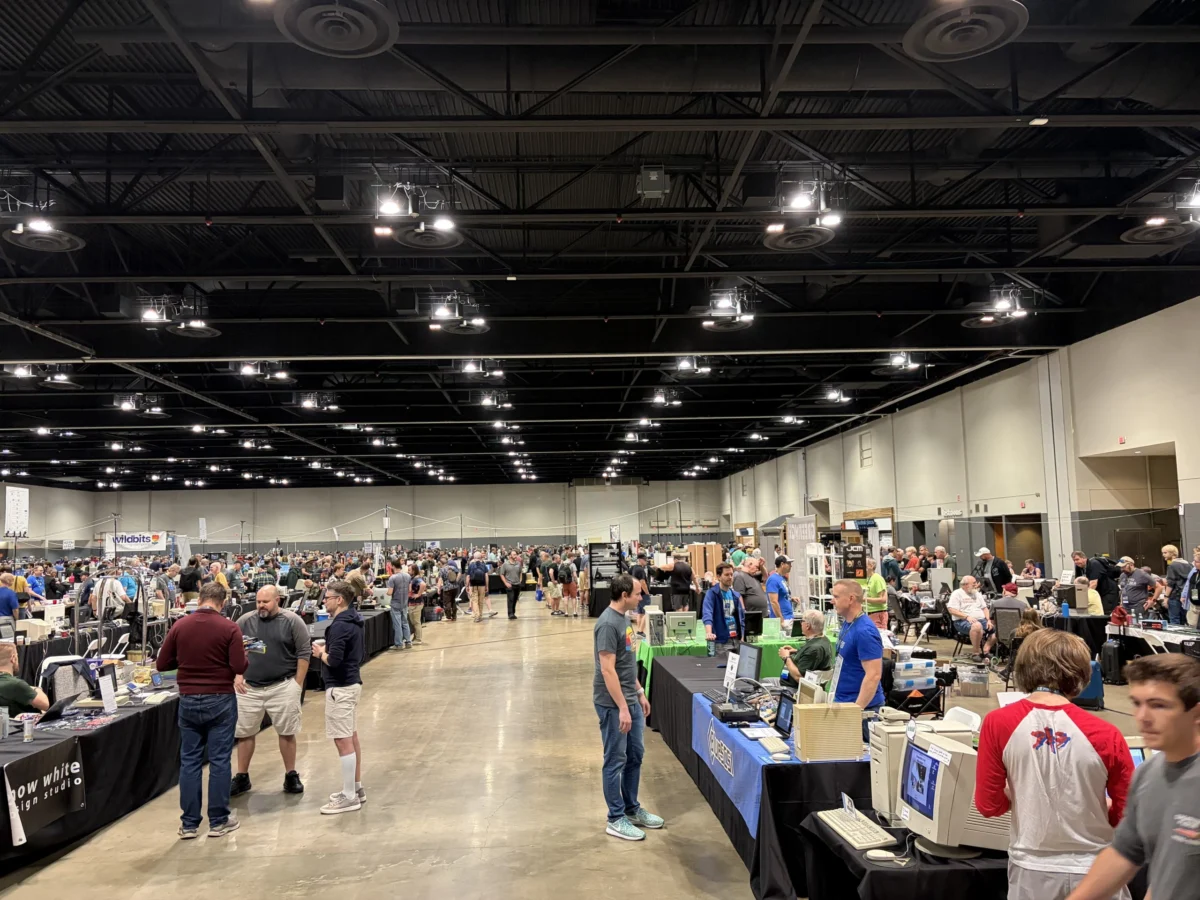
The Vintage Computer Federation (VCF) Midwest event recently served as a massive congregation for technology historians, engineers, and enthusiasts, showcasing the evolution of computing from the early 8-bit era to the workstation-heavy power of the late 1990s. Building upon the foundational exhibits of the first half of the conference, the latter portion of the event provided an exhaustive survey of industry milestones, ranging from the Apple Lisa’s graphical user interface to the experimental, short-lived hardware like the Nintendo Virtual Boy and the SGI Tezro.

The Significance of the Apple Lisa and Early GUI Development
Central to the exhibit floor was the Retro Tech Foundation’s Apple Garage, which featured a diverse array of hardware including the iconic Bell & Howell Apple II. However, the standout for many attendees was the Apple Lisa. Introduced in 1983 at a retail price of $9,995—equivalent to over $30,000 today—the Lisa represented a critical pivot point in human-computer interaction.
Observers at the event noted the performance characteristics of the Lisa, specifically the behavior of its early overlapping window system. Unlike the optimized window managers found in modern operating systems, the Lisa’s graphics-loading sequence provided a visual history of how bitmapped display technology struggled to keep pace with the ambitions of early software engineers. This exhibit offered a stark reminder of the massive hardware requirements necessary to move away from the Command Line Interface (CLI) that dominated the industry at the time.

Cross-Platform Integration and the MacCharlie Experiment
The exhibit floor also highlighted the ingenuity of third-party hardware manufacturers, most notably Dayna Communications, creators of the MacCharlie. The MacCharlie was an external expansion unit for the Macintosh 128K that allowed users to run IBM PC software. By housing an Intel 8088 processor and 640 KB of RAM, the device effectively turned a closed-system Macintosh into a dual-platform workstation.
The well-preserved specimen at VCF Midwest, complete with original documentation and the necessary IBM breakout box, served as a case study in the desperate early efforts to achieve platform interoperability. As the industry moved toward standardization, devices like the MacCharlie demonstrated the significant costs—both financial and technical—that early users incurred to ensure software compatibility across divergent architectures.

Industry Collaboration and Community Engagement
VCF Midwest acted as a nexus for prominent figures in the retro-computing community, including Steve from Mac84 and hardware restorer Collin Mistr, known as DosDude1. These experts provided live demonstrations of rare software and hardware configurations that are rarely seen outside of private archives.
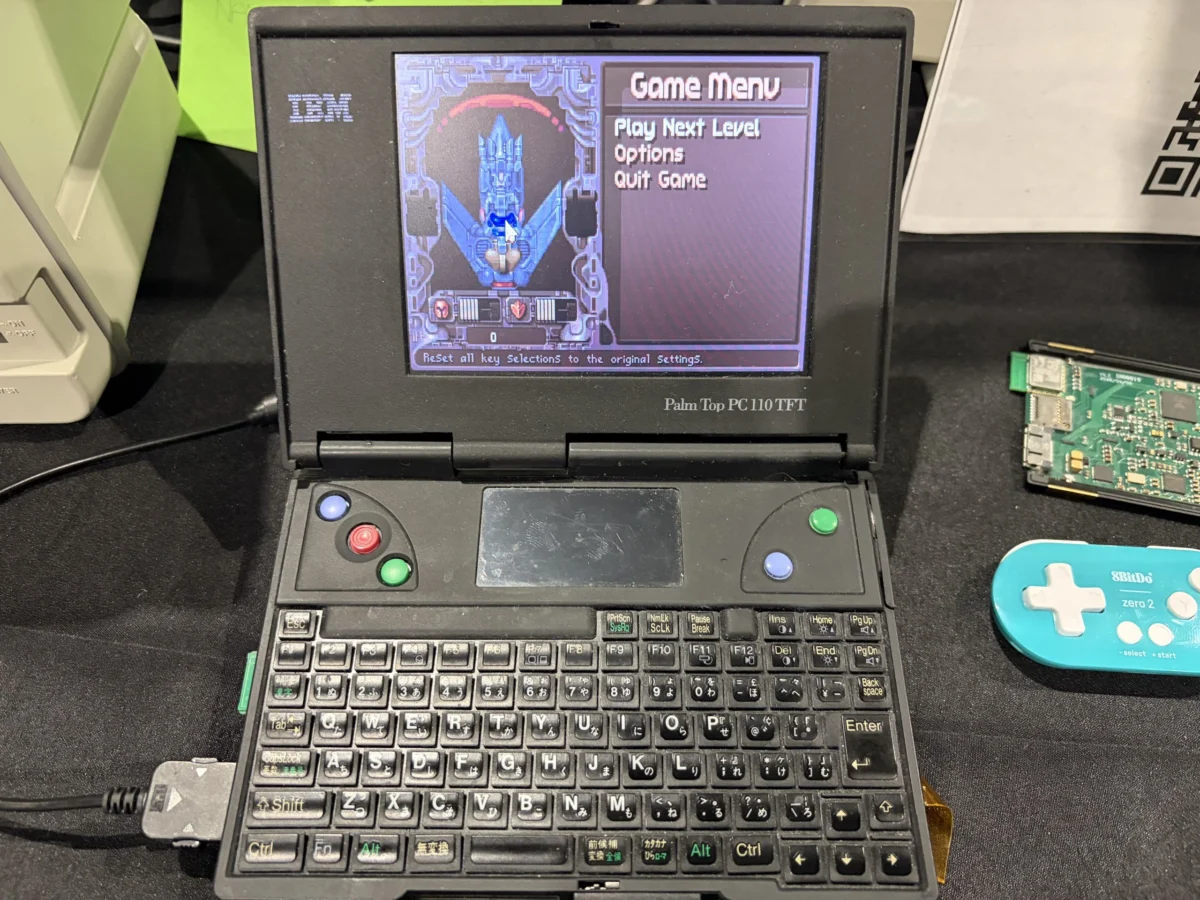
One notable exhibit from Mac84 featured a Power Macintosh 7100/80 equipped with an original 1990s-era internal hard drive. The machine contained beta versions of System 7.0 and internal Apple release notes, offering attendees a rare look at the iterative development process of the Mac OS. Similarly, Collin Mistr’s display of prototype mobile hardware, including an early iPod touch and a Sony pocket PC running an early iteration of mobile operating systems, highlighted the rapid acceleration of handheld computing during the transition into the 21st century. These interactions underscored the vital role that community-led preservation plays in documenting the "lost" history of software builds that were never meant for public release.

Visual Evolution: From CRT Displays to Workstation Graphics
The event also focused on the aesthetic and engineering evolution of display technology. A highlight for many was the display of rare Apple Studio Displays, specifically the translucent teal models introduced in the late 1990s. These displays were positioned alongside high-performance workstation hardware, such as a Power Mac G4 equipped with an Orange PC 660 Windows compatibility card.
The Orange PC card represented a more sophisticated evolution of the "MacCharlie" concept, utilizing a dedicated secondary processor to provide full Windows and DOS compatibility on the Mac platform. This hardware, often requiring custom heatsinks and complex internal cabling, serves as a testament to the era when the Macintosh ecosystem required external hardware to maintain relevance in a corporate world dominated by the Wintel (Windows/Intel) standard.

The Silicon Graphics Legacy
Silicon Graphics, Inc. (SGI) hardware, particularly the Tezro workstation, occupied a significant space in the exhibition. Known for their role in the production of groundbreaking films such as Jurassic Park and Toy Story, as well as their prominence in technical fields like meteorology and medical imaging, SGI machines were once the gold standard for high-end graphical rendering.
For many attendees, seeing the Tezro in person provided a tangible connection to the history of 3D animation. The graphical capabilities of the machine, even by modern standards, remain impressive, illustrating how SGI hardware set the architectural template for the modern GPU-driven era. The exhibit served as a bridge between the high-cost, specialized workstations of the 1990s and the accessible, high-performance computing now available to the general public.

Technical Failure and the Reality of Aging Hardware
A notable, albeit unintentional, highlight of the event occurred when a Samsung EDO/EGA CRT monitor suffered a catastrophic failure, emitting a plume of smoke. While spectators were initially alarmed, the incident served as a potent, live demonstration of the challenges inherent in maintaining vintage hardware.
As capacitors and transformers in 30-to-40-year-old electronics reach the end of their design life, "smoke shows" are an increasingly common reality for collectors. This incident prompted discussions among the technical attendees regarding the importance of recapping (replacing electrolytic capacitors) and the general fragility of CRT technology. It served as a stark reminder that the history of computing is physically decaying and requires active, ongoing maintenance to preserve for future generations.

The Virtual Boy and Experimental Human-Computer Interaction
The Nintendo Virtual Boy (1996) was presented as an example of early attempts at immersive 3D gaming. While the system is often criticized for its monochromatic red-and-black display and high rate of user-reported physical discomfort, the VCF Midwest exhibit allowed for a neutral assessment of its technical design.
The device’s reliance on simulated parallax and a lack of true spatial depth perception highlighted the limitations of mid-90s optics. Furthermore, the audio output—often described as piercing—provided an interesting case study in the importance of ergonomic and sensory design in consumer electronics. The exhibit allowed attendees to separate the "bad" reputation of the console from its actual technical attempt to pioneer VR, providing a nuanced perspective on a failed market experiment.

Broadening the Scope of Collection
The event concluded with a focus on the acquisition and preservation of mid-2000s hardware, including the Mac Pro 3,1 and 5,1 series. These machines are currently in a transition period: they are no longer current, yet they possess significant historical value as the last of the "classic" tower-style professional Macs.
The discussion surrounding the Mac Pro 3,1, specifically its sensitivity to physical vibration (which would cause the machine to restart), highlighted the quirks of aging hardware that engineers must account for when building stable setups. As enthusiasts shift their focus from the 8-bit era to the Intel-based Mac transition, the lessons learned from the maintenance of these power-hungry, high-performance machines will be critical for the next decade of computer history preservation.

Implications for the Future of Preservation
VCF Midwest successfully demonstrated that the study of computing history is not merely a nostalgic exercise, but a rigorous technical endeavor. From the preservation of rare system images on Power Macs to the physical restoration of SGI workstations, the event highlighted the necessity of community-based documentation.
The broader implication of these exhibits is clear: as modern hardware becomes increasingly proprietary and difficult to repair, the lessons learned from the open, modular, and often experimental designs of the past become more valuable. The attendees and exhibitors at VCF Midwest are effectively acting as the front line in a battle against digital and physical obsolescence, ensuring that the foundational building blocks of modern technology are not lost to time. Future events will likely continue to expand this scope, incorporating the complexities of the early internet era and the rise of mobile computing, ensuring that the lineage of the digital age remains intact for future study.