Vera Clarissa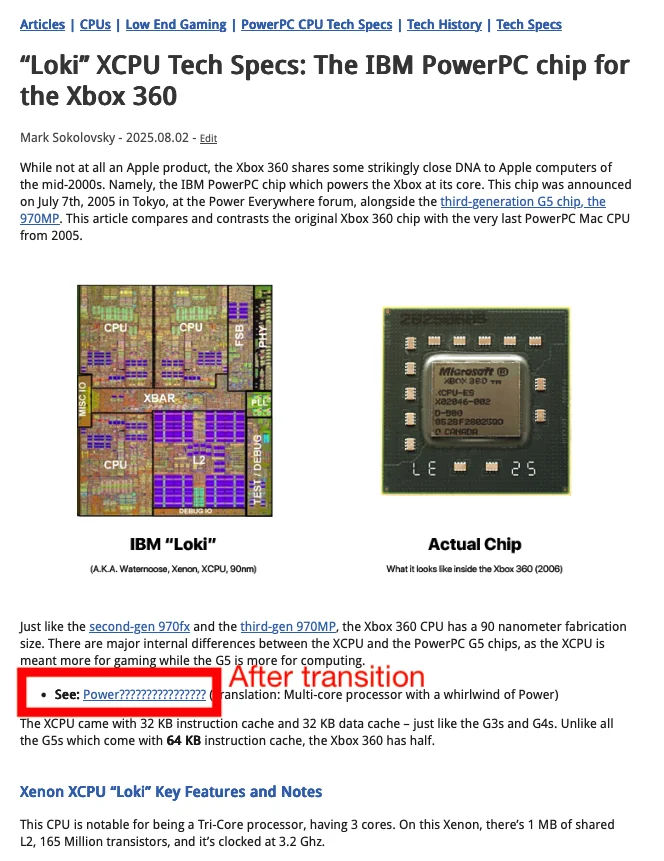
Low End Mac, a long-standing digital publication dedicated to the legacy of Apple hardware, has completed a comprehensive site-wide migration to the utf8mb4_unicode_ci character encoding standard. This technical overhaul, finalized in late August 2026, marks a significant milestone in the site’s infrastructure maintenance, successfully rectifying a pervasive issue that had rendered non-Latin characters as "????" across its archives dating back to 1997. The migration ensures that the publication’s vast repository of historical content—spanning nearly three decades—now supports modern character sets, facilitating greater accessibility for a global audience and enabling the display of diverse languages that were previously incompatible with the site’s legacy database configuration.
A Chronology of the Encoding Crisis
The technical challenges faced by the Low End Mac editorial team were not an overnight occurrence but rather a symptom of shifting web standards meeting aging infrastructure. Throughout the site’s history, various migration phases and database updates had occasionally resulted in character degradation. However, the issue reached a critical threshold in mid-2026.
Between late July and August 22, 2026, the publication experienced an acute degradation of non-Latin alphabet characters. During this period, any content utilizing non-ASCII characters—including accented vowels, non-Latin scripts such as Cyrillic or Kanji, and specific typographic symbols—was automatically stripped and replaced with placeholder question marks. This error significantly degraded the readability of technical documentation and user-contributed content that relied on international characters.
The restoration process, which took several weeks of intensive database auditing and conversion, involved a systematic re-encoding of thousands of individual articles. By transitioning the backend database to utf8mb4, the development team has effectively "future-proofed" the site, ensuring that the four-byte character encoding standard can handle the full range of Unicode characters, including emojis and complex non-Latin scripts, which were previously unsupported under the older, more restrictive encoding standards.
Understanding utf8mb4: The Technical Standard
The choice of utf8mb4_unicode_ci is not merely a cosmetic fix; it is a vital upgrade in database management. The standard "utf8" in MySQL and similar systems historically supported only a subset of Unicode characters, specifically those that could be represented in three bytes. This limitation meant that any character requiring four bytes—such as many modern symbols or specific linguistic characters—would trigger an error or, as in the case of Low End Mac, be replaced by question marks.
By moving to utf8mb4 (the "mb4" stands for "most bytes 4"), Low End Mac now aligns with current web development best practices. The "unicode_ci" suffix specifies that the database uses Unicode collation for sorting and comparison, ensuring that searches and indexing across the site remain accurate regardless of the language used in the source text. This technical shift is essential for any publication maintaining a global digital footprint, as it prevents data loss during migration and ensures consistent display across all browsers and operating systems.
Impact on Accessibility and Archival Integrity
For a publication like Low End Mac, which serves as a digital archive for the history of computing, the integrity of text is paramount. Many of the site’s articles from the late 1990s and early 2000s contain technical specifications, file names, and software strings that occasionally included non-standard characters. The restoration of this data provides a more accurate reflection of the site’s original content and preserves the nuance of international contributions.
Furthermore, the expansion of the site’s login and system language support suggests a strategic pivot toward broader inclusivity. By normalizing the database to support modern Unicode, the platform is now better positioned to integrate automated translation tools, internationalized user interfaces, and multi-language comment sections. For the readership—which includes hobbyists, historians, and developers from non-English speaking regions—this change removes a significant barrier to engagement. The ability to correctly display native linguistic characters fosters a more welcoming environment for international discourse on legacy hardware and software.
Broader Implications for Legacy Websites
The challenges faced by Low End Mac are emblematic of a broader phenomenon known as "bit rot" in the context of web architecture. Websites that have existed since the 1990s often rely on database schemas created during the early era of the internet. As web browsers and server-side software have evolved to favor UTF-8 as the universal encoding standard, these legacy systems often struggle to keep pace.
Data from the Web Almanac, an annual report on the state of the web, indicates that while the vast majority of modern websites utilize UTF-8, a significant portion of older, long-tail content remains vulnerable to encoding errors during server migrations or security patches. The Low End Mac case serves as a template for other legacy publishers who must balance the preservation of historical data with the necessity of modern technical standards.
Industry experts note that the manual labor required to re-encode nearly thirty years of content is substantial. The fact that the editorial team prioritized this restoration highlights the importance of institutional memory in digital publishing. Without such interventions, the "hidden" data loss caused by encoding errors would eventually render large swaths of the internet’s early history unreadable.
Official Response and Future Outlook
While Low End Mac has not issued a formal press release regarding the internal costs of the project, the move is widely viewed by stakeholders as a necessary investment in the brand’s longevity. By systematically addressing the "???????" display issue, the site has regained a level of professionalism that is essential for its role as an authoritative source on Apple computing.
Following the successful migration, the development team has shifted focus to optimizing the site’s overall speed and responsiveness. With the database now compliant with modern standards, the site is theoretically more efficient at handling complex queries. Moving forward, the team has indicated that they will continue to monitor the integrity of the archives to ensure that no further character degradation occurs.
The implications for the readership are immediate: improved search functionality, more reliable article display, and a more robust foundation for future site features. As the digital landscape continues to favor multilingual support, Low End Mac’s transition ensures that its archives remain accessible to the next generation of users, regardless of their linguistic background or their region of origin.
Conclusion
The successful restoration of text across the Low End Mac archives is a case study in the importance of backend maintenance. By transitioning to utf8mb4_unicode_ci, the publication has not only resolved a pressing display issue but has also signaled its intent to remain a vital, modern resource in an increasingly interconnected global digital environment. The move highlights a critical lesson for digital curators: maintaining the history of the internet requires not just the preservation of content, but the consistent updating of the underlying technologies that allow that content to be read and understood by diverse global audiences. As of late August 2026, the site’s infrastructure is fully aligned with modern international standards, marking the end of a difficult period of technical instability and the beginning of a more stable chapter for the publication.