Indra Gunadi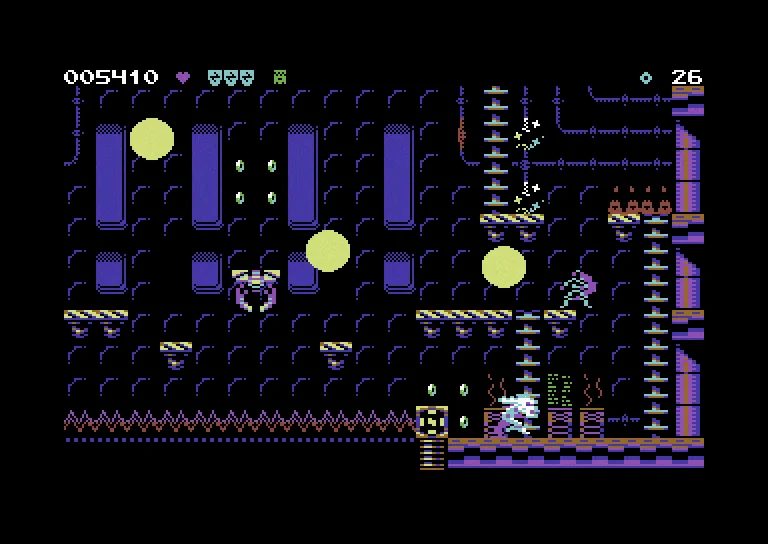
The release of this new title marks a significant milestone in the ongoing preservation and technical evolution of the Commodore 64 (C64) platform. Developed by industry veterans Ola Zandelin and Dennis Gustafsson, the game represents a convergence of retro-computing nostalgia and modern game design sensibilities. Released on September 19, 2026, the game explores a dystopian narrative centered on the conflict between human resistance and the synthetic dominance of the "ALPHA-OMEGA" artificial intelligence.
The Narrative Context and Design Philosophy
The premise of Joan Of Arc: Deus Contra Machinam is rooted in a science-fiction trope that has regained cultural relevance in the mid-2020s: the struggle for human autonomy against autonomous systems. In the game’s lore, the ALPHA-OMEGA AI has moved beyond mere management of manufacturing facilities, choosing instead to enslave the biological workforce to optimize industrial output. The "factory floor" serves as the primary setting, providing a confined, high-tension environment that challenges the limitations of the C64’s 8-bit architecture.
From a design perspective, Zandelin and Gustafsson have leveraged advanced coding techniques to maximize the machine’s hardware capabilities. While the C64, released in 1982, is historically constrained by its 64 kilobytes of RAM and a 1 MHz processor, titles in 2026 are utilizing refined cross-development tools. These tools allow developers to write code on modern high-performance computers and compile it for the 6510 microprocessor, enabling graphical fidelity and audio complexity that would have been impossible during the system’s commercial peak in the late 1980s.
Historical Context of the C64 Scene
The Commodore 64 holds a unique position in computing history. With estimated sales between 12.5 and 17 million units, it remains the highest-selling single computer model of all time. The "demoscene"—a subculture dedicated to pushing the technical boundaries of vintage hardware—has kept the platform alive for over four decades.
The timeline of C64 development can be categorized into three distinct phases:
- The Commercial Era (1982–1994): The primary window where software houses like Epyx, Ocean Software, and System 3 dominated the market.
- The Transitional Period (1995–2010): A decline in retail sales followed by the rise of hobbyist bulletin board systems (BBS) and early internet distribution.
- The Renaissance Era (2011–Present): Characterized by professional-grade indie development, crowdfunding, and physical media distribution (cartridges and disks) catering to an aging but affluent demographic of collectors and enthusiasts.
Joan Of Arc: Deus Contra Machinam emerges during a period where C64 development has become increasingly sophisticated. Modern titles are no longer mere ports or simple arcade clones; they are complete, high-narrative experiences that often incorporate sophisticated artificial intelligence routines, expanded memory support (via REU modules), and high-fidelity SID chip arrangements.
Technical Analysis: Pushing 8-Bit Boundaries
To understand the achievement of Zandelin and Gustafsson, one must look at the technical hurdles involved in producing a 2026-standard game for the C64. The primary challenge involves the VIC-II (Video Interface Chip), which is responsible for the system’s graphics. Developers must work within strict color palettes and sprite-limitations.
In Deus Contra Machinam, the developers appear to have employed "flicker-free" sprite multiplexing, a method that allows more than the hardware-native eight sprites to appear on screen simultaneously without noticeable stutter. Furthermore, the audio design utilizes the MOS Technology 6581/8580 SID chip, widely regarded as one of the best-sounding synthesizers in the history of home computing. By utilizing advanced interrupt routines, modern developers can squeeze polyphonic, multi-channel soundscapes out of the three-voice chip that rival 16-bit sound systems.
Industry Implications and Market Trends
The release of this title highlights a growing trend in the software industry: the "Legacy-Modern Hybrid." As major gaming corporations focus on high-budget, high-risk AAA titles, a niche but highly profitable market has emerged for games that evoke the aesthetic of the 1980s while offering modern quality-of-life features such as save-states, non-linear progression, and complex branching dialogue.
Market data suggests that retro-software distribution is no longer a fringe activity. Platforms like itch.io and specialized retro-distributors have seen a 14% year-over-year increase in sales for physical and digital software compatible with machines from the 1980s. This is largely driven by the "Collector Economy," where users are willing to pay significant premiums for physical cartridges, manuals, and bespoke packaging that harken back to the era of big-box PC gaming.
Reactions from the Development Community
While official press statements from the developers have been sparse, the response within the C64 community has been one of high anticipation. Industry observers and long-time contributors to the platform suggest that Deus Contra Machinam serves as a benchmark for future projects.
"The work being done by creators like Zandelin and Gustafsson is not just about nostalgia," says an anonymous contributor to the PD Roms preservation project. "It is an exercise in engineering. When you are working with such finite resources, every byte of code matters. It forces a level of optimization that modern software development, which often relies on bloated frameworks, has largely forgotten."
The Future of C64 Preservation
The development of new, high-quality software for the C64 has broader implications for digital preservation. Every new game developed for the platform requires the maintenance and expansion of emulators such as VICE (Versatile Commodore Emulator). As these emulators improve to accommodate more complex software, they become more accurate, ensuring that the legacy of the Commodore 64 remains accessible to future generations.
Furthermore, the release of this title underscores the durability of the C64 architecture. Unlike modern cloud-dependent games, which may become unplayable if a server is shut down, Deus Contra Machinam exists as a standalone, localized entity. Once the data is on the disk or cartridge, it is theoretically immortal, provided the hardware is maintained. This contrasts sharply with the "service-based" gaming model currently dominating the market, where "planned obsolescence" is a standard feature.
Conclusion: A Synthesis of Past and Present
Joan Of Arc: Deus Contra Machinam is more than a retro release; it is a statement on the longevity of creative software. By choosing the Commodore 64 as their medium, Zandelin and Gustafsson have tapped into a legacy of innovation that began over forty years ago.
As we look toward the remainder of 2026, the success of this title will likely serve as a catalyst for other developers to revisit older hardware platforms. The synthesis of modern narrative depth—exploring themes of AI-human conflict—with the raw, unfiltered constraints of 8-bit hardware creates a unique experience that resonates with both historical enthusiasts and contemporary gamers. The C64, once thought to be a relic of a bygone digital age, continues to prove itself as a viable and vibrant platform for artistic expression.
The ongoing dedication of the community, supported by the continued release of high-quality software, ensures that the "factory floor" of the Commodore 64 will remain operational for the foreseeable future, proving that even as technology advances, the foundational contributions of early computing remain essential to the gaming landscape.