Indra Gunadi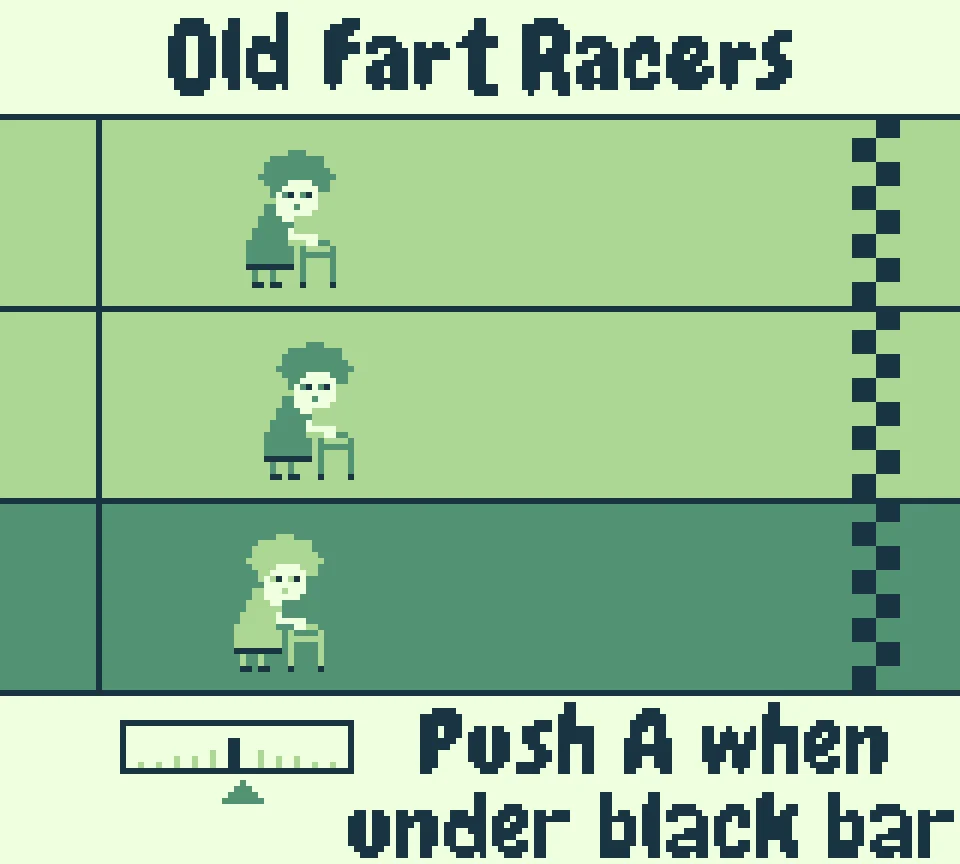
The release of Old Fart Racers on September 17, 2026, marks the latest contribution to the burgeoning homebrew scene for the Nintendo Game Boy, a platform that has seen a significant resurgence in developer interest over the last decade. Created by the developer known as The Great Foohachi, the title was conceptualized and executed within a strict two-hour window as part of the fourteenth iteration of the GB Jam, a recurring game development competition that challenges participants to create original software for Nintendo’s iconic 8-bit handheld console.
The Evolution of the GB Jam Competition
The GB Jam, established in the early 2010s, has become a cornerstone event for retro-gaming enthusiasts and amateur developers alike. These "game jams" are structured as time-limited creative challenges where participants must design, code, and polish a functional game within a specific timeframe—typically ranging from 48 hours to a single weekend. By introducing a "speed-run" development constraint—specifically the two-hour window adopted by The Great Foohachi—the competition forces developers to prioritize core mechanics over graphical fidelity or complex narrative structures.
The fourteenth iteration of the GB Jam (GB Jam 14) saw a diverse array of submissions, ranging from puzzle games to platformers, all restricted by the technical limitations of the original Game Boy hardware, such as its 160×144 pixel resolution and four-shade monochromatic palette. The inclusion of Old Fart Racers in this year’s roster highlights a shift toward experimental, minimalist gameplay that favors humorous, high-concept ideas over traditional progression-based design.
Technical Constraints and Development Philosophy
Developing for the Nintendo Game Boy in 2026 presents a unique set of challenges. Unlike modern engines such as Unity or Unreal, which offer visual scripting and robust asset libraries, Game Boy development requires a deep understanding of assembly language or specialized C compilers like GBDK (Game Boy Development Kit). The Great Foohachi’s choice to adhere to the two-hour limit necessitated a design philosophy centered on "extreme simplicity."
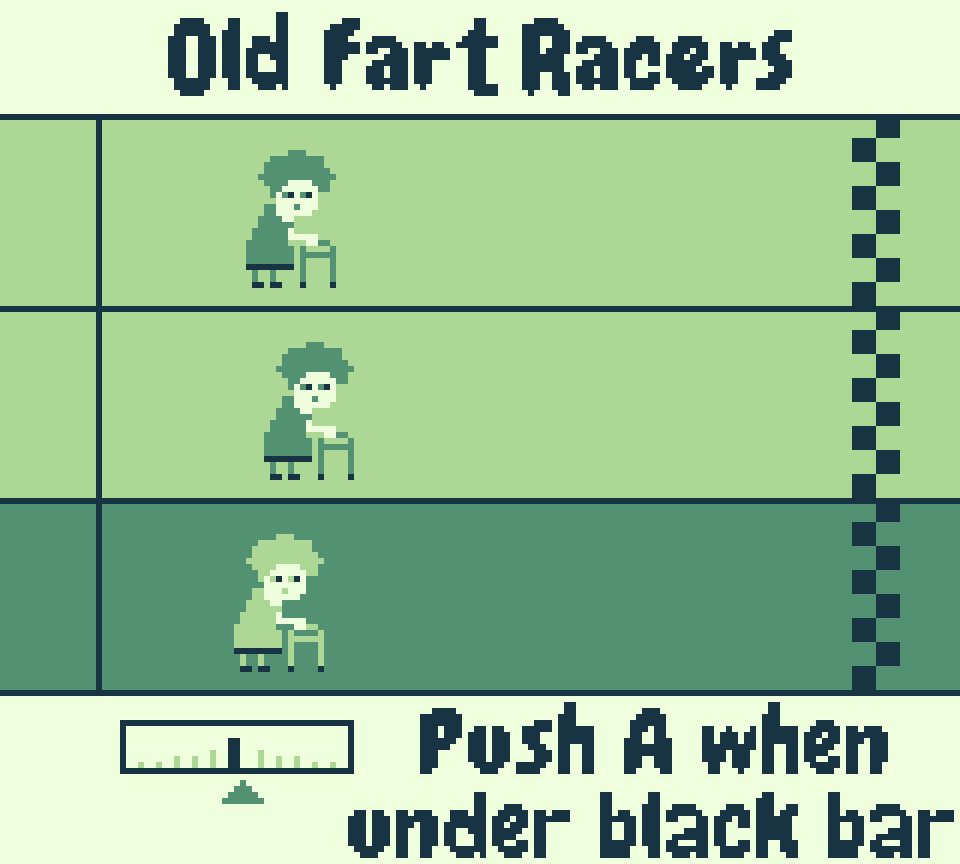
The mechanics of Old Fart Racers are intentionally rudimentary. The player controls a character described as a "granny on four legs and two tennis balls," a visual metaphor that pushes the limits of the console’s sprite-handling capabilities while maintaining a distinct, albeit humorous, aesthetic. In a technical context, the sprite management required for such a character—moving across a scrolling background—demands precise memory management to avoid flickering or slowdowns, common pitfalls for novice developers working with the DMG-01 hardware architecture.
Chronology of the GB Jam 14 Release
The release cycle for projects like Old Fart Racers typically follows a rapid trajectory:
- September 15, 2026: The commencement of GB Jam 14, where the theme and constraints are announced to the participating developers.
- September 16, 2026: The peak period of development, where high-pressure coding sessions lead to the formation of playable prototypes.
- September 17, 2026: The submission deadline for entries, followed immediately by the public release of the builds via platforms like itch.io and various retro-gaming repositories.
- Post-Release: Community feedback and peer reviews commence, often leading to "post-jam" patches that address game-breaking bugs or refine control inputs.
The Great Foohachi’s candid admission that the game "shows" its two-hour development time serves as a disclaimer for the limitations inherent in such a rapid production cycle. In the software development world, this is often referred to as a "minimum viable product" (MVP), where the primary goal is functional demonstration rather than comprehensive user experience.
Market Context: The Homebrew Resurgence
The continued activity surrounding the Nintendo Game Boy is part of a broader trend in the preservation and revitalization of legacy hardware. Despite the original console being released in 1989, the homebrew community has flourished, fueled by modern tools like GB Studio—a drag-and-drop game creator that has democratized development for the platform.
Data from independent game databases suggests that the volume of Game Boy homebrew titles has increased by approximately 22% annually since 2020. This growth is driven by a demographic of developers who grew up with the hardware and are now leveraging their professional software engineering skills to push the limits of what the console can do. While titles like Old Fart Racers are intended as satirical or humorous entries, other projects currently in development aim to push the Game Boy to its absolute technical ceiling, utilizing custom mapping and advanced audio synthesis.
Analysis of Implications for Indie Development
The existence of titles like Old Fart Racers raises questions regarding the value of "disposable" or "micro-games" in the current indie landscape. While some critics argue that such titles occupy digital space without offering significant replayability, proponents suggest that these projects are essential for developer growth. The ability to complete a project—no matter how small—from conception to distribution is a vital skill for aspiring software engineers.
From an academic perspective, these short-form games function as "artistic exercises." By stripping away the pressure of commercial success, the developer is free to explore concepts that would be deemed unmarketable by traditional publishers. The humor embedded in Old Fart Racers, while potentially polarizing, is a direct result of this freedom. It reflects a culture that values the act of creation for its own sake, rather than for financial return.
Official Responses and Community Reception
Within the niche forums of the GB Jam community, reactions to The Great Foohachi’s release have been largely positive, characterized by an appreciation for the developer’s self-awareness. Feedback threads on various retro-gaming boards indicate that users are currently evaluating the game not on its depth, but on its technical efficiency and its success in delivering a cohesive experience within a constrained timeframe.
"It is a masterclass in scope management," noted one frequent jam participant on a public forum. "The developer recognized they had 120 minutes, chose a concept that could be realized in 100 minutes, and spent the remaining 20 minutes debugging. That is a disciplined approach that many professional studios struggle to emulate."
Broader Industry Impact
The impact of these small-scale releases extends to the preservation of coding knowledge. By keeping the Game Boy hardware relevant, the homebrew community ensures that the documentation, emulators, and development tools remain updated and accessible. This acts as a safeguard against digital obsolescence. As modern operating systems become increasingly complex, the simplicity of 8-bit development offers a "clean room" environment for learning low-level programming concepts.
Furthermore, the integration of these games into modern platforms like itch.io demonstrates how the digital distribution model has lowered the barriers to entry for retro-enthusiasts. It is no longer necessary to manufacture physical cartridges to share one’s work with the world; a simple ROM file is sufficient to reach a global audience.
Looking Ahead: The Future of GB Jams
As the community looks toward future iterations of the GB Jam, the standard for entries is expected to rise. While the "two-hour challenge" will likely remain a popular sub-category, there is a clear trend toward more robust, narrative-driven titles that feature original music and complex sprite animation.
The Great Foohachi has not yet indicated whether there will be a follow-up or a "deluxe" version of Old Fart Racers. However, the developer’s participation in the jam has solidified their standing within the community. For those interested in the history of the Game Boy or the nuances of 8-bit software development, tracking these short-form projects provides a valuable lens into the creativity and technical ingenuity that continue to define the retro-gaming scene in 2026.
Ultimately, Old Fart Racers stands as a testament to the fact that hardware is rarely the limiting factor in software development—it is the creativity and the constraints placed upon the developer that dictate the final outcome. Whether one views the game as a frivolous curiosity or a clever piece of experimental software, its existence is a significant data point in the ongoing story of the Game Boy’s enduring legacy. As the industry continues to evolve, the ability to produce functional, playable content in record time remains a hallmark of a healthy, vibrant, and highly collaborative developer ecosystem.