Hartono Sudibyo
The landscape of retro video game modification has reached a significant milestone with the release of Pokémon Emerald Arena, an innovative ROM hack that introduces real-time action combat mechanics to the beloved 2004 Game Boy Advance classic. Developed by independent programmer GBurgardt and launched publicly on September 11, 2026, the project departs from the traditional, turn-based combat system that has defined the core franchise for nearly three decades. By transforming standard encounters into fast-paced, movement-driven skirmishes, the modification offers a glimpse into how classic handheld titles can be reimagined for modern playstyles.
Main Facts and Mechanics of Pokémon Emerald Arena
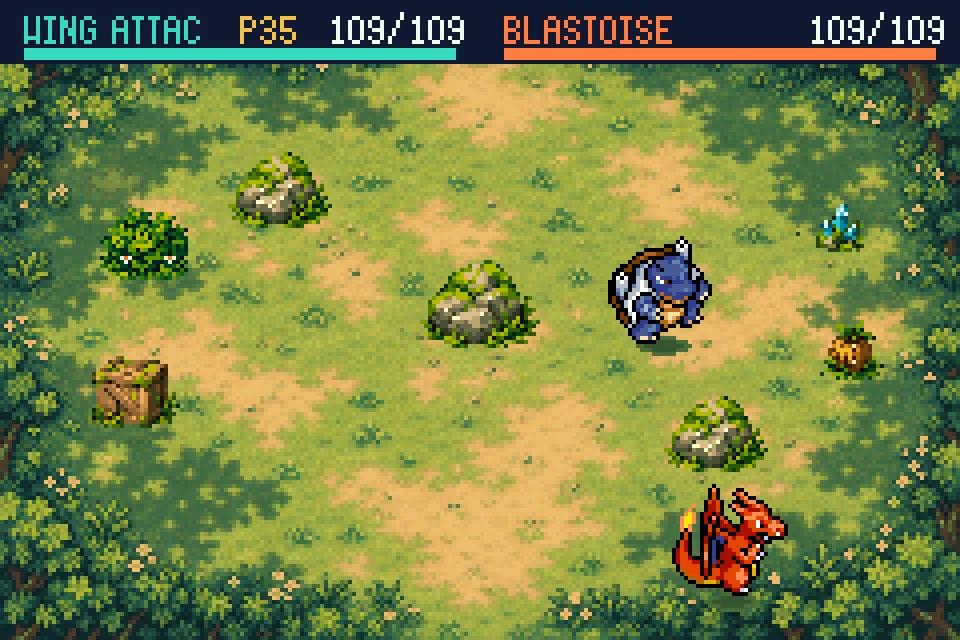
Pokémon Emerald Arena fundamentally alters the gameplay loop of Game Freak’s original third-generation title by integrating dynamic, real-time battle sequences. While exploring the overarching world of Hoenn remains familiar, encountering wild Pokémon initiates a transition into a dedicated "Arena" environment. In this space, players take direct control of their Pokémon’s positioning, utilizing standard inputs to navigate the terrain in real-time.

The control scheme has been adapted to accommodate the new action-oriented framework. Players use the "A" button to execute physical and special attacks and the "B" button to perform tactical dodges, introducing a layer of mechanical dexterity previously absent from the series. Furthermore, the battle arenas feature interactive and destructible elements, including wooden barriers, natural rock formations, storage boxes, crystal formations, and hazardous explosive pods. Players can strategically maneuver enemies into these environmental hazards to deal supplementary damage, rewarding spatial awareness and quick decision-making.
Currently, the real-time combat system is restricted to wild Pokémon encounters, leaving traditional trainer battles and gym leader confrontations to adhere to the standard turn-based mechanics of the original ROM.
Roster Limitations and Development Scope
At launch, Pokémon Emerald Arena features a carefully curated roster of twelve fully animated Pokémon capable of participating in the real-time arena battles. Because the transition to real-time action requires custom sprite animation, hitboxes, and AI behavior for every individual creature, the developer limited the initial release to a select group of fan favorites and starter Pokémon.

The twelve fully compatible species available in the current build include:
- Charizard
- Blastoise
- Eevee
- Dragonite
- Scizor
- Blaziken
- Treecko
- Poochyena
- Bulbasaur
- Squirtle
- Grovyle
- Sceptile
Selecting any Pokémon outside of this designated group during an encounter defaults the game back to the traditional turn-based battle interface. GBurgardt has indicated that expanding this roster and introducing broader move-pool sequences remain primary objectives for subsequent updates, though no official timeline for future patches has been established.
Chronology and Availability
Development on Pokémon Emerald Arena progressed quietly within the ROM-modding community before its official deployment on September 11, 2026. The project was subsequently hosted on GitHub via GBurgardt’s official repository, allowing enthusiasts to download the patch files.

To experience the modification, end-users are required to supply their own legally acquired Pokémon Emerald ROM file and apply the patch using standard IPS or UPS patching utilities. The open-source nature of the release has allowed the community to examine the underlying assembly code, sparking discussions regarding the technical feasibility of importing real-time collision detection into the Game Boy Advance architecture.
Background Context: The Evolution of Pokémon ROM Hacks
The release of Pokémon Emerald Arena arrives against the backdrop of a thriving, decades-long ROM hacking and fan-game community. Since the late 2000s, hobbyist programmers have utilized disassemblies of Generation III titles—specifically Pokémon Ruby, Sapphire, and Emerald—to create comprehensive overhauls. These projects typically focus on quality-of-life improvements, increased difficulty scaling, custom regional maps, or expanded Pokédex integration, such as the widely acclaimed Pokémon Radical Red or Pokémon Prism.
Historically, however, these modifications have strictly adhered to the foundational pillars established by Nintendo and Game Freak: grid-based movement, random encounters, and menus-driven, turn-based combat governed by statistical calculations, type matchups, and speed tiers. Attempts to introduce real-time action elements have been exceedingly rare due to hardware constraints inherent to the Game Boy Advance architecture, which was designed primarily for 2D sprite rendering and rudimentary tile-based processing rather than complex physics and multi-directional collision systems. Consequently, GBurgardt’s implementation of dynamic arena dodging and destructible environments represents a notable technical achievement within the retro-modding ecosystem.
Broader Impact and Industry Implications
While Nintendo and The Pokémon Company maintain a strict policy regarding the unauthorized distribution of copyrighted game assets and proprietary code, the phenomenon of ROM hacking continues to operate as a vital incubator for game design innovation. Major franchises frequently maintain conservative design philosophies to preserve mainstream accessibility and nostalgic appeal, leaving experimental mechanics to independent developers.
Innovations like those introduced in Pokémon Emerald Arena demonstrate the enduring cultural relevance of third-generation Pokémon titles while highlighting consumer appetite for gameplay diversification. Although real-time combat in Pokémon is officially explored through spin-off titles such as Pokémon Legends: Arceus or PokéPark, seeing these mechanics retrofitted into a classic 2004 sprite-based environment underscores the creativity present within the independent development community. As GBurgardt continues to refine the project, the modification stands as a technical proof-of-concept for how classic handheld role-playing games can transcend their original mechanical boundaries through community-driven ingenuity.