Vera Clarissa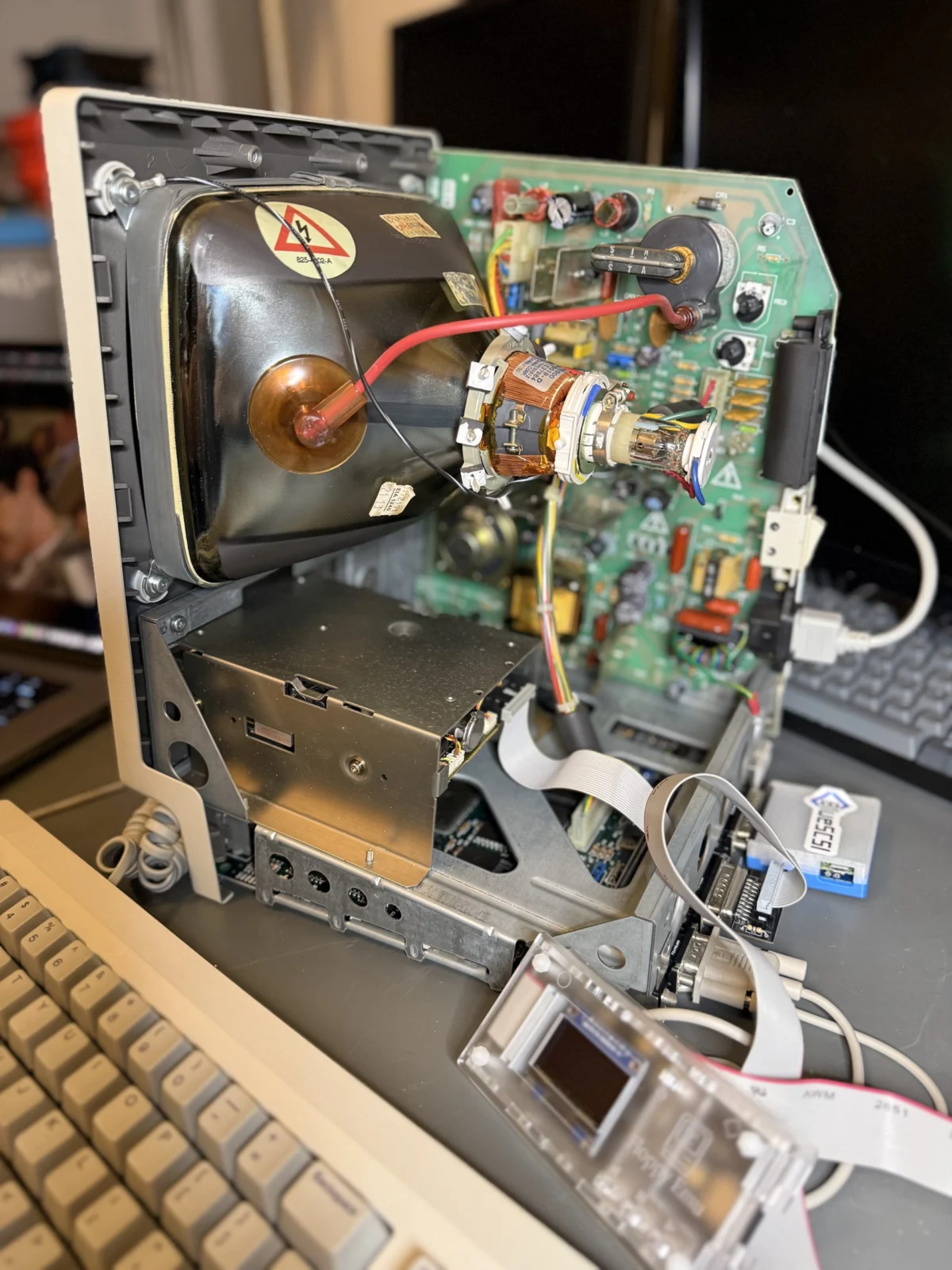
The restoration of vintage computing hardware serves as more than a nostalgic exercise; it acts as a bridge between the limitations of early personal computing and the sophisticated, high-speed storage solutions of the modern era. The Macintosh Plus, released by Apple Computer in January 1986, remains a seminal piece of hardware in the history of personal computing. While it defined an era for thousands of university students and early software developers, its original reliance on 800KB 3.5-inch floppy disk drives created significant operational bottlenecks. Modern restoration efforts, particularly those involving the integration of BlueSCSI technology, have highlighted the specific technical challenges inherent in the Plus architecture, providing a definitive case study in legacy system maintenance.
The Context of 1986 Computing Constraints
During the mid-1980s, the Macintosh Plus represented a leap forward in user-friendly design, featuring a 1MB RAM capacity and the innovative Small Computer System Interface (SCSI) port. However, the standard user experience was dominated by the "disk-swapping" phenomenon. Compiling source code—such as the C programming language—required multiple disk insertions, as the operating system, compiler, and source files could not reside simultaneously on a single floppy disk.
Data from the era indicates that a typical compilation cycle for a moderate program could consume between 10 and 20 minutes of cumulative drive-head movement and manual disk swapping. In academic lab settings, the presence of a single Macintosh Plus equipped with an external SCSI hard drive was considered a luxury, often resulting in high contention among students. The performance disparity between a floppy-only machine and one with a hard drive was profound, as the mechanical latency of floppy disks—roughly 300 to 600 milliseconds for seek times—was reduced significantly by the faster, though still primitive, hard disk technology of the time.

The Technical Evolution of Restoration
Modern restoration of a Macintosh Plus involves a multi-stage process to address the degradation of 40-year-old electronic components. The restoration process typically requires:
- Logic Board Recapping: Replacing aging electrolytic capacitors, which are prone to leaking and damaging PCB traces.
- Power Supply Unit (PSU) Overhaul: Recalibrating voltages to account for modern component tolerances and replacing failing capacitors.
- Floppy Drive Servicing: Lubrication of the mechanical assembly and replacement of the brittle "eject gear," a notorious failure point in Sony-manufactured Mac drives.
- Chassis Treatment: Utilizing chemical processes such as hydrogen peroxide exposure to reverse the yellowing of the ABS plastic, caused by the breakdown of bromine-based flame retardants.
Despite these physical restorations, the integration of contemporary storage emulation, such as the BlueSCSI—a device that allows a modern SD card to function as a SCSI hard drive—revealed an undocumented hurdle: the lack of SCSI termination power.
The Missing Diode: A Design Oversight
A significant technical finding in the restoration of the Macintosh Plus involves the SCSI bus’s electrical requirements. While the Macintosh Plus was designed to support external hard drives, Apple omitted the populating of the CR1 diode on the logic board. This diode is essential for supplying +5V termination power to the SCSI bus. Without it, many modern SCSI emulators fail to initialize because they cannot draw the necessary power from the Mac itself.
The solution, which has become a standard practice in the vintage enthusiast community, involves soldering a 1N5819 Schottky diode into the designated CR1 position. The choice of a Schottky diode is critical due to its low forward voltage drop, ensuring that the power delivered to the bus remains within the narrow tolerance required by peripheral devices. This five-minute hardware intervention effectively bridges the gap between 1986 circuitry and 21st-century emulation technology.

Software Configuration and Compatibility
Beyond the hardware, the Macintosh Plus exhibits a high degree of sensitivity to drive image configuration. Unlike modern plug-and-play systems, the Macintosh Plus operating system requires specific disk image formatting to recognize external volumes. The configuration of the BlueSCSI must explicitly define the system architecture, specifically by modifying the blueSCSI.ini configuration file to include:
[SCSI]
System=MacPlus
Furthermore, the physical order and naming conventions of the hard disk image files on the SD card are vital. The Plus often fails to boot if the drive image does not strictly adhere to Apple’s older HFS (Hierarchical File System) parameters or if the partition table is incompatible with the system ROM. By sourcing images from vetted repositories and utilizing the appropriate file naming nomenclature, the Macintosh Plus can successfully recognize and boot from modern, solid-state storage.
The Impact of Modern Storage on Legacy Performance
The implications of successfully integrating modern storage into a Macintosh Plus are significant for the longevity of the platform. By replacing the noisy, slow, and failure-prone floppy disk operations with high-speed SD card emulation, the effective throughput of the system is improved by orders of magnitude.

Analysis of "Thin C" or similar development environments shows that the compiler’s performance is no longer gated by disk I/O, but by the processor’s clock speed (8 MHz). This creates a balanced environment where the machine performs exactly as it was intended to in the 1980s, but without the mechanical bottlenecks that originally defined the experience. This shift allows for more complex software development and system testing, effectively "future-proofing" these vintage machines for the next generation of computing historians and enthusiasts.
Broader Implications for Tech Preservation
The effort required to return a Macintosh Plus to a fully functional state—complete with modern storage—serves as a template for the preservation of other 8-bit and 16-bit era computers. It underscores the reality that "working" vintage technology often requires more than just replacing worn-out parts; it necessitates a deep understanding of the original hardware design and a willingness to modify or update systems to interface with modern standards.
From a preservationist standpoint, this trend toward using emulators (like BlueSCSI or Floppy Emu) is essential. As original hard drives from the 1980s become increasingly rare and prone to catastrophic failure, these devices allow users to keep original machines operational without the risk of data loss.
As the technology continues to age, the demand for these restoration techniques will likely grow. The combination of hardware-level modifications—like the Schottky diode installation—and software-level emulation ensures that these icons of the personal computing revolution remain active subjects of study rather than static museum artifacts. The Macintosh Plus is no longer a machine defined by the limitations of its era, but rather one that benefits from the technical ingenuity of its current owners, ensuring it remains as fast and responsive as it was—or perhaps better than—it ever was during its commercial prime.