Hartono Sudibyo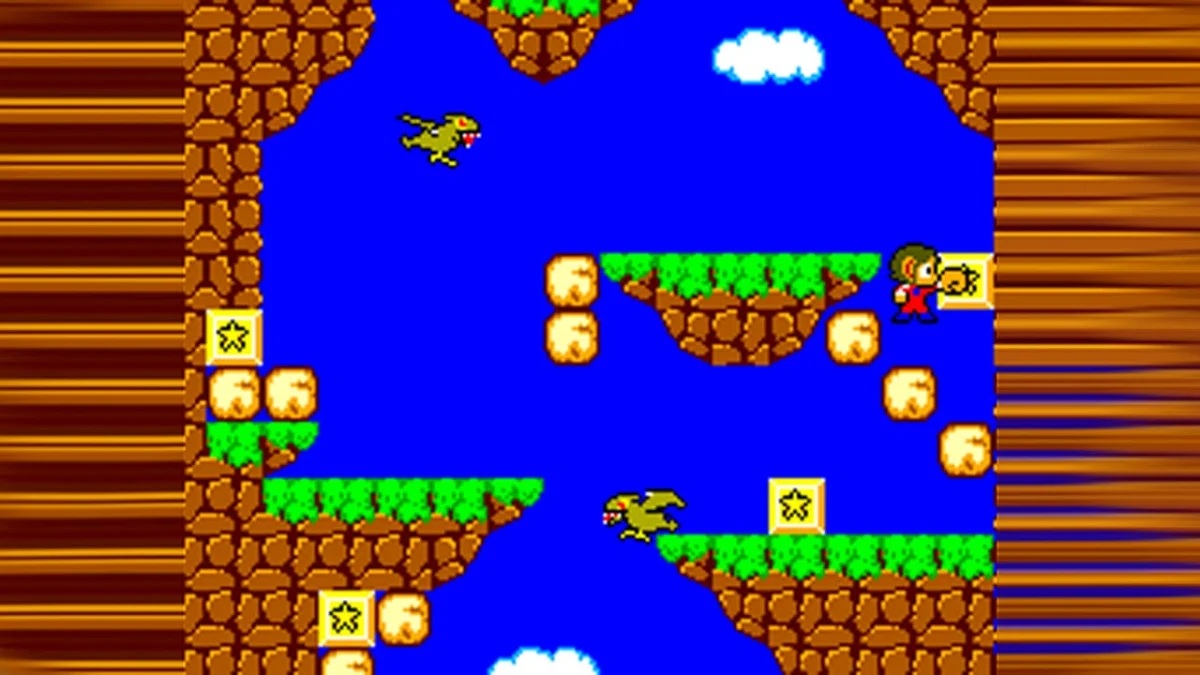
For nearly four decades, players of the classic Sega Master System platformer Alex Kidd in Miracle World have shared a uniquely frustrating collective memory: the maddening moment when the titular hero’s fist connects solidly with a brick, yet the block stubbornly refuses to shatter. Released in 1986 by Sega, Alex Kidd in Miracle World was a monumental title for the 8-bit platform, serving as the system’s de facto mascot game long before Sonic the Hedgehog ever laced up his red sneakers. Despite its status as a beloved piece of gaming history and a cornerstone of retro nostalgia, the game harbored a subtle yet persistent programming oversight that routinely disrupted fluid gameplay.
Recently, a talented ROM hacker known as Psicopompo released a brilliant, lightweight patch that permanently rectifies this historical design flaw. Weighing in at a mere 121 bytes, the modification alters the fundamental mechanics of block collision detection without modifying the game’s header or checksum, offering modern retro gaming enthusiasts the definitive way to experience Sega’s early platforming classic.
The Technical Root of the 1986 Glitch
To understand why the new ROM hack is being celebrated by the retro gaming community, one must examine the technical constraints under which developers operated in the mid-1980s. When Sega’s internal development teams programmed Alex Kidd in Miracle World, processing power and memory allocation were severely limited compared to modern standards. Every single CPU cycle and byte of RAM had to be meticulously managed to maintain a stable frame rate and ensure smooth horizontal scrolling.
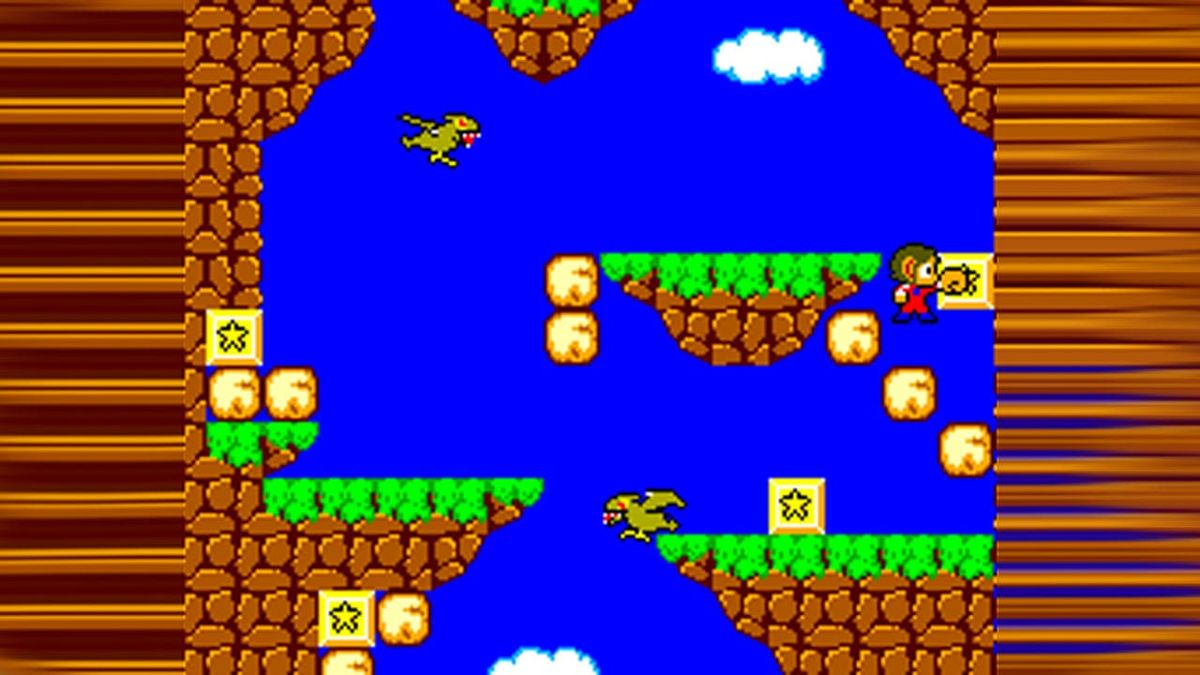
According to technical breakdowns provided by Psicopompo, the original game code utilized a remarkably rudimentary method for detecting whether Alex’s punches successfully interacted with breakable terrain. The legacy code only checked for block collision precisely once per frame—specifically on the exact frame the punch button was depressed—and restricted that check to a single, minuscule 8×8 pixel point.
This design choice created a significant margin for failure. During active gameplay, players rarely stood completely still to throw a punch. Instead, platforming veterans naturally incorporated dynamic movement, throwing punches mid-jump, during descents, or while shifting momentum. If the fist’s collision point failed to intersect with the designated 8×8 pixel sweet spot during that exact frame—frequently occurring when striking near the corners of a block—the collision check failed entirely. The visual animation of the punch played out on screen, but the game logic registered no contact, leaving the player vulnerable to enemies or blocked in tight corridors. For generations of players accustomed to frantic, high-speed platforming, this lack of responsive feedback turned simple traversal into a test of unnatural precision.
How Psicopompo Engineered the Solution
The newly released patch addresses the core mechanics of the collision routine by fundamentally transforming how the game evaluates physical contact. Rather than relying on a fleeting, single-frame check at an isolated pixel point, the ROM hack implements continuous collision checking. Whenever the player extends Alex Kidd’s fist, the game actively monitors the action across every active frame of the animation.
Instead of utilizing an arbitrary point, the hack leverages the character’s actual hitbox—the precise 8×5 pixel bounding box that the base game already employed for registering damage against enemies. To ensure absolute reliability and eliminate any possibility of blind spots, Psicopompo added a deliberate one-pixel margin around each side of the hitbox, expanding the total interactive area to a robust 10×7 pixels.
Furthermore, the updated collision routine deploys a multi-point sampling matrix. The algorithm tests six distinct sample points arranged in a three-column by two-row grid across the expanded hitbox. Because this wider box covers a significantly larger surface area without creating spatial gaps, any contact made between any part of the sampled matrix and a breakable block triggers an immediate, successful smash.
In addition to rectifying the collision detection, the 121-byte patch includes a quality-of-life control adjustment that many players argue should have been the standard layout from the beginning. The modification swaps the default Sega Master System controller mapping, reassigning Button 1 to punch and Button 2 to jump. This configuration aligns the control scheme more intuitively with standard platforming conventions established later in the generation. Because the entire patch is exceptionally compact, it fits seamlessly into the unused free space located at the very end of the fixed bank inside the original cartridge ROM structure, preserving the integrity of the file architecture.
Background Context and the Evolution of Retro ROM Hacking
The release of the Alex Kidd collision patch highlights a broader, thriving subculture within the video game preservation and modification community. ROM hacking has evolved far beyond simple palette swaps, unauthorized translations, or artificial difficulty spikes. Today, a dedicated cadre of software engineers and retro gaming enthusiasts utilize advanced debugging tools, disassemblers, and emulators to reverse-engineer decades-old source code, effectively polishing timeless classics to modern standards of playability.
Alex Kidd in Miracle World holds a unique and revered place in the chronology of video games. Launched in Japan in December 1986 and subsequently rolled out worldwide during 1987, the title was designed by Sega to counter Nintendo’s runaway success with Super Mario Bros. For millions of owners of the Sega Master System, particularly in PAL regions and Latin America where the 8-bit console enjoyed immense popularity, the game was often built directly into the hardware memory of later Master System II models. Consequently, millions of players formed a nostalgic bond with the character, making the game’s idiosyncratic quirks—such as the infamous Rock-Paper-Scissors boss battles and the frustrating punch glitches—a shared cultural touchstone.

Despite its historical significance, the game has long occupied an awkward space in retro retrospectives. While contemporary flagship titles like Super Mario Bros. are frequently praised for their tight, uncompromising physics engine, Alex Kidd has often been critiqued by modern players for floaty jump physics and inconsistent collision mechanics. By fixing the foundational input lag and collision anomalies without altering the level design, enemy placement, or audiovisual presentation, patches like Psicopompo’s bridge the gap between 1980s hardware limitations and modern player expectations.
Broader Implications for Video Game Preservation and Community Engineering
The creation and distribution of lightweight, highly targeted utility patches carry profound implications for the future of video game preservation. Historically, debates surrounding digital preservation have centered on archival accuracy—maintaining the original code precisely as it was shipped, warts and all, to preserve historical authenticity. However, the interactive nature of video games means that flawed mechanics can actively hinder user enjoyment, creating a barrier to entry for younger generations or modern audiences experiencing these titles for the first time.
Community-driven engineering offers a compelling middle ground. By developing non-invasive, optional enhancements that correct objective programming errors rather than altering artistic intent, hackers provide a revitalized experience that respects the original creators’ vision while eliminating needless frustration. The Alex Kidd patch is structurally distinct from cheats or unauthorized modifications; it does not grant invincibility, skip levels, or alter enemy health pools. Instead, it ensures that the game functions precisely as the player’s visual and spatial intuition dictates it should.
As retro gaming hardware continues to experience a commercial renaissance—supported by dedicated enthusiast hardware manufacturers, digital storefronts, and specialized emulation handhelds—the demand for polished legacy experiences is at an all-time high. Software patches distributed through archival hubs like ROMhacking.net demonstrate how grassroots technical communities can actively contribute to the longevity of software history.
For fans looking to revisit the colorful, block-breaking adventures of Sega’s early mascot, the availability of this patch transforms a nostalgic exercise in patience into a fluid, responsive platforming experience. By resolving a forty-year-old programming oversight with surgical precision, the retro gaming community has ensured that Alex Kidd in Miracle World remains as enjoyable to play today as it was revolutionary upon its debut in 1986.