Indra Gunadi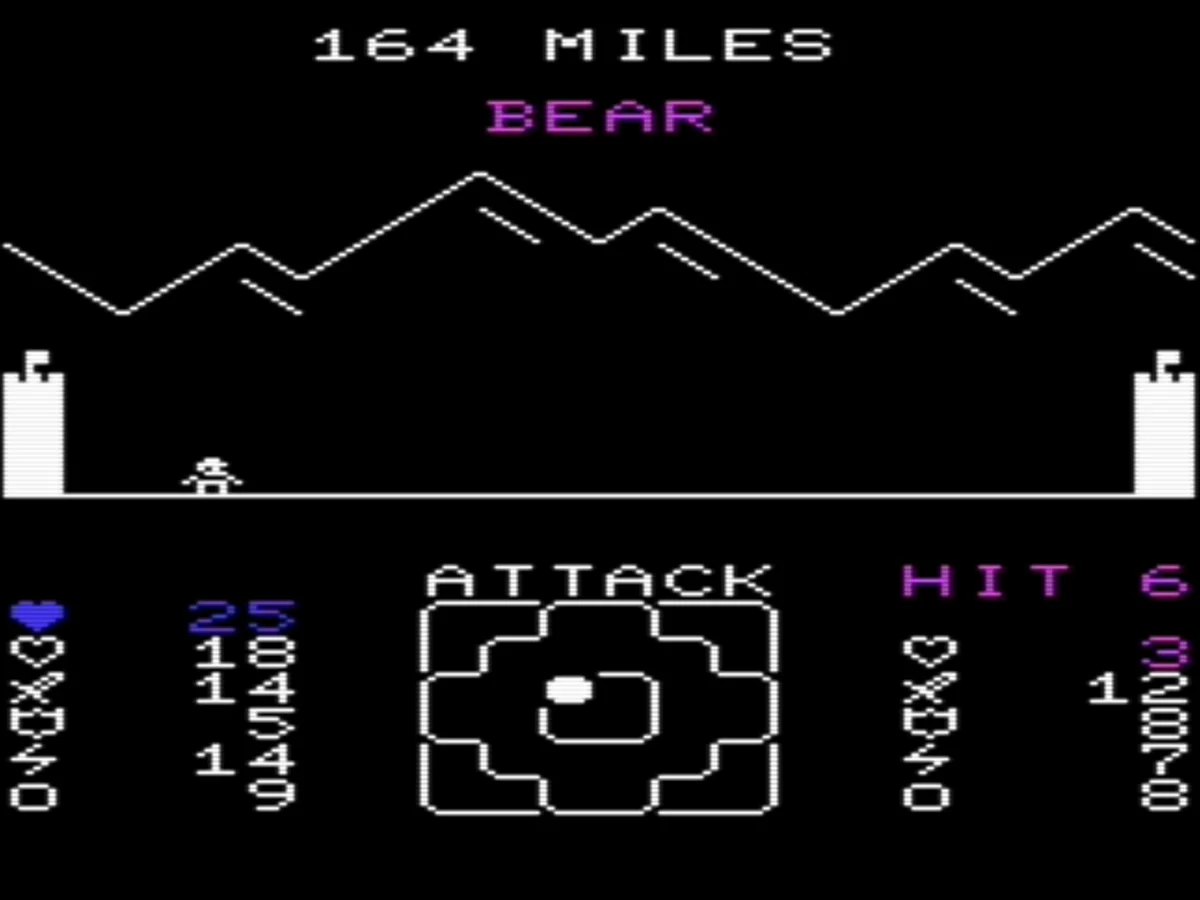
The release of "Walk 500 Miles," a new game developed by omenatalo for the venerable Commodore VIC-20, on July 24, 2026, signals a vibrant continuation of retro computing culture and ingenuity. This latest addition to the VIC-20’s software library is noteworthy not only for its contemporary development but also for its commitment to the platform’s original, unexpanded specifications. As detailed in the announcement, "Walk 500 Miles" is described as a one-button adventure, challenging players to "walk, fight, level up, and reach that 500-mile goal," all within the stringent memory confines of the VIC-20, requiring no RAM expansion. The game is available for download and engagement via omenatalo’s itch.io page, offering a new experience for enthusiasts of the early 1980s home computer.
The Enduring Legacy of the Commodore VIC-20
To fully appreciate the significance of a new title like "Walk 500 Miles," it is essential to understand the historical context and technical specifications of the Commodore VIC-20. Launched in North America in June 1981, following its European release in 1980, the VIC-20 (short for "Versatile Integrated Circuit") was Commodore Business Machines’ pioneering attempt to bring an affordable, color-capable home computer to the masses. Priced initially at around $299.95, it was strategically positioned below more expensive machines of its era, making personal computing accessible to a broader demographic.
The VIC-20 was powered by a MOS Technology 6502 CPU, running at 1.02 MHz (or 1.11 MHz in PAL regions). Its memory configuration was famously modest, featuring 5 kilobytes (KB) of RAM, with only approximately 3.5 KB directly available to the user for BASIC programming or machine language. Graphics capabilities included a 22-column by 23-row text display, and a character-based graphics mode supporting a resolution of 176×184 pixels in 8 colors. Sound was generated by a MOS 6560/6561 VIC chip, offering three voices and a noise generator. These specifications, while revolutionary for their time, present significant challenges for modern game developers accustomed to gigabytes of RAM and powerful graphics processors. The very act of creating a compelling experience within these constraints is a testament to the creativity and technical prowess of the retro computing community.
The VIC-20 served as a crucial stepping stone for millions into the world of computing and gaming, preceding its wildly successful successor, the Commodore 64. Its original software library, comprising hundreds of cartridges and cassette-based games, was often characterized by simple, engaging gameplay loops designed to maximize the limited hardware. Decades later, a dedicated community continues to celebrate, preserve, and actively develop for this foundational platform.
omenatalo and the Spirit of Contemporary Homebrew Development
omenatalo’s "Walk 500 Miles" emerges from a thriving global homebrew and demoscene community, a collective of enthusiasts, programmers, and artists who dedicate their time to creating new software and digital art for vintage computer systems. This community is driven by a unique blend of nostalgia, technical challenge, and a desire to push the boundaries of what these decades-old machines can achieve. Developers like omenatalo are not motivated by commercial mass-market success but by passion, a love for the hardware, and the satisfaction of mastering severe technical limitations.
The creation of new games for platforms like the VIC-20 often involves modern cross-development toolchains. This typically means writing code (often in assembly language or a highly optimized C dialect) on a contemporary PC, compiling it, and then testing it on a VIC-20 emulator or directly on original hardware via flash cartridges or other transfer methods. This blend of old and new technologies underscores the sophisticated nature of modern retro development. While specific details about omenatalo’s development process for "Walk 500 Miles" are not publicly detailed in the initial announcement, it is highly probable that such methods were employed to meticulously craft the game within the VIC-20’s rigid framework. The choice of itch.io as a distribution platform is also characteristic of the indie and homebrew scenes, providing an accessible portal for developers to share their creations directly with a targeted audience.
Gameplay Innovation: The One-Button Adventure on Limited Hardware
The core gameplay loop of "Walk 500 Miles" is distilled into a "one-button adventure," a design choice that is both pragmatic for the VIC-20 and creatively intriguing. This minimalist control scheme implies that all player actions—walking, fighting, and potentially interacting with the environment—are context-sensitive and triggered by a single input, likely the joystick fire button or a specific keyboard key. This design philosophy forces developers to think creatively about timing, decision-making, and emergent gameplay, rather than relying on complex input combinations.
For a system like the VIC-20, a one-button interface offers several advantages:
- Simplicity: It makes the game immediately accessible to players, reducing the learning curve.
- Resource Efficiency: Less code is needed to handle complex input routines, freeing up precious RAM and CPU cycles for game logic and graphics.
- Creative Constraints: It challenges the developer to design engaging scenarios where a single action can have multiple outcomes depending on the game state, positioning, or timing.
The description "walk, fight, level up, and reach that 500-mile goal" suggests an experience that blends elements of endless runners, simplified RPGs, and perhaps even early text adventures. Players are likely to progress through a series of encounters or environments, using their single button to navigate obstacles, engage enemies, and make choices that contribute to their character’s growth and ultimate objective. The "500-mile goal" provides a clear, long-term objective, adding a sense of purpose and progression to what might otherwise be a purely score-driven experience. This blend of classic RPG elements within a minimalist framework is a hallmark of innovative retro game design.
Technical Feats: Developing for the Unexpanded VIC-20
Perhaps the most significant technical achievement of "Walk 500 Miles" is its compatibility with the unexpanded VIC-20. This means the game runs solely within the 3.5 KB of user-addressable RAM and utilizes only the built-in hardware of the base machine, without requiring any of the common RAM expansion cartridges (e.g., 8KB, 16KB, 32KB) that were popular upgrades in the VIC-20’s commercial lifespan.
Developing for this extremely limited memory footprint demands extraordinary efficiency and clever programming techniques. Every byte of RAM is critical, forcing developers to:
- Optimize Code: Write highly efficient machine code, often in assembly language, to minimize instruction count and memory usage.
- Compress Data: Employ advanced data compression algorithms for graphics, level layouts, and other assets to fit within the tiny memory envelope.
- Procedural Generation: Utilize procedural generation techniques to create game content (e.g., enemy patterns, terrain) on the fly, rather than storing large amounts of pre-defined data.
- On-Demand Loading: Potentially load and discard small chunks of data or code as needed, though this is challenging with the VIC-20’s limited storage I/O.
- Creative Graphics: Make the most of the VIC-20’s character-based graphics, using character redefinition and clever color cycling to create varied visuals without consuming excessive memory for bitmaps.
The declaration "No RAM expansion needed" is a direct appeal to purists and those with original, unmodified VIC-20 hardware. It also signifies a higher level of technical mastery, as it’s significantly easier to develop for an expanded VIC-20 (which can have up to 35KB of user RAM) than for the bare-bones system. This commitment to the original hardware specifications reinforces the game’s position as a genuine tribute to the VIC-20’s legacy.
The Broader Retro Gaming Renaissance and its Implications
The release of "Walk 500 Miles" is not an isolated event but rather a symptom of a much larger retro gaming renaissance that has gained considerable momentum over the past two decades. This movement encompasses several facets:
- Nostalgia and Preservation: Older generations revisit the games of their youth, while new generations discover the roots of video gaming. This drives efforts to preserve hardware, software, and documentation.
- Technical Challenge and Creativity: The limitations of vintage hardware inspire developers to create within strict confines, often leading to innovative design solutions that are overlooked in modern, resource-rich environments.
- Community Building: Online forums, social media groups, events, and platforms like itch.io foster vibrant communities where enthusiasts share knowledge, tools, and creations.
- New Hardware and Software: Beyond homebrew games, the retro scene also sees the development of new hardware (e.g., FPGA-based recreations, modern peripherals for old systems) and commercial re-releases of classic titles.
For the VIC-20 community specifically, new game releases extend the platform’s active lifespan. They provide fresh reasons to dust off old machines, encourage new collectors, and keep the dialogue around the system alive. Games like "Walk 500 Miles" serve as benchmarks, demonstrating what is still possible on these venerable machines and inspiring future developers.
While official statements from related parties are not available at this nascent stage, the inferred reactions from the retro computing community are overwhelmingly positive. A hypothetical retro computing enthusiast might exclaim, "This is precisely the kind of innovative, hardware-respecting development that keeps the VIC-20 scene vibrant and exciting!" Another hypothetical developer might comment, "omenatalo has truly pushed the boundaries of what’s achievable on an unexpanded VIC-20, showcasing remarkable technical skill and design acumen." These reactions reflect the common sentiment of appreciation for new, high-quality software that respects the original limitations of the target platform.
Future Prospects and the Enduring Appeal of the VIC-20
The continued development and release of games like "Walk 500 Miles" underscore several crucial aspects of the retro computing landscape. Firstly, it demonstrates that even after more than 45 years, platforms like the VIC-20 are not merely museum pieces but living systems capable of hosting new creative works. Secondly, it highlights the enduring appeal of focused, often minimalist, gameplay experiences in an era dominated by sprawling, graphically intensive titles. The constraints of the VIC-20 naturally foster game designs that prioritize core mechanics and immediate engagement.
The implications extend beyond the immediate gaming experience. Each new homebrew release contributes to the digital preservation of these platforms, ensuring that the knowledge and techniques required to program them remain active and accessible. It also provides a unique educational opportunity, allowing new generations to learn about early computer architecture and programming principles in a practical, engaging way.
In conclusion, "Walk 500 Miles" by omenatalo is more than just another game release; it is a significant cultural artifact for the retro computing world. Its arrival on July 24, 2026, for the Commodore VIC-20, especially its adherence to the unexpanded system’s limitations and its innovative one-button design, solidifies its place as a testament to creative ingenuity, technical mastery, and the unwavering passion of the retro gaming community. As enthusiasts embark on their 500-mile journey, they are not just playing a game; they are participating in the ongoing legacy of a computing pioneer.