Indra Gunadi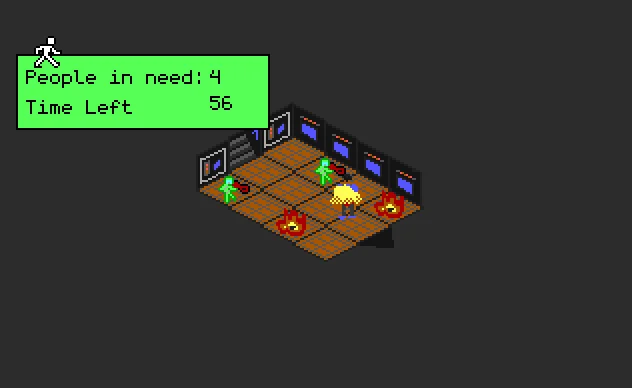
The digital landscape of 2026 continues to surprise and delight with a vibrant confluence of cutting-edge innovation and profound nostalgia, a trend epitomized by the recent emergence of "Hero: Before/After," a new game developed by Zyarg specifically for the venerable MS-DOS operating system. First featured on pdroms.de on July 24, 2026, this 2025 release is a concise yet engaging 15-minute adventure structured across two distinct levels, challenging players to "rescue as many civilians as you can." This development not only underscores the enduring appeal of retro computing platforms but also highlights a fascinating sub-current within the independent game development scene, where artistic vision often transcends technological obsolescence.
The Genesis of "Hero: Before/After": A Modern Retro Release
"Hero: Before/After" represents a curious anomaly in the contemporary gaming ecosystem. While the vast majority of new titles target modern operating systems, sophisticated graphics cards, and expansive memory capacities, Zyarg’s decision to develop for MS-DOS, an operating system whose commercial dominance peaked nearly three decades prior, is a deliberate artistic and technical statement. Released in 2025, the game appeared on platforms like itch.io, a popular digital storefront for independent developers, before gaining wider notice within dedicated retro gaming communities. The brevity of the experience – a mere 15 minutes – suggests a focused design philosophy, perhaps reminiscent of early arcade games or the concentrated narrative experiences found in short films. Players are tasked with a clear objective: civilian rescue, implying a sense of urgency and perhaps a moral dimension within its compact framework. The "Before/After" subtitle itself hints at a narrative progression or a thematic dichotomy that players are meant to experience and reflect upon within the game’s limited runtime.
MS-DOS: A Legacy Platform Reimagined
To fully appreciate the significance of "Hero: Before/After," it is crucial to understand the historical context and enduring cultural impact of MS-DOS. Introduced by Microsoft in 1981, MS-DOS (Microsoft Disk Operating System) served as the foundational operating system for IBM PC compatible computers throughout the 1980s and early 1990s. Before the widespread adoption of graphical user interfaces like Windows, MS-DOS provided a command-line interface that allowed users to interact directly with their hardware. For an entire generation of PC users, MS-DOS was synonymous with personal computing and, crucially, with gaming. Iconic titles such as Doom, Wolfenstein 3D, Commander Keen, Monkey Island, and Civilization all found their initial homes on MS-DOS, defining genres and establishing gameplay paradigms that persist to this day.
The technical constraints of the MS-DOS era – limited RAM, rudimentary sound capabilities (often just a PC speaker or later, AdLib/Sound Blaster cards), and CGA/EGA/VGA graphics standards – forced developers to be incredibly ingenious. Creativity flourished within these boundaries, leading to highly optimized code, innovative graphical techniques like dithering, and compelling gameplay loops designed to maximize player engagement despite hardware limitations. This period fostered a "less is more" philosophy, where game design often prioritized mechanics, puzzles, and narrative over photorealistic visuals.
In the 21st century, MS-DOS has transitioned from a commercial standard to a cherished relic. However, it is far from dormant. A dedicated community of retro computing enthusiasts, hardware collectors, and software developers actively maintains, restores, and even creates new content for these vintage systems. Emulators like DOSBox have democratized access to MS-DOS games, allowing them to run on modern hardware, thereby introducing classic titles to new audiences and preserving digital heritage. The development of a new game like "Hero: Before/After" for MS-DOS is a testament to this vibrant preservationist and creative culture, demonstrating that these platforms are not merely historical artifacts but still viable canvases for artistic expression.
Zyarg’s Creative Intent and Technical Undertaking
While Zyarg, the developer behind "Hero: Before/After," has not released extensive public statements regarding the specific motivations for choosing MS-DOS, such a decision typically stems from a blend of artistic challenge, nostalgic reverence, and a desire to connect with a specific niche audience. Developing for MS-DOS in 2025 involves significant technical hurdles. Modern development environments and toolchains are not designed for direct MS-DOS compatibility. Developers often resort to cross-compilation techniques, using vintage compilers (like Borland C++ or Watcom C) within emulated environments, or even writing significant portions of code in assembly language to achieve optimal performance and adherence to system limitations.
The choice of platform implies a deliberate embrace of constraints. These limitations – restricted color palettes, lower resolutions, and simpler audio – are not seen as impediments but as creative guidelines that shape the game’s aesthetic and gameplay. For Zyarg, this likely meant distilling the game’s core concept down to its most essential elements, focusing on impactful gameplay and narrative within a highly constrained environment. The "15-minute adventure" model fits perfectly within this philosophy, offering a complete, albeit brief, experience that can be appreciated for its conciseness and technical execution. It appeals to players seeking quick, focused entertainment, or those who appreciate the novelty of a fully realized short-form experience.
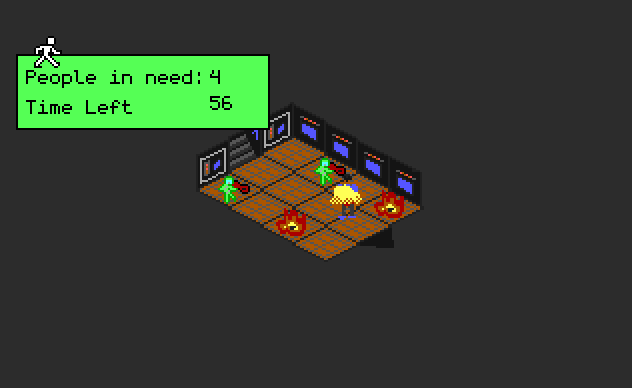
The thematic elements suggested by "Hero: Before/After" – heroism and a temporal or situational shift – could be powerfully conveyed through MS-DOS’s often stark visual style. The "Before" state might depict a thriving world, only for the "After" state to present a devastated landscape requiring the player’s intervention to rescue civilians. This narrative arc, even if minimalist, leverages the player’s imagination, a common technique in retro gaming where abstract graphics often necessitated player-driven visualization.
Gameplay Mechanics and Narrative Interpretation
"Rescue as many civilians as you can" is a mission statement that implies a blend of action, strategy, and potentially puzzle-solving. In a two-level structure, this could translate to:
- Level 1: "Before" Scenario: Perhaps an introductory phase where the player character, the "Hero," navigates a relatively peaceful environment, perhaps learning basic controls or observing the world before a catastrophic event. The "rescue" element might be minimal or preparatory.
- Level 2: "After" Scenario: This level would then present the core challenge. Following an implied disaster or conflict, the environment is transformed, hostile elements might be introduced, and the urgency of civilian rescue becomes paramount. The "as many as you can" suggests a scoring system, encouraging replayability and optimizing routes or strategies to achieve a higher civilian count.
The game’s brevity necessitates immediate engagement. Players would likely be thrust into the action quickly, with intuitive controls and objectives. The two-level structure allows for a clear progression and escalation of stakes, culminating in the critical rescue operations. The limitations of MS-DOS would dictate the visual representation of civilians, potentially as simple sprites, making their successful extraction a matter of player skill and environmental navigation rather than complex AI interaction. This simplicity, however, often enhances the core gameplay loop and keeps the player focused on the immediate task.
Broader Implications: Retro Gaming, Indie Development, and Digital Preservation
"Hero: Before/After" is more than just a niche game; it is a symptom and a symbol of several significant trends in the broader gaming and tech landscapes:
- The Power of Niche Markets: The continued viability of platforms like MS-DOS for new game development demonstrates the strength and dedication of niche communities. The retro gaming market, globally valued in the billions of dollars annually, is not solely driven by collecting old hardware but also by a desire for new experiences on beloved old systems. Developers like Zyarg tap into this passionate audience, finding recognition and appreciation that might be harder to achieve in the crowded mainstream market.
- Innovation Through Constraints: The choice to develop for a restrictive platform forces developers to innovate within limits. This often leads to highly polished gameplay, clever visual tricks, and a focus on core mechanics, influencing modern game design philosophies that sometimes advocate for "demakes" or pixel-art aesthetics. It serves as a reminder that technological prowess does not always equate to artistic merit or engaging gameplay.
- Digital Preservation and Archiving: Every new game released for an old platform contributes to its ongoing relevance and serves as a living testament to its capabilities. Projects like "Hero: Before/After" encourage the maintenance of emulation software, the archiving of old development tools, and the continued discussion around historical computing, all crucial for digital preservation efforts.
- The Indie Game Ethos: Independent game development often champions artistic freedom and experimentation. Zyarg’s project perfectly embodies this, prioritizing a unique creative vision over commercial viability or broad appeal. It highlights the diversity within the indie scene, where developers are free to explore unconventional platforms and design philosophies.
- The "Slow Gaming" Movement: In an era dominated by sprawling open-world games and endless online services, concise experiences like "Hero: Before/After" offer a refreshing counter-narrative. They respect player time, delivering a complete experience without requiring hundreds of hours of commitment. This aligns with a growing desire among some players for focused, impactful, and less time-consuming gaming sessions.
Inferred Community Reception and Developer Perspective
While specific community reactions to "Hero: Before/After" at the time of its feature on pdroms.de are not detailed, it is highly probable that the game has been met with significant enthusiasm within the MS-DOS and retro computing communities. Enthusiasts typically appreciate:
- Technical Prowess: The mere act of developing a new game for MS-DOS in 2025 is considered a feat.
- Nostalgic Resonance: A new adventure on a beloved old system rekindles memories and provides a fresh reason to engage with classic hardware or emulators.
- Contribution to the Scene: New software injects vitality into a community often focused on preservation.
It can be inferred that Zyarg’s motivation was deeply personal, perhaps a long-held ambition to create for the platform that shaped their early gaming experiences. A hypothetical statement from Zyarg might articulate: "Developing ‘Hero: Before/After’ for MS-DOS was a passion project, a way to honor the machines and the games that inspired me. It was a challenging but incredibly rewarding experience to work within those classic constraints, pushing the boundaries of what a short, impactful narrative could be on a system so many of us grew up with. I hope players enjoy the brief journey and the unique charm that only MS-DOS can offer."
The Future of Retro Development
"Hero: Before/After" stands as a beacon for the ongoing vitality of retro game development. Its existence suggests that the creative well for platforms like MS-DOS is far from dry. As technology continues to advance, the contrast between the cutting-edge and the classic will only sharpen, making projects like Zyarg’s even more compelling. The ability to distribute these games through modern digital storefronts like itch.io, and for them to be highlighted on specialized news sites like pdroms.de, ensures that these niche creations find their intended audience, fostering a continuous cycle of innovation and preservation within the retro computing world. The game serves as a powerful reminder that sometimes, looking back can pave the way for entirely new forms of artistic expression in the digital present.