Jia Lissa
The arrival of the Halloween season serves as a traditional catalyst for a surge in consumer engagement with horror-themed media, a trend that extends firmly into the legacy gaming sector. While the 16-bit era of the Sega Genesis is frequently cited for its more advanced technical capabilities, the 8-bit platforms—the Sega Master System (SMS) and its portable counterpart, the Game Gear—boast a distinct library of titles that defined the horror genre for a generation of players. These systems, though technologically limited by contemporary standards, provided a foundation for atmosphere-driven gameplay that prioritized thematic cohesion and mechanical innovation.
A Chronology of 8-Bit Horror Development
The trajectory of horror games on Sega’s 8-bit platforms followed a clear evolution between the mid-1980s and the early 1990s. Early titles, such as 1986’s Ghost House, established the basic framework for the genre: navigation of hostile environments, resource management, and the inclusion of supernatural antagonists. By the early 1990s, developers began to shift toward licensed properties and more complex, narrative-driven experiences.
The release of Alien Syndrome in 1987 marked a significant pivot toward science-fiction horror, heavily influenced by the aesthetic and narrative beats of James Cameron’s Aliens (1986). The transition of this title from the arcade to the Master System and eventually to the Game Gear represents the period’s focus on porting high-intensity arcade experiences to home hardware. As the Game Gear gained market share following its 1990 release, developers increasingly utilized the handheld’s backlit, color-capable screen to deliver titles that competed directly with traditional home consoles.
Technical Analysis of Key Titles
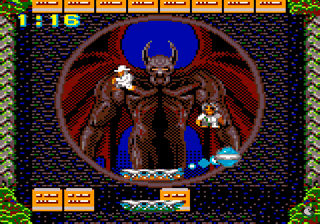
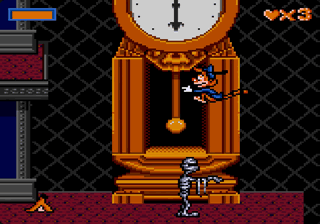
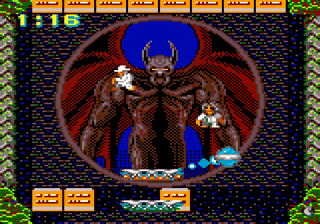
The library of 8-bit horror is characterized by creative workarounds to hardware constraints. Devilish, released for the Genesis but rooted in the arcade-style mechanics often seen on 8-bit platforms, demonstrates how developers manipulated the classic Breakout formula to create an action-adventure experience. By shifting the focus from simple paddle control to vertical and horizontal scrolling, the game utilized the limited screen real estate to convey a sense of exploration and urgency.

Similarly, Ghouls ‘N Ghosts for the Master System stands as a technical benchmark for the era. Despite the platform’s 2-megabit cartridge limitation, the port managed to replicate the arcade’s aesthetic through optimized character animation and a revamped shop system that altered the game’s traditional difficulty curve. By allowing players to purchase health and weapon upgrades, the developers effectively modified the gameplay loop to better suit the home console experience, a departure from the brutal one-hit-kill mechanics that defined the arcade original.
The Role of Licensed Horror Properties
The 1990s saw a proliferation of licensed horror titles, most notably Bram Stoker’s Dracula. Unlike the Sega CD iteration, which suffered from the technical challenges of early full-motion video (FMV) integration, the 8-bit versions developed by Probe Software leaned into traditional side-scrolling platform mechanics. This approach proved to be a more stable strategy for the hardware, allowing for a consistent framerate and more fluid character movement. The title serves as a case study in the efficacy of platform-specific development; by moving away from the "realistic" aspirations of the CD-based version, the 8-bit release maintained a cohesive aesthetic that, while cartoony, remained loyal to the thematic source material.

Cultural and Economic Impact
The scarcity of certain titles, such as Laser Ghost and Dracula’s Castle, highlights the regional distribution strategies employed by Sega during the late life cycle of the Master System. Laser Ghost, which utilized the Sega Light Phaser, represents the pinnacle of 8-bit peripheral integration. By requiring players to interact with the screen using a physical light gun, the game attempted to bridge the gap between arcade immersion and living-room convenience. The fact that such titles remained regional exclusives—largely confined to PAL territories and Japan—has created a robust secondary market in the decades since, underscoring the enduring value of these niche titles among collectors and enthusiasts.
Comparative Genre Development: The Case of Sports-Horror
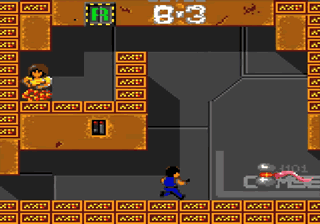
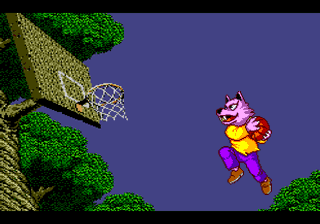
One of the most unconventional entries in the genre remains Basketball Nightmare. While the sports-simulation genre was dominated by realistic titles, Basketball Nightmare introduced a supernatural narrative arc, replacing standard professional teams with creatures such as vampires and werewolves. This title remains a unique case in gaming history; it represents a brief moment where developers experimented with genre-blending, even if the execution was ultimately limited by repetitive gameplay mechanics and a lack of depth in its AI. It serves as an example of the industry’s willingness to experiment during the 8-bit era, a philosophy that contrasts sharply with the risk-averse nature of modern AAA game development.

Industry Perspectives on Retro Horror
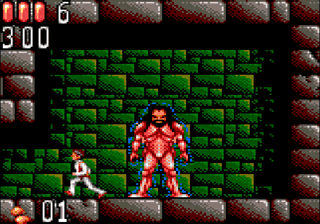
Reflecting on these titles, industry analysts often point to the limitations of the era as the primary driver of creativity. The necessity of using "chiptune" music, for instance, forced composers to create high-tension, repetitive loops that became synonymous with the feeling of dread. In Vampire: Master of Darkness, the audio design is credited with significantly enhancing the game’s gothic atmosphere. When compared to the Konami Castlevania series on the Nintendo Entertainment System, Vampire: Master of Darkness is frequently cited as a high-water mark for the Master System, showcasing that 8-bit hardware could indeed support complex, multi-stage action games with high-quality, atmospheric production values.
Implications for Modern Gaming
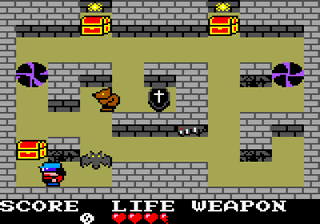
The continued relevance of these 8-bit horror games lies in their design philosophy: the "less is more" approach. By relying on simple, repeatable mechanics—such as collecting keys, managing limited health items, or navigating restricted screen layouts—these games forced the player to engage with the environment in a deliberate manner.

The lack of save states or passwords in many of these titles, such as Dracula’s Castle, created a high-stakes environment that is largely absent in modern gaming. The requirement to complete a game in a single session, or to navigate 32 stages without modern safety nets, provides a level of tension that is inherently "horror-adjacent." As the gaming industry continues to evolve toward high-fidelity graphics and open-world experiences, the persistence of these 8-bit titles suggests that the foundational elements of horror—pacing, atmosphere, and the threat of loss—remain effective regardless of the underlying technology.
Conclusion
As consumers curate their digital libraries for the Halloween season, the legacy of the Sega Master System and Game Gear remains significant. These platforms offered more than just ports of arcade hits; they provided a distinct venue for horror experimentation that favored ingenuity over graphical fidelity. Whether through the science-fiction dread of Alien Syndrome, the gothic homage of Vampire: Master of Darkness, or the unconventional crossover appeal of Basketball Nightmare, these games demonstrate the enduring power of 8-bit storytelling. For the modern enthusiast, these titles are not merely relics of a bygone era, but essential components of the horror genre’s history, proving that even with only eight bits of data, a developer can craft an experience that is as chilling today as it was thirty years ago.