Vera Clarissa
The intersection of classic optical physics and modern digital manipulation has provided a fertile ground for experimental photography, as evidenced by recent projects utilizing diffraction grating filters in conjunction with mobile devices. What began as an informal investigation into the behavior of light through an iPhone 3Gs has evolved into a sophisticated methodology for creating bespoke digital assets. This process involves the isolation of light sources, the application of physical filters to refract light into its constituent spectral components, and the final refinement of these captured images through professional-grade photo editing software.
The Physics of Diffraction and Optical Experimentation
At the core of this artistic endeavor lies the diffraction grating, an optical component with a periodic structure that splits and diffracts light into several beams traveling in different directions. By utilizing this filter, photographers can transform mundane light sources into complex, multi-hued spectral displays. Historically, diffraction gratings have been essential tools in spectroscopy, allowing scientists to identify the chemical composition of light-emitting objects by analyzing their unique spectral fingerprints.

In the context of recent photographic experiments, the process involves placing a diffraction grating in front of a camera lens to intercept incoming photons. When a point source of light—such as an LED or a halogen bulb—is photographed through this medium, the light is dispersed into a spectrum of colors. This physical interaction creates visual patterns that are not visible to the naked eye under normal circumstances. The experimenter’s transition from using legacy hardware like the iPhone 3Gs to more contemporary imaging setups highlights the democratization of high-end optical effects, where mobile devices serve as both the sensor and the primary laboratory for creative exploration.
Chronology of the Light Study
The project followed a distinct evolutionary path, beginning with environmental observations and moving toward controlled studio-style manipulation. Initially, the experimenter focused on ambient light sources, including the Sun. Outdoor testing revealed the inherent challenges of diffraction photography: uncontrolled environmental variables, such as shifting cloud cover and the extreme intensity of solar radiation, often resulted in images that, while technically interesting, lacked the cohesion required for refined digital composition.
Following the outdoor phase, the study shifted toward interior, controlled light sources. A bright yellow halogen lamp was utilized, which provided a stable, broad-spectrum light source. Because halogen lights emit a continuous spectrum, they are ideal for diffraction experiments, producing rich, radiant bands of color. This phase of the project proved successful enough that the resulting images were adopted as official visual assets for the Low End Mac (LEM) website, signaling a transition from mere experimentation to the production of functional digital media.

The final phase of the chronology focused on the LED flashlight. Unlike halogen lamps, LEDs often have a more concentrated spectral output, which allowed the photographer to experiment with specific angles to create "light comets"—elongated, vibrant streaks of color that appear as singular, focused beads of energy. By systematically adjusting the angle of the light source and the orientation of the diffraction grating, the photographer was able to produce a series of stills that served as the raw material for the final Photoshop-based composition.
Technical Methodology and Digital Post-Processing
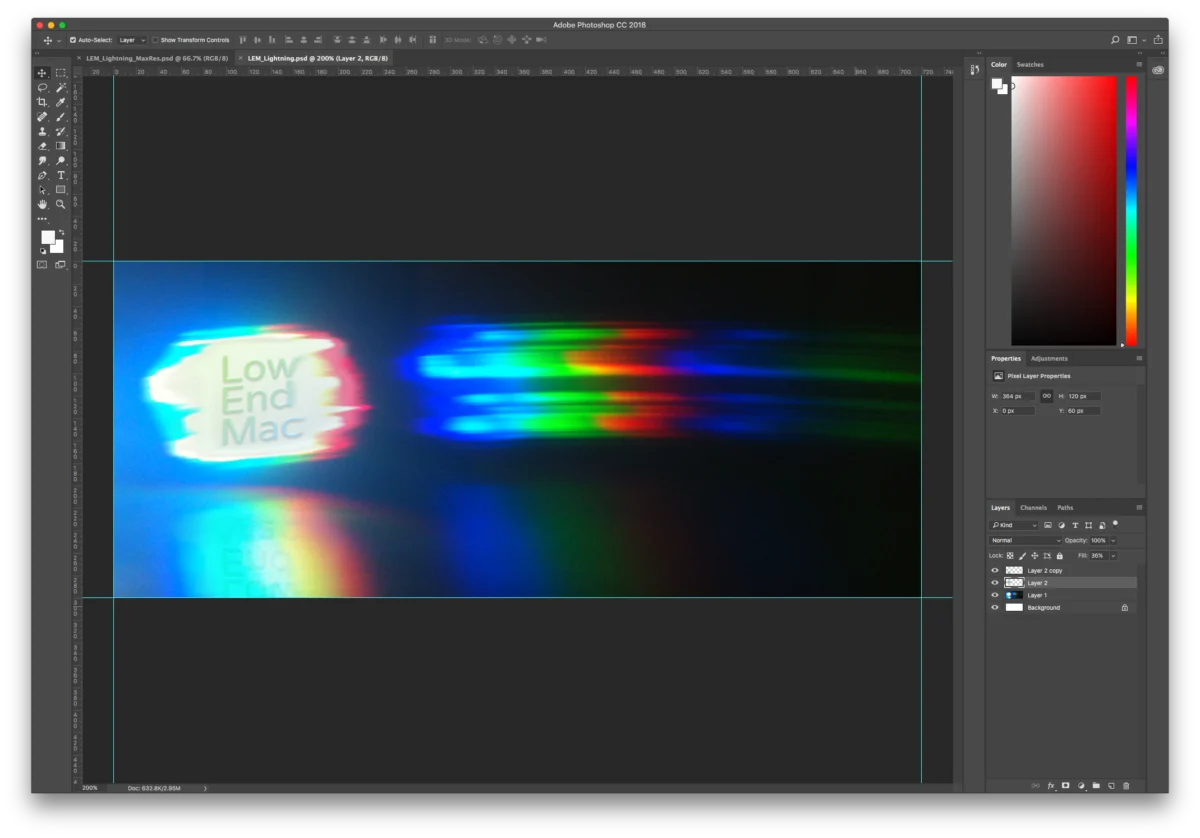
The transition from raw photograph to finished digital art is a testament to the precision of modern image-editing workflows. Once the ideal spectral "light bead" was captured, the image was moved into Adobe Photoshop. The goal of this stage was not to alter the physical properties of the captured light, but rather to integrate corporate branding—specifically the LEM logo—into the spectral environment.
The process involved several distinct technical steps:

- Masking and Isolation: The center of the light orb was cleared of visual noise to create a negative space.
- Branding Integration: The LEM logo was imported and subjected to a skew transformation, matching the geometric trajectory of the light streak to create the illusion of depth and movement.
- Smudging and Blending: To maintain visual continuity, the edges of the logo were treated with a smudge tool, mimicking the diffraction-induced blur found in the original light capture.
- Reflective Realism: A mirror-image layer of the logo was created at a 10% opacity, providing a synthetic reflection that grounds the logo within the virtual scene.
- Atmospheric Adjustment: A transparent-to-black gradient was applied as a background layer, effectively neutralizing the background clutter of the original room and allowing the spectral light to become the focal point of the image.
This non-destructive approach—where the integrity of the light itself is preserved while the surroundings are carefully curated—ensures that the final output maintains a high level of fidelity. The absence of additional color filters or synthetic light effects is significant; it indicates that the vibrancy of the final product is entirely derived from the interaction between the diffraction grating and the original light source.
Supporting Data and Optical Analysis
To understand why these experiments yield such distinct results, one must consider the spectral power distribution (SPD) of the light sources involved. A halogen bulb, characterized by its black-body radiation, emits light across a continuous range of wavelengths. When diffracted, this creates a seamless gradient. Conversely, an LED, which typically relies on a blue chip coated in yellow phosphor, exhibits a more "spiky" SPD. This difference is clearly observable in the diffraction results, where the LED-produced "comets" display sharper, more defined boundaries between spectral colors compared to the softer transitions of the halogen lamp.
The use of legacy mobile devices, such as the iPhone 3Gs, also introduces technical artifacts that contribute to the aesthetic. Older CMOS sensors, with their smaller dynamic ranges and different noise profiles, often capture light in a manner that feels more "organic" than the hyper-processed images produced by modern computational photography algorithms. By opting for a manual, analog-filter approach, the photographer avoids the automated color-correction and sharpening typically applied by modern smartphone software, resulting in a more authentic representation of the diffraction pattern.

Broader Implications for Digital Content Creation
The project underscores a growing trend in digital media: the preference for "authentic" optical effects over purely generative, AI-based imagery. By relying on physical diffraction rather than digital plug-ins, the creator establishes a tangible connection between the work and the laws of physics. This methodology provides a sustainable, repeatable framework for content creators who wish to generate unique visual assets without resorting to stock imagery or expensive lighting equipment.
From an organizational standpoint, the integration of these experimental assets into the LEM brand identity represents a strategic use of internal resources. By transforming a hobbyist experiment into a professional wallpaper or brand asset, the organization demonstrates a cost-effective approach to content production. Furthermore, it highlights the importance of institutional documentation—the fact that these experiments were chronicled on the site’s changelog page suggests that, for many organizations, the process of creation is as valuable to the audience as the final product itself.
Conclusion and Future Outlook
The fusion of diffraction grating technology with mobile photography has proven to be more than a mere curiosity. It is a structured, replicable process that bridges the gap between scientific observation and aesthetic design. As optical components become more accessible and mobile camera technology continues to evolve, we can expect to see an increase in similar "maker-culture" projects that leverage the physics of light to create high-quality, authentic visual content. The experiment serves as a reminder that with a basic understanding of optical principles and a modest amount of digital post-processing, even the most mundane objects—such as an LED flashlight—can be transformed into a work of compelling digital art. The success of this endeavor lies not in the complexity of the equipment used, but in the deliberate application of physics to visual storytelling.