Indra Gunadi
The Evolution of the GBA Homebrew Ecosystem
The Game Boy Advance, originally launched by Nintendo in 2001, has maintained a remarkably consistent lifecycle among independent developers. While the console was officially discontinued in 2010, the "homebrew" community—a collective of programmers, artists, and retro-gaming enthusiasts—has continued to develop new software for the platform. This ecosystem is sustained by advancements in emulators, flash cartridge technology, and cross-platform development tools that make coding for the ARM7TDMI processor more accessible than it was two decades ago.
Nightkeep enters this market during a period of significant growth for retro-platform development. Unlike the early 2010s, where homebrew titles were often limited to simple puzzle games or tech demos, the current landscape features complex mechanical structures, such as roguelites and procedural generation, which were rarely seen on the original hardware due to memory and processing constraints.
Mechanics and Gameplay Design of Nightkeep
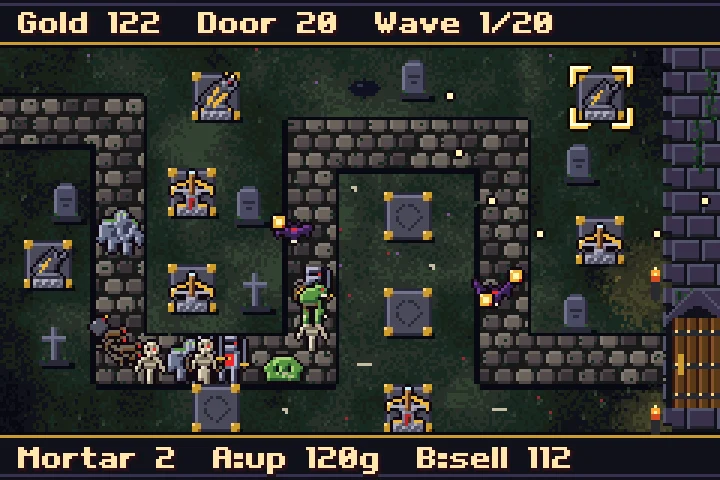
At its core, Nightkeep is defined by its hybrid genre classification: a gothic-inspired roguelite tower defense game. The player is tasked with defending a central "keep" from waves of encroaching enemies. The game features a strategic architecture consisting of six distinct types of defensive towers, each requiring a specific resource management approach.
The enemy composition includes eight unique types of undead adversaries, each with varying speed, health, and behavioral patterns. A standout mechanic in the game is the behavior of the bat enemies, which utilize a direct pathfinding AI to assault the keep from unexpected angles, forcing players to maintain a constant defensive perimeter. To aid the player, the game incorporates a "blessing" system that triggers every five waves. These randomized upgrades provide strategic boons, forcing players to adapt their defensive configurations on the fly—a staple of the roguelite genre that adds replayability to the short-form loop of the GBA format.
The Role of Artificial Intelligence in Retro Development
One of the most notable aspects of the release of Nightkeep is the developer’s formal disclosure regarding the use of artificial intelligence in the production process. NugKnows has been transparent about utilizing AI-assisted tools to facilitate the development, a move that reflects a broader trend in independent game design.
In the context of GBA development, where the hardware is severely limited by strict VRAM and ROM size constraints, AI tools are increasingly being used to optimize sprite assets and generate code templates. For small-scale developers, these tools serve as a force multiplier, allowing for the creation of high-quality assets that might otherwise take a solo developer months to produce. While some purists within the retro-gaming community debate the implications of AI-assisted assets, the technical consensus suggests that as long as the final product runs within the memory constraints of the GBA (typically a maximum of 32MB for most cartridges), the method of creation is secondary to the technical execution.
Chronology of GBA Homebrew Milestones
The arrival of Nightkeep is the latest in a long, storied history of GBA software development that has transcended the console’s commercial lifespan.
- 2001: Nintendo launches the Game Boy Advance, setting the stage for a massive library of titles.
- 2010: Nintendo officially discontinues the GBA line, shifting focus to the Nintendo DS and 3DS.
- 2015–2018: The rise of open-source GBA development kits, such as devkitARM, allows for easier entry for non-professional developers.
- 2023: A surge in "modern retro" game releases occurs as development tools for the console become more sophisticated, integrating modern workflows with legacy assembly language.
- October 2026: Nightkeep is released, marking a shift toward more complex roguelite structures on the GBA.
Technical Analysis: Constraints and Hardware Capabilities
Developing for the GBA in 2026 requires a deep understanding of the console’s original hardware constraints. The system features an ARM7TDMI 32-bit RISC processor running at 16.78 MHz. With only 32KB of internal WRAM and 96KB of VRAM, developers must be extremely efficient with memory management.
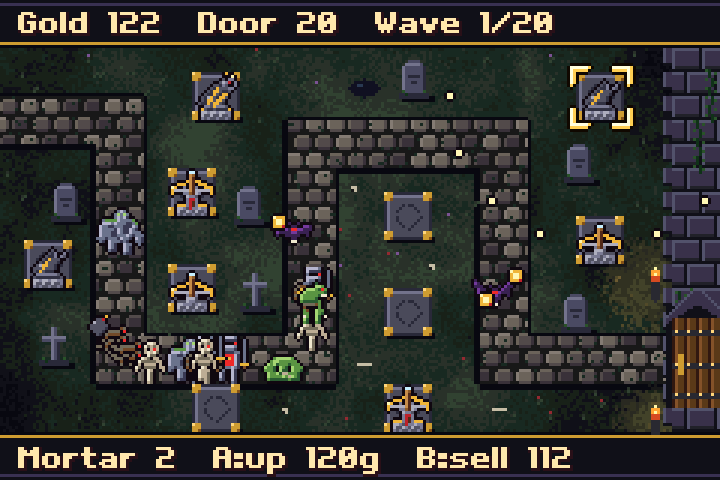
Nightkeep’s ability to manage eight distinct undead enemy types simultaneously, alongside tower pathing and real-time updates, suggests an optimized engine that likely utilizes custom memory banking. In traditional tower defense games, the "spawn and path" calculations can quickly overwhelm the CPU, leading to frame rate drops. However, initial reports indicate that Nightkeep maintains a stable performance, indicating that the developer has effectively utilized the GBA’s interrupt-driven architecture to manage the game logic during the vertical blank (VBlank) period of the screen refresh.
Industry Implications and Community Reaction
The release of titles like Nightkeep has significant implications for the longevity of the GBA as a platform. By bridging the gap between classic tower defense mechanics and modern roguelite unpredictability, the game expands the definition of what constitutes a "GBA game."
In the wider industry, the homebrew scene is increasingly being viewed as a legitimate laboratory for game design. Many developers who start by creating homebrew titles for legacy consoles often transition into professional indie development for modern platforms like the PC, Nintendo Switch, or PlayStation 5. The strict limitations of the GBA serve as a "boot camp," forcing developers to master optimization, efficiency, and core gameplay loops without the crutch of modern engine features like real-time lighting or massive RAM buffers.
While no official statement has been released by Nintendo regarding the current state of homebrew, the company has historically maintained a passive stance toward community-developed software, provided it does not infringe on intellectual property or facilitate piracy. The homebrew community, for its part, remains focused on the preservation and expansion of the GBA’s legacy, viewing their work as a continuation of the console’s cultural significance.
Future Outlook for the GBA Enthusiast Market
The release of Nightkeep highlights a maturing market for physical homebrew cartridges. Many developers now partner with boutique publishers to produce physical, boxed copies of their games, complete with manuals and cart inserts. This "physical-first" mentality has kept the secondary market for the GBA vibrant and has elevated the status of homebrew software from digital downloads to collectible physical media.
As we move into late 2026, it is clear that the Game Boy Advance is not merely a relic of the past, but a living, breathing platform. The success of Nightkeep will likely encourage further experimentation with complex genres on the console. Developers are expected to continue exploring how machine learning and AI-assisted workflows can be integrated into the GBA pipeline to create ever more sophisticated experiences that fit within the 25-year-old hardware.
For players, the value of Nightkeep lies in its ability to provide a polished, challenging, and technically sound experience on a device that many thought had reached its peak capability decades ago. As the community continues to refine its tools and expand its creative ambitions, the legacy of the GBA will undoubtedly continue to evolve, proving that with enough ingenuity, even the most constrained hardware can host modern, compelling gameplay experiences.
The integration of roguelite elements—specifically the blessing system—ensures that the game remains fresh for repeat sessions, a critical factor in the longevity of any homebrew title. As the homebrew community continues to iterate on these designs, the GBA will continue to serve as a cornerstone of independent game development, proving that innovation is not limited by the era of the hardware, but by the creativity of the developer.