Chalid Lutfie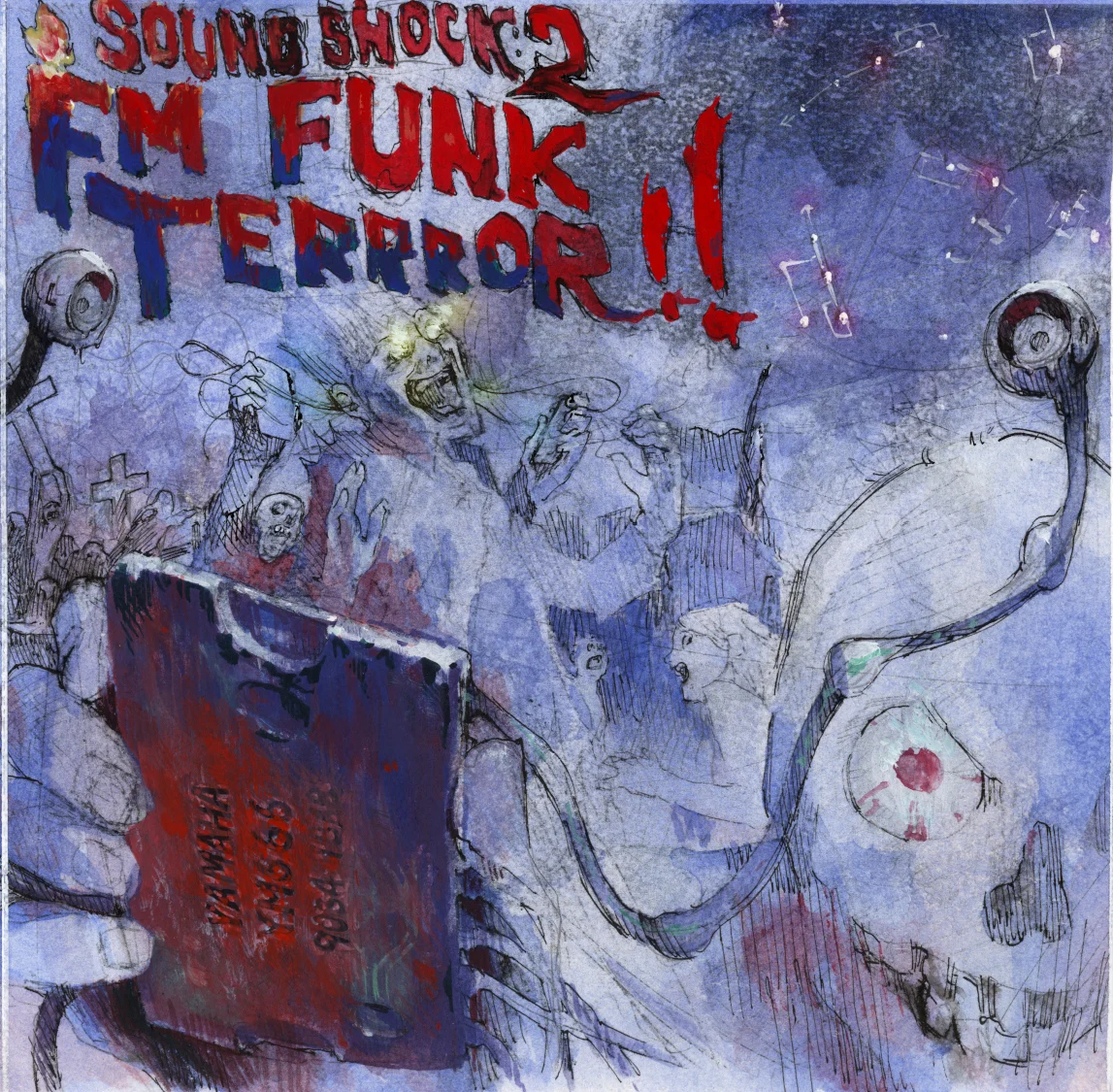
The conclusion of the SOUNDSHOCK trilogy marks a significant milestone in the preservation and celebration of FM synthesis culture, as highlighted by a comprehensive retrospective of the series’ visual identity. Central to this retrospective is the work of Tsuyoshi Shimokura, a professional artist and musician whose handpainted album covers have defined the aesthetic trajectory of the series since its inception. Curated and narrated by the producer known as zinger, the retrospective provides an in-depth look at the creative synergy between traditional manga-influenced art and the digital legacy of Frequency Modulation (FM) sound. The SOUNDSHOCK series, which began as a tribute to the "crunchy" and complex textures of 1980s and 1990s arcade and home console audio, has evolved into a multi-sensory project that bridges the gap between technical hardware appreciation and spiritual philosophy.
The Genesis of the SOUNDSHOCK Collaboration
The partnership between the project’s lead producer, zinger, and Tsuyoshi Shimokura began through an introduction by the artist hex125. Originally, Shimokura was invited to contribute a musical composition to the first installment, SOUNDSHOCK: FM FUNK MADDNESS!!. However, his involvement expanded significantly when his background as a professional manga artist was discovered. This dual talent allowed Shimokura to influence the series both sonically and visually, ensuring that the cover art would be more than a mere marketing tool; it became a visual manifestation of the music’s underlying technology.
Shimokura’s deep-seated passion for computer history, gaming culture, and FM hardware served as the foundation for the project. Unlike contemporary digital art, which often relies on clean vectors and high-resolution renders, Shimokura’s handpainted approach mirrors the organic yet gritty nature of FM synthesis itself—a technology known for its ability to produce metallic, sharp, and highly expressive sounds.
A Chronological Examination of the Artistic Trilogy
The visual development of the SOUNDSHOCK series followed a deliberate path of escalation, both in terms of thematic complexity and artistic ambition. Each volume was designed to push the boundaries of the "FM Funk" concept, moving from mechanical warfare to supernatural horror, and finally to transcendental spirituality.
Phase One: FM FUNK MADDNESS!! and the Industrial Aesthetic
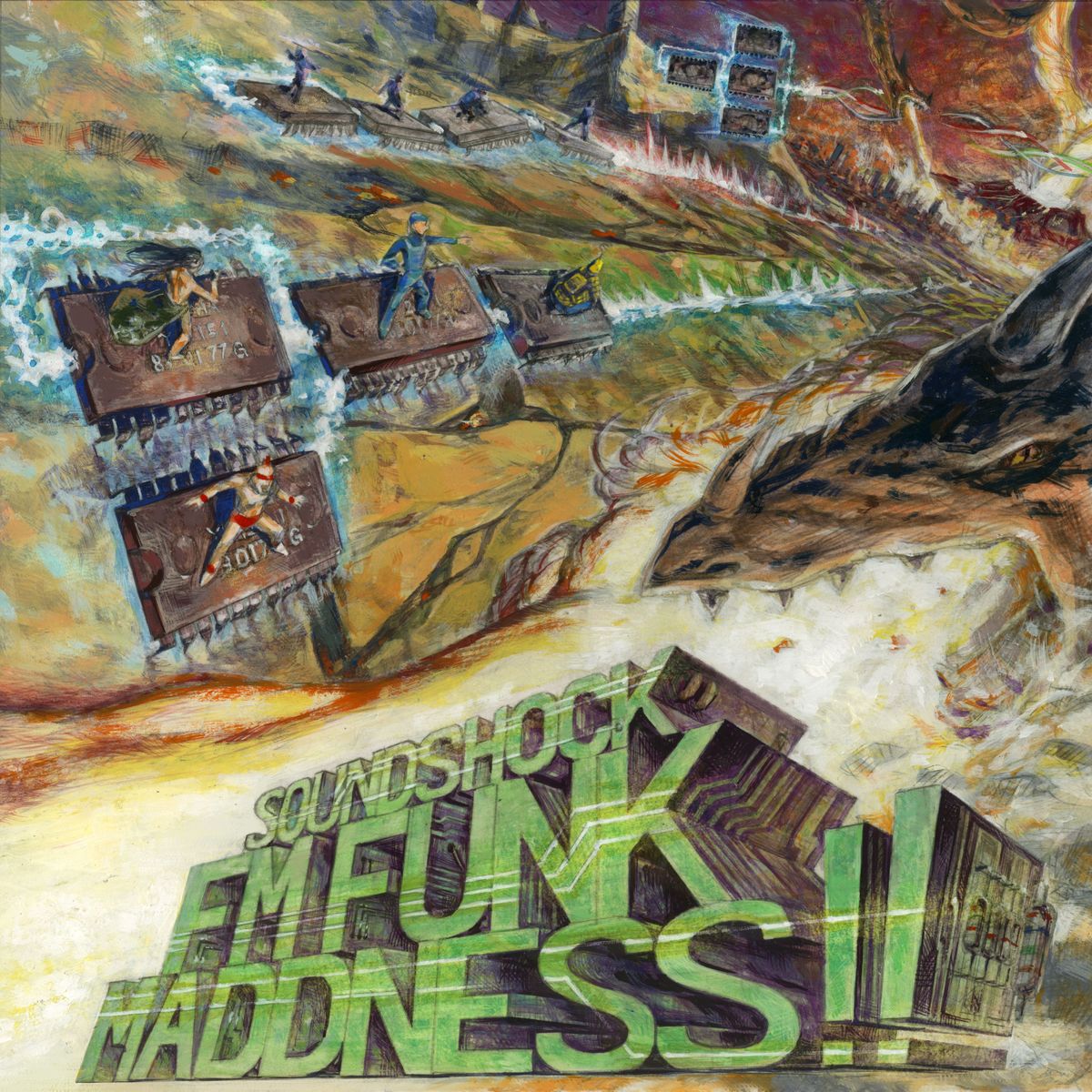
For the debut release, SOUNDSHOCK: FM FUNK MADDNESS!!, the creative team drew inspiration from classic arcade flyers of the early 1990s. Specifically, the artwork for Taito’s Metal Black and Darius II served as primary references. These games are celebrated not only for their gameplay but for their avant-garde soundtracks and gritty, industrial visual designs.
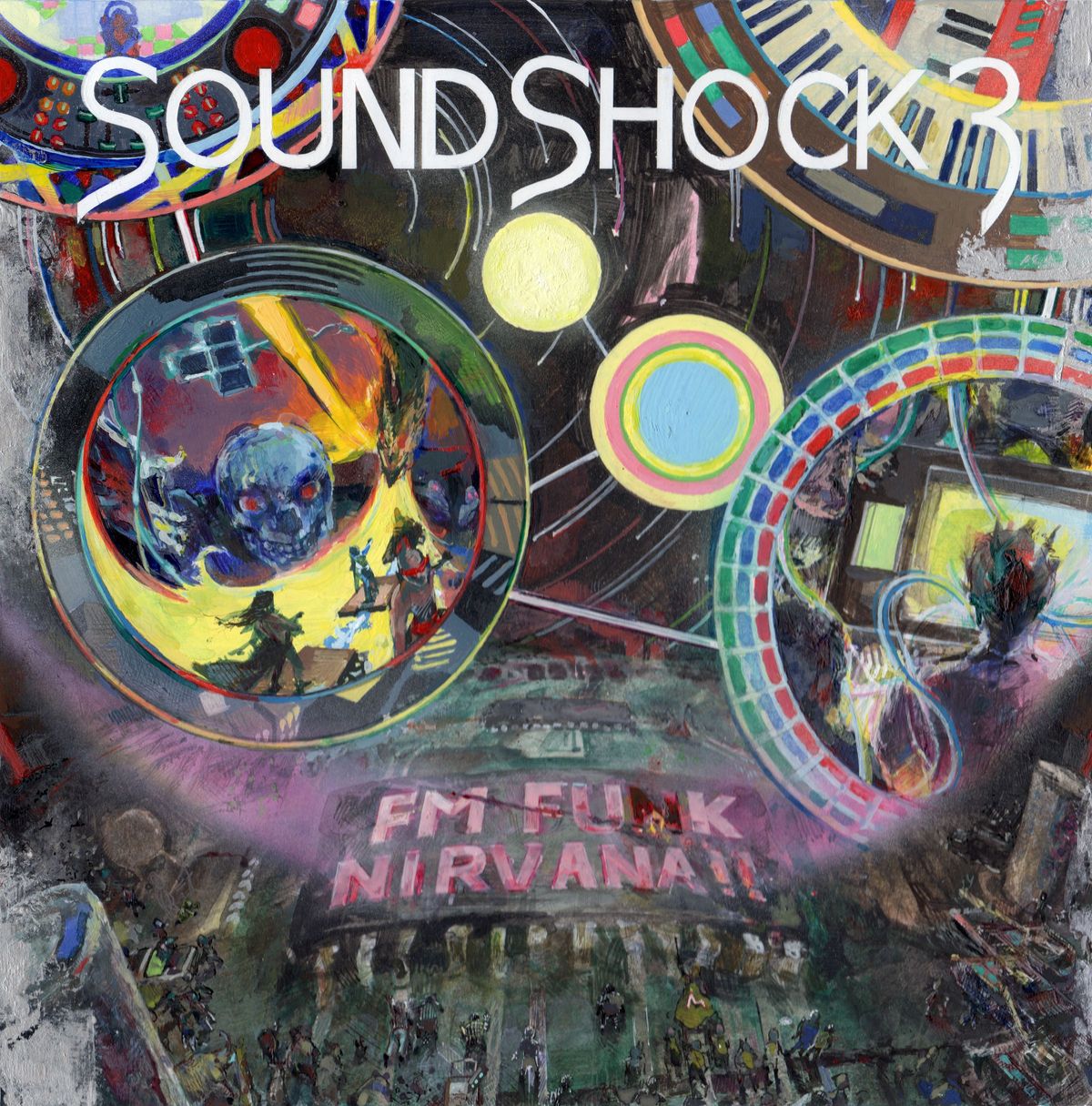
Shimokura’s conceptual framework for MADDNESS!! involved a narrative where musicians utilize the power of FM sound to combat monstrous entities. The artwork is notable for its intricate technical details; Shimokura integrated representations of FM chips into the composition, aligning them in configurations that mimic algorithm charts—the fundamental building blocks of FM synthesis. The artist’s decision to depict these chips with caterpillar-like legs suggests a fusion of biology and technology, a recurring theme in Japanese "Mecha" and "Cyberpunk" traditions.
Phase Two: FM FUNK TERRROR!! and the Horror Influence
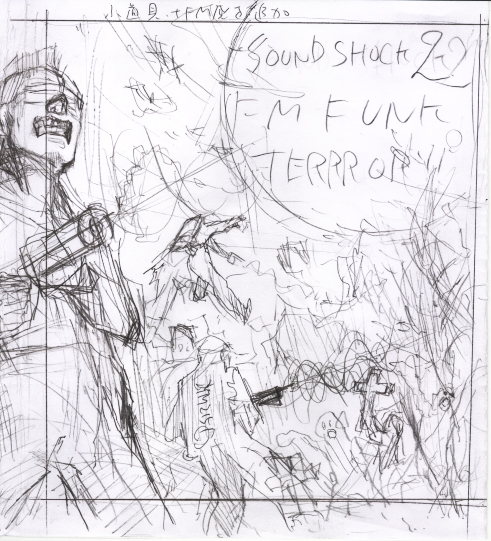
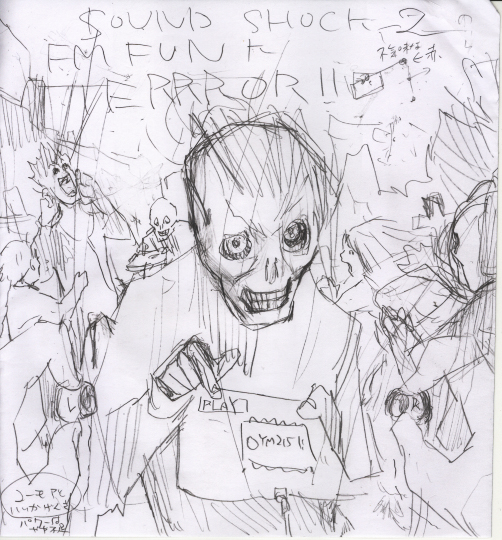
The second volume, SOUNDSHOCK 2: FM FUNK TERRROR!!, shifted the focus toward 1980s horror tropes. The production team utilized a vast array of reference materials, including posters for A Nightmare on Elm Street and The Evil Dead, alongside the aesthetic of Namco’s Splatterhouse series.
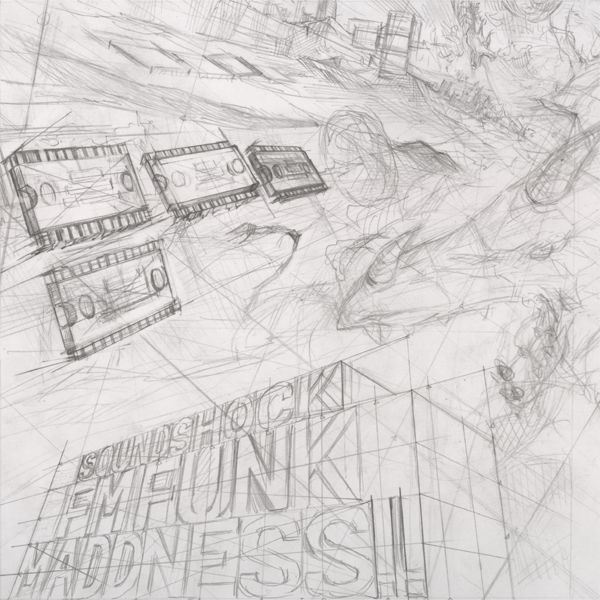
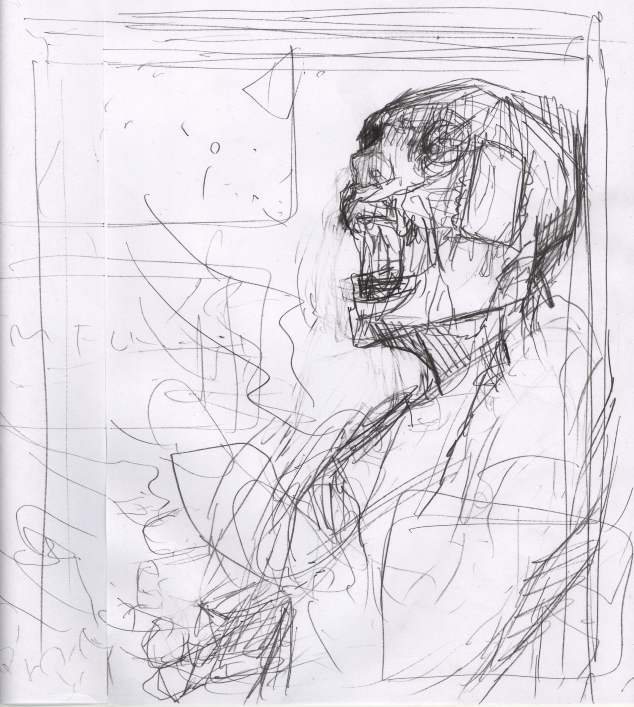
The creative process for TERRROR!! spanned several weeks of iterative design. The final artwork features a central ghoul wielding a fictionalized "YM666" device—a play on the Yamaha YM series of FM chips (such as the YM2151 or YM2612). This character serves as a metaphor for the addictive and overwhelming power of the FM sound, with the narrative suggesting that listeners are being "turned" or conscripted into a legion of FM devotees. A particularly lauded detail in this piece is the constellation of stars in the background, which, upon closer inspection, are arranged to form FM algorithm diagrams. This subtle integration of technical data into a fantasy landscape became a hallmark of Shimokura’s style for the series.
Phase Three: FM FUNK NIRVANA!! and the Transcendental Conclusion
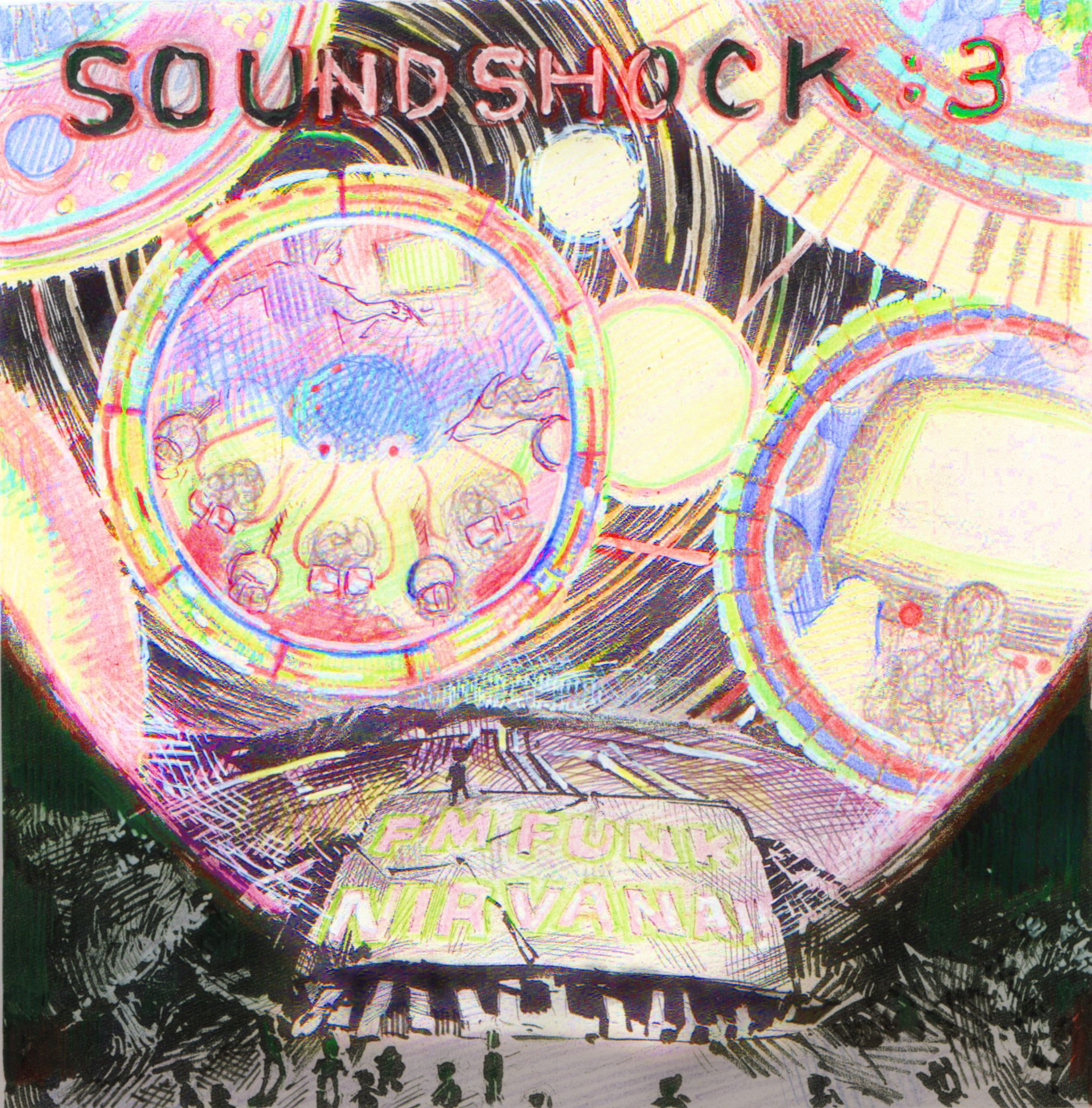
The final installment, SOUNDSHOCK 3: FM FUNK NIRVANA!!, represents the ultimate evolution of the series. The title itself was inspired by a fan comment on social media, which suggested that the only logical progression from "Madness" and "Terror" was a state of total enlightenment or "Nirvana."
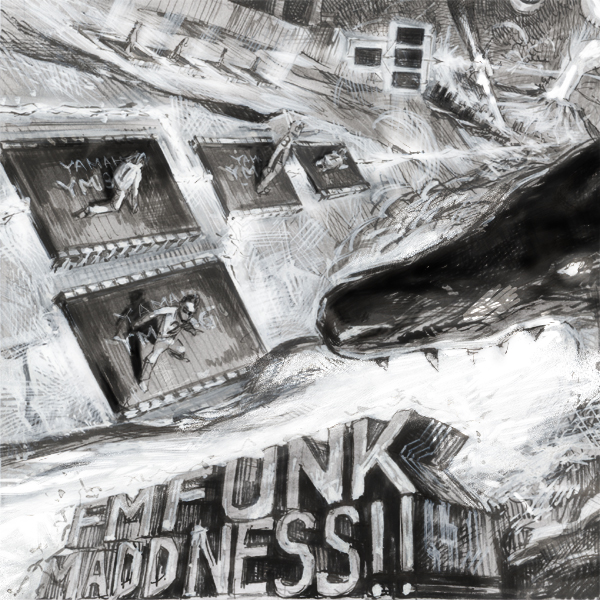
While the previous titles utilized intentional misspellings ("MADDNESS" and "TERRROR") to convey increased intensity, the team decided to retain the standard spelling of "Nirvana." The reasoning, as explained by zinger, was that the concept of Nirvana is inherently "maxed out" and requires no further linguistic augmentation to convey its weight.
The artwork for NIRVANA!! is the most abstract and philosophically dense of the trilogy. Drawing inspiration from the Darius Gaiden soundtrack cover and Buddhist mandalas, the piece depicts a universe composed of spheres representing different elements. At the base of the image, a mass of worshippers gathers around a massive FM chip mounted on a circuit board. This imagery positions the hardware of the past as a modern deity, suggesting that the "disciples" of FM sound have reached a state of spiritual unity through their shared passion for the technology.
Technical Context: The Cultural Impact of FM Synthesis
To understand the significance of the SOUNDSHOCK series, it is necessary to examine the historical context of FM synthesis. Developed by John Chowning at Stanford University and later commercialized by Yamaha, FM synthesis revolutionized the music industry in the 1980s. Unlike subtractive synthesis, which was common in analog synthesizers, FM synthesis allowed for the creation of complex, non-harmonic overtones, making it ideal for simulating bells, brass, and metallic percussion.
In the realm of video games, FM chips like the YM2612 (found in the SEGA Genesis/Mega Drive) and the YM2151 (used in countless arcade boards) defined the soundscape of an entire era. The SOUNDSHOCK series serves as a "doujin" (self-published) effort to keep this specific sonic palette alive. By pairing this vintage sound with high-level handpainted art, the project elevates the medium from mere nostalgia to a form of contemporary digital archaeology.
Official Responses and the Artist’s Final Message
The conclusion of the series was met with a mixture of celebration and reflection from the contributors. Tsuyoshi Shimokura provided a concluding message that serves as a manifesto for the project’s legacy. He emphasized that the end of SOUNDSHOCK should not be viewed as a cessation, but as a "seeding" of ideas for future generations.
"Supposing SOUNDSHOCK really has struck a chord in its listeners’ hearts, then our work could be thought of as a seed for future stars that have yet to be born," Shimokura stated. He further characterized the community of FM enthusiasts as "spiritual offshoots" of their predecessors, reinforcing the idea that the appreciation for this specific technology is a continuous lineage.
The producer, zinger, echoed these sentiments, expressing gratitude for Shimokura’s ability to translate complex technical concepts into evocative visual narratives. The retrospective also serves as a personal acknowledgement of the collaborative spirit that defines the independent Japanese music and art scene, often referred to as the "M3" or "Comiket" culture, where high-quality artistic endeavors are fueled by passion rather than commercial mandates.
Broader Implications and Industry Legacy
The SOUNDSHOCK trilogy stands as a testament to the enduring appeal of 16-bit era technology. In an age dominated by high-fidelity sampling and infinite digital processing power, the deliberate limitation of FM synthesis offers a unique creative challenge that continues to attract musicians and artists worldwide.
The success of the series and the acclaim for Shimokura’s artwork suggest a growing market for physical media and high-concept art within the independent music sector. By treating the album cover as a "mandala" for the listener’s focus, the SOUNDSHOCK series encourages a deeper, more meditative engagement with music.
Furthermore, the project highlights the importance of cross-disciplinary collaboration. The integration of manga-style storytelling, technical hardware diagrams, and experimental electronic music provides a blueprint for how niche subcultures can preserve their history while creating new, innovative content. As the retrospective concludes, the "Algorithm constellations" established by Shimokura and zinger remain a permanent fixture in the landscape of retro-inspired digital art, ensuring that the "terror," "madness," and "nirvana" of FM sound will continue to resonate with future audiences.