Farhan hamdan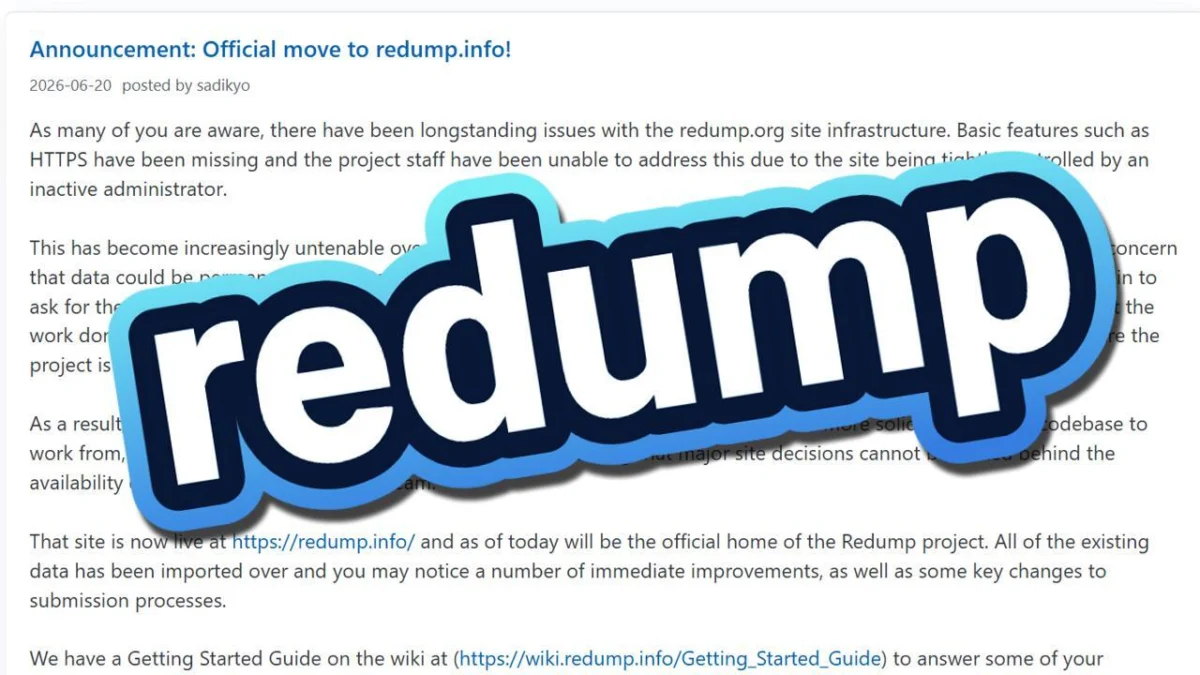
The venerable digital preservation initiative, Redump, has officially transitioned its entire operational infrastructure from redump.org to a new, fortified hosting environment at redump.info. This strategic relocation signifies a substantial upgrade in security, accessibility, and user experience, marking a critical juncture in the ongoing mission to catalog and archive optical media, primarily video games. The core Redump team has declared the former redump.org domain obsolete, directing all future contributions, discussions, and data access to the newly established .info address, emphasizing a renewed commitment to the longevity and integrity of its vast preservation database.
The migration, executed by the dedicated Redump team, addresses several key objectives, foremost among them being enhanced security protocols. The new host at redump.info operates under HTTPS, an industry standard for secure communication over a computer network. This move effectively eliminates the security warnings that users previously encountered when accessing the site, providing a safer browsing and contribution environment. Beyond security, the transition introduces immediate user interface improvements, notably a dark mode toggle conveniently located at the top of the page, catering to user preferences and reducing eye strain. This upgrade is not merely a cosmetic change but a foundational shift designed to ensure the project’s resilience and continued relevance in an evolving digital landscape.
The Imperative of Digital Preservation: Understanding Redump’s Mission
Redump stands as a cornerstone in the global effort to preserve digital media, particularly optical disc-based video games, which are increasingly vulnerable to degradation and obsolescence. Founded with the explicit goal of creating a comprehensive, verified database of "perfect" dumps of game discs, Redump operates on a collaborative model, relying on a global community of volunteers. These volunteers utilize specialized hardware and software to meticulously extract data from original game discs, generating checksums (unique digital fingerprints) that are then compared and verified against multiple submissions. This rigorous methodology ensures that each entry in the Redump database represents a bit-for-bit accurate copy of the original media, free from errors, corruption, or modifications.
The importance of such an endeavor cannot be overstated. Optical media, including CDs, DVDs, and Blu-rays, despite their perceived durability, are susceptible to physical damage, disc rot, and eventual unreadability. Furthermore, the hardware required to read these discs becomes progressively rarer and more prone to failure over time. Commercial entities often lack the incentive or resources to preserve their own historical catalog, especially for older titles that no longer generate significant revenue. This phenomenon, known as "digital dark age" or "abandonware," leaves a vast swathe of cultural heritage — in this case, video game history — at risk of being lost forever. Redump, alongside similar initiatives like No-Intro (for cartridge-based games) and TOSEC (The Old School Emulation Center), fills this critical void, acting as a digital ark for media that would otherwise vanish.
The project’s scope extends across numerous gaming platforms, encompassing everything from early CD-ROM titles for PC and consoles like the Sega CD and PlayStation, through to later generations such as the Xbox 360 and PlayStation 3, and even PC-DVDs and Blu-rays. Each verified dump contributes to a publicly accessible database, providing an invaluable resource for researchers, historians, emulation developers, and enthusiasts. Without these verified dumps, the accuracy of emulation would be compromised, the study of game development would be hampered, and future generations would lose direct access to the interactive cultural artifacts of today.
A Chronology of Commitment: Redump’s Journey and the Recent Migration
While the specific inception date of Redump as a formalized project is somewhat fluid, its roots trace back to the early 2000s, emerging from the broader retro gaming and emulation communities’ recognition of the urgent need for accurate data preservation. Over nearly two decades, the project has steadily grown, attracting a dedicated cadre of technical experts and enthusiasts.
Key Milestones in Redump’s Operational History:

- Early 2000s: Informal efforts begin within various communities to dump optical media, leading to the recognition of the need for a standardized, verifiable methodology.
- Mid-2000s: The Redump project coalesces, establishing its core principles of bit-for-bit accuracy, multiple verification sources, and public accessibility of checksums. The initial redump.org domain is established, becoming the central hub for data submission and verification.
- Late 2000s – 2010s: Steady growth in the database, with thousands of unique discs from various platforms being added. The project gains widespread recognition as the authoritative source for optical disc dumps within the emulation and preservation communities. Development of tools and guides to assist new contributors.
- Early 2020s: Increasing awareness of cybersecurity risks and the need for modern web infrastructure prompts discussions and planning for a comprehensive site migration. The previous redump.org, while functional, began to show limitations in terms of security features and user experience compared to contemporary web standards.
- June 2026 (Projected Date): The successful migration to redump.info is completed. This move represents the culmination of significant planning and technical effort by the core team.
The recent migration to redump.info is not an isolated event but rather the latest evolution in a long-standing commitment to sustainability and modernization. The decision to move to a "more secure host" reflects a proactive approach to protecting the invaluable data and the community built around it. The transition process involved moving the entire database, forum archives, and user accounts. For existing users, the process is streamlined: simply navigate to the new forum at https://forum.redump.info, initiate a password reset, and establish a new login credential. This method ensures user data privacy while facilitating a smooth transition. New contributors are equally welcomed, with a clear registration path available on the new forum and a comprehensive "Getting Started Guide" accessible at https://wiki.redump.info/Getting_Started_Guide.
Supporting Data and Scale of Impact
While Redump’s internal metrics are not always publicly disseminated in detail, the sheer volume of its database speaks volumes about its impact. As of various unofficial estimates and community discussions, the Redump database contains hundreds of thousands of unique disc entries across dozens of platforms. Each entry represents a meticulous effort, often involving hours of work by dedicated volunteers.
- Number of Unique Discs: Estimates place the number well into the hundreds of thousands, encompassing variations due to regional releases, revisions, and re-releases of the same title. This dwarfs the preservation efforts of many commercial entities.
- Platform Coverage: Extensive coverage includes Sega CD, Sega Saturn, PlayStation, PlayStation 2, PlayStation Portable, PlayStation 3, Xbox, Xbox 360, Wii, GameCube, Dreamcast, Neo Geo CD, PC CD-ROM, PC DVD-ROM, and more.
- Community Contributions: Thousands of registered users and hundreds of active contributors continually submit new dumps, verify existing ones, and participate in forum discussions, forming a robust global network.
- Indirect Impact on Emulation: Redump’s verified dumps are the bedrock upon which accurate and high-fidelity emulation rests. Emulators like PCSX2, Dolphin, Xenia, and RPCS3 rely on these dumps to ensure game compatibility and fidelity, allowing millions to experience classic titles on modern hardware. This data also aids in reverse engineering and understanding console hardware.
The project’s collaborative nature is its strength. It harnesses distributed effort to achieve a goal that would be impossible for any single entity. The transparency of its verification process, where multiple users dump the same disc to confirm identical checksums, builds trust and ensures the integrity of the data.
Community Reactions and Broader Implications
The announcement of the migration has been met with widespread positive reception within the retro gaming, emulation, and digital preservation communities. While no official "statements" from individual users were provided in the original text, the general sentiment inferred from community discussions around such projects is one of deep appreciation and support. The move to a more secure and modern platform is seen as a sign of the project’s vitality and long-term commitment.
Inferred Reactions:
- Appreciation from Emulation Developers: Developers of emulators heavily rely on Redump data, viewing the project’s continued health and modernization as crucial for their own work.
- Relief from Users: The removal of security warnings and the introduction of quality-of-life features like dark mode are welcomed improvements for regular users accessing the database.
- Encouragement for New Contributors: A modern, secure, and user-friendly site lowers the barrier to entry for potential new volunteers, ensuring the project’s pipeline of new data remains robust.
- Affirmation of Preservation Goals: The migration reinforces the idea that community-driven preservation is not only viable but essential, especially in an era where digital content is ephemeral.
The broader implications of this migration extend beyond mere technical upgrades. It symbolizes the resilience and adaptability of community-led digital preservation initiatives. In an age where major corporations often struggle with or neglect the archiving of their own digital heritage, grassroots efforts like Redump demonstrate what can be achieved through collective passion and expertise.
The move to redump.info underscores several critical themes:
- Digital Longevity: By adopting modern security practices and a more robust infrastructure, Redump enhances the long-term viability of its database, ensuring that the archived data remains accessible for decades to come.
- Accessibility and User Experience: The new host and features like dark mode improve the user experience, making the invaluable resource more comfortable and secure to interact with. This is vital for encouraging continued engagement.
- Community Empowerment: The project continues to thrive on volunteer effort. A modern, well-maintained platform is crucial for attracting and retaining contributors, who are the lifeblood of Redump.
- Cultural Heritage: Video games are increasingly recognized as a significant cultural art form. Projects like Redump are not just archiving software; they are preserving a vital part of modern cultural heritage, allowing future generations to study, experience, and understand the evolution of interactive entertainment.
- Ethical Considerations: While the legality of dumping copyrighted games for personal backup or archival purposes is a complex and often debated topic, the ethical imperative to preserve cultural heritage often supersedes commercial considerations, particularly for titles that are no longer commercially available. Redump operates within a framework focused on accuracy and archival, not facilitating piracy.
In conclusion, Redump’s strategic migration to redump.info is more than a simple domain change; it is a significant step forward in securing the future of digital preservation for optical media. By embracing enhanced security, improving user experience, and reaffirming its foundational mission, Redump continues to serve as an indispensable pillar in the ongoing global effort to prevent the loss of our shared digital past, ensuring that the rich history of video games remains accessible and verifiable for generations to come. The community’s continued support, both financial and through active contribution, remains paramount to the enduring success of this vital endeavor.