Retno Hari Mulyono
Marking the completion of a third consecutive year of ownership, the comprehensive chronicle of an NB-generation Mazda Miata serves as a detailed case study in amateur motorsports development, vehicle dynamics optimization, and endurance racing logistics. Spanning from March 2023 through February 2024, this developmental period highlights the mechanical resilience and continuous modification required to campaign a naturally aspirated sports car across multiple regional tracks, competitive SCCA Time Trials, and high-frequency autocross events. Over the course of the year, the vehicle underwent targeted aerodynamic refinements, weight-reduction strategies, and drivetrain overhauls, illustrating the methodical approach necessary to remain competitive within specific power-to-weight classification structures.
Chronology of Modifications and Track Operations
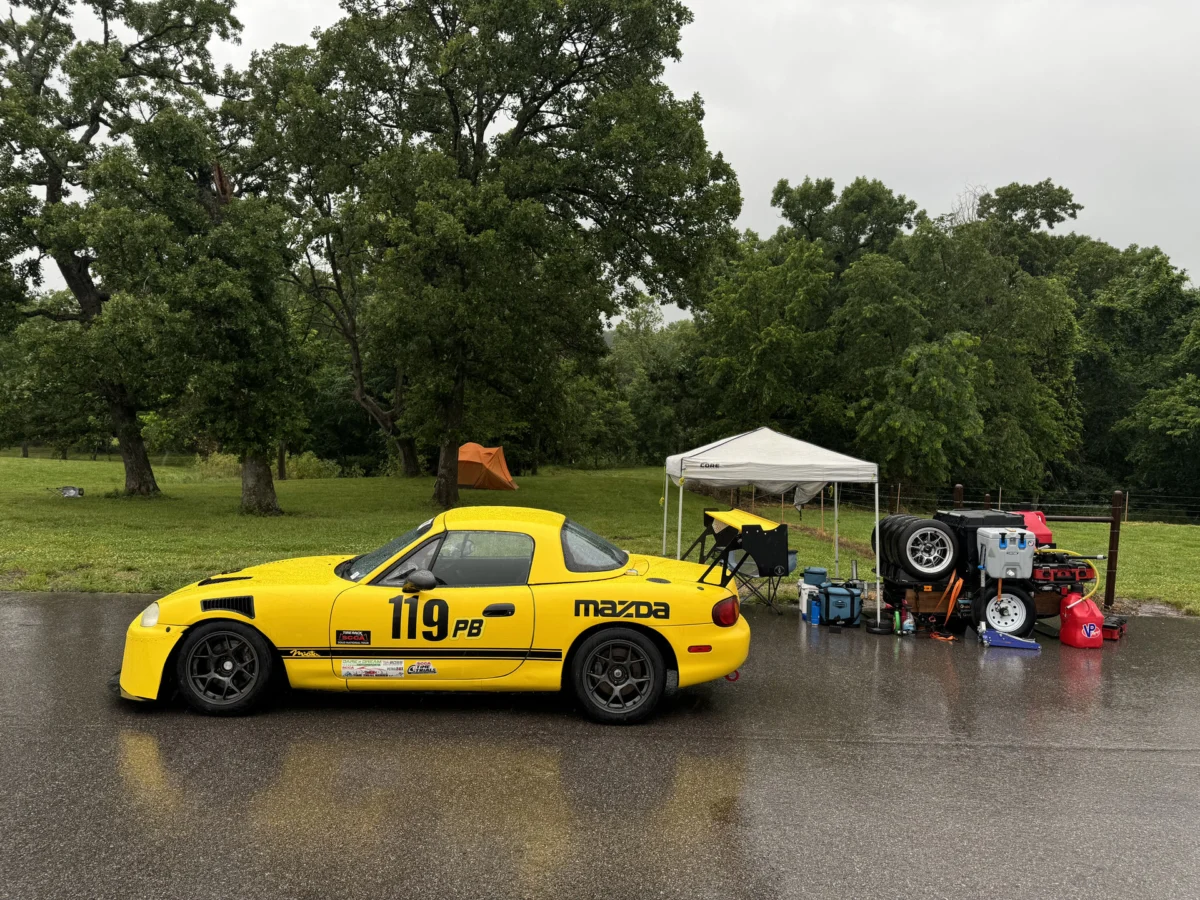
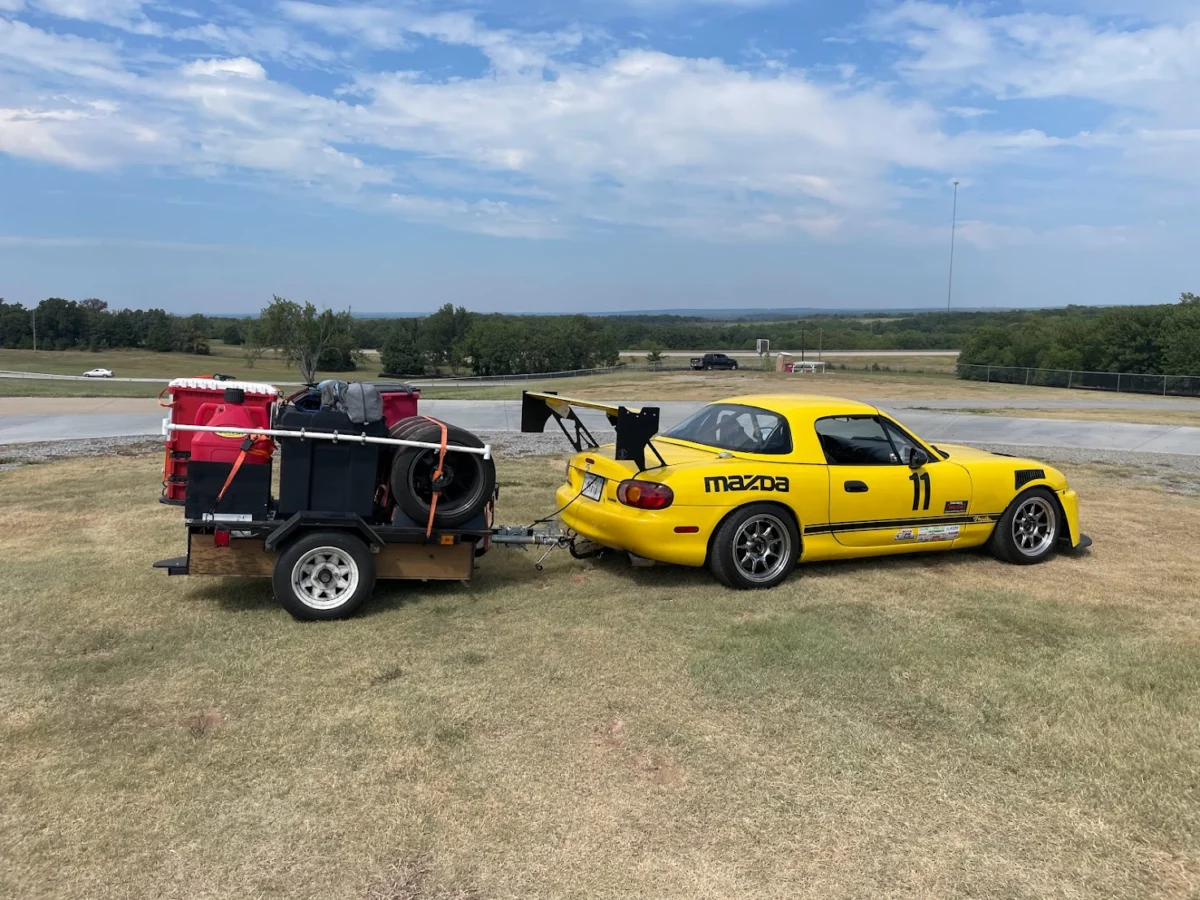
The twelve-month timeline commenced in March 2023 with strategic logistical enhancements centered around the custom-built tire trailer utilized for transport to regional venues. Recognizing the space constraints inherent to the compact chassis of the NB Miata, the operator engineered a lower deck extending just below the axle to optimize cargo capacity. Further updates included the integration of a single 15-gallon fuel jug to replace dual five-gallon containers, a dedicated under-trailer mounting system for a spare aerodynamic splitter, and a specialized cylindrical containment tube designed to transport variable-sized wing gurney flaps.
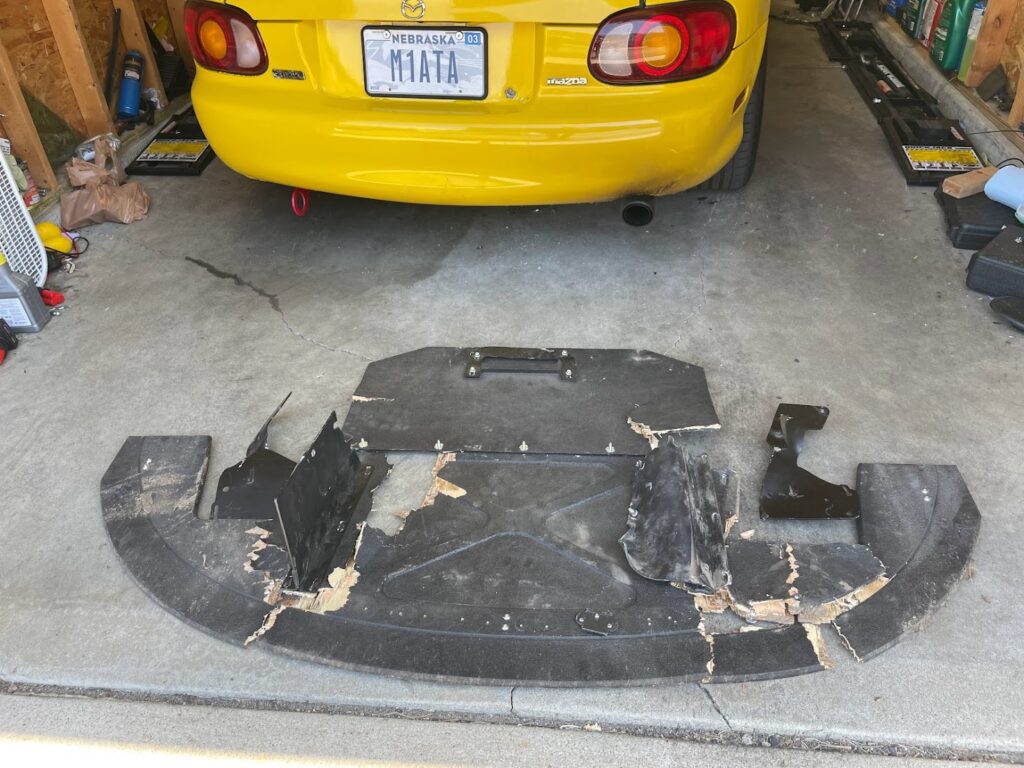
April brought immediate logistical and structural challenges following the winter installation of a Nine Lives Racing medium downforce aerodynamic package. During the initial high-speed lap of the opening track event, an off-course excursion in a high-speed corner resulted in severe structural damage, including a shattered front splitter, bent mounting brackets, and a compromised radiator support. Demonstrating the resilience required in competitive amateur racing, the team utilized a quick-turnaround strategy. By utilizing pre-fabricated spare mounts and rapidly constructing a replacement splitter from quarter-inch plywood, the vehicle successfully competed in a subsequent weekend autocross event. Subsequent track encounters with localized road hazards necessitated further durability testing, ultimately leading to the adoption of a half-inch plywood splitter reinforced with robust side supports capable of withstanding heavy scraping under dynamic compression.
Regional Circuit Participation and Venue Analysis
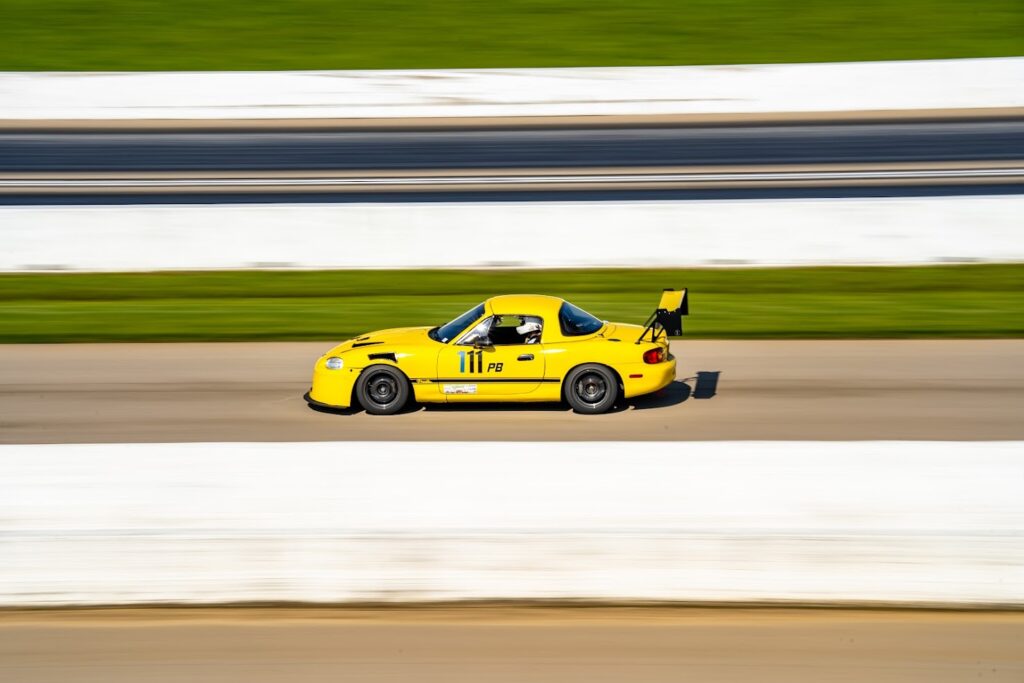
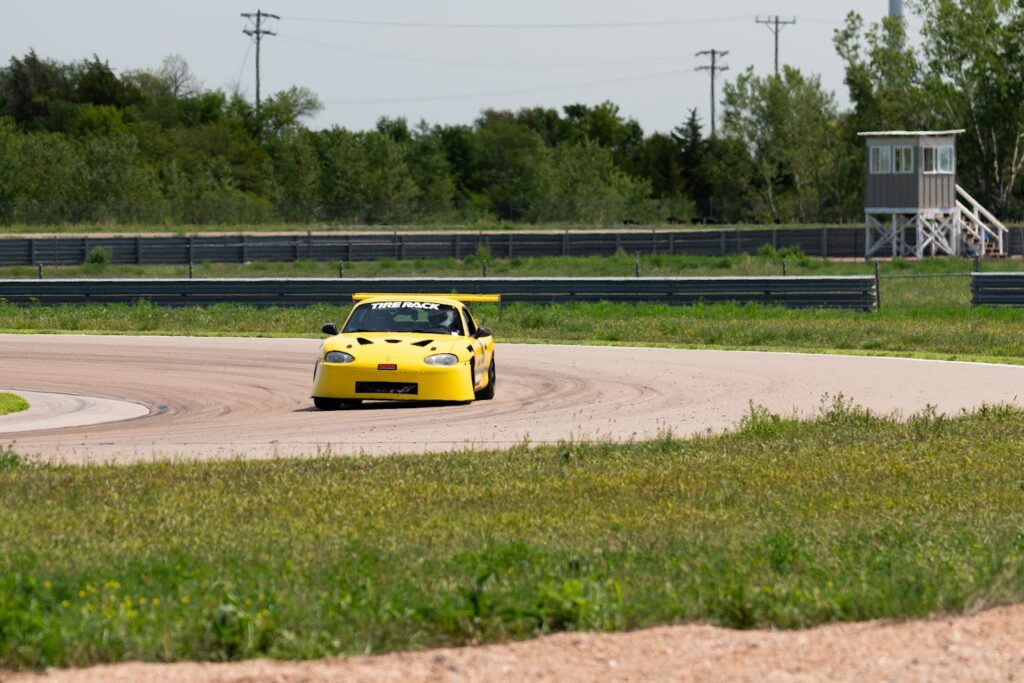
The competitive season progressed into May with participation in the Sports Car Club of America (SCCA Time Trials circuit at Heartland Motorsports Park. Competing on a newly adopted tire configuration consisting of Falken RT660 rubber (225/45R15) mounted on 15×9-inch wheels—an upgrade from the previous season’s Hankook RS4 compound—the vehicle demonstrated improved grip characteristics. However, this event carried broader historical significance for the regional racing community; Heartland Motorsports Park permanently ceased operations at the conclusion of the 2023 season following tax disputes, resulting in the complete auctioning of facility assets and leaving a notable void in the regional Midwestern motorsports infrastructure.
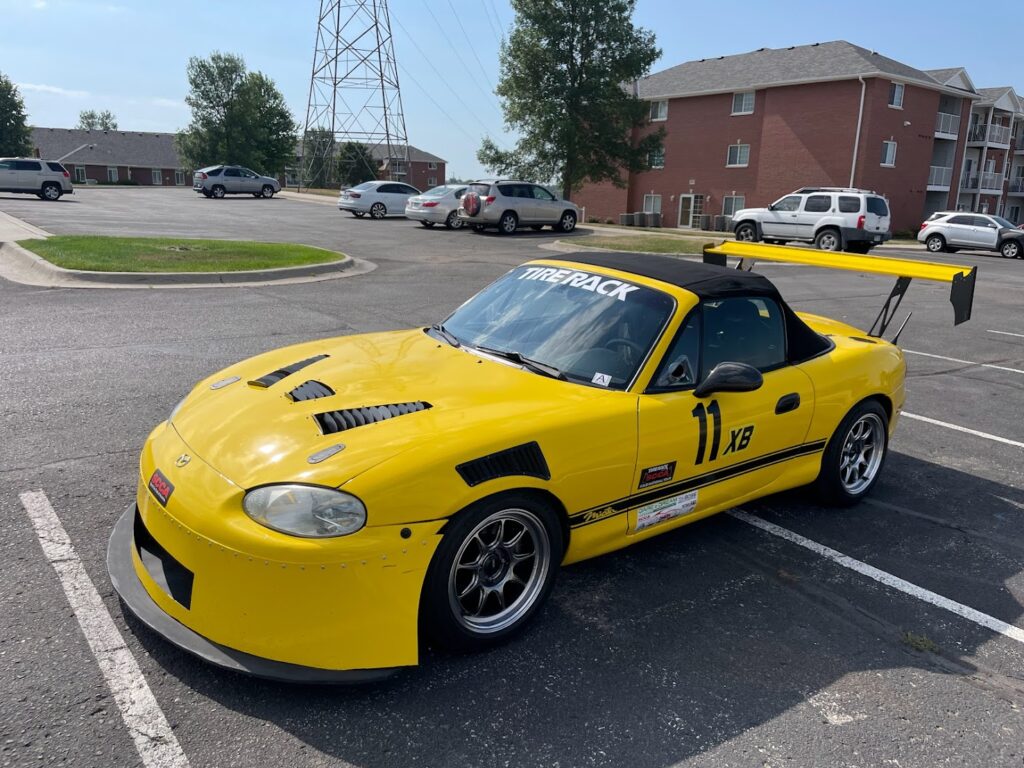
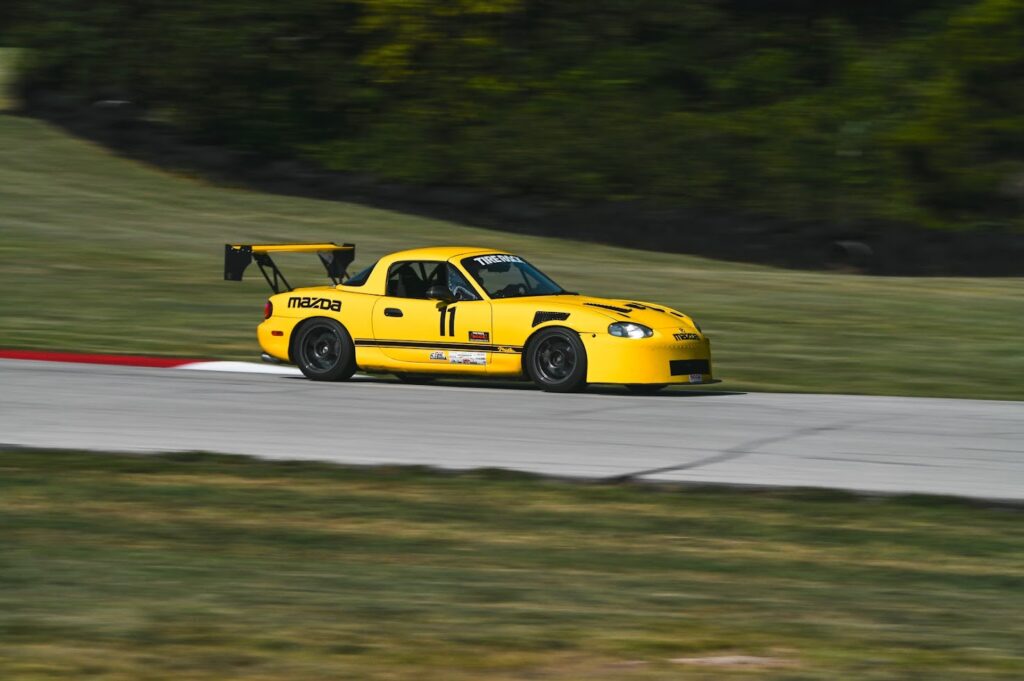
In June, telemetry and aerodynamic evaluations prompted the complete removal of the factory soft top. Empirical testing confirmed that the rear wing element operates with significantly higher aerodynamic efficiency when paired with a rigid hardtop configuration. Removing the soft top entirely not only maximized the functional output of the rear downforce package but also yielded a measurable reduction in vehicle weight while improving rear chassis access for routine fuel pump maintenance.
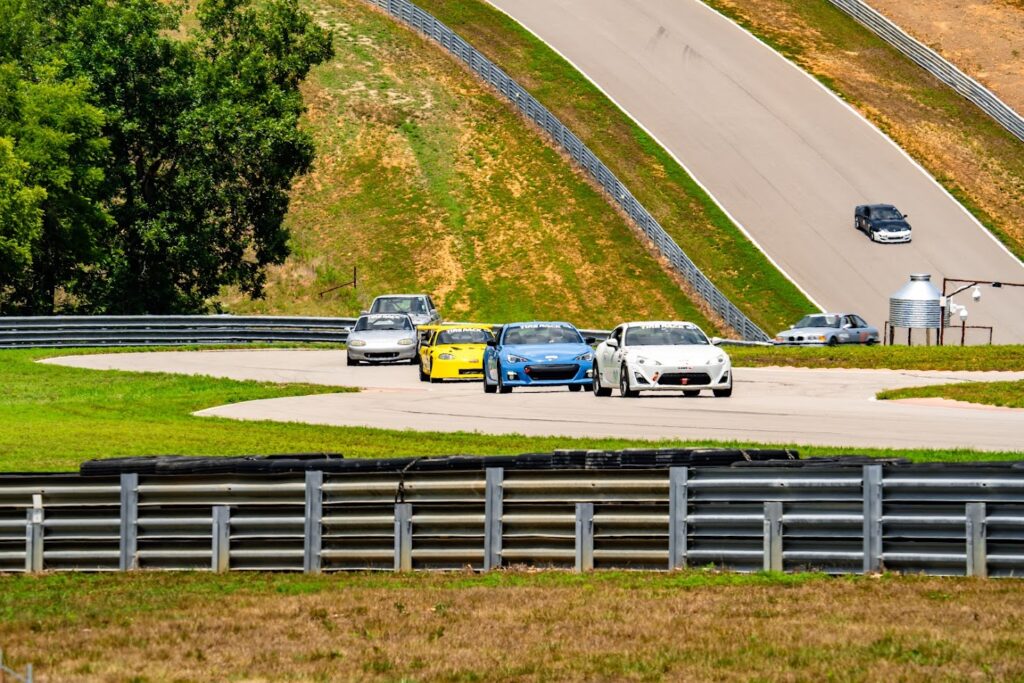
July introduced a new competitive venue: Ozarks International Raceway. Prior to the event, early indicators of clutch failure necessitated an expedited replacement. Lacking sufficient lead time to source a specialized performance clutch, a temporary, commercially available organic clutch was installed and broken in within a compressed timeline. Ozarks International Raceway presented unique technical demands, characterized by relentless elevation changes, high-frequency directional transitions, and proximate safety barriers that required a measured, progressive approach to lap-time reduction.
Technical Upgrades, Drivetrain Rework, and Weight Optimization
By August, the vehicle returned to Motorsports Park Hastings, where consistent testing yielded a competitive lap time of 1:42.78. When benchmarked against established regional records—such as NASA Spec Miata benchmarks—data analysis indicated substantial remaining potential, particularly through high-speed cornering optimization at turn three, the site of the vehicle’s earlier structural off-course incident. September brought participation in the "Miatas at Hallett" event at Hallett Motor Racing Circuit, paired with the integration of a Cool Shirt driver-cooling system. The circulation of chilled water through specialized undergarments proved vital in mitigating hyperthermia during high-ambient-temperature sessions, addressing safety compliance mandates regarding fully covered driver apparel.
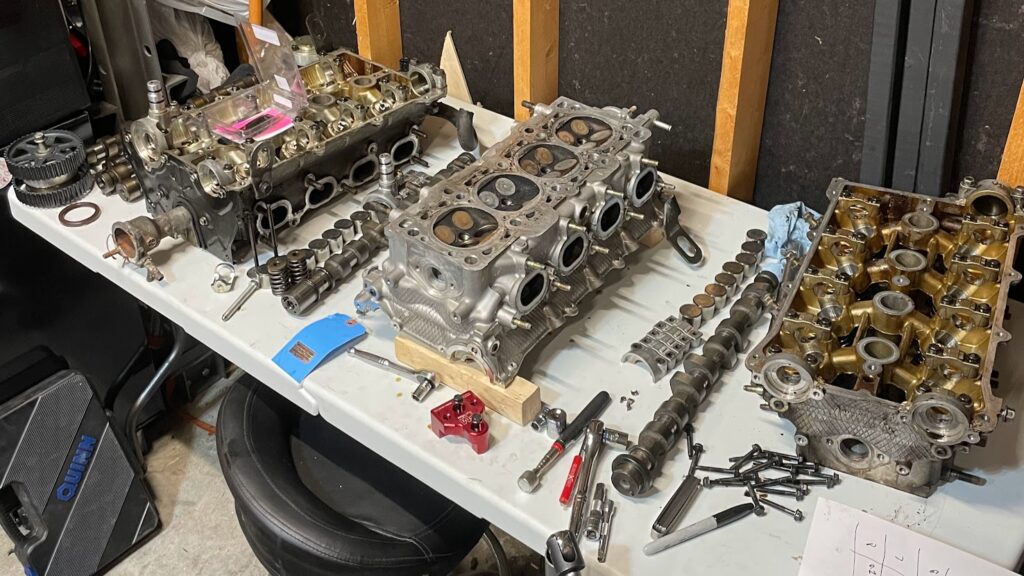
The autumn months marked a transition toward mechanical overhaul and off-season preparation. In October, an evaluation of accumulated spare powerplants—specifically two BP4W engines, one BP6D engine, and an extra BP6D cylinder head—began. The vehicle’s original factory BP4W engine, while modified with upgraded valve springs, an Exhintake cam swap, a coolant reroute, and a Boundary Engineering oil pump, displayed characteristic high-RPM oil consumption and exhaust smoke under engine braking. Consequently, a hybrid engine build commenced, utilizing a home-serviced BP4W bottom end paired with a professionally rebuilt BP6D cylinder head and updated BP6D pistons.
Off-Season Weight Reduction and Ergonomic Enhancements
November concluded the active competition calendar with a final local autocross event, bringing the annual total to 15 track days and 15 autocross events—a marked increase over previous operational metrics. Tire endurance data collected across the season revealed exceptional longevity from compounds such as the Bridgestone RE71-RS and Falken RT660, establishing a baseline for comparative analysis against prospective high-performance compounds for the upcoming year.
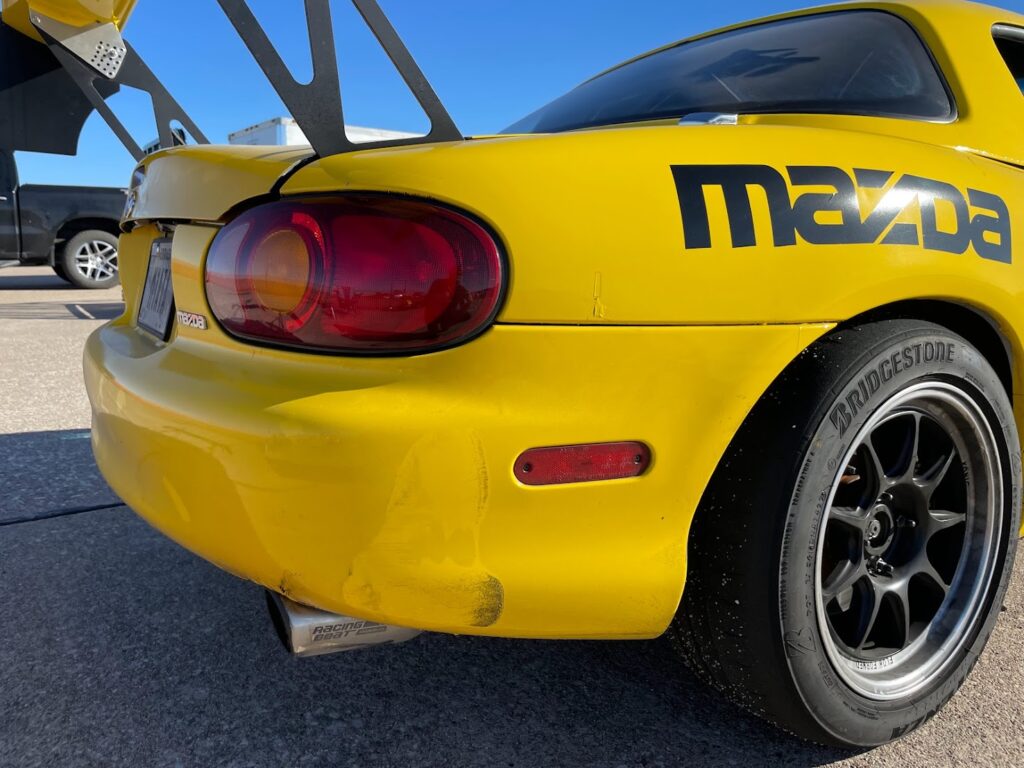
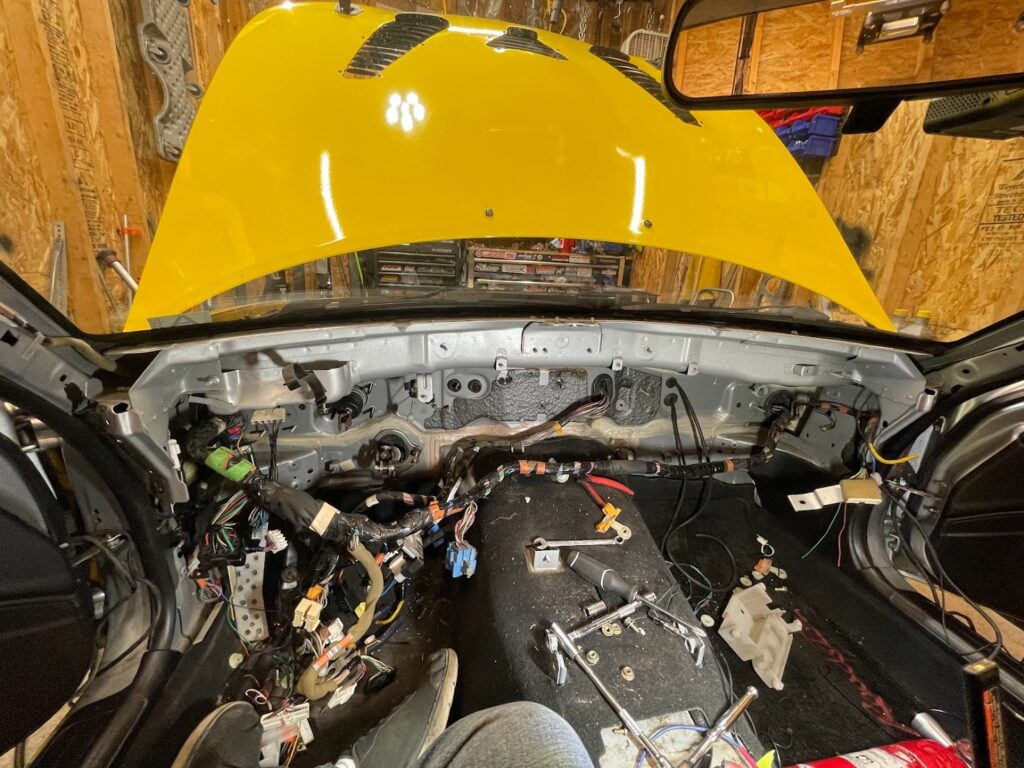
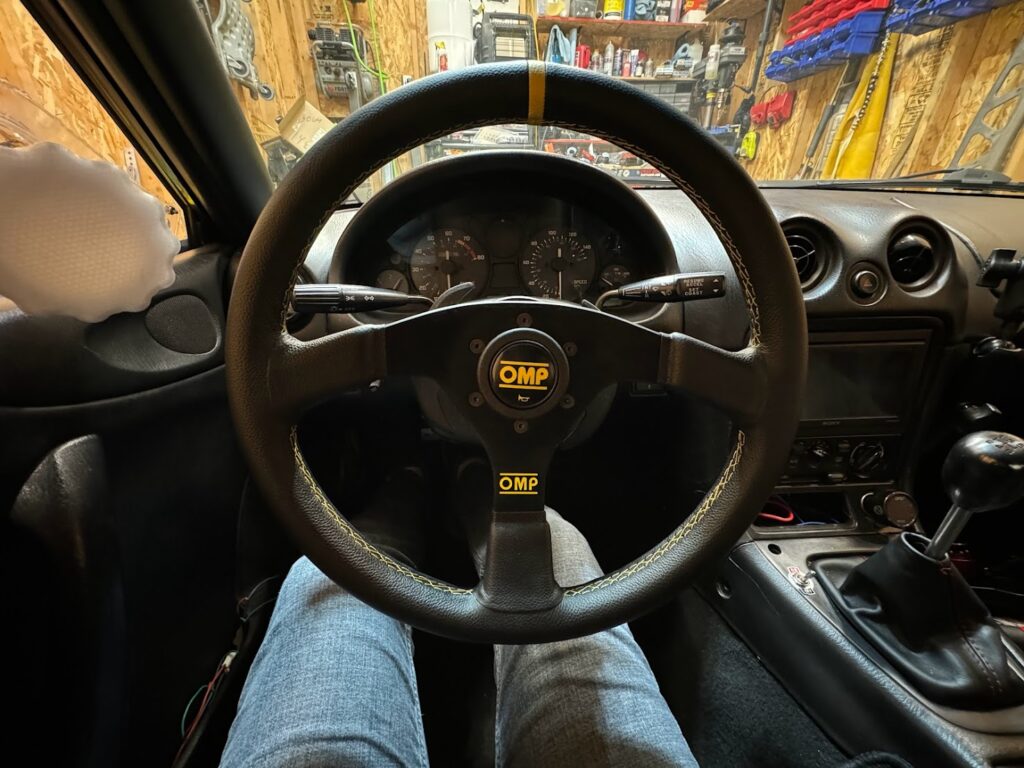
During December and January, focus shifted to chassis preparation and weight-reduction initiatives designed to improve competitiveness within the vehicle’s specific Time Trials class power-to-weight bracket. By executing targeted interior simplifications, wiring harness consolidations, and component removals, approximately 50 pounds of static mass were eliminated from the chassis. This was complemented in January by the installation of a quick-release OMP steering wheel (330mm diameter), which improved driver ingress and egress, optimized footwell accessibility during maintenance, and marginally reduced steering system weight without power-steering assist complications.
In February, the Cool Shirt cooling system underwent a permanent mechanical relocation. Previously secured via temporary strap methods to the passenger seat—thereby restricting passenger capacity—the cooler was permanently integrated into the vehicle’s trunk via a custom-fabricated, lightweight aluminum angle bracket secured with structural joining techniques.
Broader Implications and Future Outlook
The third year of NB Miata ownership underscores the intricate balance between logistical preparation, mechanical maintenance, and iterative performance tuning required in modern amateur road racing. By engaging across five distinct state venues, expanding track-day frequency, and systematically addressing structural, thermal, and weight-related inefficiencies, the campaign has achieved a high state of mechanical readiness. While naturally aspirated power limitations continue to define the vehicle’s classification boundaries, ongoing data collection, tire testing, and preventative engine rebuilding position the platform for sustained competitiveness in future regional time trials and autocross competition.