Cecilia Chamidah Nur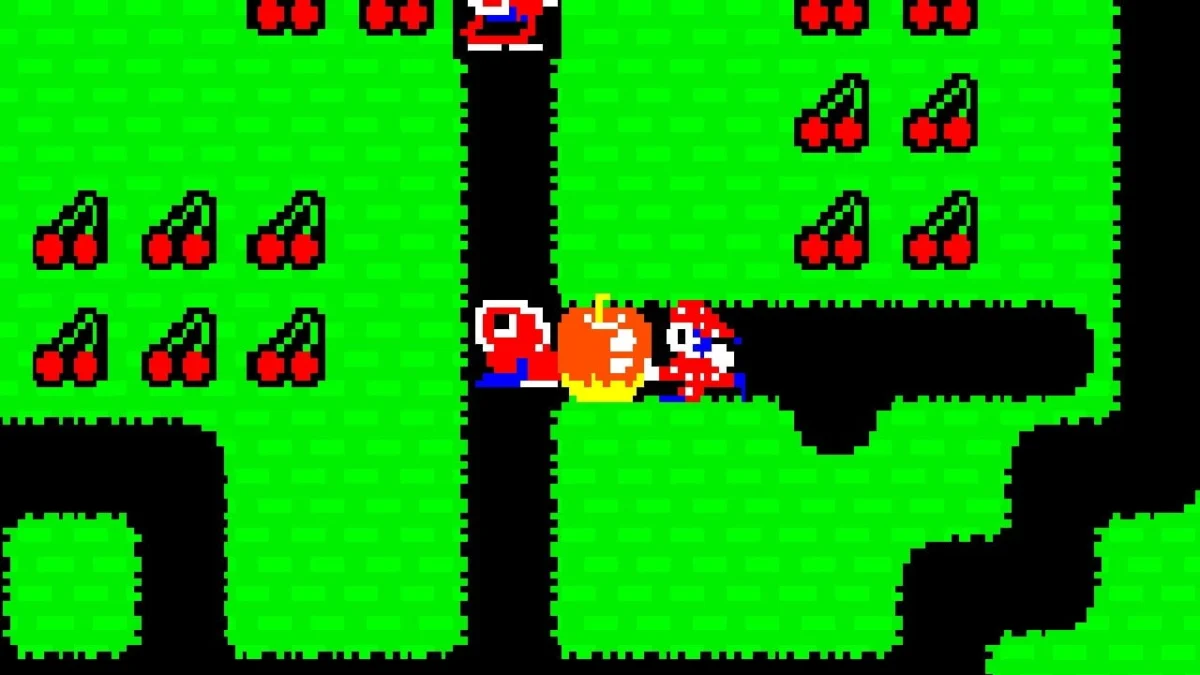
Hamster, the renowned publisher dedicated to preserving classic video games, has officially announced the upcoming release of Universal’s beloved tunnel-digging arcade maze game, Mr. Do!, across a broad spectrum of contemporary gaming systems. This eagerly anticipated re-release will arrive on Nintendo Switch, the forthcoming Switch 2, PlayStation 4, PlayStation 5, and Xbox Series X|S, integrated into the celebrated Arcade Archives and Arcade Archives 2 series of retro reissues. This move underscores Hamster’s ongoing commitment to bringing pivotal titles from arcade history to new generations of players, while also offering seasoned enthusiasts the chance to revisit these classics with enhanced features.
The announcement positions Mr. Do! as a cornerstone of Hamster’s May 2026 lineup, with a release date slated for Friday, May 15th, 2026, as confirmed by the official Arcade Archives website. Pricing for the title will follow Hamster’s established tiered structure: $7.99 for the standard Arcade Archives version available on PS4 and Switch, and $9.99 for the Arcade Archives 2 edition, which will cater to the latest generation consoles, including PS5, Switch 2, and Xbox Series X|S. The Arcade Archives 2 releases are typically distinguished by a richer selection of gameplay modes, often featuring an exclusive "TIME ATTACK MODE" designed to challenge players’ speed and precision, alongside other potential enhancements that leverage the superior processing capabilities of current-gen hardware.
A Deep Dive into the Legacy of Mr. Do!
Originally making its debut in 1982, Mr. Do! quickly carved out a niche for itself in the highly competitive arcade landscape of the early 1980s. It stands as the second significant title from developer Kazutoshi Ueda, following his 1981 release, Lady Bug, a game that itself drew inspiration from Namco’s groundbreaking Pac-Man. The creative genesis of Mr. Do! is particularly intriguing, as it was directly influenced by another Namco blockbuster from 1982, Dig Dug. This influence was not accidental but rather a direct directive from Universal’s then-president, Kazuo Okada, who encouraged Ueda to craft his next game with Dig Dug firmly in mind. This strategic decision highlights the intense rivalry and cross-pollination of ideas prevalent among arcade game developers during that golden era, where innovation often sprang from iterating upon successful concepts.
The gameplay of Mr. Do! offers a distinctive blend of maze navigation, strategic digging, and action-oriented combat. Players assume control of a charismatic character, depicted as a colorful clown in most international versions, or as a charming snowman in the original Japanese arcade release. The primary objective is deceptively simple: collect all the cherries or fruit scattered across the game screen. This task, however, is complicated by the constant pursuit of dinosaur-like antagonists known as Creeps. These enemies, relentless in their pursuit, force players to think on their feet and utilize the environment to their advantage.
Players have several defensive options at their disposal. The most iconic method involves strategically digging tunnels beneath large, round apples and then pushing them onto the heads of the pursuing Creeps, crushing them instantly. This mechanic introduced a unique element of environmental puzzle-solving to the action genre. Additionally, players possess a single "Power Ball" that can be thrown to temporarily clear the board of enemies, providing a crucial reprieve in desperate situations. Once used, the Power Ball can only be retrieved after a new one appears, adding a layer of resource management to the frantic gameplay. This combination of digging, collecting, and combat, set within a vibrant, ever-changing maze, ensured Mr. Do!’s enduring appeal.
The Evolution and Proliferation of a Classic
Over the decades, the popularity of Mr. Do! led to its widespread porting and re-release across an impressive array of home computing and console platforms. Its journey from the arcade cabinet to the living room began with early home systems such as the ColecoVision and the Atari 2600, demonstrating its adaptability to vastly different hardware architectures. As technology progressed, Mr. Do! found its way onto 8-bit computers like the Apple II and Commodore 64, further expanding its reach. Later, it graced 16-bit consoles like the Super Nintendo Entertainment System (SNES) and even handheld devices such as the original Nintendo Game Boy, proving its timeless design could transcend technological generations. Each port often brought minor variations or graphical adjustments to suit the target platform, but the core gameplay remained intact, a testament to its robust design.
The success of the original game naturally led to a franchise, with Mr. Do! spawning three official sequels that further explored and expanded upon its unique mechanics. Mr. Do’s Castle introduced a more vertical, platforming-centric gameplay style within a castle setting. Mr. Do’s Wild Ride shifted the focus to a roller coaster-themed environment, emphasizing speed and timing. Finally, Do! Run Run returned to a more traditional maze-like structure but incorporated new challenges and enemy types. Beyond these direct sequels, the franchise also saw various remakes and reimaginings, notably for platforms such as the Neo Geo MVS, which offered updated graphics and sound while striving to retain the essence of the original’s charm.
In the contemporary digital landscape, Mr. Do! has already made an appearance on streaming platforms dedicated to retro gaming. A version of the arcade game is currently available for streaming on Antstream Arcade, a service accessible across Windows, Xbox, PlayStation, iOS, and Android devices. While Antstream offers broad accessibility, Hamster’s upcoming reissue is poised to deliver a more definitive and feature-rich experience for dedicated collectors and enthusiasts. This new release is confirmed to contain "the two widely played versions" of the game, appealing to those familiar with its international iterations, as well as the "rare ‘OLDEST version’" which famously features the snowman character design. This inclusion is a significant draw for historical purists. Furthermore, the Hamster release will include standard bonus modes, such as score challenges and online leaderboards, alongside customizable CRT filters that simulate the authentic visual aesthetic of vintage arcade monitors, providing a deeply nostalgic experience.
Hamster’s Console Archives Unearths Master of Monsters: Disciples of Gaia
In addition to the highly anticipated release of Mr. Do!, Hamster has also revealed another significant addition to its Console Archives series: System Soft & Toshiba-EMI’s Sony PlayStation anime-themed strategy game, Master of Monsters: Disciples of Gaia. This title marks another effort by Hamster to bring historically important, though perhaps lesser-known, Japanese console games to a wider modern audience.
Master of Monsters: Disciples of Gaia is slated for release on the PlayStation 5 on May 14th, 2026, followed by its debut on the Nintendo Switch 2 on May 15th, 2026. Originally launched in Japan in 1997, this tactical role-playing game garnered a dedicated following for its intricate strategy and distinctive anime art style. It later saw limited publication in parts of Europe by Agetec Europe and in North America by ASCII in 1998, introducing the Master of Monsters series to Western audiences.
However, a crucial detail for Western players is that the version Hamster is releasing appears to be the unlocalised Japanese original. This means that, regrettably, only the main menu and associated digital manuals will be available in English, with the vast majority of the in-game text, dialogue, and story elements remaining in Japanese. This decision presents a significant barrier for non-Japanese speaking players, limiting full comprehension of the game’s narrative and strategic nuances. The original localized versions published by ASCII and Agetec included full English translations of the in-game text, making them accessible to a broader international audience. The absence of these translated scripts in Hamster’s re-release suggests potential challenges in acquiring the rights to those specific localized versions or a strategic decision to preserve the game in its original, untouched Japanese form.
Priced at $11.99, Master of Monsters: Disciples of Gaia aims to cater to fans of classic turn-based strategy and those interested in the history of Japanese console gaming. Hamster provided an official synopsis, offering a glimpse into the game’s premise:
"With the help of the master to defeat the evil ruler Gaia! Master of Monsters: Disciples of Gaia was released by TOSHIBA-EMI in 1997 for a 32-bit home console. This is a simulation war game where Iros, a boy granted power from the heavens, embarks on a journey with the goal of defeating Gaia. With the help of Master, who can freely control monster armies, summon monsters from another world, defeat your enemies, and raise your own monsters."
This synopsis highlights the game’s core elements: a grand fantasy narrative, a young protagonist named Iros, and the strategic deployment and raising of monster armies under the guidance of a powerful "Master." The Master of Monsters series, developed by System Soft, has a long history, dating back to 1988 on Japanese home computers. It is known for its deep tactical gameplay, hexagonal battlefields, and a rich roster of summonable creatures, influencing many subsequent strategy titles. Disciples of Gaia, as part of this lineage, represents a significant entry from the PlayStation era, known for its visual enhancements and expanded strategic depth compared to its predecessors.
The Broader Impact of Hamster’s Archival Efforts
Hamster’s Arcade Archives and Console Archives initiatives play a vital role in the broader landscape of video game preservation. In an era where digital content can easily become inaccessible, these officially licensed re-releases ensure that historically significant titles remain playable and available on modern hardware. The company’s meticulous approach, often involving the faithful emulation of original arcade ROMs and precise console code, ensures an authentic experience for players. The addition of features like save states, customizable controls, and various display options allows for both a nostalgic trip and a more convenient modern playthrough.
The dual announcement of Mr. Do! and Master of Monsters: Disciples of Gaia illustrates Hamster’s diverse strategy. On one hand, Mr. Do! represents a universally recognized arcade classic, instantly appealing to a broad audience and benefiting from multi-platform distribution. Its inclusion of multiple historical versions further caters to a dedicated segment of retro enthusiasts who value historical accuracy and completeness. On the other hand, Master of Monsters: Disciples of Gaia caters to a more niche, yet equally passionate, audience interested in deeper Japanese console cuts. While the lack of full English localization for Disciples of Gaia is a point of contention and a significant barrier for many, it also sparks discussions within the retro gaming community about the challenges and compromises inherent in game preservation, particularly concerning regional differences and intellectual property rights for translated scripts.
The continued expansion of both the Arcade Archives and Console Archives series reflects a robust and growing market for classic games. As the gaming industry matures, there is an increasing appreciation for its rich history, and companies like Hamster are at the forefront of making that history accessible. These releases not only provide entertainment but also serve as educational tools, allowing players to experience the foundational titles that shaped modern game design. The commitment to multi-platform availability, including the next generation of consoles like the Switch 2, further solidifies the long-term viability and importance of these archival efforts in the digital age.