Chalid Lutfie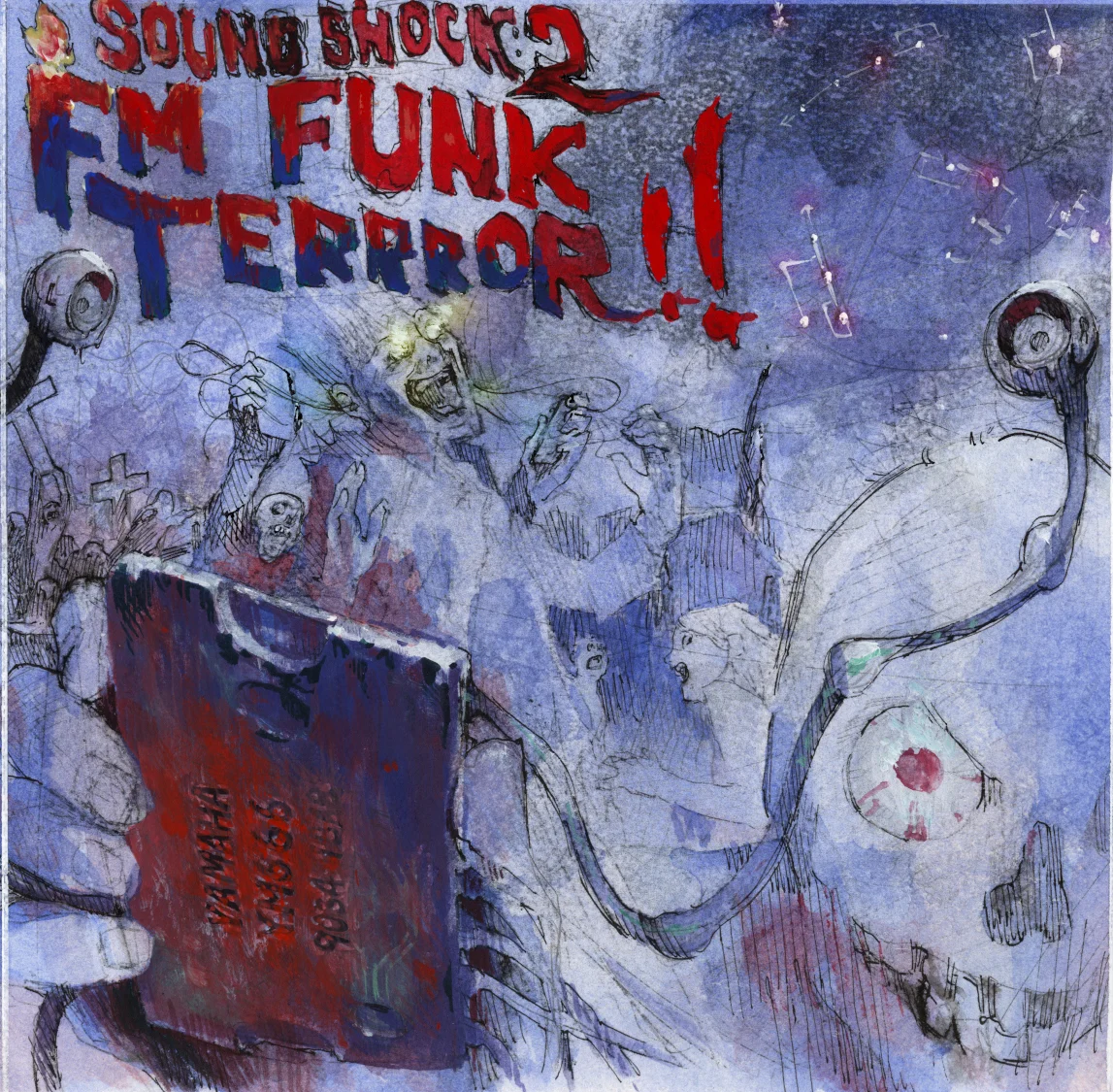
The digital music collective and production team behind the SOUNDSHOCK series has released a comprehensive retrospective detailing the visual evolution of its acclaimed trilogy, highlighting the hand-painted contributions of artist Tsuyoshi Shimokura. Published on April 15, 2017, the report provides a rare glimpse into the intersection of retro-gaming aesthetics, FM synthesis technology, and traditional manga illustration techniques. This retrospective, curated by the series organizer known as zinger, documents the creative trajectory from the project’s inception to its final installment, SOUNDSHOCK 3: FM FUNK NIRVANA!!, while offering an analysis of the thematic depth embedded within the series’ iconography.
The SOUNDSHOCK series emerged as a dedicated homage to Frequency Modulation (FM) synthesis—a method of sound synthesis that defined the auditory landscape of 1980s and early 1990s arcade and home console gaming. By pairing this specific musical niche with high-concept visual art, the project sought to create a multi-sensory experience that bridged the gap between vintage hardware and contemporary composition. The partnership between zinger and Shimokura, facilitated by the artist hex125, transformed the series from a standard compilation into a cohesive narrative work, utilizing Shimokura’s background in professional manga to personify the technical specifications of FM sound chips.
The Genesis of a Visual Identity
The collaboration began during the production of the first volume, SOUNDSHOCK: FM FUNK MADDNESS!!. Originally invited to contribute a musical track, Shimokura’s secondary portfolio of visual art prompted a shift in his role within the project. His deep-seated interest in computer history, gaming culture, and FM synthesis hardware provided a foundational synergy with the project’s goals. According to archival notes, Shimokura’s professional background allowed him to translate complex technical concepts—such as operator algorithms and signal paths—into vibrant, action-oriented illustrations.
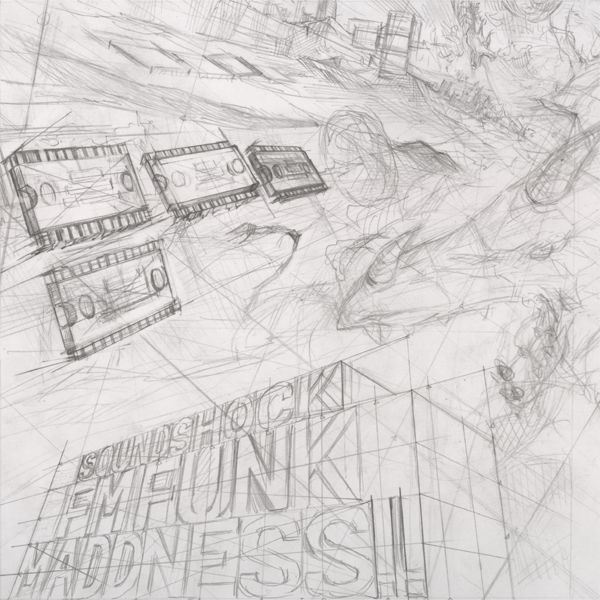
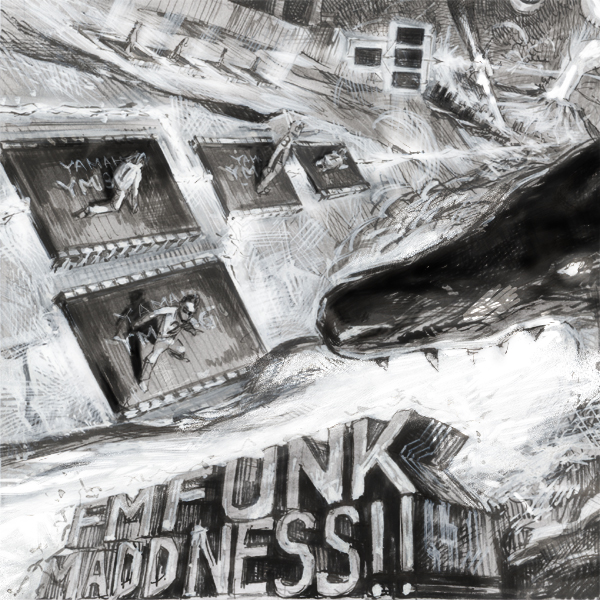
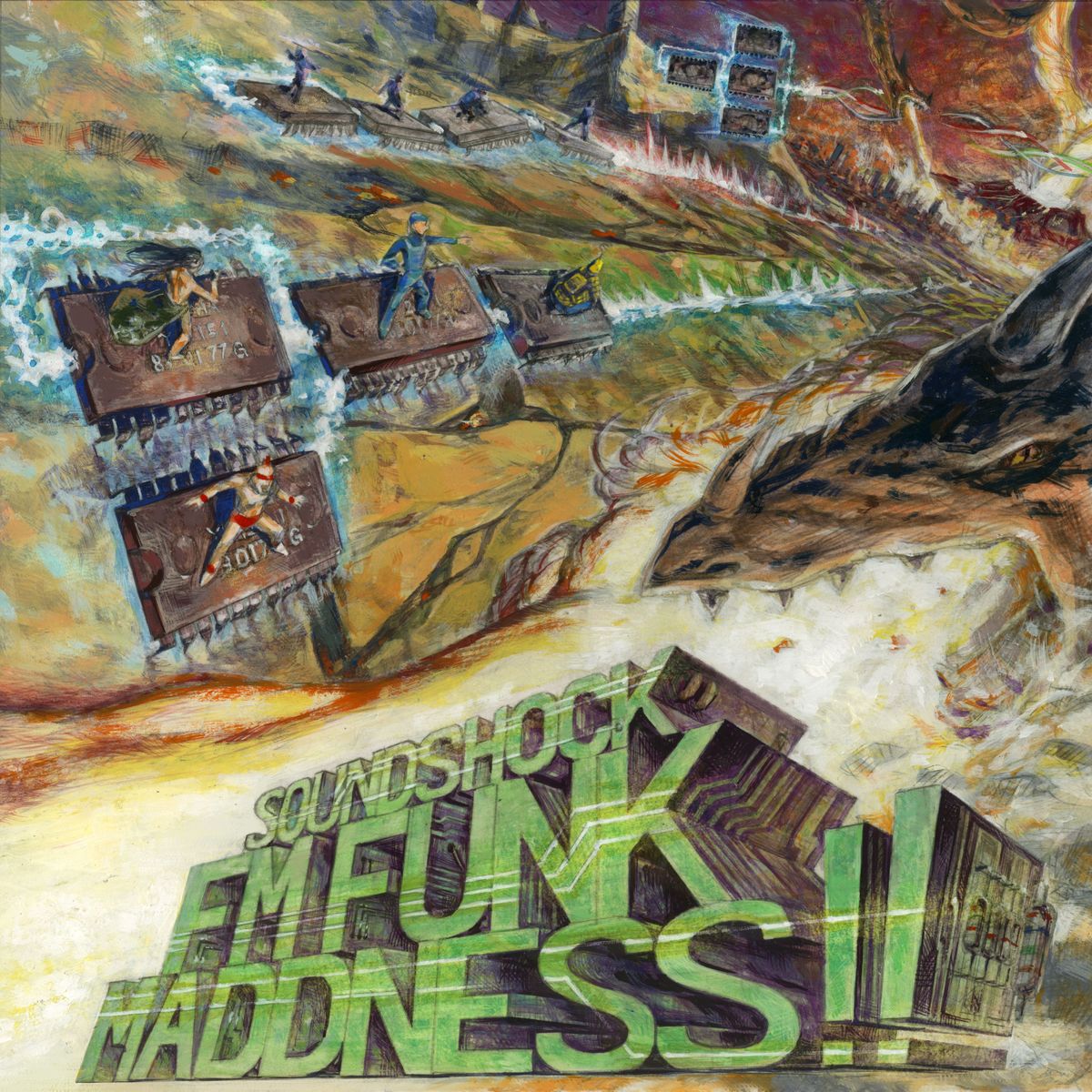
For the inaugural release, the creative direction drew heavy inspiration from the flyer and cabinet art of classic arcade titles, specifically Taito’s Metal Black and Darius II. These games were notable for their "biomechanical" aesthetics, a theme Shimokura adopted for the album cover. The resulting artwork depicted a group of musicians utilizing the "power of FM" to combat monstrous entities. A key technical detail in this piece was the depiction of FM chips (integrated circuits) as sentient, caterpillar-like tanks. The legs of these chips were arranged to mirror algorithm charts, the mathematical diagrams used by sound designers to program FM patches. This literal interpretation of hardware as a weapon of creativity established the series’ signature style: a blend of shonen manga energy and technical reverence.
Chronology of the SOUNDSHOCK Trilogy
The progression of the series followed a deliberate escalation in both musical intensity and visual complexity. This chronology reflects a three-year journey through different genres of retro-futurism and pop culture tropes.
SOUNDSHOCK: FM FUNK MADDNESS!! (The Foundation)
Released as the series debut, this volume focused on the "heroic" aspect of sound design. The visual narrative centered on the unity of artists and their machines. The intentional misspelling of "MADDNESS" with an extra "D" was the first instance of what would become a series trademark: linguistic "overloading" to signify increased power and energy.
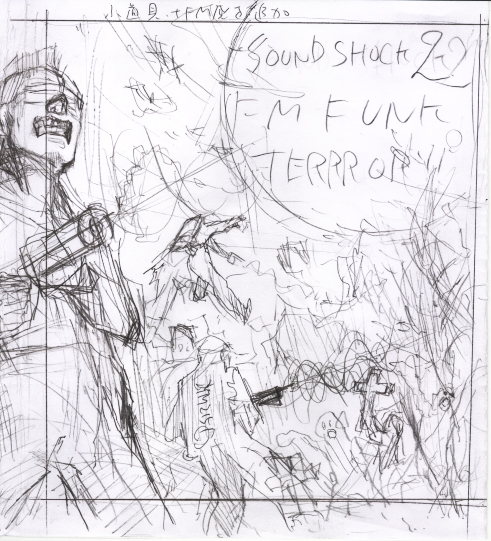
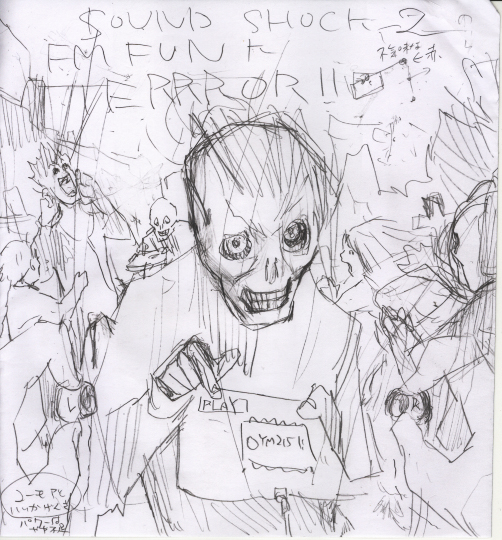
SOUNDSHOCK 2: FM FUNK TERRROR!! (The Horror Shift)
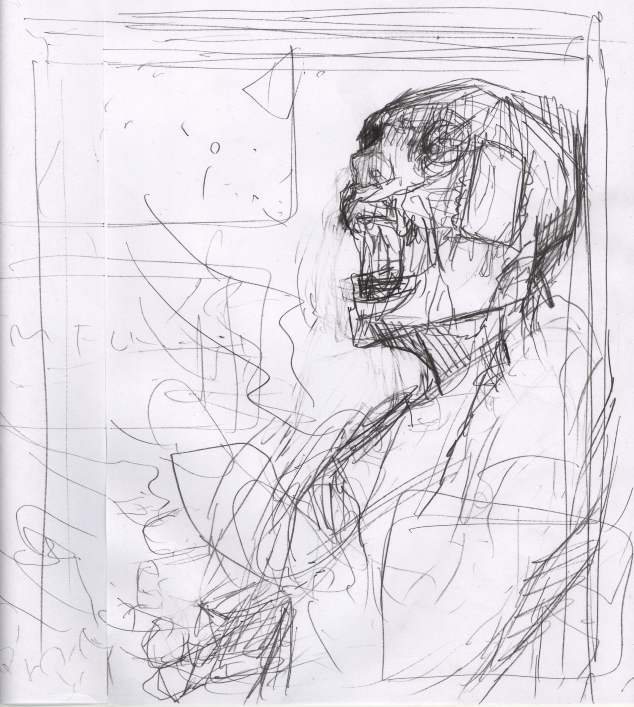
The second installment transitioned into the realm of 1980s horror. Drawing from cinematic influences such as A Nightmare on Elm Street and The Evil Dead, as well as Namco’s Splatterhouse video game series, the artwork took on a darker, more chaotic tone. Shimokura’s illustrations for this volume included a "ghoul" character holding a tombstone-shaped portable media player labeled "YM666"—a play on the Yamaha YM-series chips (such as the YM2612 found in the Sega Genesis) and the "Number of the Beast."
The thematic lore developed for this album suggested that the FM sound possessed a "magical power" capable of enthralling and conscripting humanity. The stars in the background of the cover were meticulously arranged to form FM algorithm constellations, further cementing the link between the celestial and the technical.
SOUNDSHOCK 3: FM FUNK NIRVANA!! (The Spiritual Conclusion)
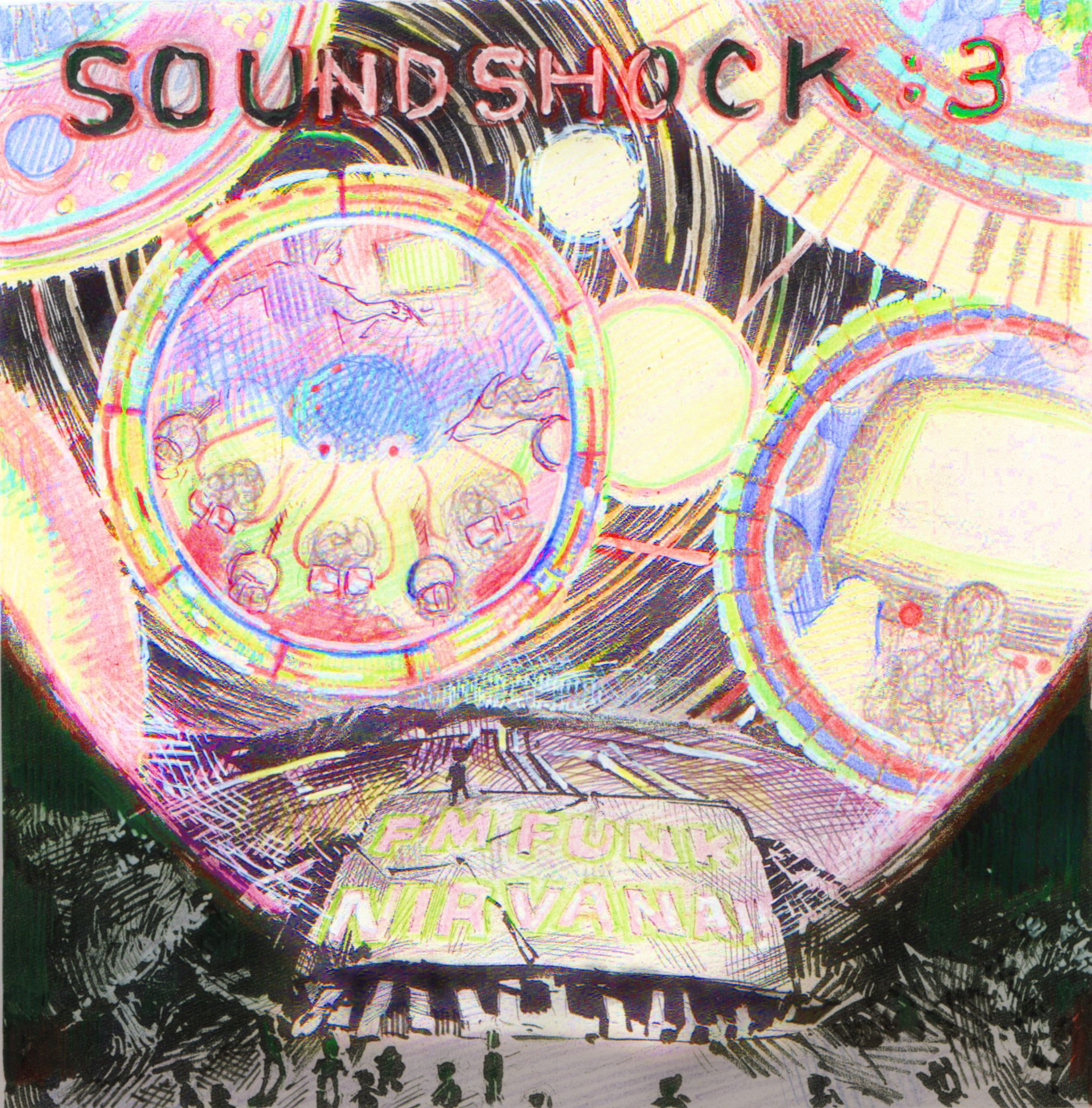
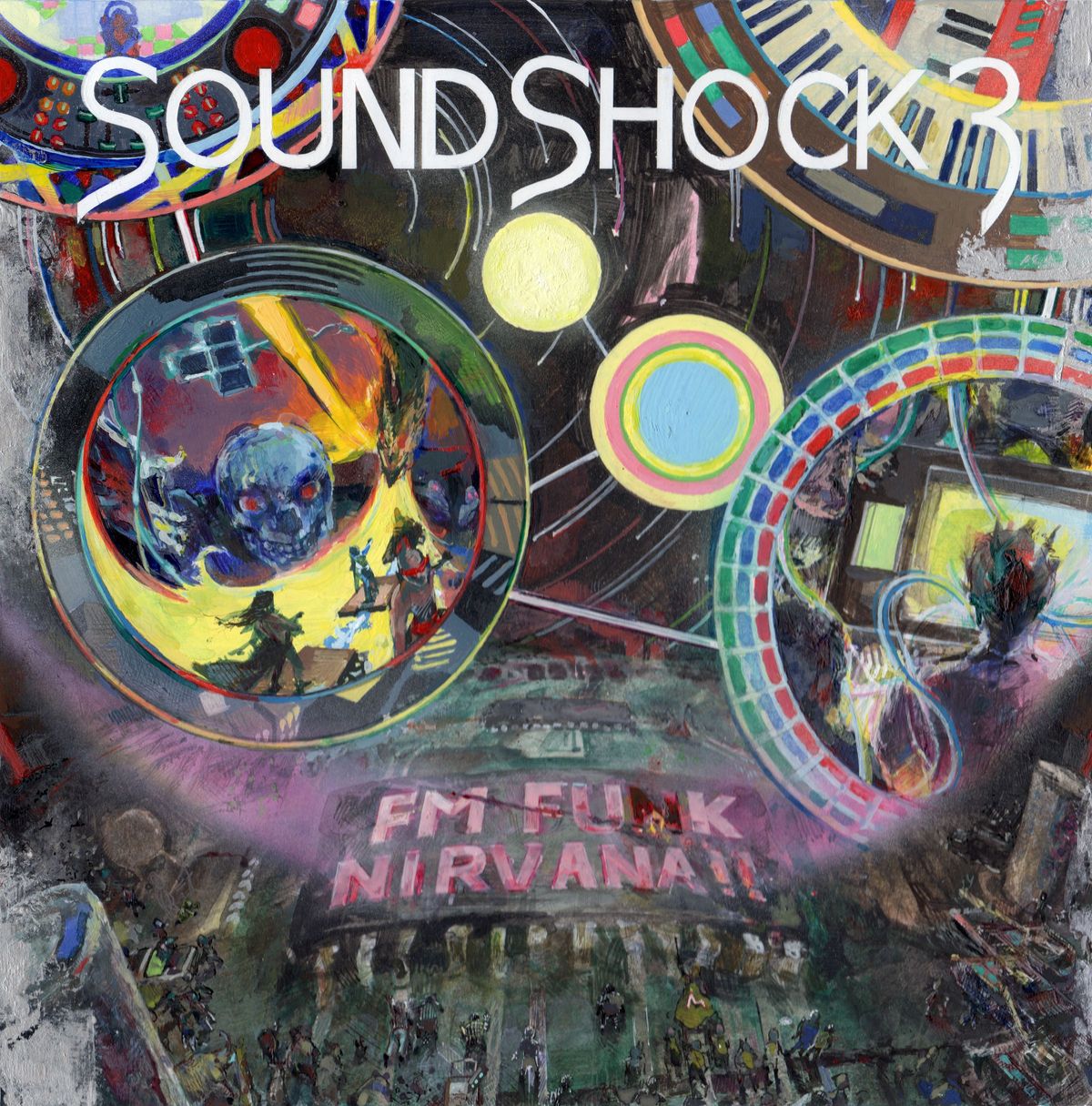
The final volume represented the ultimate peak of the series. Abandoning the trend of adding extra letters to the title, the producers chose the word "NIRVANA" to signify a state of perfection and completion. The visual theme shifted from horror to Buddhist-inspired cosmicism. Influenced by the soundtrack art of Darius Gaiden, Shimokura created a "mandala" of FM elements.
The composition features a vast congregation of disciples worshipping a monolithic FM chip mounted on a circuit board. Above them, a series of spheres containing various elements forms a map of the universe. This imagery served as a metaphor for the series’ end: the "death" of the project not as a cessation, but as an ascension into a permanent spiritual legacy.
Technical Context: The Role of FM Synthesis
To understand the significance of the SOUNDSHOCK visuals, one must consider the hardware they celebrate. FM synthesis, popularized by the Yamaha DX7 synthesizer and various sound chips used in 1980s computers and arcade boards, relies on "operators" (oscillators) modulating one another in specific configurations called algorithms.
Unlike modern sample-based synthesis, FM synthesis is purely mathematical, often resulting in "metallic," "glassy," or "aggressive" textures. The SOUNDSHOCK artwork frequently references these technical realities. For example, the recurring motif of "algorithm charts" in Shimokura’s art is a direct nod to the Yamaha YM2151 and YM2612 chips. By personifying these charts as monsters or constellations, the series transformed abstract engineering into a tangible mythology for fans of the "chiptune" and "retrowave" movements.
Official Responses and Artistic Philosophy
In a concluding message included in the retrospective, Tsuyoshi Shimokura addressed the cessation of the series. His statement emphasized a cyclical view of creativity, suggesting that the end of SOUNDSHOCK serves as a "seed" for future artists.
"Supposing SOUNDSHOCK really has struck a chord in its listeners’ hearts, then our work could be thought of as a seed for future stars that have yet to be born," Shimokura stated. He further characterized the community of FM sound enthusiasts as a lineage, where current creators are the "progeny" of their forerunners and will eventually become the "spiritual offshoots" for the next generation. This philosophy explains the transition of the final album’s art from the "terror" of the second volume to the "enlightenment" of the third.
Zinger, the series producer, reflected on the collaborative process, noting that the relationship was built on a mutual respect for "small-scale game centers" and the culture of Osaka’s retro gaming scene. This cultural grounding ensured that the series remained authentic to its roots, avoiding the superficiality often associated with modern "retro" branding.
Broader Impact and Implications for the Independent Music Scene
The SOUNDSHOCK retrospective highlights a growing trend in independent and "netlabel" music circles: the elevation of album art from mere packaging to a vital component of the world-building process. In an era where digital streaming often reduces album covers to small thumbnails, the SOUNDSHOCK series insisted on high-fidelity, hand-painted artwork that demanded closer inspection.
The implications of this project extend into several areas:
- Preservation of Aesthetic History: By utilizing 80s arcade flyer styles and horror movie tropes, the series acts as a curated archive of late-20th-century visual vernacular.
- Technological Humanization: The series successfully "humanized" complex digital technology. By turning silicon chips into objects of worship or characters in a story, it made the history of sound engineering accessible to a broader audience.
- Community Cohesion: The project fostered a niche but dedicated international community. The fact that the title for the third volume was inspired by a YouTube comment from a fan demonstrates the high level of engagement between the producers and their audience.
As the SOUNDSHOCK series concludes, its legacy remains documented not only in its 4-operator and 6-operator FM compositions but also in the intricate mandalas and algorithm monsters of Tsuyoshi Shimokura. The retrospective serves as a final "algorithm chart" for the series, mapping out the creative signals and modulations that defined a unique era in the modern appreciation of vintage sound. The producers have indicated that while this specific series has reached its "Nirvana," the influence of its visual and auditory experiments will likely resonate in future projects within the global chiptune and electronic music landscapes.