Cecilia Chamidah Nur
For decades, a curious enigma has captivated fans of the Super Nintendo Entertainment System (SNES) classic Star Fox: what became of the iconic live-action puppets used in the game’s groundbreaking 1993 marketing campaign? These meticulously crafted representations of Fox McCloud, Slippy Toad, Falco Lombardi, and Peppy Hare became synonymous with the game’s launch, gracing everything from print advertisements to strategy guide covers, only to vanish without a trace after their initial promotional run. The long-standing question, "Were they preserved in a secret Nintendo archive, or were they destroyed?" has finally been addressed through a dedicated investigation, revealing a definitive answer regarding their fate, while simultaneously unearthing a secondary, more nuanced mystery.
The Genesis of a Phenomenon: Star Fox and Its Revolutionary Marketing
Released in 1993, Star Fox (known as Starwing in Europe) was a technological marvel for its time. Developed by Nintendo EAD and Argonaut Games, it was one of the first games to utilize the Super FX chip, an enhancement co-processor integrated into the game cartridge. This chip allowed the SNES, a console primarily known for its 2D sprite-based graphics, to render real-time 3D polygonal environments and characters. This innovation provided an unprecedented sense of depth and speed, catapulting players into thrilling on-rails space combat as part of the anthropomorphic Star Fox team defending the Lylat System. The game was a critical and commercial success, lauded for its revolutionary graphics, tight controls, and engaging gameplay, effectively pushing the boundaries of what was thought possible on 16-bit hardware.
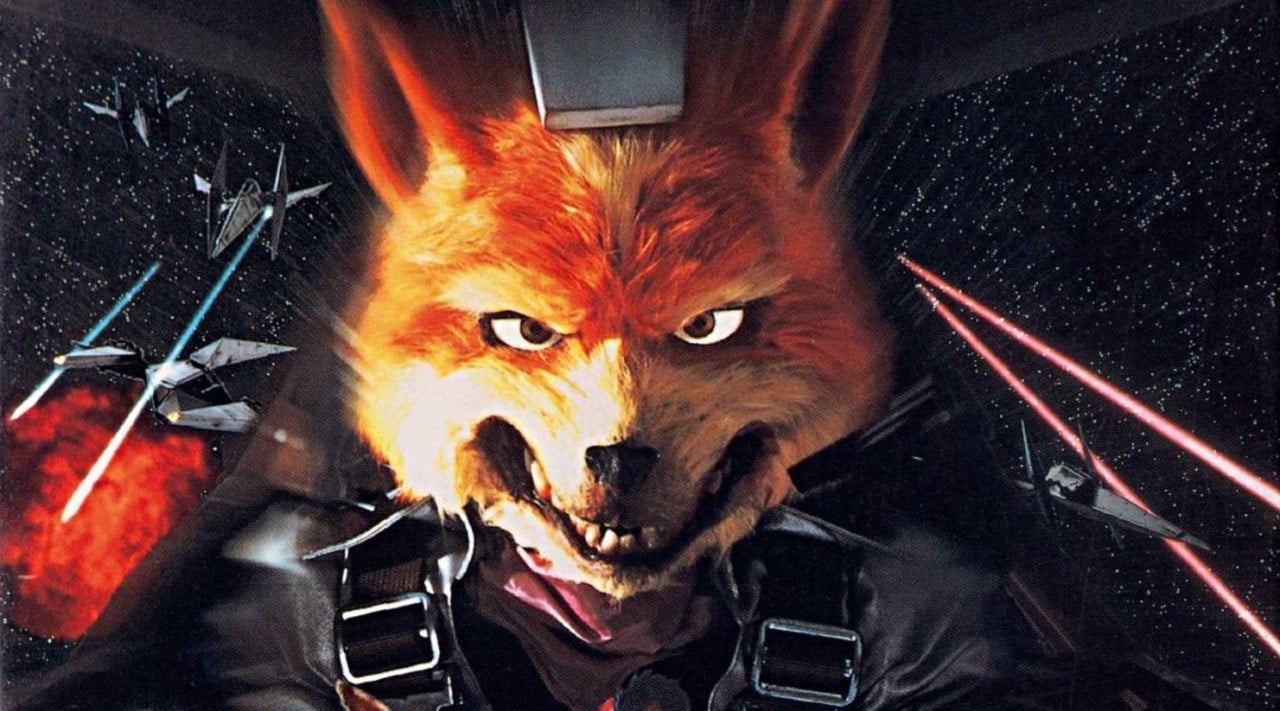
To match the game’s innovative nature, Nintendo Co., Ltd. (NCL) orchestrated an ambitious marketing campaign designed to capture the imagination of a global audience. Central to this strategy was the creation of a set of highly detailed, live-action puppets depicting the main protagonists. These weren’t mere static models; they possessed a lifelike quality that lent a unique charm and personality to the characters, bridging the gap between the game’s nascent 3D polygons and the tangible world. The decision to use puppets was a deliberate choice, likely aimed at making the anthropomorphic animal characters more relatable and iconic in an era before advanced CGI was commonplace in mainstream advertising. The puppets imbued the team with a tactile presence, making them feel like genuine heroes plucked from a Saturday morning cartoon.
These physical manifestations of the Star Fox team were ubiquitous in the early ’90s. They featured prominently in an array of promotional materials:
- Print Advertisements: Magazine spreads in publications like Nintendo Power, GamePro, and various gaming and general interest magazines often showcased the puppets in dynamic poses, battling unseen enemies or soaring through space. These ads were crucial in building anticipation and establishing the game’s visual identity.
- In-Store Promotions: Retailers such as Blockbuster Video, Toys ‘R’ Us, and electronics stores frequently displayed promotional standees, posters, and even video loops featuring the puppets. These point-of-sale materials were designed to grab attention and provide a tangible connection to the digital adventure. One particularly memorable instance was their use in live-action cockpit scenes for in-store demo videos, further immersing potential players in the game’s universe.
- Official Box Art: Perhaps their most iconic appearance was on the North American and European box art for the SNES game. The image of Fox McCloud, stern-faced and ready for action, surrounded by his team, became an instant classic, instantly recognizable to a generation of gamers.
- Strategy Guide Covers: Major strategy guide publishers also featured the puppets on their covers, solidifying their status as the official, marketable face of the franchise.
The widespread deployment of these puppets solidified their place in gaming lore, making their eventual disappearance all the more perplexing to fans and historians alike.
Decades of Silence: The Lingering Question and a Renewed Investigation
Following the initial marketing blitz, the puppets seemingly vanished from public view. As years turned into decades, and the Star Fox franchise evolved through subsequent console generations, the physical artifacts from its inception faded into obscurity. The mystery of their whereabouts became a persistent footnote in discussions about video game history and rare memorabilia. Enthusiasts and collectors often speculated: were they carefully cataloged and preserved in the hallowed archives of Nintendo in Kyoto, destined to be unveiled for a future anniversary, or had they met a less fortunate end, perhaps discarded or destroyed?
The team at Time Extension, an online publication dedicated to classic gaming, admitted to harboring this very curiosity for a considerable period. While the question lingered, the sheer difficulty of tracing such elusive artifacts meant that a full-scale investigation required significant resources and perseverance. It wasn’t until recently, armed with what they felt was sufficient time, patience, and a handful of promising leads, that they decided to embark on a concerted mission to uncover the truth behind the missing puppets. This endeavor underscored the growing interest in preserving and understanding the tangible history of video games, a field often overlooked in favor of digital preservation.
The Initial Pursuit: Conflicting Developer Insights
The investigation began by reaching out to individuals who were intimately involved with the original Star Fox project. The hope was that firsthand accounts from the game’s creators could shed light on the puppets’ fate.
One of the first contacts was Dylan Cuthbert, a key programmer from Argonaut Games who played a pivotal role in the development of Star Fox for the SNES. His initial recollection offered a glimmer of hope for the puppets’ survival. "The last time I saw them was about 15 years ago in a storage kind of room within Nintendo," Cuthbert recounted, albeit with a caveat. "I think so, at least; my memory is a little vague. Imamura-san probably knows more. No idea what happened to them after that, though." This statement suggested that at least some form of the puppets might have existed within Nintendo’s facilities as recently as the late 2000s, sparking optimism among the investigators.
However, a subsequent inquiry to Takaya Imamura, a prominent designer at Nintendo known for his work on Star Fox (he created many of the characters, including Fox McCloud), introduced a significant contradiction. Imamura-san, responding in Japanese, stated unequivocally that he had "never actually seen the puppets in person." More critically, he conveyed that, "as far as he was told, they had been destroyed," casting a pall of doubt over their continued existence.
The conflicting information from two central figures involved in the game’s history presented a critical juncture for the investigation. Cuthbert’s vague memory of a sighting versus Imamura’s more definitive, albeit secondhand, report of destruction created a need to broaden the scope of the search. It became clear that to get a conclusive answer, the investigators would need to bypass memory and hearsay and attempt to locate the actual creators of the puppets themselves.
Tracing the Creators: A Challenging Path to Shirogumi
Identifying the company responsible for crafting the Star Fox puppets proved to be a formidable challenge. For years, the actual creators had never publicly come forward to claim credit for their intricate work, leaving their identity shrouded in mystery. This lack of public acknowledgement made direct contact nearly impossible without a substantial lead.
The crucial breakthrough came in the form of an obscure image that circulated among fans and researchers. This photograph depicted Takashi Yamazaki, the acclaimed director of the recent, Oscar-winning film Godzilla Minus One, posing with a Fox McCloud puppet in the early 1990s. Yamazaki, at that time, was a relatively unknown artist working in the visual effects industry. His presence with the puppet strongly suggested a connection to a specific Japanese FX company: Shirogumi.
Shirogumi Inc. is a renowned Japanese animation and visual effects studio with a long and distinguished history in film, television, and game production. Established in 1974, the company has been a pioneer in practical effects, miniatures, and later, computer graphics. Their expertise in creating lifelike models and creature effects made them a highly plausible candidate for the sophisticated work seen in the Star Fox marketing materials. The photographic evidence, combined with Shirogumi’s reputation, provided the strongest lead yet.
With this crucial piece of information, the Time Extension team, recognizing the need for precise communication, enlisted the help of Liz Bushouse, a skilled Japanese-to-English translator. Together, they meticulously drafted an email, addressed to Shirogumi and several of its known past employees, politely inquiring whether the studio was indeed responsible for creating the iconic Star Fox puppets and, if so, what their ultimate fate had been.
The Definitive Answer: Shirogumi’s Revelation
The wait for a response from Shirogumi was undoubtedly tense, but it was not long before a message arrived, delivering a definitive, albeit somber, answer to the decades-old question. The studio’s reply brought an end to the hopeful speculation about hidden archives, confirming the puppets’ destruction:
"Thanks for your email. The Fox puppets created at our company were made by gluing fur and feathers to natural rubber, so they deteriorate simply by being exposed to air. Because of that, we had to destroy them after production was finished."
This statement was undeniably conclusive. Shirogumi’s explanation provided critical insights into the materials used in the puppets’ construction: natural rubber, fur, and feathers. These organic components, while excellent for achieving realistic textures and flexibility during production, are inherently susceptible to degradation over time. Exposure to air, humidity, temperature fluctuations, and even light can cause natural rubber to become brittle, crack, and crumble. Fur and feathers, similarly, can rot, shed, or be compromised by pests. Given these material properties, the studio’s decision to destroy the puppets after their production run was not an act of carelessness but a pragmatic necessity due to their inherent fragility and the impracticality of long-term preservation. The statement corroborated Takaya Imamura’s earlier information and effectively closed the primary chapter of the mystery.
Reconciling the Contradiction: The Second Mystery Unveiled
While Shirogumi’s response largely settled the question of the original promotional puppets, it left one significant loose end: what had Dylan Cuthbert seen "about 15 years ago in a storage kind of room within Nintendo"? If the puppets were destroyed shortly after production, his memory seemed to conflict directly with the confirmed facts. This led the investigators to delve deeper, scrutinizing the existing visual evidence of the puppets.
A closer examination of the various promotional materials revealed a subtle but crucial distinction. It became apparent that the models used for the official box art and certain static print advertisements were not identical to the puppets featured in the dynamic cockpit scenes of the in-store demo videos. The box art models appeared more robust and capable of standing independently, suggesting a different construction or design emphasis. The puppets used in the cockpit scenes, conversely, might have been designed specifically for seated poses, potentially lacking the internal armatures or stability required to stand unaided, and possibly even more prone to decay due to their specific construction for motion capture or video work. This subtle variation opened up the possibility that Cuthbert might have seen a different set of models or prototypes.
Further bolstering this hypothesis was the discovery of evidence pertaining to a model kit. Specifically, a high-quality garage kit based on the 1993 Fox McCloud design was released at Wonder Fest, a renowned Japanese event celebrating garage kits and figures, four years before Cuthbert’s recalled sighting. Such kits, often produced by professional sculptors for limited runs, can be remarkably detailed and could easily be mistaken for official prototypes or original production models by someone with a passing glance in a storage area. This Wonder Fest kit presented a plausible alternative for what Cuthbert might have encountered during his visit to Nintendo HQ, offering a tangible explanation for his memory without contradicting Shirogumi’s definitive statement.
Armed with these new findings, the investigators re-contacted Dylan Cuthbert, hoping the additional context might jog his memory further. While the new information provided potential explanations, Cuthbert’s memory remained largely unchanged. "Hmm… maybe it was a different set of models I saw then. My memory is hazy for sure. It’s all a long time ago," he conceded. His candid acknowledgment of a fading memory, combined with the plausible existence of alternative models or kits, effectively reconciled the last remaining discrepancy, bringing a comprehensive close to the investigation.
Broader Implications: Preservation, Memorabilia, and Gaming History
The resolution of the Star Fox puppet mystery offers valuable insights into several broader implications concerning the preservation of video game history and the nature of cultural artifacts.
Firstly, it underscores the inherent fragility of early gaming marketing artifacts. Unlike the digital code of the game itself, which can be meticulously archived, physical promotional items were often created using materials not intended for long-term preservation. The rapid advancements in technology and marketing techniques in the early 1990s meant that the focus was on immediate impact, not archival longevity. This reality means that many tangible pieces of video game history have simply disintegrated or been discarded over time, highlighting the urgent need for dedicated preservation efforts.
Secondly, the enduring fan curiosity surrounding these puppets speaks volumes about the value and emotional resonance such memorabilia holds. For a generation of gamers, these puppets were not just marketing tools; they were the physical embodiment of beloved characters, iconic images that shaped their early gaming experiences. Their disappearance created a void, a longing for a tangible connection to a cherished past. The quest to find them reflects a broader cultural appreciation for the physical artifacts that ground our digital experiences.
Thirdly, the investigation highlights the challenges faced by even major corporations like Nintendo in comprehensively archiving every piece of their creative output. The sheer volume of promotional materials, prototypes, and development assets generated over decades is immense. Coupled with the material degradation issues, maintaining a complete physical archive is an enormous logistical and financial undertaking. This often means that certain items are prioritized, while others, deemed non-essential after their immediate use, are either lost or, as in this case, intentionally destroyed due to material instability.
Finally, the success of this investigation, driven by a dedicated publication and aided by meticulous research and expert translation, exemplifies the critical role of investigative journalism and fan-driven historical research in the gaming world. As the video game industry matures, the stories behind its creation, its marketing, and its cultural impact become increasingly important. Unearthing these narratives, even if they lead to a conclusion of destruction rather than discovery, enriches our collective understanding of gaming’s rich and complex past.
While the original Star Fox puppets are no longer with us, their images continue to inspire and evoke nostalgia, a testament to their indelible mark on the landscape of video game marketing and the enduring legacy of the Star Fox team. The mystery may be solved, but the story of their creation and eventual demise adds another fascinating layer to the history of a true SNES classic.