Jia Lissa
The history of the video game industry is often told through the lens of hardware sales and software benchmarks, but the internal corporate narratives of the 1990s reveal a more complex story of cultural friction, visionary leadership, and missed technical opportunities. Mike Fischer, a veteran executive whose career spanned pivotal roles at Sega of Japan, Sega of America, Namco, and Microsoft, provides a rare, first-hand account of the era when Sega transitioned from a dominant hardware manufacturer to a third-party software publisher. His experiences offer a granular look at the internal dynamics between Tokyo and San Francisco, the birth of the Sonic the Hedgehog franchise, and the strategic pivots that defined the industry’s trajectory during the 16-bit and 32-bit eras.

From Tokyo to San Francisco: A Unique Executive Trajectory
Fischer’s entry into the gaming industry in 1990 was unconventional. After graduating with a degree in quantitative economics from California Polytechnic State University, he moved to Japan to teach English before securing an entry-level position at Sega’s Overseas Consumer Products Business Division. Unlike most Western executives who began their careers in domestic branches, Fischer’s four-year tenure in Tokyo (1990–1994) allowed him to witness the inner workings of Sega’s Japanese headquarters during the height of the Mega Drive (Genesis) era.
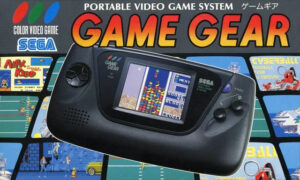
During this period, Fischer served as a "utility player," performing tasks ranging from translating technical repair manuals for the Game Gear to acting as a translator for high-profile visitors like Michael Jackson and Ayrton Senna. This immersion in Japanese corporate culture provided Fischer with a unique perspective on the "frugal" nature of Sega’s domestic operations, which contrasted sharply with the high-spending, marketing-heavy environment he would later encounter at Sega of America (SOA).

The 16-Bit Peak and the Birth of a Mascot
The early 1990s were defined by Sega’s aggressive pursuit of Nintendo’s market share. Fischer was present for the conceptualization of Sonic the Hedgehog, a project initiated by a corporate-wide memo seeking a "Mario-killer." While history often credits Yuji Naka as the sole creator of the blue speedster, Fischer’s account emphasizes the collaborative nature of the project, highlighting the contributions of character designer Naoto Ōshima and level designer Hirokazu Yasuhara.
The success of the Genesis in North America—achieving nearly 50% market share at its peak—was driven by the leadership of SOA CEO Tom Kalinske. However, Fischer notes that this success created an "awkward" dynamic with the Japanese headquarters. While the Genesis was a phenomenon in the West, the Mega Drive struggled to gain traction in Japan against the Super Famicom. This disparity in performance led to a divergence in corporate philosophy: the U.S. team wanted to extend the lifecycle of the 16-bit Genesis through peripherals like the Sega CD and 32X, while the Japanese team was eager to move toward the next-generation Saturn.
The Hardware Transition: Strategic Missteps and Technical Hurdles
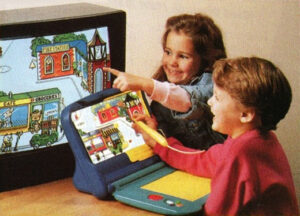
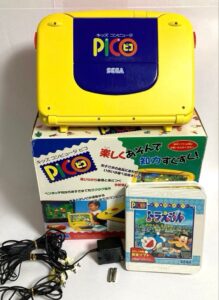
The mid-1990s marked a period of "corporate culture shock" for Fischer as he transferred to Sega of America in 1994. He arrived during the launch of the Sega Pico, an edutainment system that Fischer managed. While the Pico was a long-term success in Japan, outliving both the Saturn and Dreamcast, it struggled in the U.S. due to high manufacturing costs and pricing pressures.
Fischer’s observations on the Saturn era point to significant technical and communicative failures. The Saturn was notoriously difficult to develop for, featuring a complex dual-CPU architecture utilizing Hitachi SH-2 chips. Fischer suggests that the decision to move away from the industry-standard Motorola 68000 series—which had powered the Genesis and many arcade boards—severed the technical continuity that might have made the Saturn more competitive against the Sony PlayStation. Furthermore, the lack of robust documentation for Western developers hindered the system’s software library, a factor that contributed to its third-place finish in the 32-bit console war.
Management Dynamics: Nakayama and Kalinske
Central to the Sega narrative is the relationship between Sega CEO Hayao Nakayama and SOA’s Tom Kalinske. Fischer describes Nakayama as a "merciless" but brilliant leader who respected Kalinske’s market intuition. In one notable anecdote, Fischer recalls Nakayama berating his own Japanese staff for ignoring Kalinske’s advice on the Pico’s pricing, slamming a cartridge on a table to emphasize the need for cost reduction.
Despite this respect, the pressure from Sega’s board of directors and the underperformance of the Saturn eventually fractured the relationship. By 1996, the "honeymoon period" between the Japanese parent company and the American subsidiary had ended. The inventory issues and financial losses associated with the 32X and the early Saturn launch led to a loss of autonomy for the U.S. branch, eventually resulting in Kalinske’s departure.
The Namco Pivot and the PlayStation Ascendancy
Following his first tenure at Sega, Fischer moved to Namco during a period of immense growth for the company. Namco’s partnership with Sony was a cornerstone of the PlayStation’s success, with titles like Tekken, Ridge Racer, and Ace Combat serving as technical showcases. Fischer’s time at Namco highlighted the shifting alliances of the industry; when Namco decided to develop Soul Calibur for the Sega Dreamcast, it was a strategic move that broke a long-standing exclusive arrangement with Sony.
The Dreamcast version of Soul Calibur remains a high-water mark for the system, famously looking better than the arcade original. However, Fischer reveals that despite this success, Namco’s internal teams were hesitant to continue supporting the Dreamcast. The technical ease of developing for the upcoming PlayStation 2, combined with concerns over the Dreamcast’s market viability, led Namco to refocus its efforts on Sony’s hardware, further isolating Sega in the hardware market.
Returning to a Software-Only Sega
Fischer returned to Sega in the early 2000s under the leadership of Peter Moore. His primary task was to manage the transition from a first-party hardware manufacturer to a third-party software publisher. This involved "rebuilding bridges" with former rivals Nintendo and Sony.
One of the most symbolic moments of this era was the introduction of Sonic the Hedgehog to Nintendo’s headquarters. Fischer recalls the emotional weight of seeing the Mario and Sonic mascots embrace, signaling the end of the most heated rivalry in gaming history. During this period, Sega began porting its iconic library to the GameCube, PlayStation 2, and the newly launched Xbox.
Legacy and the Future of the "Sega Brand"
The latter part of Fischer’s Sega career was marked by friction with Yuji Naka, who had become a senior executive. Fischer describes a "malignant" environment where Naka resisted market feedback from the West, including trends toward M-rated content and multiplayer-focused gaming. This internal resistance, Fischer argues, delayed Sega’s modernization and led to several lackluster releases during the mid-2000s.
Reflecting on the current state of Sega, Fischer expresses optimism under the leadership of Shuji Utsumi. He notes that Sega is finally moving beyond "recycling nostalgia" and is innovating with its core franchises, such as the Like a Dragon (Yakuza) series. The success of Sonic Mania—a project led by fan-turned-developer Christian Whitehead—serves as a case study in how Sega can successfully leverage its legacy by incorporating "fresh blood" into its creative processes.

Chronology of Key Events (1988–2005)
- 1988: Sega releases the Mega Drive in Japan; Mike Fischer graduates from Cal Poly.
- 1990: Fischer joins Sega of Japan; Genesis achieves significant traction in the U.S. market.
- 1991: Launch of Sonic the Hedgehog and the Game Gear.
- 1993: Launch of the Sega Pico in Japan.
- 1994: Fischer transfers to Sega of America; Sega Saturn launches in Japan.
- 1995: Surprise launch of the Saturn in the U.S. at E3; Sony PlayStation launches in the U.S.
- 1996: Tom Kalinske resigns from Sega of America.
- 1997: Fischer leaves Sega for Namco; Sega of America faces financial restructuring.
- 1998: Dreamcast launches in Japan.
- 1999: Dreamcast launches in the U.S.; Soul Calibur released.
- 2001: Sega announces it will discontinue hardware and become a third-party publisher.
- 2002: Fischer returns to Sega to assist with the third-party transition.
- 2004: Sammy Corporation completes a takeover of Sega.
- 2005: The Sega Pico is finally discontinued in Japan, outlasting the Saturn and Dreamcast.
Fact-Based Analysis: The Implications of the Transpacific Gap
The history recounted by Mike Fischer underscores a fundamental challenge in the global gaming industry: the "transpacific gap" in management and consumer behavior. Sega’s downfall as a hardware power was not due to a single failure, but a series of misalignments between its Japanese and American divisions.
- Market Disconnect: Sega of Japan’s obsession with the arcade market led to hardware (the Saturn) that was optimized for 2D sprites at a time when Western consumers were demanding 3D polygons.
- Economic Disparity: The "frugal" Japanese headquarters often struggled to understand the massive marketing budgets required to compete in the U.S. retail environment.
- Institutional Friction: The success of the Genesis gave SOA a level of autonomy that Sega of Japan eventually found threatening, leading to a "reeling in" of the American branch at the exact moment it needed flexibility to fight the PlayStation.
Today, Sega exists as a resilient software entity, having survived a transition that claimed other former hardware giants. The lessons from Fischer’s career—the importance of technical documentation, the need for cross-cultural communication, and the value of protecting creative legacies from internal politics—remain relevant as the industry moves into an era dominated by cloud gaming and subscription services. As Fischer concludes, the "ragtag band" of the 1990s may have lost the hardware war, but they created a cultural fraternity that continues to influence the gaming world decades later.