Jia Lissa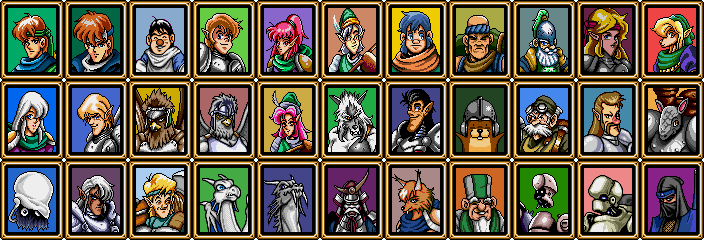
Following the commercial success of Shining in the Darkness in March 1991, Sega and the independent studio Climax Entertainment embarked on a project that would fundamentally redefine the role-playing game (RPG) landscape on the Genesis/Mega Drive hardware. While the previous title had been a first-person dungeon crawler, the successor, Shining Force, pivoted toward a tactical, turn-based strategy format. This transition was not merely a change in gameplay mechanics but a calculated effort to expand the narrative scope of the Shining universe while navigating complex corporate relationships and technical limitations. The resulting title, released in Japan in March 1992 and in the West in early 1993, became a cornerstone of Sega’s 16-bit software library, though its development was marked by internal division and a deteriorating relationship between the studio and the publisher.
The Strategic Evolution of the Shining Franchise
At the dawn of the 1990s, the RPG market was dominated by traditional turn-based systems popularized by franchises like Dragon Quest and Final Fantasy. Hiroyuki Takahashi, a former Enix and Chunsoft employee who founded Climax Entertainment, sought to evolve the genre. Takahashi believed that the static nature of RPG combat was becoming stagnant for players. He envisioned a system where movement and spatial awareness were as critical as character statistics.
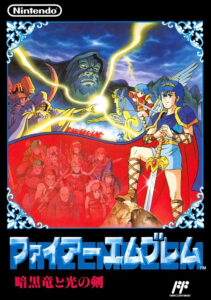
While Nintendo had already established a presence in the tactical RPG subgenre with Fire Emblem, Takahashi maintained that his vision was distinct. In historical interviews, he noted that the pacing of contemporary strategy games was often too slow, focusing more on board-game mechanics than narrative immersion. His primary inspiration was not found on consoles but on the PC88 platform, specifically the 1988 title Silver Ghost by Kure Software Koubou. Silver Ghost utilized a system of managing multiple characters in real-time, which Takahashi adapted into a more accessible, turn-based "simulation" style for the console audience.

The decision to move away from the first-person perspective of Shining in the Darkness was a gamble. Climax intended to build a shared world—the land of Rune—that felt expansive and populated by diverse cultures. By shifting to an overhead tactical view, the developers could depict large-scale warfare, shifting the stakes from a single hero’s quest to the survival of entire nations.
Sonic Co., Ltd.: A Strategic Partnership Born of Necessity
The increasing complexity of 16-bit RPGs required resources beyond the capacity of a small independent studio. To facilitate the growth of the Shining franchise, Sega and Takahashi entered into a joint venture in June 1991 to form Sonic Co., Ltd. (later known as Camelot Software Planning). Sega held an 85 percent stake in the company, with Climax and Takahashi holding the remainder.
The new entity was named after Sega’s burgeoning mascot, Sonic the Hedgehog, reflecting the high expectations Sega had for the unit. Sonic Co. was tasked with planning, market research, and the management of external creative talent. This allowed Climax to focus on the technical aspects of programming while Sonic Co. recruited specialists from other industries, such as manga and traditional literature, to handle character design and scenario writing.
Kenji Orimo, a director at Sonic Co. with deep ties to the manga industry, was instrumental in this recruitment. He argued that the video game industry needed to look outward to improve its storytelling. This collaborative approach led to the hiring of Yoshitaka Tamaki, whose character designs became the visual identity of the series, and Masaki Wachi, a freelancer who structured the game’s episodic narrative chapters.
Redefining the Turn-Based Combat Paradigm
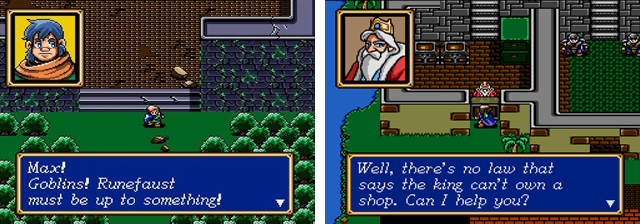
One of the primary technical goals for Shining Force was the elimination of the "sluggishness" typical of the strategy genre. In traditional systems, players would issue commands to their entire army before the enemy could respond. Takahashi and programmer Yoshinori Tagawa developed a mixed-initiative system where turn order was determined by an individual character’s agility stat. This kept the player engaged, as the tactical situation shifted after every individual move.
Furthermore, the team prioritized visual spectacle. Unlike other strategy games that used small, static icons for combat, Shining Force transitioned to a cinematic, full-screen battle view. When a character attacked, the camera shifted to a detailed side-view animation. These sequences were designed to provide the same visceral satisfaction as an action game. However, this aesthetic choice came at a high cost in terms of memory.
Technological Innovation and the 12-Megabit Hurdle
In 1992, the standard size for a high-end Mega Drive cartridge was eight megabits (1Mb). Shining Force required 12Mb, making it the largest game on the console at the time of its release. Even with this expanded capacity, the sheer volume of character animations, backgrounds, and magical effects threatened to exceed the storage limits.
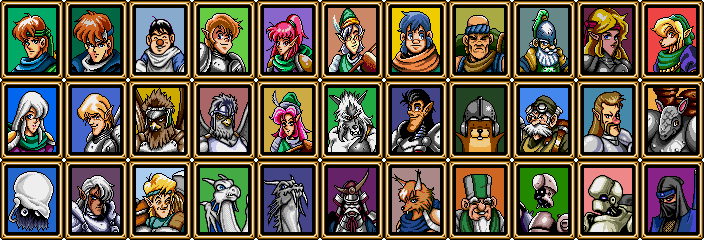
To address this, Climax developed proprietary compression routines. While typical compression at the time yielded a 50 percent reduction in file size, the Climax team managed to compress data to approximately 22 percent of its original size. This technical achievement allowed the game to include 30 playable characters, each with unique promotional classes and attack patterns, across 29 distinct battle maps.
The artificial intelligence (AI) also required a novel approach. To ensure the game remained challenging without causing long processing delays, the team implemented what they called "Columbus’s Egg" routines—efficient algorithms that allowed enemies to calculate their optimal move within one second. The AI was programmed to prioritize attacking the protagonist, Max, or targeting weakened party members, forcing players to think defensively.
Narrative Construction and Character Diversity
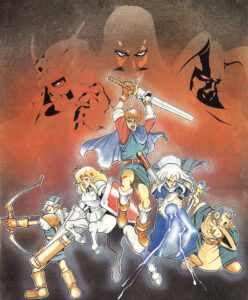
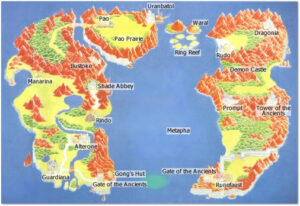
The plot of Shining Force was conceived as a prequel to Shining in the Darkness, set on the dual continents of East and West Rune. The narrative centered on the Kingdom of Guardiana and its struggle against the invading forces of Runefaust, led by the sorcerer Darksol. The story introduced the "Legacy of the Ancients," a science-fantasy concept that blended traditional medieval tropes with advanced, forgotten technology—a hallmark of the series.
The game’s cast was notable for its diversity, featuring over 30 recruitable characters from ten different races, including centaurs, birdmen, and a robotic unit named Adam. Yoshitaka Tamaki’s designs were more realistic and "harder" than the whimsical caricatures of the previous game, reflecting the somber tone of a world at war.
A unique feature was the "Headquarters," a mobile base where players could interact with their army between battles. This added a layer of personality to the characters, though Takahashi later admitted that he had hoped to implement even more dynamic dialogue that changed after every chapter—a feature eventually cut due to memory constraints and programming timelines.

Strained Relations: The Climax and Sega Fracture
Despite the critical success of the Shining series, the relationship between Climax Entertainment and Sega began to deteriorate during the development of Shining Force. Takahashi has since stated that Sega’s management structure became increasingly profit-oriented, viewing Climax as an "unruly subsidiary."
Budgetary constraints were a constant source of friction. The financial support provided by Sega barely covered the rising costs of developing high-capacity cartridges. Furthermore, as Sega shifted its focus toward the upcoming Mega CD and the 32X, Climax felt marginalized. This tension eventually led to a divide within the studio itself. While some members remained focused on the Shining franchise, Kan Naitō led a separate team to develop Landstalker, which was intended to be the third part of a "Shining trilogy" but was ultimately released as a standalone intellectual property.
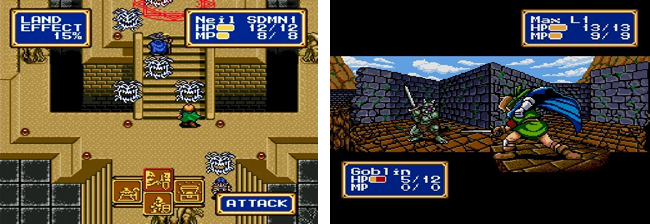
The Dreamcast would later become the only major Sega platform not to receive a mainline Shining Force entry, a testament to the eventual complete separation between Takahashi’s team and the hardware manufacturer.
Market Reception and the Enduring Legacy of Rune
Upon its release, Shining Force was a commercial success in Japan, though global sales figures remain a point of debate. Estimated data suggests the game sold approximately 200,000 units worldwide, a figure that some analysts believe is low given the game’s massive presence in gaming media of the era. Regardless of raw numbers, the title’s impact on the genre was profound. It proved that strategy games could be accessible to a console audience without sacrificing depth.
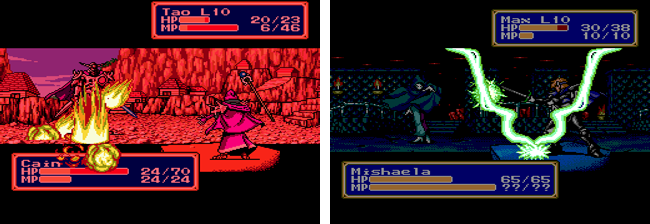
The game’s legacy is preserved through numerous sequels on the Game Gear, Sega CD, and Saturn, as well as a 2004 remake for the Game Boy Advance titled Resurrection of the Dark Dragon. Its influence can be seen in the design of modern tactical RPGs, which continue to use the mixed-turn initiative and cinematic battle transitions pioneered by Climax.
Ultimately, Shining Force stands as a landmark of 16-bit game design. It represented a moment when technical innovation, artistic ambition, and narrative world-building converged to create an experience that transcended the limitations of its hardware. For many Genesis owners, the struggle of Max and the Shining Force against the Dark Dragon remains the definitive RPG experience of the era, cementing the franchise’s place in the annals of video game history.